
Articles Posted in H1B Employers

popmelon-ai-generated-8647282-scaledA newly proposed rule from the U.S. Department of Labor (DOL) could significantly reshape the cost and strategy of hiring foreign talent through the H-1B and PERM programs.


The proposal, aimed at increasing wage protections for U.S. workers, is expected to drive up salary requirements—adding what some are calling “sticker shock” for employers.


What the Proposed Rule Does


The DOL’s proposal focuses on revising how prevailing wages are calculated across H-1B, H-1B1, E-3, and PERM programs. Instead of relying on lower wage percentiles, the rule would shift wage levels upward to better reflect actual market compensation.

Under the current system, wages are divided into four levels based on experience. The proposal would significantly raise each level—for example, entry-level wages would move from the 17th percentile to the 34th percentile, with similar increases across all tiers.

The DOL’s stated goal is to ensure foreign workers are paid comparably to similarly situated U.S. workers and to eliminate incentives for employers to hire lower-cost foreign labor.

Continue reading

starshopping-trophy-4145177_1280Welcome back to Visalawyerblog! In this post, we bring you the latest H-1B lottery news.

On March 31, 2026, USCIS announced that they have selected enough beneficiaries from properly submitted electronic registrations to meet the H-1B regular cap and the U.S. advanced degree exemption for fiscal year 2027.

With this announcement, USCIS brings the 2027 FY H-1B cap season to a close.


What happens next?


At this point, USCIS has completed its selection process and sent out non-selection notifications via the myUSCIS online accounts to those petitioners and their attorneys who were not selected for FY 2027.

The status for registrations properly submitted for the FY 2027 H-1B numerical allocations, but that were not selected, will show:

  • Not Selected: Not eligible to file an H-1B cap petition based on this registration.

If I was selected, when can I submit my paper application by mail or online?


Only petitioners who were selected will be able to file a paper or online application on behalf of the alien worker, beginning April 1, 2026. Petitioner’s must include a copy of the applicable registration selection notice with the FY 2027 H-1B cap-subject petition. For paper applications, petitioners should ensure that they send their application to the correct service center within the filing period indicated on the registration selection notice.

Beginning April 1, USCIS will only accept the 02/27/26 edition of Form I-129. All H-1B cap subject petitions for FY 2027 must use this edition of the form.

Continue reading

mana5280-XiF1p97u3fc-unsplash-scaled

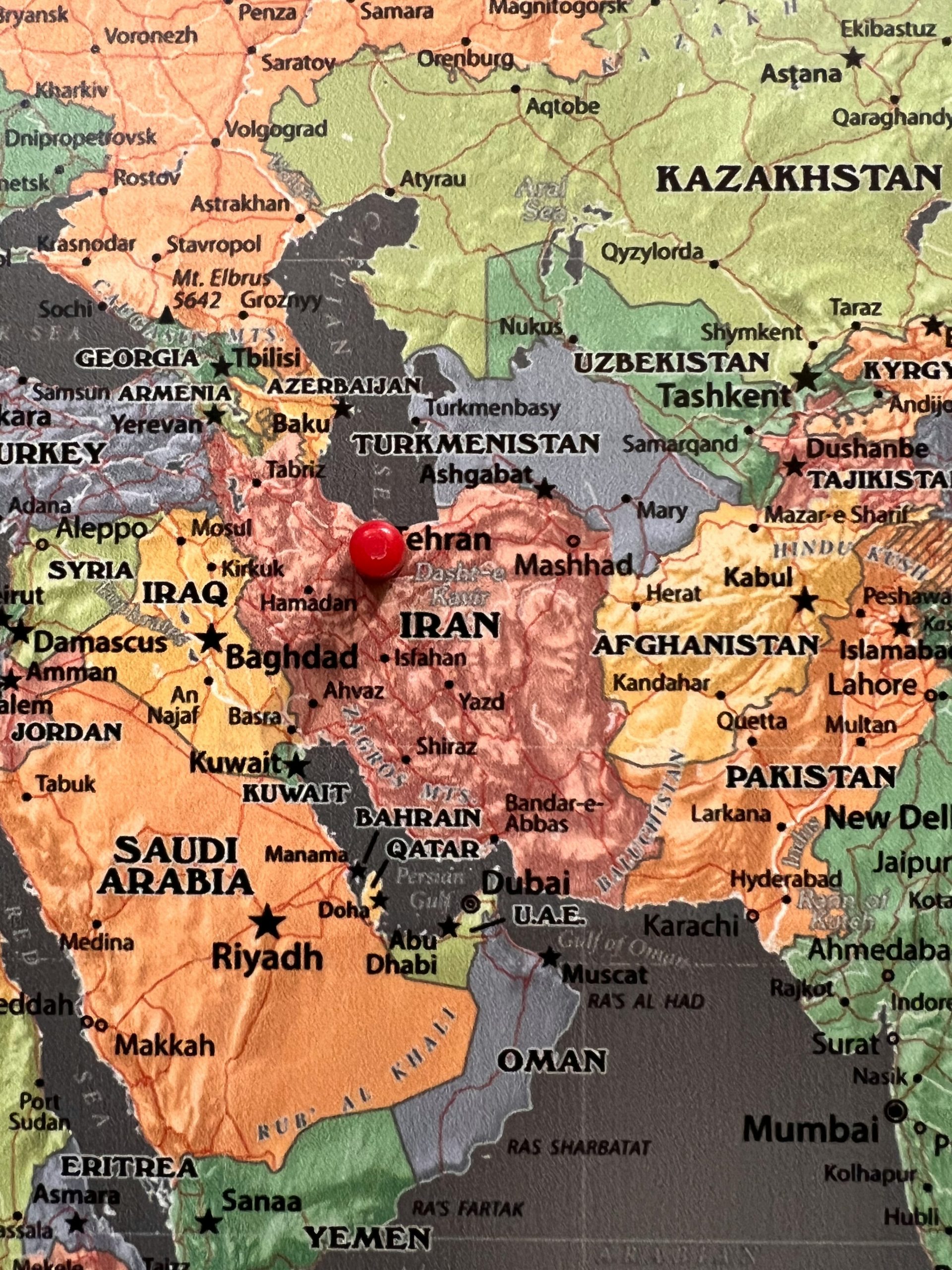
Rising tensions in the Middle East are causing immediate disruptions to visa processing and international travel across the region. According to the State Department, several embassies throughout the Middle East have halted or significantly limited visa services following airstrikes targeting Iran and subsequent retaliatory actions.

The situation is fluid and is evolving on a daily basis.

Widespread Travel Disruptions Across the Middle East


The escalating security situation has triggered widespread travel interruptions throughout the region. Airspace closures have been reported in Iran, Israel, Kuwait, the United Arab Emirates, Bahrain, Iraq, and Qatar. Airlines have suspended flights throughout the region, and there are reports of land border closures and shelter-in-place advisories in several countries.

These disruptions are expected to significantly affect visa issuance, passport returns, and the movement of workers.

U.S. Embassy Visa Services Suspended or Limited


The following U.S. diplomatic missions across the region have implemented operational changes, including canceled appointments, and the suspension of routine visa services until further notice.

  • United Arab Emirates: The U.S. Embassy in Abu Dhabi and the U.S. Consulate in Dubai canceled all visa and U.S. citizen services appointments from March 2–4 while personnel sheltered in place.
  • Beirut: Since February 23rd non-emergency personnel have departed and all consular visa services have been suspended.
  • Qatar: Routine consular appointments at the U.S. Embassy in Doha have been canceled due to ongoing security concerns until further notice.
  • Israel: The U.S. Embassy in Jerusalem and the Tel Aviv branch office have suspended all routine visa services through March 13 and are prioritizing assistance to U.S. citizens.
  • Jordan: The U.S. Embassy in Amman issued a shelter-in-place directive and visa services are suspended for the foreseeable future.
  • Kuwait: Embassy personnel have been ordered to shelter in place and all routine visa have been suspended.
  • Dubai: The U.S. Embassy in Abu Dhabi and the Dubai branch office issued a shelter-in-place directive and all routine visa services and appointments have been postponed.
  • Pakistan: The State Department has ordered non-emergency U.S. government employees from U.S. Consulates Lahore and Karachi to leave Pakistan due to safety risks.  At the U.S. Embassy Islamabad, the consulate will not be open for routine services on March 6, but staff remain available for emergency services only.
  • Cyprus: The State Department ordered non-emergency U.S. government employees to leave Cyprus due to the threat of armed conflict. All routine visa services and U.S. Citizen services have been suspended.
  • Saudi Arabia: The U.S. Mission in Saudi Arabia has suspended all routine and emergency consular services until further notice. The State Department has authorized non-emergency U.S. government employees to leave Saudi Arabia. The U.S. Consulate in Dhahran has specifically ordered the public to stay away from the area due to ongoing attacks and security concerns.

Continue reading

tanrica-financial-analytics-10079927_1280
Highlights

  • Starting March 1, 2026, the premium processing fee for I-140 immigrant worker petitions and most Form I-129 nonimmigrant worker petitions will increase to $2,965, from $2,805. Fees for premium processing of certain I-129 petitions for nonimmigrant workers, I-539 petitions to extend/change nonimmigrant status, and I-765 EADs for OPT and STEM classifications will also increase.
  • The new fees apply to filings postmarked on or after March 1, 2026.

graphic-4067697_1280As the FY 2027 H-1B cap season approaches, employers will need to take additional steps to prepare for the new wage-based weighted selection system and to assess whether their petitions will be subject to the recently implemented $100,000 H-1B fee.


Registration Opens March 4, 2026


USCIS recently announced that the initial registration period for the FY 2027 H-1B cap will open at 12:00 p.m. Eastern on March 4, 2026, and will close at 12:00 p.m. Eastern on March 19, 2026.

During this window, employers and their representatives must use a USCIS online account to electronically register each prospective H-1B cap beneficiary for the selection process and pay the required $215 registration fee for each registration.


New Changes to the H-1B Lottery


Pursuant to a new regulation, the Department of Homeland Security (DHS) is replacing the traditional random H-1B cap lottery with a weighted selection process that prioritizes beneficiaries offered the highest wages under the Department of Labor’s four-level prevailing wage structure.

DHS plans to implement the system on February 27, 2026, in advance of the FY 2027 H-1B cap season beginning in March 2026.

As a result, employers will be required to indicate, for each prospective beneficiary registered in the H-1B cap system, the applicable Department of Labor (DOL) prevailing wage level corresponding to the offered salary.

Continue reading

hiring-1977914_1280The U.S. Department of Homeland Security (DHS) has issued a final rule that replaces the longstanding random H‑1B cap lottery with a wage‑level‑based weighted selection system, set to take effect in time for the fiscal year 2027 H‑1B cap season beginning in March 2026.

Under the new rule, beneficiaries registered for the H‑1B cap will be entered into the selection pool with entries weighted according to the wage offered by their prospective employer under the Department of Labor’s four‑level prevailing wage system.

A beneficiary offered a Level4 wage receives four entries in the selection pool, Level3 three entries, Level2 two entries, and Level1 one entry, giving higher‑wage positions statistically greater odds of selection than lower‑wage positions.

Employers must indicate the appropriate wage level, occupational code, and work location in each registration, and U.S. Citizenship and Immigration Services (USCIS) may deny or revoke petitions if it determines that an incorrect wage level was indicated to unfairly increase selection odds.

The rule is scheduled to take effect 60 days after its December29 publication in the Federal Register, though it may face court challenges before implementation.

Requirements for Offered Wages


H‑1B cap registrations will reflect the OEWS wage level corresponding to the wage offered to the prospective employee. When submitting a registration, the sponsoring employer must select the highest OEWS wage level that the offered wage meets or exceeds for the relevant occupation in the intended work location.

If the employee will work in multiple locations, the employer must use the lowest applicable OEWS wage level. Additionally, if multiple employers register the same foreign national, that individual will be entered into the H‑1B lottery using the registration with the lowest prevailing wage level.

Continue reading

mobile-1087845_1280

DHS Ends Family Reunification Parole Programs

On December 12, 2025, the Department of Homeland Security (DHS) announced that it is terminating all categorical Family Reunification Parole (FRP) programs for citizens of Colombia, Cuba, Ecuador, El Salvador, Guatemala, Haiti, and Honduras, including their immediate family members.

These programs allowed certain relatives of U.S. citizens and permanent residents to enter the United States on parole while awaiting completion of the immigrant visa process.

DHS described the move as an effort to end what they described as the “abuse of humanitarian parole,” arguing that these programs allowed individuals to bypass traditional immigration procedures without sufficient vetting. Under the new policy, parole will be granted on a case-by-case basis.

The termination takes effect December 15, 2025, and parole for individuals already admitted under FRP will generally expire on January 14, 2026, unless they have a pending Form I-485 Application to Adjust Status that is postmarked or electronically filed on or before December 15 and it is still pending on January 14, 2026.

If an individual has a pending Form I-485, their parole will remain valid until either their period of parole expires or USCIS makes a final decision on their pending Form I-485, whichever is sooner. If the Form I-485 is denied, the period of parole will be terminated, and they will be required to depart the United States or seek relief through alternative legal pathways.

Continue reading

payment-terminal-6400952_1280On September 19, 2025, the President issued a Proclamation on the Restriction on Entry of Certain Nonimmigrant Workers, requiring any new H-1B petitions to include an additional $100,000 payment as a condition for eligibility.

Following the President’s announcement, USCIS released clarification on the new fee requirement, specifying that the surcharge only applies to new H-1B petitions filed on or after 12:01 a.m. EDT on September 21, 2025. The fee is triggered only when the foreign national beneficiary is outside the United States at the time the petition is filed, and the petition requires visa issuance at a U.S. or port of entry notification.

Importantly, the USCIS guidance also clarifies who is exempt from the surcharge. For example, H-1B petitions filed before the effective date are not subject to the fee. Additionally, individuals already in H-1B status in the U.S.—such as those seeking extensions, amendments, or a change of employer—are not required to pay the surcharge under the current guidance. The responsibility for paying the fee rests with the petitioner (employer), and proof of payment must be included with the petition at the time of filing. USCIS instructs employers to submit the required fee using pay.gov, following the payment instructions.  

ai-generated-8775233_1280On October 3, 2025, a coalition of labor unions, healthcare providers, academic institutions, and religious groups, filed a lawsuit urging a federal court to strike down the $100,000 fee imposed on new H-1B petitions by the Trump administration for workers outside the United States.

What the Lawsuit Says


The lawsuit, filed in the U.S. District Court for the Northern District of California, argues that the fee which took effect September 21, violates both the Immigration and Nationality Act and the Administrative Procedure Act. Plaintiffs claim the President lacks authority to unilaterally impose a fee of this kind, especially one designed to raise revenue or direct government spending.

The Trump administration’s sudden rollout of the H-1B fee caused immediate disruptions:

  • Workers abroad scrambled to return to the United States, paying steep travel costs.
  • Others inside the U.S. canceled planned international travel.
  • Some even asked to deplane midflight upon hearing the news.

The fee is seen by critics as a threat to institutions that rely heavily on skilled foreign workers—such as universities, health systems, and religious groups—particularly in fields already facing staffing shortages.

Continue reading

people-4009327_1280On September 24, 2025, the Department of Homeland Security (DHS) issued a proposed rule that would change the current selection process for selecting H-1B visa petitions subject to the annual numerical limits established by the Immigration and Nationality Act.

Under the proposed rule, the current random lottery system would be replaced with a wage-based selection process that prioritizes the selection of H-1B workers offered higher salaries by sponsoring employers.

The goal is to better align the H-1B program with U.S. labor market needs by increasing the chances of selection for higher-paid, and presumably higher-skilled, foreign workers. This change aims to reduce the potential for abuse in the system, discourage mass low-wage registrations, and ensure that the most economically valuable positions are filled through the H-1B program.

What may change


Currently, the U.S. government selects H-1B visa petitions through a randomized lottery system due to the annual numerical cap on available visas. Employers first submit electronic registrations for each prospective H-1B worker during a designated registration period, typically held in March. Because the demand for H-1B visas consistently exceeds the supply, the U.S. Citizenship and Immigration Services (USCIS) conducts a lottery to determine which petitions can proceed with applying for H-1B visas.

There are two separate caps under the H-1B program: the regular cap of 65,000 visas and an additional 20,000 visas reserved for individuals who hold advanced degrees from U.S. institutions (commonly referred to as the master’s cap). All registered beneficiaries, including those with U.S. advanced degrees, are first entered into the regular cap lottery. After 65,000 are selected, those with U.S. master’s degrees who were not chosen in the initial round are entered into a second lottery for one of the 20,000 advanced degree slots.

This current system does not prioritize applicants based on wage levels, qualifications, or skills. Selection is purely random as long as the minimum eligibility requirements are met.

However, the Department of Homeland Security (DHS) is proposing changes that would shift the selection process to favor higher-paid workers.

Continue reading