Articles Posted in Immigrant Visas

5132848528_8a47684a87_z

Massachusetts Governor Charlie Baker has proposed a new policy that will allow State Police to contact federal immigration authorities for the purposes of verifying the immigration status of suspects already in custody on state criminal charges. In taking this step, Governor Baker, a Republican, is undoing the actions of his Democratic predecessor, ex-governor Deval Patrick. This new proposal will be put in place to allow federal law enforcement officials to better combat terrorism, gangs, and other activity of a criminal nature in the state of Massachusetts. This policy will affect undocumented immigrants, as well as legal permanent residents, with extensive criminal records or those convicted of serious crimes of moral turpitude.

State police will not be able to apprehend individuals based on immigration violations alone. Instead, as a result of this new policy, state troopers will be able to contact Immigration and Customs Enforcement (ICE) and inquire with ICE whether a person in custody is considered a ‘priority target.’ A ‘priority target’ is someone who has extensive criminal history or poses a security risk. By law, state police cannot enforce federal immigration law, but they will be able to assist federal law enforcement officials in detaining individuals in custody who pose a significant threat to the country’s national security.

Continue reading

15531282194_c5c9b33b52_bToday May 31, 2016 the United States Department of Justice (DOJ) filed an emergency motion to prevent a federal judge from the State of Texas from imposing sanctions on DOJ prosecutors, requiring them to attend mandatory ethics classes. The federal judge in question is Andrew Hanen, the same judge who issued a temporary injunction blocking the expanded DACA and DAPA programs from taking effect on February 18, 2015, as originally intended by the Obama administration. The case United States v. Texas has made its way up to the Supreme Court of the United States. An official ruling assessing the legality of the expanded DACA and new DAPA program is expected this summer.

Judge Hanen filed the judicial order after federal prosecutors acknowledged that they were not completely transparent in regards to implementation of the expanded DACA and new DAPA program. Hanen argues that he was assured that the government would not start implementation of these programs until February 18, 2015 when in fact the government implemented a portion of the program before February and granted more than 100,000 applications. After reading government briefs acknowledging this information, Judge Hanen claimed that attorneys for the Department of Justice were not only knowledgeable of the facts, but were guilty of misrepresenting them in federal court.

In addition to ordering sanctions on federal prosecutors, Judge Hanen has ordered the Department of Homeland Security (DHS) to provide the names of individuals who were granted benefits under these programs, despite not being eligible to receive those benefits. This move would require the Department of Justice to release the records of more than 50,000 people.

14088211137_c71a919911_zOn behalf of our Law Office, we would like to wish you a safe and Happy Memorial Day as you spend it with your loved ones. Thank you for your service.

For more information about the services we offer please click here.


Screen Shot 2016-05-26 at 2.59.40 PM

The state of Colorado is set to pass a new bill known as HB16-1391 that will prosecute non-attorneys posing as licensed immigration attorneys or legal representatives in matters relating to immigration. Colorado Senator Dan Pabon, first introduced the bipartisan bill, HB 16-1391 the Immigration Consultants Deceptive Trade Practice, before the Colorado Senate earlier this year. The focus of HB16-1391 is to crackdown on “notarios” targeting the Hispanic community, who are not licensed to practice law in the United States. The word “notario” in some Latin American countries refers to a person that is either highly trained to conduct legal matters or is an attorney. The word notary in the United States takes on a different meaning. A notary public in the United States is not an attorney and cannot conduct legal matters. They cannot provide legal advice nor represent individuals before court. Instead, a notary public can attest or certify writings to make them authentic. Notary publics are typically involved in the certification of affidavits, depositions, and other negotiable documents. In the United States they witness the making of documents and sign in order to attest that documents are authentic. The Hispanic community is often misled by these “notarios” who advertise themselves as authorized legal representatives and/or attorneys for compensation. Despite the fact that these “notarios” are not authorized to offer legal consultations, they often do causing irreparable damage to the people they serve. They often give false hope to people in the United States unlawfully and mislead them into applying for an immigration benefit they are not eligible to receive, prompting their removal from the United States. The bill, Immigration Consultants Deceptive Trade Practice, will prohibit non-attorneys from conducting consultations, receiving compensation, and providing legal services to individuals related to immigration.

Continue reading

6431170125_725b09e571_z

The U.S. Department of State (DOS) recently released the June Visa Bulletin. The Chief of Visa Control and Reporting Division, Charles Oppenheim has provided new insights and developments pertaining to the June 2016 Visa Bulletin. Cutoff dates listed below form part of the final action (FA) chart of the Visa Bulletin. Currently, USCIS has advised adjustment of status family-sponsored and employment-based applicants to refer to cutoff dates that appear on the final action chart for the month of June, and not the date of filing chart.

Employment-Based, First Preference (EB-1)

Demand for the EB-1 category remains at a very high level. DOS has said that should demand continue to remain at the same rate, some form of “corrective action” would be necessary before the close of the fiscal year to regulate worldwide visa numbers. This may require the establishment of a cutoff date or other form of regulation.

India Employment-Based, Second Preference (EB-2)

Demand for the EB-2 category is also very high. Due to increasing demand, there will no longer be unused numbers available in excess of the normal EB-2 per-country limit. EB-2 Worldwide and EB-2 India demand is expected to increase. The high level of demand for visa numbers in the EB-2 India Category and lack of excess numbers from EB-2 worldwide has caused the EB-2 India final action date to retrogress to October 1, 2004 for the month of June.The DOS expects that the EB-2 India cutoff date will advance slowly for the rest of the fiscal year, at a pace similar to the EB-3 advancement.

Continue reading

1a233a6

In this segment, we answer 4 of your most frequently asked questions received on our social media platforms and our website. Please remember that every case is different and every immigration journey is unique. You should not compare your situation to anyone else’s. We hope that our answers will provide you with further guidance while you embark on your immigration journey. If you have any further questions, please call our office to schedule a free first time consultation. We serve international clients and domestic clients in all 50 states. We thank you for your continued trust in our law office. For more information on the services we offer please click here.

Consular Report of Birth Abroad (CRBA) and the Affidavit of Support

Q:  I am a US Citizen married to a foreign national. We have a child together. We recently moved to the United States from abroad.  My husband and son entered the United States on a B-2 visa and we are planning to apply for their adjustment of status. My question is regarding the Form I-864 Affidavit of Support. I have just secured employment and will be able to sponsor my family. I want to know what documents are required in support of the Affidavit of Support as proof that I have sufficient income to support my family. At the moment I do not have pay stubs. I plan to start my employment next month.

A: Thank you for your question. If your child was born abroad, your child may acquire U.S. Citizenship by filing for a Consular Report of Birth Abroad (CRBA, Form FS-240) before your child reaches their 18th birthday. To do so, the U.S. Citizen parent must report the birth of the child at their nearest U.S. Embassy or Consulate. Anytime that a child of a U.S. Citizen parent is born abroad, the parent must report the birth to nearest U.S. Consulate as soon as possible. This will allow the Consulate to issue a Consular Report of Birth Abroad as an official record of your child’s claim to U.S. Citizenship. The CRBA may be used as proof of your child’s U.S. Citizenship and allows the child to obtain a U.S. passport. A child with a consular report of birth abroad receives the same privileges as a child born in the United States. It is recommended that you first contact your closest U.S. embassy or Consulate before filing a petition for your son, because it is likely that you will not need to go through the immigration process for your son.

Continue reading

294797273_6efed53754_o

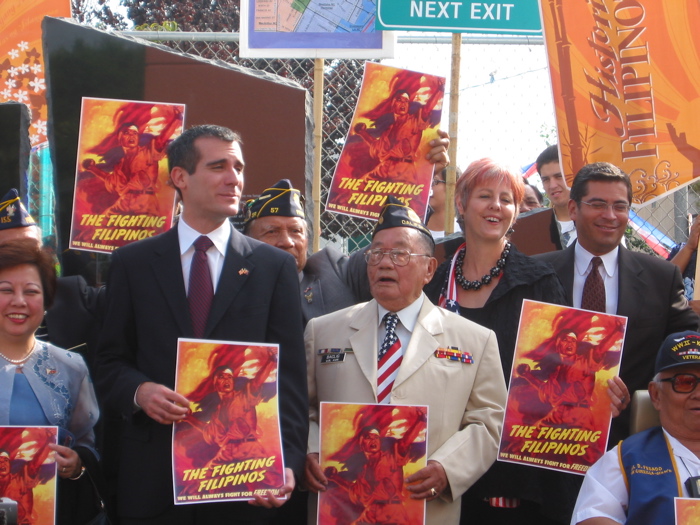
The United States Citizenship and Immigration Services will allow the families of certain Filipino World War II veterans to reunite with veterans beginning June 8, 2016 as a result of a new policy change called Filipino World War II Veterans Parole Policy. In order to qualify, extended family members of veterans must be beneficiaries of approved family-based immigrant visa petitions, and be awaiting the availability of an immigrant visa. Certain extended family members of U.S. Citizen or LPR Filipino World War II Veterans will have the opportunity to receive advance parole on a ‘discretionary’ case-by-cases basis in order to travel to the United States to be with their loved ones, while they await an immigrant visa to become available. In addition, certain relatives of deceased Filipino World War II veterans, will be able to seek parole for themselves. This new policy change has been implemented to honor Filipino veterans who enlisted in the World War II Veterans Parole Program to fight for our country during World War II. The initiative will also allow extended family members to care and support their U.S. Citizen or LPR veteran family members during the advanced stages of their life. According to the policy, approximately 2,000 to 6,000 family members will be able to benefit from this new policy change. Applications for the the Filipino World War II Veterans Parole Program will not be accepted until June 8, 2016.

Presently, the process of immigrating extended family members of U.S. Citizens and Legal Permanent Residents residing abroad is a very complex and antiquated process. This is because there is a limit to the number of immigrant visa applications that can be issued for extended family members. The Visa Bulletin outlines the numerical immigrant visa limitations for family-sponsored and employment-based preference categories established by the Immigration and Nationality Act (INA).

Continue reading

6848823919_724f516a05_z

On May 04, 2016 the Department of Homeland Security published a proposed rule in the Federal Register, announcing that filing fees for many USCIS petitions and applications are expected to increase for U.S. employers and foreign nationals. The proposed regulation stipulates that filing fees may be adjusted for certain immigration and naturalization benefit requests by USCIS. The increase in filing fees was considered after USCIS conducted a comprehensive review of its fees and found that the current fees do not cover the cost of services provided by USCIS. According to USCIS, in an effort to fully recover costs and maintain adequate services, “an adjustment to the fee schedule will be necessary”. According to the regulation, fees for most employment-based petitions and applications would be raised by an average of 21%, though other types of petitions may experience a higher increase in filing fees.

According to DHS, the higher fees will more accurately reflect the current cost of processing immigration applications and petition. A portion of the increased fees would provide additional funding for refugee and citizenship programs as well as system support for interagency immigration status verification databases.  The increase in filing fees will not take effect until the federal government approves the regulation, which is expected to take several months following the close of the 60-day comment period on July 5, 2016.

According to the new fee schedule under consideration, employment-based petitions would be the most impacted by the increase in filing fees. The filing fee for Form I-129, Petition for a Nonimmigrant Worker, would increase by 42% to a fee of $460, from the current rate of $325.  Similarly, the filing fee for Form I-140, Immigrant Petition for Alien Worker, would increase by 21% to a fee of $700, from the current rate of $580. The complete fee schedule under consideration has been provided below for your reference.

The EB-5 Immigrant Investor Visa Program is expected to be the most heavily affected by the new fee schedule. The filing fee for Form I-924, Application for Regional Center Under the Immigrant Investor Pilot Program, would increase by a rate of 186% requiring Regional Centers seeking designation under the program to pay a filing fee of $17,795 instead of the current rate of $6,230. In addition, Regional Centers would be required to pay a $3,035 annual fee to certify their continued eligibility for the designation. Currently, there is no fee in place for annual certification. The filing fee for the I-526 Immigrant Petition by Alien Entrepreneur, an application associated with the EB-5 visa program, would also increase to a rate of $3,675, a 145% increase up from the current rate of $1,500. The filing fee for an investor’s petition to remove conditions on residence would remain unchanged under these new regulations.

Continue reading

61320634_2e4c8e752c_z

Every year USCIS receives and adjudicates approximately 6 million applications from foreign nationals seeking to immigrate to the United States, and U.S. companies seeking to employ foreign workers temporarily.  According to the Department of Homeland Security’s Office of Immigration Statistics, “an estimated 13.1 million lawful permanent residents (LPRs) were living in the United States on January 1, 2013.” Of these permanent residents, more than half–8.8 million–were eligible to apply for naturalization. Additionally, the United States issues approximately 700,000 temporary non-immigrant work visas for a variety of temporary workers including: highly skilled foreign workers employed in specialty occupations in the STEM fields, fashion models, internationally acclaimed athletes and entertainers, aliens of extraordinary ability, religious workers, intra-company transferees, treaty traders/investors, foreign media workers, and agricultural and seasonal workers.

The reason the issuance of temporary worker visas is so low, when compared to the issuance of permanent resident cards, is because most of the temporary foreign worker visa programs are subject to a congressional cap, that limits the amount of non-immigrants that can be admitted per fiscal year. Additionally, certain temporary nonimmigrant worker visa classifications are granted for a specified period of time, although in most cases at least one extension may be granted. The cap applies primarily to the H nonimmigrant worker classifications, and non-minister religious workers. The H visa category accounts for approximately 54% of all visas issued for temporary workers. That is why the H visas are the most talked about visas among politicians when discussing immigration reform. The cap does not apply to treaty traders/investors, aliens of extraordinary ability, intra-company transferees, NAFTA professionals (Canada and Mexico), and foreign media workers. In comparison to developed countries, the United States admits a relatively low number of temporary foreign workers. Foreign workers are typically admitted either to fill labor shortages in the American job market, or because of their exceptional, or highly technical skills, as is the case for the H-1B visa classification.  Only highly skilled foreign nationals, aliens of extraordinary ability, aliens holding advanced degrees, high capital investors, nurses and physical therapists, doctors in undeserved area, and recipients of national interest waivers, have the unique opportunity to obtain permanent residence based on employment.

The mammoth task of meaningful immigration reform will not be easy and it will not happen overnight. The presidential nominees have failed to outline a clear strategy to overhaul our immigration system. None of the presidential candidates have addressed the most contentious areas of immigration policy that must be revised, in order to repair our broken immigration system.

Continue reading

5086531784_ed4e1a8a69_z
For this blog we are answering 5 questions we have recently received through our social media platforms and our website. Please remember that every case is different and every immigration journey is unique. You should not compare your situation to anyone else’s. We hope that our answers will provide you with further guidance while you embark on your immigration journey. If you have any further questions, please call our office for a free legal consultation. We serve international clients and domestic clients in all 50 states. We thank you for your continued trust and interest in our law office.

Change of Status B-2 to F-1

Q: I need advice regarding my change of status. I am currently in the United States on a B-2 tourist visa. I have filed a change of status application to change my status to F-1 student. My B-2 duration of stay will expire today and my change of status application to F-1 student is still pending with USCIS. I informed my school that I will be postponing my classes and was notified that I need to file a new I-20 and provide some missing information. I have time to make adjustments to my application but I would like to know the steps to correct any missing information. I also wanted to know if I need to leave the United States immediately since my F-1 application is still pending. Please assist.