Articles Posted in Filing Fees

bike-7071098_1280
On November 12, 2025, a federal court ruling in the case Moody et al. v. Mayorkas et al. granted relief to new investors in the EB-5 program by halting the increased application fees introduced by the U.S. Citizenship and Immigration Services (USCIS) on April 1, 2024.


What fees were increased?


Here’s a quick breakdown of the fee changes that were challenged:

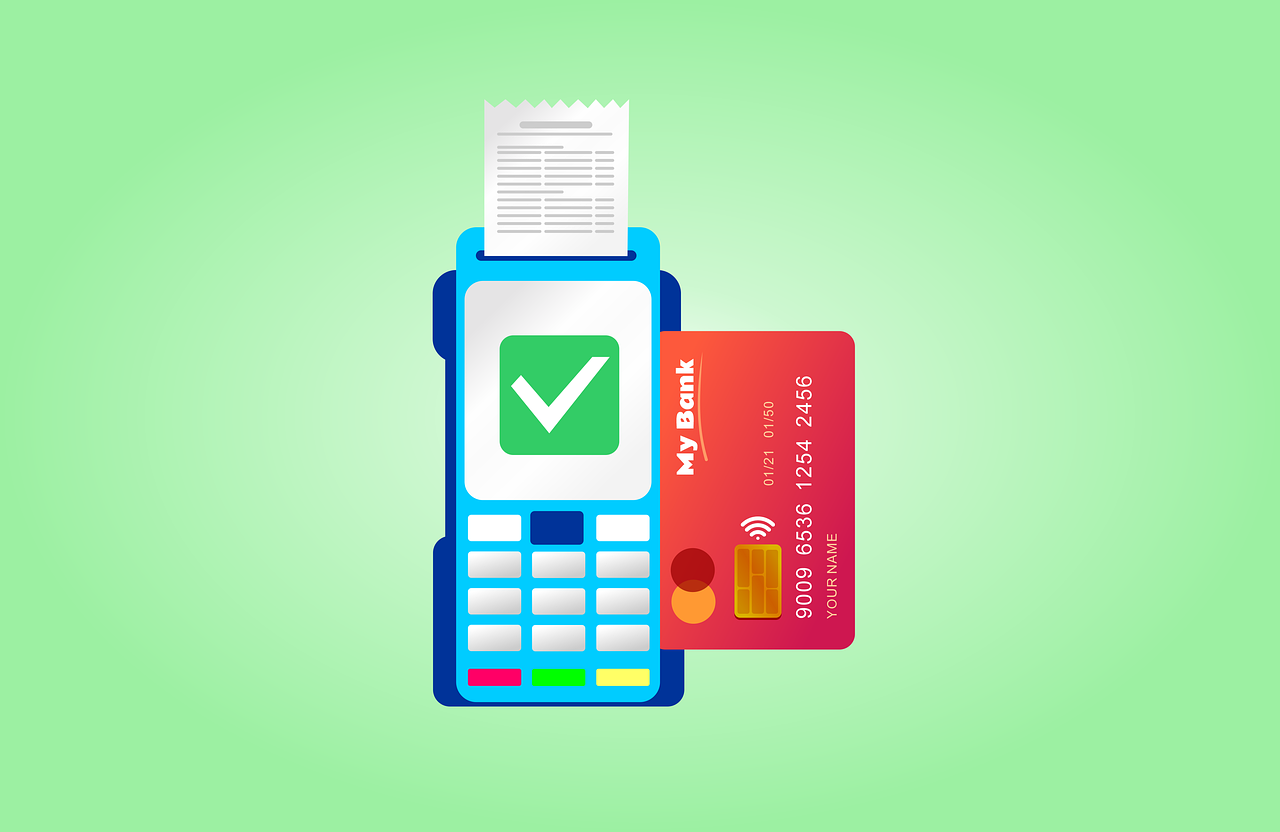
payment-terminal-6400998_1280On August 29, 2025, U.S. Citizenship and Immigration Services (USCIS) announced a major update to how filing fees for USCIS forms are paid.

Starting October 28, 2025, all payments must be made electronically through ACH bank transfer from a U.S. bank account or with credit/debit cards. Paper checks and money orders will no longer be accepted.

Payment Methods


  • USCIS offers ACH (electronic debit) payments, allowing applicants and petitioners to authorize fees directly from a U.S. bank account using Form G‑1650 Authorization for ACH Transactions.
  • Applicants can also make payments with a credit or debit card using Form G‑1450—Authorization for Credit Card Transactions.

Applicants should confirm that the bank account or card used has sufficient funds to avoid rejected filings.

Why the Change


This initiative supports Executive Order 14247, “Modernizing Payments to and from America’s Bank Account,” which seeks to streamline the processing of checks and money orders, reduce staff workload, and minimize risks related to fraud, lost payments, and theft.

USCIS spokesman Matthew J. Tragesser, cited in the agency’s press release, stated, “Over 90% of our payments come from checks and money orders, causing processing delays and increasing the risk of fraud and lost payments.”

For additional guidance on making a payment for USCIS filing fees, please reach out to your caseworker or an attorney at the Law Offices of Jacob Sapochnick.

To learn more about this announcement, please click here.

Continue reading

payment-terminal-6400952_1280On September 19, 2025, the President issued a Proclamation on the Restriction on Entry of Certain Nonimmigrant Workers, requiring any new H-1B petitions to include an additional $100,000 payment as a condition for eligibility.

Following the President’s announcement, USCIS released clarification on the new fee requirement, specifying that the surcharge only applies to new H-1B petitions filed on or after 12:01 a.m. EDT on September 21, 2025. The fee is triggered only when the foreign national beneficiary is outside the United States at the time the petition is filed, and the petition requires visa issuance at a U.S. or port of entry notification.

Importantly, the USCIS guidance also clarifies who is exempt from the surcharge. For example, H-1B petitions filed before the effective date are not subject to the fee. Additionally, individuals already in H-1B status in the U.S.—such as those seeking extensions, amendments, or a change of employer—are not required to pay the surcharge under the current guidance. The responsibility for paying the fee rests with the petitioner (employer), and proof of payment must be included with the petition at the time of filing. USCIS instructs employers to submit the required fee using pay.gov, following the payment instructions.  

arrow-1238788_1280The U.S. Department of Homeland Security (DHS) has introduced a new $1,000 immigration parole fee for most individuals granted parole into the country, effective October 16, 2025.

Announced by DHS and USCIS under the H.R. 1 legislation, the fee applies at the time parole is granted, even if the application was filed before the rule took effect. Only a few narrow exceptions are available such as for those applying for green cards returning after temporary travel abroad and those facing medical emergencies.

Officials say the policy aims to curb “rampant abuse” of the parole system and ensure the government recovers administrative costs. It also comes alongside broader fee increases for other immigration benefits, including work permits for parolees and asylum seekers.

This marks a major shift in how parole is handled, making the process more restrictive and costly.

Applicants will now face higher financial barriers, and exceptions will be tightly limited, signaling a tougher stance on parole admissions going forward.

Starting October 16, 2025, if your parole or re-parole request is approved and requires the immigration parole fee, you will receive a notice with payment instructions and a deadline.

The fee must be paid in full and on time before your request can be approved. Parole will not be granted if the payment is not completed as instructed by USCIS.

Continue reading

a-plastic-card-1647376_1280U.S. Citizenship and Immigration Services (USCIS) has announced that, effective October 28, it will no longer accept checks or money orders for payment of filing fees, ending the previously permitted payment methods.

What Payment Methods Are Now Accepted?


Payment by ACH Bank Transfer

Starting October 28th USCIS will accept payment of filing fees directly from a U.S. bank account by electronic debit.

To use this payment method, individuals must complete and sign Form G-1650, Authorization for ACH Transactions, and submit it along with their application, petition, or request.

Please note that the bank account must be with a U.S. financial institution, as ACH transactions cannot be processed through foreign banks.

Payment by Credit Card

Alternatively, payment for filing fees can be made using a credit card issued by a U.S. bank, by completing Form G-1450, Authorization for Credit Card Transactions.

Please note that USCIS does not accept credit cards issued by foreign banks.

Continue reading

dollar-2931882_1280On Tuesday, the U.S. Citizenship and Immigration Services (USCIS) will issue a Federal Register notice enforcing new fees for certain immigration benefit requests postmarked on or after July 22, 2025. Benefit requests submitted to the agency without the proper fees will be rejected.

These new fees are part of the H.R. 1 Reconciliation Bill. A portion of these new fees will be deposited into a U.S. Treasury account that primarily funds the operations of USCIS.

Please be aware that the Federal Register Notice does not include all the new fees mandated by the new bill. The Department of Homeland Security (DHS) will issue a future announcement regarding the implementation of fees that have not been addressed in Tuesday’s notice.


What are the new fees?


Continue reading

ai-generated-8894578_1280The H-1B FY 2026 cap season is now in full swing!

Yesterday, the U.S. Citizenship and Immigration Services (USCIS) formally announced that the initial registration period for the FY 2026 cap season will open on March 7th at noon Eastern time and run through March 24th at noon eastern time.

Those who participated in the FY 2025 H-1B cap season may recall that there was a decrease in the number of registrations submitted (479,953) when compared to FY 2024 (780,884). Of the 479,953 total registrations submitted in FY 2025, only 470,342 were eligible to participate in the lottery.

Additionally, a total of 135,137 registrations were selected in FY 2025, compared to 188,400 in FY 2024.

H-1B FY 2026 Cap Registration Important Dates


  • February: Petitioners and registrants can begin creating H-1B registrant accounts at noon Eastern.
  • March 7: H-1B registration period opens at noon Eastern.
  • March 24: H-1B registration period closes at noon Eastern.
  • March 31: Date by which USCIS intends to notify selected registrants.
  • April 1: The earliest date that FY 2026 H-1B cap-subject petitions based on the registrations selected during the initial FY 2026 selection period may be filed.

FY 2026 Cap Season Highlights


  • FY 2026 H-1B cap petitioners or their representatives must register using their USCIS online accounts by the deadline of March 24th at noon ET to participate in the computer-generated lottery
  • The H-1B registration fee for each electronic registration is $215 U.S. dollars (per beneficiary)
  • H-1B cap selections will not take place until the initial registration period closes, so there is no requirement to register on the day the initial registration period opens
  • Legal representatives and registrations will need to wait until March 7 to enter beneficiary information and submit the registration with the associated fee

For more information about how to create a USCIS online account, please click here.

Continue reading

boy-2027487_1280In the last few days, the immigration world has been reeling from the results of the Presidential election. People across the nation are preparing for an incoming Trump administration that promises to be extremely tough on immigration.

While the future of many hangs in the balance, the federal courts have started taking action to undo the immigration policies of the Biden administration.

Just two days after Americans cast their ballots and elected Donald Trump to become the next President of the United States, federal Judge J. Campbell Barker of the Eastern District Court of Texas issued a court order in the case Texas et. al. vs. DHS et. al., Case No. 6:24-cv-00306 (E.D. Tex.), ending President Biden’s Keeping Families Together parole program.

In a short one-page ruling, the judge declared that the Biden administration lacked the authority to grant parole in place to undocumented aliens, and therefore set aside and vacated Biden’s Keeping Families Together program.

In doing so, judge Barker delivered the first major blow to Biden’s immigration friendly policies. This decision stops the government from accepting applications for parole in place under the program, which would have allowed undocumented spouses and stepchildren of U.S. Citizens to remain together during the immigration process.

Continue reading

money-3883174_1280Recently, the U.S. Citizenship and Immigration Services (USCIS) published guidance to help petitioners of Form I-140, Immigrant Petition for Alien Workers submit the correct filing fee payment when submitting their applications with USCIS.

Since USCIS increased its filing fees in April and implemented a new asylum program fee of $600 for employment-based petitioners filing I-140, it has been rejecting a very high number of petitions due to incorrect fees and missing information.

USCIS reminds all petitioners of Form I-140 that they must provide a payment for the $600 asylum program fee, unless they qualify for a reduced fee of $300 (small employers with 25 or fewer full-time employees), or are exempt from the asylum program fee (nonprofit organizations).

Petitioners who do not provide the correct asylum program fee and the appropriate I-140 filing fee may have their cases rejected.

Additionally, petitioners must provide correct responses on Part 1 for questions 5 and 6 of Form I-140 notifying USCIS whether they qualify for a reduced fee. This portion of the form cannot be left blank.

Petitioners who fail to provide the correct payment with the I-140 petition, or who do not provide a response for questions 5 and 6 in Part 1, may have their cases rejected.

USCIS has published the following guidance on how to complete questions 5 and 6 and determine the correct payment. 

Petitioner Type In Part 1 of the I-140 Question 5 In Part 1 of the I-140 Question 6 Asylum Program Fee Filing Fee Total Payment
Non-profit or Small Business 
nonprofit business, institution, or government research organization. Yes  Yes or No $0 $715 $715
A small business or organization employing 25 or fewer full-time employees in the United States No Yes $300 $715 $1,015
Individual Self-Petitioner 
A self-petitioner employing 25 or fewer (or zero) full-time employees in the United States No Yes  $300 $715 $1,015
All Other Petitioners 
All petitioners who do not qualify for a reduced Asylum Program Fee and answer “No” to both questions 5 and 6. No No $600 $715 $1,315

I-140 Filing Fee Guidance


USCIS requests that I-140 petitioners provide separate payments for the $715 filing fee and the Asylum Program Fee, using the same type of payment, either check/money order or Form G-1450 to pay with a credit card. Packages filed with more than one type of payment may be rejected.

Petitioners should also review the FAQ section discussing the new USCIS filing fees in subsection “Employment-Based Forms and Fees” for further guidance.

Continue reading

family-1150995_1280Recientemente, el Servicio de Ciudadanía e Inmigración de los Estados Unidos (USCIS) ha proporcionado nuevos detalles sobre el permiso de permanencia temporal para cónyuges e hijastros indocumentados de ciudadanos estadounidenses, también conocido como “Manteniendo a las familias unidas.”

USCIS comenzará a aceptar solicitudes en línea para “permanencia temporal,” el 19 de agosto de 2024, utilizando un nuevo formulario electrónico llamado Formulario I-131F, solicitud de permanencia temporal para ciertos cónyuges e hijastros de ciudadanos estadounidenses. El formulario no estará disponible para enviarse por correo. USCIS le recuerda al público que cualquier solicitud recibida antes del 19 de agosto será rechazada.

Los solicitantes deben tener en cuenta que información adicional sobre el proceso de solicitud, y otra información clave se detallará en una próxima notificación del Registro Federal. 


Requisitos de elegibilidad para la I-131F Permanencia Temporal


 Un cónyuge o hijastro de un ciudadano estadounidense puede solicitar el permiso de permanencia temporal bajo este proceso si:

  • Están presentes en los Estados Unidos sin admisión ni permiso de permanencia temporal.
  • Han estado continuamente presente físicamente en los Estados Unidos:
    • Desde al menos el 17 de junio de 2014, si busca la permanencia temporal como cónyuge de un ciudadano estadounidense; O
    • A partir del 17 de junio de 2024, si busca la permanencia temporal como hijastro de un ciudadano estadounidense

Y tambien tiene:

  • Un matrimonio legalmente válido con un ciudadano estadounidense desde el 17 de junio de 2024, si busca la permanencia temporal como cónyuge de un ciudadano estadounidense; O
  • Un padre que tuvo un matrimonio legalmente válido con un ciudadano estadounidense desde el 17 de junio de 2024, y antes que el hijastro cumpliera 18 del años, si busca permanencia temporal como hijastro de un ciudadano estadounidense.
  • No tiene antecedentes penales que lo descalifiquen; y
  • No representa una amenaza para la seguridad nacional y la seguridad pública.

Continue reading