Articles Posted in Student Visas

starshopping-trophy-4145177_1280Welcome back to Visalawyerblog! In this post, we bring you the latest H-1B lottery news.

On March 31, 2026, USCIS announced that they have selected enough beneficiaries from properly submitted electronic registrations to meet the H-1B regular cap and the U.S. advanced degree exemption for fiscal year 2027.

With this announcement, USCIS brings the 2027 FY H-1B cap season to a close.


What happens next?


At this point, USCIS has completed its selection process and sent out non-selection notifications via the myUSCIS online accounts to those petitioners and their attorneys who were not selected for FY 2027.

The status for registrations properly submitted for the FY 2027 H-1B numerical allocations, but that were not selected, will show:

  • Not Selected: Not eligible to file an H-1B cap petition based on this registration.

If I was selected, when can I submit my paper application by mail or online?


Only petitioners who were selected will be able to file a paper or online application on behalf of the alien worker, beginning April 1, 2026. Petitioner’s must include a copy of the applicable registration selection notice with the FY 2027 H-1B cap-subject petition. For paper applications, petitioners should ensure that they send their application to the correct service center within the filing period indicated on the registration selection notice.

Beginning April 1, USCIS will only accept the 02/27/26 edition of Form I-129. All H-1B cap subject petitions for FY 2027 must use this edition of the form.


Continue reading

arpad-czapp-Cg94g0QFHv4-unsplash-scaledThe U.S. Department of State has announced expanded screening and vetting procedures for visa applicants, effective Monday March 30. As a result, applying for a U.S. visa will now involve closer review of your background, including your online activity.


Who Is Affected


The following nonimmigrant visa applicants may now be subject to enhanced review of their social media and online presence:

  • A-3
  • C-3 (if a domestic worker)
  • G-5
  • H-3
  • H-4 (dependents of H-3)
  • K-1
  • K-2
  • K-3
  • Q
  • R-1
  • R-2
  • S
  • T
  • U

These are in addition to H-1B applicants and their dependents, as well as F, M, and J student and exchange visitor visa applicants already subject to this review.

Continue reading

graphic-4067697_1280As the FY 2027 H-1B cap season approaches, employers will need to take additional steps to prepare for the new wage-based weighted selection system and to assess whether their petitions will be subject to the recently implemented $100,000 H-1B fee.


Registration Opens March 4, 2026


USCIS recently announced that the initial registration period for the FY 2027 H-1B cap will open at 12:00 p.m. Eastern on March 4, 2026, and will close at 12:00 p.m. Eastern on March 19, 2026.

During this window, employers and their representatives must use a USCIS online account to electronically register each prospective H-1B cap beneficiary for the selection process and pay the required $215 registration fee for each registration.


New Changes to the H-1B Lottery


Pursuant to a new regulation, the Department of Homeland Security (DHS) is replacing the traditional random H-1B cap lottery with a weighted selection process that prioritizes beneficiaries offered the highest wages under the Department of Labor’s four-level prevailing wage structure.

DHS plans to implement the system on February 27, 2026, in advance of the FY 2027 H-1B cap season beginning in March 2026.

As a result, employers will be required to indicate, for each prospective beneficiary registered in the H-1B cap system, the applicable Department of Labor (DOL) prevailing wage level corresponding to the offered salary.

Continue reading

hiring-1977914_1280The U.S. Department of Homeland Security (DHS) has issued a final rule that replaces the longstanding random H‑1B cap lottery with a wage‑level‑based weighted selection system, set to take effect in time for the fiscal year 2027 H‑1B cap season beginning in March 2026.

Under the new rule, beneficiaries registered for the H‑1B cap will be entered into the selection pool with entries weighted according to the wage offered by their prospective employer under the Department of Labor’s four‑level prevailing wage system.

A beneficiary offered a Level4 wage receives four entries in the selection pool, Level3 three entries, Level2 two entries, and Level1 one entry, giving higher‑wage positions statistically greater odds of selection than lower‑wage positions.

Employers must indicate the appropriate wage level, occupational code, and work location in each registration, and U.S. Citizenship and Immigration Services (USCIS) may deny or revoke petitions if it determines that an incorrect wage level was indicated to unfairly increase selection odds.

The rule is scheduled to take effect 60 days after its December29 publication in the Federal Register, though it may face court challenges before implementation.

Requirements for Offered Wages


H‑1B cap registrations will reflect the OEWS wage level corresponding to the wage offered to the prospective employee. When submitting a registration, the sponsoring employer must select the highest OEWS wage level that the offered wage meets or exceeds for the relevant occupation in the intended work location.

If the employee will work in multiple locations, the employer must use the lowest applicable OEWS wage level. Additionally, if multiple employers register the same foreign national, that individual will be entered into the H‑1B lottery using the registration with the lowest prevailing wage level.

Continue reading

mobile-1087845_1280

DHS Ends Family Reunification Parole Programs

On December 12, 2025, the Department of Homeland Security (DHS) announced that it is terminating all categorical Family Reunification Parole (FRP) programs for citizens of Colombia, Cuba, Ecuador, El Salvador, Guatemala, Haiti, and Honduras, including their immediate family members.

These programs allowed certain relatives of U.S. citizens and permanent residents to enter the United States on parole while awaiting completion of the immigrant visa process.

DHS described the move as an effort to end what they described as the “abuse of humanitarian parole,” arguing that these programs allowed individuals to bypass traditional immigration procedures without sufficient vetting. Under the new policy, parole will be granted on a case-by-case basis.

The termination takes effect December 15, 2025, and parole for individuals already admitted under FRP will generally expire on January 14, 2026, unless they have a pending Form I-485 Application to Adjust Status that is postmarked or electronically filed on or before December 15 and it is still pending on January 14, 2026.

If an individual has a pending Form I-485, their parole will remain valid until either their period of parole expires or USCIS makes a final decision on their pending Form I-485, whichever is sooner. If the Form I-485 is denied, the period of parole will be terminated, and they will be required to depart the United States or seek relief through alternative legal pathways.

Continue reading

payment-terminal-6400952_1280On September 19, 2025, the President issued a Proclamation on the Restriction on Entry of Certain Nonimmigrant Workers, requiring any new H-1B petitions to include an additional $100,000 payment as a condition for eligibility.

Following the President’s announcement, USCIS released clarification on the new fee requirement, specifying that the surcharge only applies to new H-1B petitions filed on or after 12:01 a.m. EDT on September 21, 2025. The fee is triggered only when the foreign national beneficiary is outside the United States at the time the petition is filed, and the petition requires visa issuance at a U.S. or port of entry notification.

Importantly, the USCIS guidance also clarifies who is exempt from the surcharge. For example, H-1B petitions filed before the effective date are not subject to the fee. Additionally, individuals already in H-1B status in the U.S.—such as those seeking extensions, amendments, or a change of employer—are not required to pay the surcharge under the current guidance. The responsibility for paying the fee rests with the petitioner (employer), and proof of payment must be included with the petition at the time of filing. USCIS instructs employers to submit the required fee using pay.gov, following the payment instructions.  

interview-7323656_1280Starting September 2, 2025, the U.S. Department of State will implement major changes that limit eligibility for nonimmigrant visa interview waivers.

Under the State Department’s new revised policy, most applicants—including children under 14 and adults over 79—will be required to attend an in-person interview with a U.S. consular officer, with limited exceptions.

This new policy replaces the previous Interview Waiver Update issued on February 18, 2025, and will significantly impact individuals seeking to travel to the United States on a nonimmigrant visa including workers seeking to renew their visas.


Who Can Still Qualify for an Interview Waiver After September 2?


Although the new rules tighten overall interview requirements, certain applicants may still be eligible for an interview waiver, including:

  1. Certain Diplomatic and Official Visa Holders

Applicants under the following visa classes are exempt from the interview requirement:

  • A-1, A-2 (representatives of foreign governments)
  • C-3 (excluding attendants or personal staff)
  • G-1 through G-4 (representatives of international organizations)
  • NATO-1 through NATO-6
  • TECRO E-1 (Taipei Economic and Cultural Representative Office officials)
  1. Diplomatic or Official-Type Visa Applicants

Those applying for visas that support diplomatic or governmental missions may still be eligible for interview waivers.

  1. Applicants Renewing Certain B Visas or Border Crossing Cards

Applicants may qualify for an interview waiver if they meet all the following conditions:

Continue reading

media-998990_1280On June 18, 2025, the State Department announced that U.S. Embassies and Consulates around the world will resume scheduling appointments for F, M, and J nonimmigrant visas, introducing new guidance that includes stricter vetting procedures and an expanded review of applicants’ social media activity.

Moving forward, all F, M, and J nonimmigrants applying for visas at U.S. Consulates overseas will be instructed to change their social media privacy settings to “public” so that they can be reviewed by Consular officers. Those who fail to comply may be presumed to be evading the vetting process and risk having their application denied.

Under the State Department’s new policy that views a U.S. visa as a privilege rather than a right, these enhanced screening and vetting measures aim to identify individuals who may present a threat to our national security.

As part of the process, visa officers will closely examine applications to confirm both the applicant’s eligibility for the requested visa and their intent to carry out activities aligned with the purpose of their entry into the United States. Internal guidance sent to Consular officers also states that officers should look for, “any indications of hostility toward the citizens, culture, government, institutions, or founding principles of the United States.”

Continue reading

passport-8621284_1280

Harvard Travel Ban Blocked by Federal Judge

Earlier this month President Trump had signed an Executive Order suspending the entry of all nonimmigrants and exchange visitors attending Harvard University, for a period of 6 months starting June 4th (the effective date of the proclamation).

Those affected by the executive order were F, J, and M visa holders outside of the United States as of the date of the proclamation. The suspension did not apply to nonimmigrants entering the United States to attend other universities.

Shortly after the executive order was issued, a federal judge granted a preliminary injunction, temporarily halting its enforcement until the court can rule on the merits of the case.

Following the court’s actions, the State Department ordered embassies and consulates around the world to resume visa processing for Harvard University students and exchange visitors.

As a result, Harvard students can breathe easier. While the preliminary injunction remains in effect, consulates are barred from denying visas to Harvard students and exchange visitors, and visa holders attending Harvard cannot be refused entry to the United States.

For more information, please click here.

Continue reading

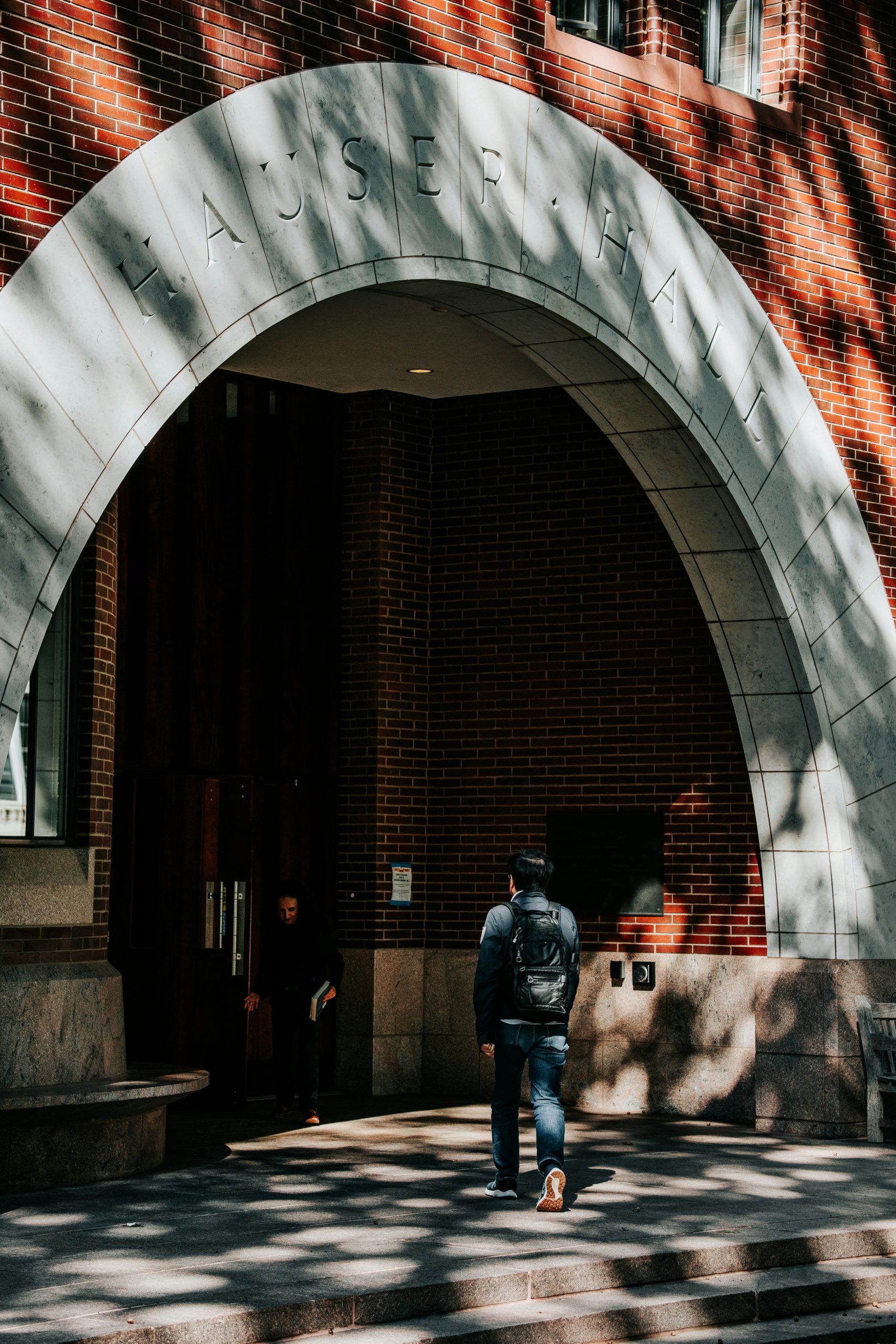
beverly-kimberly-tfiGOGEmJVI-unsplash-scaledOn June 4, 2025, President Trump continued his ongoing assault on Harvard University with a new Executive Order entitled, “Enhancing National Security by Addressing Risks at Harvard University.”

Effective June 4th, the order suspends the entry of all nonimmigrants and exchange visitors bound for Harvard University for a period of 6 months, citing national security concerns over Harvard’s failure to police foreign students and ensure that foreign nationals admitted on student and exchange visitor visas remain in compliance with Federal law.

The executive order also accuses Harvard of having extensive entanglements with foreign adversaries including China.

Who is affected?


All nonimmigrants who enter or attempt to enter the United States to begin attending Harvard University through the Student and Exchange Visitor Program (SEVP) after the effective date of the proclamation (June 4, 2025).

The executive order further empowers the Secretary of State Marco Rubio to consider in his discretion whether foreign nationals who currently attend Harvard University and are in the United States pursuant to F, M, or J visas, should have their visas revoked pursuant to the proclamation.

Who is not affected?


The suspension does not impact Harvard students who are already inside the United States with a valid student visa as of the effective date of the proclamation.

The suspension also does not apply to any alien who enters the United States to attend other universities through the Student and Exchange Visitor Program (SEVP).

It also does not apply to any alien whose entry would be in the national interest, as determined by the Secretary of State, the Secretary of Homeland Security, or their designated representatives.

Impact on Harvard Students Currently in the United States


The executive order does not:

  • Restrict change or extension of status applications filed with U.S. Citizenship and Immigration Services (USCIS)
  • Revoke existing visas, I-94, or STEM OPT work authorization status for students currently in the United States

Continue reading