Articles Posted in Visa Backlogs

294797273_6efed53754_o

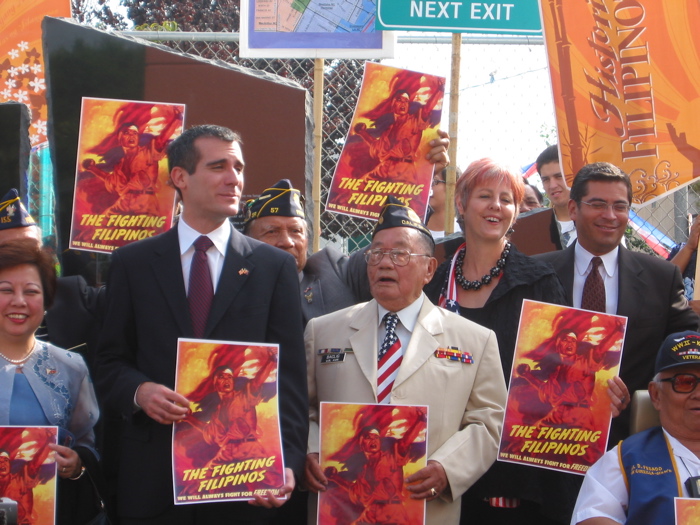
The United States Citizenship and Immigration Services will allow the families of certain Filipino World War II veterans to reunite with veterans beginning June 8, 2016 as a result of a new policy change called Filipino World War II Veterans Parole Policy. In order to qualify, extended family members of veterans must be beneficiaries of approved family-based immigrant visa petitions, and be awaiting the availability of an immigrant visa. Certain extended family members of U.S. Citizen or LPR Filipino World War II Veterans will have the opportunity to receive advance parole on a ‘discretionary’ case-by-cases basis in order to travel to the United States to be with their loved ones, while they await an immigrant visa to become available. In addition, certain relatives of deceased Filipino World War II veterans, will be able to seek parole for themselves. This new policy change has been implemented to honor Filipino veterans who enlisted in the World War II Veterans Parole Program to fight for our country during World War II. The initiative will also allow extended family members to care and support their U.S. Citizen or LPR veteran family members during the advanced stages of their life. According to the policy, approximately 2,000 to 6,000 family members will be able to benefit from this new policy change. Applications for the the Filipino World War II Veterans Parole Program will not be accepted until June 8, 2016.

Presently, the process of immigrating extended family members of U.S. Citizens and Legal Permanent Residents residing abroad is a very complex and antiquated process. This is because there is a limit to the number of immigrant visa applications that can be issued for extended family members. The Visa Bulletin outlines the numerical immigrant visa limitations for family-sponsored and employment-based preference categories established by the Immigration and Nationality Act (INA).

Continue reading

8516269783_79248f4ba2_c

Presently, the Employment and Training Administration’s (ETA) Office of Foreign Labor Certification (OFLC) is experiencing significant delays in processing employer H-2B certification applications.  These delays are owed to various factors. The most important includes a mandatory 17-day certification pause that took place at the Chicago National Processing Center, for the purpose of implementing revisions of the H-2B prevailing wage and other standards required by law. Additionally, the OFLC announced that the amount of H-2B certification applications received has doubled in comparison to the previous year. Lastly, the electronic filing system iCERT, experienced significant technical problems, slowing the certification process down significantly for employers of H-2B workers. Unfortunately, these delays have diminished an employer’s ability to hire foreign workers during a time of need, and have had an adverse affect on small businesses who depend on these temporary and seasonal workers to perform work that cannot be readily filled by American workers.

To alleviate the certification backlogs, the Chicago National Processing Center has announced that employers may file an emergency request for expeditious handling of their applications under 20 CFR 655.17.

Expeditious Requests for Emergency Procedures under 20 CFR 655.17:

  • Based on the factors causing the backlogs, the OFLC has determined that employers are entitled to request expeditious emergency procedures for their currently pending applications for certification, under 20 CFR 655.17, on the basis of good and substantial cause. Emergency requests are warranted given that the backlogs caused by the delays in the application process are considered outside of the employers’ control, that employers have suffered unforeseen changes in market conditions because of the delays, amid a climate of uncertainty.

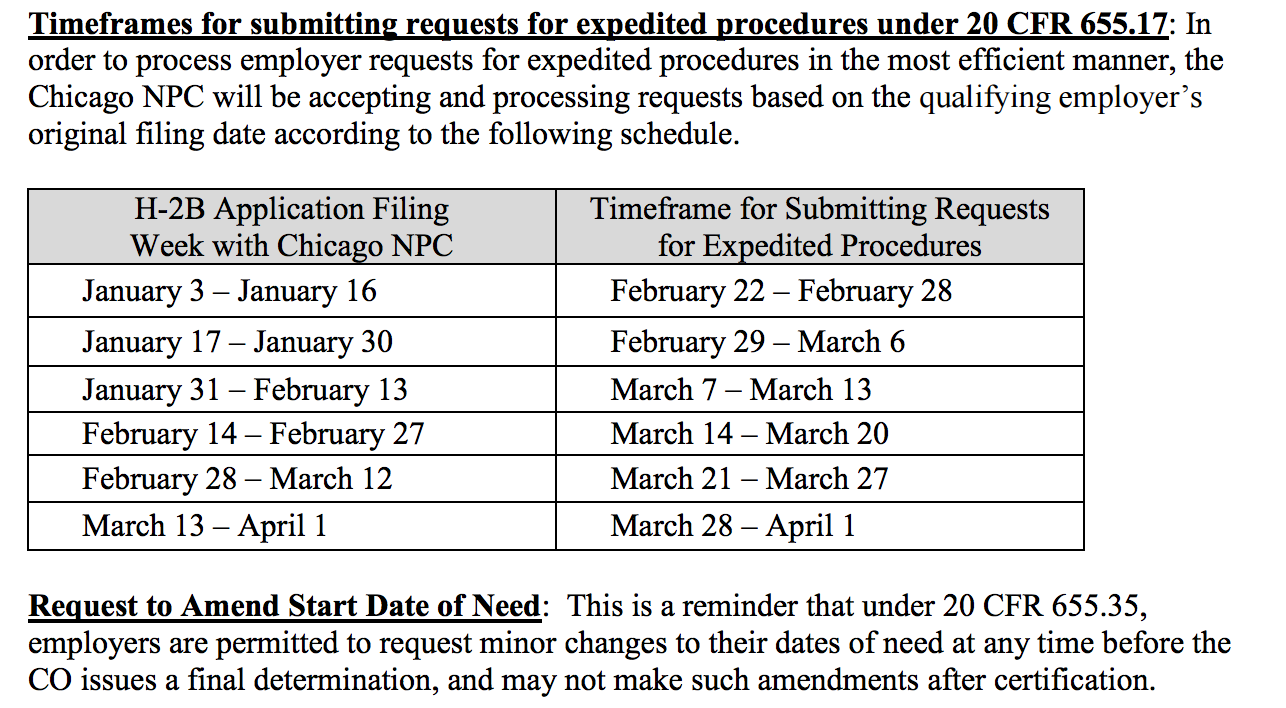
Employers with pending H-2B applications for certification must submit their expedite requests for emergency procedure, by email to the Chicago NPC at ER.H2B.Chicago@dol.gov beginning Monday February 22, 2016 (12:01 AM) through Friday April 1, 2016 (at 12:00 midnight). Requests may also be made by fax (312) 886-1688 or by US mail to:

ATTN: H-2B Request for Emergency Handling

U.S. Department of Labor ETA OFLC

Chicago NPC

11 West Quincy Court

Chicago, IL 60604-2105

The NPC may extend this emergency request period beyond April 1, however at this time no such extension has been announced.  Filing a new H-2B application is not necessary for an expedite request.

Employers filing for emergency treatment under 20 CFR 655.17 must request that the pending application for certification and proposed job order be “incorporated by reference” into the request made under 20 CFR 655.17, and state the withdrawal of the prior application. The procedure for submitting an expedite requested will be listed below.

Screen Shot 2016-02-22 at 2.57.07 PM

Continue reading

9033805851_a19992134e_z

On Thursday, December 31, 2015 the Department of Homeland Security published a new proposed rule affecting highly skilled immigrant and non-immigrant workers alike. The proposed rule, introduced in last week’s federal register, aims to improve the ability of American employers to hire and retain highly skilled workers waiting to receive their employment-based lawful permanent residence in the visa bulletin backlogs. Additionally, the proposed rule aims to enhance opportunities for such workers allowing them to be more easily promoted, to accept lateral positions with their current employers, change employers, and pursue other employment. While the proposed rule is not groundbreaking, it does address important challenges employers and their highly skilled workers have faced as the law stands today and makes recommendations for such relief. The proposed rule will be open for comment until February 29, 2016.

You may remember that on November 20, 2014 the President highlighted, as part of his executive actions on immigration, that the employment-based immigration system needed to be amended to modernize, improve, and clarify immigrant and nonimmigrant visa programs in order to create more jobs, foster innovation at home, retain a highly skilled workforce that would allow the United States to compete with other countries, and to stimulate the American economy overall.  In order to modernize the employment based immigration system, USCIS would be required to work with the Department of State to modernize and simplify the immigrant visa allocation process. Part of this process would require the Department of State to make reasoned projections of employment-based immigrant visa availability on the visa bulletin, that could be relied upon by employers and their highly skilled workers.

Presently, immigrant workers from India and China are experiencing extraordinary delays in the employment-based queue for permanent residence, while other highly skilled workers are forced to wait over a five-year period to receive company sponsorship and lawful permanent residence. Furthermore, such workers are forced to remain on temporary employment-sponsored visas in the United States while waiting for an immigrant visa to become available to them. This puts the immigrant worker in a predicament giving the employer the upper hand, while restricting the employee from seeking advancement and discouraging new employment, since this would require the employer to file a new petition and incur the expensive fees required for filing. Highly skilled works facing extortionate delays in the visa backlogs have experienced hindered employer/employee career advancement and job mobility. The new rules will provide limited relief in this area.

Continue reading

3285309862_e84a0f6bae_z

The December visa bulletin was recently released by the DOS on November 9, 2015. For the month of December CIS has announced that family based applicants must use the ‘date of filing’ chart to determine when their adjustment of status applications may be filed. This means that for family based preference categories, there are presently immigrant visas available and demand has not yet been met for the fiscal year. Employment based applicants must refer to the ‘final action date’ chart as a basis for applying for adjustment of status. This means that presently there is more demand than immigrant visas available for employment based categories. For the month of December, filing dates have remained unchanged. The impact of the dual chart system will not be felt until CIS requests visa numbers from the DOS in April 2016 for adjustment of status filings based on the October Visa Bulletin. In this post we will discuss new announcements that have appeared on the December visa bulletin and projections for EB-2 India, EB-2 and EB-3 China, F-2A, and F-2B. These projections are based on guidance provided by the Chief of the Visa Control and Reporting Division, Charles Oppenheim. While they do not guarantee actual immigrant visa availability, these projections are helpful reference points.

Replacement of Foreign Affairs Manual (FAM) and New Visa Waiting List

The December visa bulletin has announced that the Foreign Affairs Manual (FAM) used internally by the Department of States will be replaced with 9 FAM-e beginning November 18, 2015. Public release of the new FAM has not yet been announced.

Additionally, a ‘Visa Waiting List’ will be released beginning with the January Visa Bulletin which will provide applicants information on the National Visa Center waiting list starting November 1, 2015.

Continue reading

16205135740_83caef24c9_z

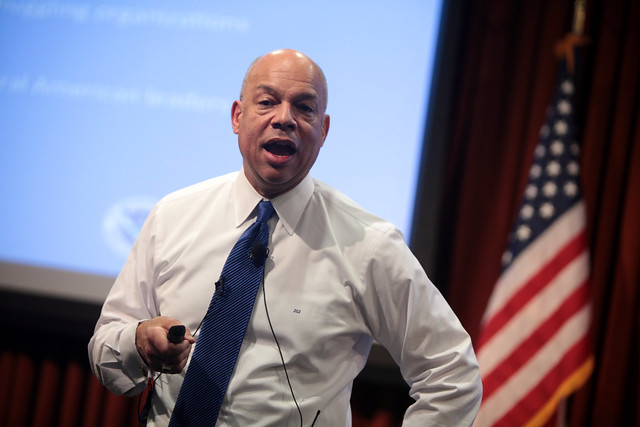
Secretary of Homeland Security Jeh Johnson

On October 28, 2015 sixteen Democrats from the House of Representatives including —Zoe Lofgren, Michael M. Honda, Judy Chu, Katherine M. Clark, Elijah E. Cummings, Anna G. Eshoo, Tulsi Gabbard, Luis V. Gutierrez, James A. Himes, Ruben Hinojosa, Eddie B. Johnson, James P. McGovern, Frank Pallone Jr., Jared Polis, David E. Price, and Alma S. Adams — issued a letter addressed to the Secretary of Homeland Security, Jeh Johnson concerning drastic revisions made to the Visa Bulletin on September 25, 2015.

In the letter, House Democrats argue that the revisions to the Visa Bulletin have compromised the integrity of the immigrant visa process, and resulted in a lose of faith in our immigration system. More over they argue that these revisions have adversely impacted the lives of thousands of immigrants, the American businesses who employ highly skilled workers, and our economy which benefits from retaining highly skilled workers.

As previously reported, the Department of State had published a dual chart system on September 9, 2015 with the addition of a new ‘date of filing chart’ which first appeared on the October Visa Bulletin. This new ‘date of filing’ chart was implemented in an effort to modernize and streamline the immigration process, as part of President Obama’s executive actions on immigration reform.

Continue reading

ellis

Photograph taken at Ellis Island

Further changes have been made to the November Visa Bulletin published earlier this month by the Department of State. The dual chart system remains in place including the ‘final action date’ chart and ‘date of filing’ chart. So what has changed? USCIS has become more involved in the application process for family-sponsored and employment-based immigrant applications since the introduction of the date of filing chart. A disclaimer has now been added to the November Visa Bulletin above the date of filing chart which instructs applicants to visit the USCIS website for more instructions on how and when the chart is to be used. USCIS has created this new web page to notify applicants whether they can proceed with applications for permanent residence based on the date of filing chart published monthly on the Visa Bulletin. The website will be updated within about a week of the publication of the Visa Bulletin every month. The webpage is intended to provide applicants information in regards to visa availability for family-sponsored and employment-based immigrant visas for each fiscal year, letting applicants know whether the filing date chart is enforceable. So far, USCIS has indicated that the filing date chart for October and November 2015 is enforceable.

Continue reading

5535613157_499f6d4863_z

As some of you may have heard, on September 25th the US Department of State made some additional changes to the October 2015 Visa Bulletin. These changes include new and earlier date of filing cut-offs than those initially released on September 9th. The date of filing chart released on September 25th will replace the prior one released on September 9th. To view the complete changes please click here. These new changes have raised several concerns for our readers.

What caused the visa numbers to be re-issued after their release on September 9, 2015?

Though we cannot ascertain the exact reasons why these changes have come about, we can make the fair assumption that these changes were likely due to workload concerns and a lack of resources necessary to accommodate the large amount of adjustment of status applications expected to be filed beginning October 1st. The anticipated workload may have given the Department of State no choice but to retrogress the visa numbers in heavily used categories.

Is the Department of State reneging on their promise to modernize and streamline the immigration process as part of Obama’s executive actions on immigration?

While it is disappointing that the visa numbers on the ‘date of filing’ chart have retrogressed, a departure from the promised executive actions does not seem to be the case. The visa numbers have been adjusted in an effort to streamline the immigration process in a way that is viable, practical, and effective. Dates of filing have been adjusted for family-sponsored and employment-based preferences to create a practical timeline that provide CIS the sufficient time needed to process the large volume of anticipated adjustment of status applications.

Continue reading

Infographic-page-001 (1)

In order to apply for permanent residence, a relative or American employer must file an immigrant petition on your behalf. Family-sponsored and employment-based petitions are subject to visa limitations unlike petitions filed by immediate relatives who are US citizens. Immediate relative petitions remain unlimited and are always available. This means that if your petitioner is your immediate relative and a US Citizen you can file your I-485 at the same time as your immigrant petition.

In order to understand whether a visa is available to you and whether you can proceed with filing your application for permanent residence, you will need to keep a close eye on the Department of State’s Visa Bulletin. 

Family Sponsored Preference Categories are as follows:

FAMILY-SPONSORED PREFERENCES

First: (F1) Unmarried Sons and Daughters of U.S. Citizens:  23,400 plus any numbers not required for fourth preference.

Second: Spouses and Children, and Unmarried Sons and Daughters of Permanent Residents:  114,200, plus the number (if any) by which the worldwide family preference level exceeds 226,000, plus any unused first preference numbers:

A. (F2A) Spouses and Children of Permanent Residents:  77% of the overall second preference limitation, of which 75% are exempt from the per-country limit;

Continue reading

16229407771_5725895b69_z
The Department of State has issued an alert announcing that as of June 26, 2015 all visa issuing US embassies and consulates are now able to continue visa processing. Staff at US consulates and embassies were able to work over the weekend and resolve backlogs which are expected to be eliminated this week.

As you may recall between the time period of June 9, 2015 to June 19, 2014, 335,000 visas were unable to be printed due to clearance and technological issues. Of those 335,000 visas, approximately 300,000 have now been printed.

Consulates and embassies worldwide are now scheduling visa interviews and issuing non-immigrant and immigrant visas.

11400978_10153396425248766_3904864215081914789_n

Presently, attorneys Jacob Sapochnick, Esq., Ekaterina Powell, Esq., and Yingfei Zhou, Esq. from our office are in attendance at the 2015 American Immigration Lawyers Association (AILA) Conference on Immigration Law taking place in Washington, DC. Together, they have had the privilege of being present for an open forum where officials from the Department of State and the National Visa Center provided valuable information in regards to modernization of PERM, improvements in visa processing at the National Visa Center, technical issues experienced at U.S. Consulates abroad, H-1B fee announcements, and more!

Technical issues experienced at U.S. Consulates worldwide

1. In regards to technical issues causing delays in visa issuance at U.S. Consulates worldwide, visa issuance is currently frozen. No visas are currently being issued at any U.S. Consulates worldwide. U.S. Consulates are rescheduling appointments for visas that were affected by the technical issues. The DOS is working to repair the hardware, however it will not be until next week when all issues will be resolved. Due to this, there will be a backlog for visa issuance and it will take longer to schedule a consular appointment for a visa.

2. If a visa applicant was affected by the technical issues at a U.S. Consulate abroad and they need to retrieve their passport urgently, they will be able to retrieve their passport, however, in doing so, applicants will forfeit the visa fees they have paid, and will be issued a 221(g) visa denial letter. If applicants are still interested in receiving a visa, they must re-apply and re-pay any visa fees. Applicants who are re-applying must note on future applications that their visa was denied due to a technical glitch. Applicants from visa waiver countries who are concerned that the visa denial will automatically result in an ESTA denial can rest assured. ESTA submissions will not be denied based on the technical glitch. DOS has responded that the technical issues will not affect future visa applications. Continue reading