Articles Posted in Court Hearings

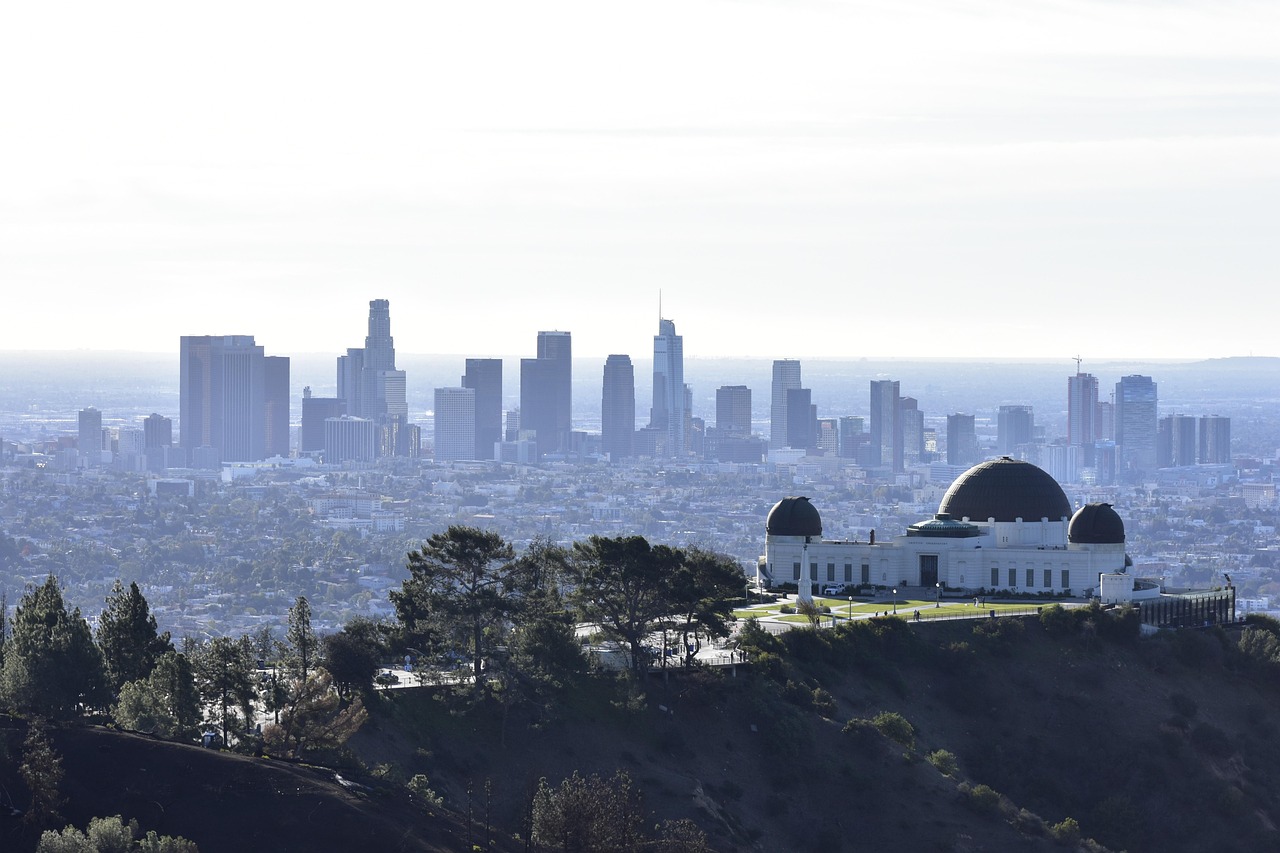
cityscape-5351686_1280A federal judge has issued a court order requiring that immigrants detained at a U.S. Immigration and Customs Enforcement (ICE) processing center in downtown Los Angeles be granted access to their attorneys in a timely manner.

The ruling comes after lawyers reported that detainees were frequently denied phone access, had in-person meetings canceled, and faced pressure to sign legal documents without private counsel.

The B‑18 facility, originally designed as a short-term holding space, lacks basic amenities such as beds, showers, and adequate medical services. Advocates say ICE has effectively turned it into a long-term detention site, restricting detainees’ ability to communicate with the outside world.

bike-7071098_1280
On November 12, 2025, a federal court ruling in the case Moody et al. v. Mayorkas et al. granted relief to new investors in the EB-5 program by halting the increased application fees introduced by the U.S. Citizenship and Immigration Services (USCIS) on April 1, 2024.


What fees were increased?


Here’s a quick breakdown of the fee changes that were challenged:

judge-3008038_1280This week, the Justice Department announced that it has hired 36 new immigration judges — 11 permanent and 25 temporary — for the Executive Office for Immigration Review (EOIR), a key agency that handles immigration court proceedings in deportation cases.

What’s happening?


The hiring comes after several months of layoffs among immigration judges occurring earlier this year. In the past 10 months, EOIR fired more than 125 judges, causing delays in immigration court proceedings across the country.

The courts in Massachusetts and Illinois were among the most affected by these departures. The good news is these newly hired judges will begin serving across 16 states nationwide.

Who are the new judges?


  • The permanent hires largely come from federal‑government backgrounds: some from EOIR itself, some from the Department of Homeland Security (DHS), and others who previously trained agents or worked as asylum officers.
  • The temporary hires include military attorneys drawn from the Marines, Navy, Air Force, and Army.
  • These changes accompany a modification in DOJ policy that lowers the qualification requirements for temporary judges—prior immigration law experience is no longer mandatory.

Continue reading

us-1978465_1280Last week, the U.S. Supreme Court handed down a troubling decision that could strip legal status from hundreds of thousands of Venezuelans currently living in the United States under Temporary Protected Status (TPS).

On Friday, the Court granted the Trump administration’s request to halt a lower court ruling that found the administration’s cancellation of TPS protections for Venezuelans unlawful. The unsigned order from the Court effectively allows the government to proceed, for now, with its plans to revoke temporary protections that had shielded Venezuelan nationals from deportation and granted them employment authorization.

TPS was created in 1990 as a humanitarian safeguard for individuals whose home countries are experiencing extraordinary crises such as armed conflict, environmental disasters, or other temporary but severe disruptions. Venezuela was designated for TPS in 2021 under President Biden, in response to the country’s severe economic collapse, widespread human rights abuses, and political instability.

Since then, approximately 300,000 Venezuelans have relied on that protection to live and work legally in the U.S., building lives, paying taxes, and raising families.

Trump Administration Moves to Strip Venezuela’s TPS Designation


But the political tides have shifted. When the Trump administration returned to office, it appointed Kristi Noem as Secretary of Homeland Security. Earlier this year, Noem moved to revoke Venezuela’s TPS designation, arguing that conditions in the country had improved and that continuing the program was no longer in the national interest. That decision sparked immediate legal challenges. A coalition of Venezuelan TPS recipients and advocacy groups sued, claiming the administration’s actions were arbitrary, rushed, and in violation of federal law.

Continue reading

judge-8779957_1280In a significant victory for civil rights and immigrant advocacy groups, a federal appeals court has upheld a lower court’s decision to temporarily block federal immigration agents from conducting immigration-related arrests in Los Angeles without reasonable suspicion.

The Ninth Circuit Court of Appeals issued the ruling late Friday, marking a major legal development in the ongoing battle over immigration enforcement and constitutional protections.

At the heart of the case is the question of whether federal agents can detain individuals based solely on generalized characteristics such as race, ethnicity, or language. The appeals court was clear: they cannot.

A Firm Rejection of Racial Profiling

The three-judge panel ruled that U.S. Immigration and Customs Enforcement (ICE) and other federal agents cannot use factors like “apparent race, ethnicity, speaking Spanish or speaking English with an accent, particular location, and type of work” as the basis for reasonable suspicion to stop an individual. Even taken together, the court stated, these characteristics form only a broad profile and fail to meet the legal standard required for a lawful stop.

“We agree with the district court that…these factors do not demonstrate reasonable suspicion for any particular stop,” the panel wrote, emphasizing the constitutional protections that apply to all individuals, regardless of immigration status.

Continue reading

motherhood-7114294_1280Last month, the Supreme Court ruled that lower courts cannot issue nationwide injunctions blocking the Trump administration’s executive order limiting birthright citizenship, except in class action lawsuits.

Prior to the Supreme Court’s ruling, at least three different lawsuits had secured nationwide injunctions protecting all individuals potentially affected by Trump’s executive order restricting birthright citizenship. However, the Court’s ruling scaled back those protections, potentially leaving some children unprotected.

To safeguard all families across the country and address any gaps left by prior legal actions, the American Civil Liberties Union (ACLU) filed a class-action lawsuit, Barbara v. Donald J. Trump to stop the government’s enforcement of the order against all current or future babies born or after February 20, 2025, where:

(1) that child’s mother was unlawfully present in the United States and the child’s father was not a United States citizen or lawful permanent resident at the time of said child’s birth, or

(2) that child’s mother’s presence in the United States was lawful but temporary, and the child’s father was not a United States citizen or lawful permanent resident at the time of said child’s birth.

The U.S. District Judge Joseph Laplante agreed with the plaintiffs and issued a class-wide preliminary injunction blocking Trump’s executive order from being enforced against any affected baby born in the United States after February 20th.

Continue reading

Gavin_Newsom_by_Gage_Skidmore

Attribution: Gage Skidmore

On Friday July 11, 2025, a federal judge ruled that the government’s ongoing immigration raids in Southern California and its denial of legal counsel to detained immigrants likely violates the Constitution.

In so ruling, the court issued two temporary restraining orders (TROs) barring the Department of Homeland Security (DHS) and other federal agencies from continuing these actions in the counties of Los Angeles, Orange, Ventura, Riverside, San Bernardino, Santa Barbara and San Luis Obispo. (Pedro Vasquez Perdomo v. Kristi Noem (2:25-cv-05605)

The first TRO prohibits immigration agents from stopping individuals without reasonable suspicion and bars law enforcement from relying solely on the following factors—alone or in combination—to form reasonable suspicion for a stop including (1) apparent race or ethnicity (2) speaking Spanish or English with an accent (3) presence in a particular location like a bus stop, car wash, day laborer pick up site, or agricultural site, or (4) the type of work the person does.

The second TRO orders DHS to provide access to counsel on weekdays, weekends, and holidays for those who are detained in B-18, the basement of a federal building in downtown Los Angeles located at 300 North Los Angeles Street.

It further requires immigration officials to develop guidance on how agents and officers should determine whether “reasonable suspicion” exists when conducting stops and to implement training for officers involved in immigration operations.

In addition to immigration officers, the TROs apply to the FBI and Justice Department, who are named in the lawsuit and are involved in immigration enforcement actions.

Continue reading

prison-370112_1280A new lawsuit filed by a man detained in San Diego, California, is challenging the controversial practice of courthouse arrests by U.S. Immigration and Customs Enforcement (ICE) taking place in recent months. The case could offer critical insight into the government’s approach in making these arrests. (A.M. v. Larose (3:25-cv-01412))

The man identified in court filings as A.M. is seeking asylum in the United States after being subjected to torture in his home country from his human rights advocacy. On June 3, he arrived for what he believed would be a routine immigration court hearing but was shocked to find that the judge had dismissed his case and ICE agents were waiting outside, ready to arrest him and take him to Otay Mesa’s Detention Facility to eventually be deported.

Unfortunately, A.M.’s case is not unique. In recent months, the Trump administration has enforced a controversial policy in immigration courts to expedite deportations by instructing judges to swiftly dismiss cases, subjecting individuals to expedited removal without giving them a meaningful opportunity to contest the government’s claims or consult attorneys.

This approach, detailed in a May 30 directive from the Executive Office for Immigration Review, encourages judges to grant oral motions to dismiss without the standard 10-day response period, effectively eliminating opportunities for individuals to contest their cases. Once dismissed, individuals are immediately eligible for expedited removal, making it possible for ICE officers to arrest them.

Continue reading

gavel-7499921_1280In a stunning turn of events, on Tuesday a federal judge in New York blocked the Trump administration from ending Temporary Protected Status (TPS) benefits for Haitians ahead of schedule, ruling that DHS violated the law in attempting to strip deportations and work permits from over half a million Haitians.

The ruling comes in response to the Department of Homeland Security’s abrupt announcement that it would be terminating Haiti’s TPS designation effective September 2, 2025.

In a decision issued Tuesday, District Court Judge Brian M. Cogan found that accelerating the program’s expiration by at least five months was unlawful and that the government failed to follow required procedures mandated by Congress, such as conducting a review of current conditions in Haiti before ending its TPS designation—a requirement that was not followed in this case.

sarah-kranz-pKqAaTUi0wg-unsplash-scaledIn a significant ruling handed down on Friday, the U.S. Supreme Court limited the power of federal judges to impose nationwide injunctions against President Trump’s executive order aimed at denying birthright citizenship to children born in the U.S. to noncitizens.

While the justices did not rule on the legality of the President’s executive order, this decision is an extraordinary victory for the Trump administration, because it hinders lower courts from intervening in potentially illegal actions by the government.

Historically, lower courts have issued nationwide preliminary injunctions early in litigation to block government conduct that could cause irreparable harm to plaintiffs pending judicial review.

The court’s decision to restrain judges from providing such relief is a remarkable departure from historic precedent and ventures into dangerous territory. It further indicates that the balance of power on the Supreme Court has clearly shifted in Trump’s favor, with six conservative justices backing his position.

What it Means

The ruling means that lower courts cannot stop the enforcement of the executive order on a nationwide basis for affected individuals. The executive order can only be suspended against individuals who have filed lawsuits against the government (either as individual plaintiffs or in class actions) or where a state has issued a state-wide injunction.

It will take time before the Supreme Court ultimately rules on the constitutionality of the executive order, with some legal experts suggesting the process could stretch on for years.

It is also uncertain whether this decision could restrict future nationwide blocks on controversial laws, particularly in other immigration and civil rights cases against the government.

Continue reading