Articles Posted in Consular Processing

doctor-gf257138fd_1280

In this blog post, we share with you new developments related to immigration law.


Uniting for Ukraine: USCIS Extends Completion of Medical Screening & Attestation Within 90 Days of Arrival to the United States 


Effective immediately, the United States Citizenship and Immigration Services (USCIS) has announced that it will extend the amount of time that beneficiaries paroled into the United States under the “Uniting for Ukraine” program must comply with the medical screening and attestation requirements for required vaccinations such as tuberculosis and COVID-19. Previously, parolees were required to complete the medical screening and attestation requirements within 14 days of their arrival to the United States.

Now, Uniting for Ukraine parolees will be given 90 days from the date of their arrival to the United States to fulfill the attestation requirement, which is one of the conditions of being granted parole. The attestation can be completed in the beneficiary’s USCIS online account. USCIS notes that beneficiaries are responsible for arranging to have their vaccinations and medical screening for tuberculosis, including an Interferon-Gamma Release Assay (IGRA) blood test.

Those who test positive for tuberculosis, may be subject to additional procedures such as undergoing additional screening (a chest radiograph, isolation, and treatment if applicable).

Beneficiaries will also be required to complete the tuberculosis screening attestation for their minor children within 90 days of arrival to the United States, even if the child is under the age of 2 years old and qualifies for an exception to the tuberculosis test screening.

For more information and resources, please visit the Centers for Disease Control and Prevention’s Uniting for Ukraine: Information for TB Programs page.

For more information about the Uniting for Ukraine program please click here.

Continue reading

ehr-g1f2dd91fa_1280
Welcome back to a brand-new week. We have some interesting news for employment-based adjustment of status applicants.

Today, Monday, June 27, 2022, the U.S. Citizenship and Immigration Services (USCIS) issued a public engagement notice recommending that members of the public submit their Form I-693 sealed medical examinations as soon as possible to ensure efficient processing of employment based green cards.

According to USCIS, the agency is ramping up its efforts to process as many employment-based immigrant visas as possible to avoid wasting visa numbers before the end of fiscal year 2022, which ends on September 30, 2022.

afghanistan-g35026ad96_1920

We are excited to share some very important news for Afghan nationals. On June 14, 2022, the U.S. Citizenship and Immigration Services (USCIS) announced new discretionary powers providing relief to certain Afghan nationals, who do not pose national or public safety risks to the United States.

The Secretary of Homeland Security and Secretary of State, have carved out 3 new exemptions which can be applied for on a case-by-case basis, to ensure individuals who would otherwise be eligible for the benefit or protection they are seeking are not automatically denied.

According to the announcement, Afghan nationals will be eligible only if they have undergone rigorous screening and vetting and are individually determined to not pose a risk to national security or public safety. The announcement further states that the Secretaries of State and Homeland Security, under both Republican and Democratic administrations, have exercised their exemption authority over 30 times previously, thus ensuring deserving individuals are not inadvertently subject to terrorism-related bars to admission and are eligible for protection in the United States. These new exemptions are expected to welcome thousands more Afghan nationals in the coming months.


Who may apply under these new exemptions?


There are three categories of applicants who may qualify for immigration benefits under these new exemptions. They are as follows:

  1. Afghans who supported U.S. military interests, specifically Afghan allies who fought or otherwise supported those who fought in the resistance movement against the Taliban and Afghans who took part in the conflict against the Soviet occupation of Afghanistan.
    • This could include individuals who fought alongside, or with assistance from, U.S. government entities, the United Nations, or the International Security Assistance Force (ISAF), or successor Force. It also includes individuals who supported U.S. interests and participated in the resistance movement to the Soviet invasion and occupation of Afghanistan between December 24, 1979 and April 28, 1992.
    • This exemption specifically does not include individuals who targeted non-combatants or U.S. interests, committed certain types of human rights abuses or violations, or acted on behalf of a designated terrorist organization.
  2. Individuals employed as civil servants in Afghanistan at any time from September 27, 1996 to December 22, 2001 or after August 15, 2021.
    • This could include teachers, professors, postal workers, doctors, and engineers, among others. Some civil servants held these positions prior to the Taliban announcing their so-called “interim government” and continued in their roles due to pressure, intimidation, or other hardship. In other instances, individuals used their positions to mitigate the repressive actions of the Taliban, often at great personal risk.

Continue reading

bulletin-board-g6e84eee26_1920

In this blog post, we cover the release of the July Visa Bulletin 2022 and what you can expect for employment based and family preference categories during the upcoming month of July.

The Department of State releases the visa bulletin on a monthly basis, which summarizes the availability of immigrant visa numbers for that particular month. The “Final Action Dates” and “Dates for Filing Applications,” charts indicate when immigrant visa applicants should be notified to assemble and submit the required documentation to the National Visa Center.


Adjustment of Status Filing Chart July 2022


For Family-Sponsored Filings:

Pursuant to guidance released by USCIS, for all family-sponsored preference categories, applicants must use the  Dates for Filing chart in the Department of State Visa Bulletin for July 2022.

For Employment-Based Preference Filings:

All applicants, falling under employment-based preference categories, must use the Final Action Dates chart in the Department of State Visa Bulletin for July 2022. 


July 2022 Visa Bulletin Final Action Cutoff Dates


Employment-Based Categories


FINAL ACTION DATES FOR EMPLOYMENT-BASED PREFERENCE CASES


According to the Department of State’s July 2022 Visa Bulletin, the following Final Action cutoff dates will apply for the issuance of an immigrant visa for employment-based categories:

  • EB-1: All countries, including India and China, will remain current.
  • EB-2: India will advance by 3 months, to December 1, 2014, and China will advance by 1 month to April 1, 2019. All other countries will remain current.
  • EB-3 Professionals and Skilled Workers: EB-3 India and EB-3 China will remain unchanged from the previous month, at January 15, 2012 and March 22, 2018, respectively. All other countries will remain current.
  • EB3 Other Workers: For this category, the Department of State has established a worldwide cutoff date of May 8, 2019, to avoid exceeding the annual numerical limits. EB-3 India and China will remain unchanged at January 15, 2012 and June 1, 2012, respectively.
  • EB-5: The Department of State has taken corrective action by establishing a Final Action cutoff date of November 22, 2015, for the EB-5 China Unreserved Non-Regional Center (C5 and T5) categories. It will also apply to EB-5 Unreserved Regional Center (I5 and R5) case types. EB-5 Final Action dates will remain current for all countries and for all EB-5 “Set-Aside” categories (Rural, High Unemployment, and Infrastructure).

Continue reading

outline-g101176714_1920

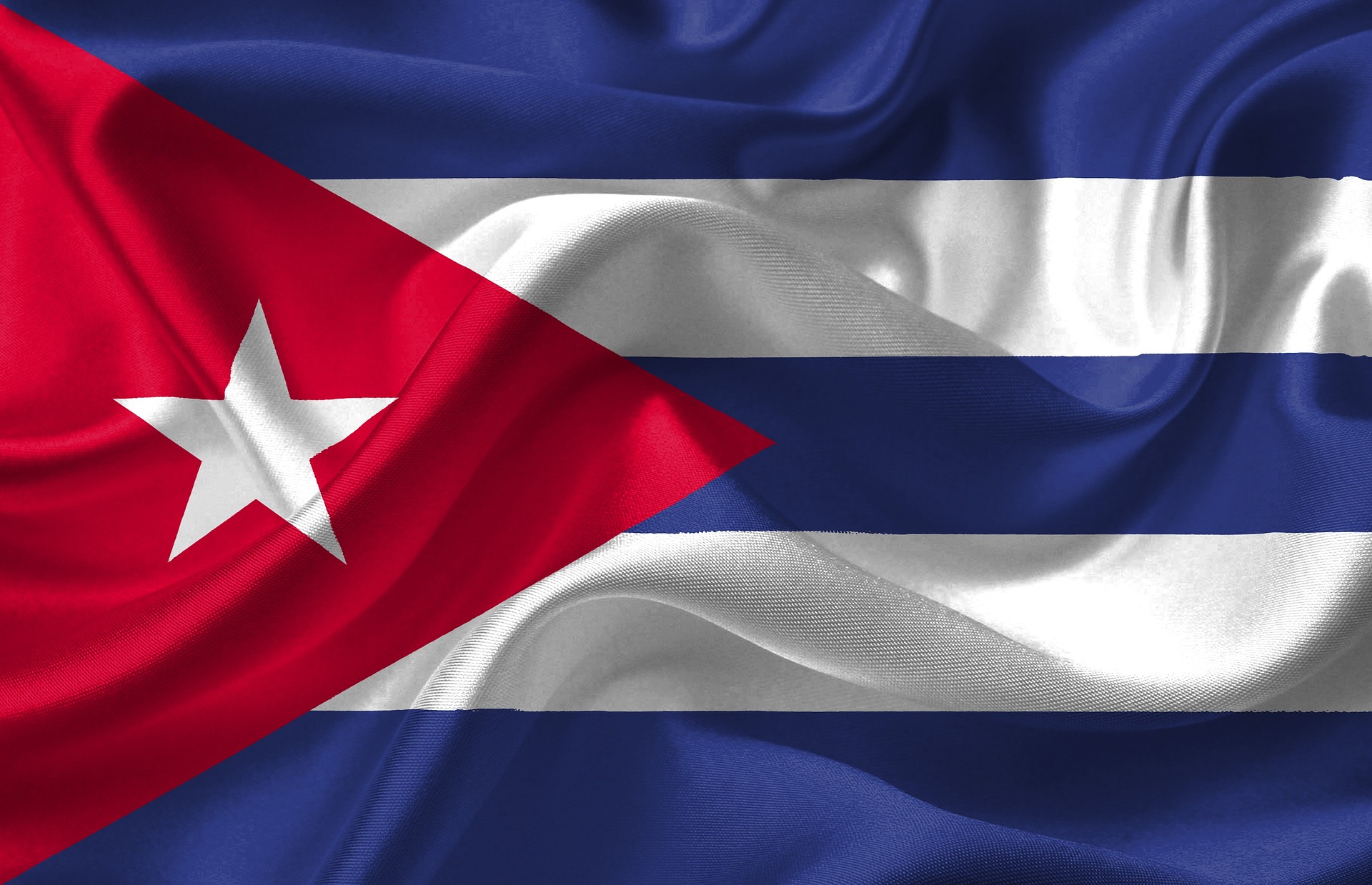
Are you a Cuban national with a pending immigrant visa application? If so, we have some great news for you.

The Department of State today announced that the U.S. Embassy in Havana, Cuba will now be responsible for scheduling all immediate relative immigrant visa appointments, including those of spouses and children under 21 of U.S. citizens (IR/CR-1 and IR/CR-2), with interviews beginning in July 2022.

Previously, the Department of State announced that Havana would be scheduling interviews for applicants in the IR-5 category (parent of a U.S. Citizen) that began their processing there in May 2022.  While the government is working to expand services to reduce the ongoing backlogs, the U.S. Embassy in Georgetown, Guyana will continue to remain the primary processing location for all other Cuban immigrant visa applicants (IR/CR-1, IR/CR-2 and IR-5).


Documentarily Qualified Notifications on or after June 8th – U.S. Embassy Havana


IR/CR-1 and IR/CR-2 applicants who were notified on or after June 8, 2022 that their case is ready to be processed will have their interview scheduled at the U.S. Embassy Havana, not the U.S. Embassy in Georgetown, beginning in July.


Documentarily Qualified Notifications before June 8th – U.S. Embassy Georgetown


IR/CR-1 and IR/CR-2 applicants who were notified prior to June 8, 2022 that their case was ready to be processed will be interviewed at the U.S. Embassy Georgetown, also beginning in July.

The Department of State has said that neither the U.S. Embassy in Havana nor the U.S. Embassy in Georgetown will be able to assist with requests to transfer cases due to resource constraints.

The government will continue to evaluate, further expansion of visa processing in Havana depending on resources and country conditions.

Additionally, the U.S. Embassy in Havana will continue to offer services for American Citizens and limited emergency nonimmigrant visa processing. For further information please review the embassy’s website for updates at https://cu.usembassy.gov/consular-services-available-at-u-s-embassy-havana/.

Continue reading

outline-g3da870f14_1920
In this blog post, we share with you new immigration updates including major steps being taken by the Biden administration to support the people of Cuba, and the recent suspension of the NVC public inquiry telephone line.


Biden Administration Measures to Support the Cuban People


The Biden administration has taken new measures to provide relief to the people of Cuba as they face a humanitarian crisis. Among the major announcements, the government has said that it will be reinstating the Cuban Family Reunification Parole (CFRP) program to promote family reunification and increase capacity for consular services at the U.S. Embassy in Havana, Cuba.

flags-g24bc48bb7_1920

Today, the Biden administration unveiled a brand-new program, Uniting for Ukraine, which seeks to provide humanitarian parole to an estimated 100,000 Ukrainian nationals who have been displaced by the Russian invasion which began on February 24, 2022 for a period of up to 2 years.


What is Uniting for Ukraine?


Uniting for Ukraine is a new Biden initiative that will allow Ukrainian citizens to apply for humanitarian parole in the United States. Humanitarian Parole is a process that allows foreign nationals to lawfully enter the U.S., provides temporary lawful presence in the U.S., and protects that person from deportation during the parole timeframe that has been granted to the foreign national. Humanitarian parole is a temporary permission to remain lawfully in the United States. It does not provide law permanent residence (a green card) and does not provide a pathway to citizenship.

To be eligible, Ukrainians must have been residents in Ukraine as of February 11, 2022, have a sponsor in the United States, complete vaccinations and other public health requirements, and pass rigorous biometric and biographic screening and vetting security checks.

Ukrainians who are approved via this process will be authorized to travel to the United States and be considered for parole, on a case-by-case basis, for a period of up to two years. Once paroled through this process, Ukrainians will be eligible for work authorization.


Who can be a sponsor?


Effective Monday, April 25, 2022, U.S. based individuals and entities can apply to sponsor displaced Ukrainian citizens through the Uniting for Ukraine process, which will go live on the Department of Homeland Security website that same day.

Any U.S. citizen or individual, including representatives of non-government organizations, can sponsor Ukrainian applicants. Individuals and organizations seeking to sponsor Ukrainian citizens in the United States will be required to declare their financial support and pass security background checks to protect against exploitation and abuse. Eligibility requirements will include required vaccinations and other public health requirements, as well as biographic and biometric screening, vetting, and security checks.

Continue reading

chart-g1cb8459b5_1280

DACA Renewal E-Filing is here!

Exciting news is on the horizon for those filing a renewal of their deferred action under the Deferred Action for Childhood Arrivals (DACA)!

This week, the United States Citizenship, and Immigration Services (USCIS) announced that applicants will now be able to file their applications online on Form I-821D, Consideration of Deferred Action for Childhood Arrivals. Additionally, renewal applicants may also file applications to renew their Employment Authorization Document (EAD) online by filing Form I-765 Application for Employment Authorization and the Form I-765 Worksheet.

This move will now make it easier for applicants to obtain a renewal of their status faster and more efficiently.

While the agency hopes to expand the possibility of electronic filing to a broader pool of applicants in the future, the e-file option is currently only available for individuals who have been previously granted DACA.

The e-filing option is expected to help reduce the substantial backlogs at the USCIS level. Currently, USCIS receives nearly half a million Form I-821D DACA requests every fiscal year, and processes more than 8.8 million requests for immigration benefits. As time has gone on, the agency has allowed online filings to streamline the application process.

How can you file online?


DACA renewal applicants who wish to file Form I-821D and Form I-765 online, must first create a USCIS online account, to submit their forms, pay fees and track the status of any pending USCIS immigration request throughout the adjudication process. There is no cost to set up an account, and one of the added benefits is that applicants have the ability to communicate with USCIS through a secure inbox and respond online to Requests for Evidence received.

Continue reading

couple-g86465ecab_1920USCIS Updates Policy Guidance Highlighting Discretionary Power to Waive In-Person Interviews for I-751 Applicants


On April 7, 2022, the United States Citizenship, and Immigration Services (USCIS) updated its Policy Manual on the interview waiver criteria for family-based conditional permanent residents filing to remove the conditions on permanent residence on Form I-751 Removal of Conditions.

Under the law, those who attained their permanent resident status (green card) based on a marriage that was less than 2 years old at the time of approval, receive a conditional green card, also known as “conditional permanent residency.”

This conditional green card is issued for a 2-year period. Prior to the expiration of the 2-year green card, the applicant must file Form I-751 to remove their conditions on permanent residence within the 90-day window before it expires.

The Immigration and Nationality Act stipulates that a conditional permanent resident must appear for an in-person interview as part of the I-751 Removal of Conditions adjudication process, so that the immigration officer can verify the accuracy of the information included in the petition and determine whether the conditions on permanent residence should be removed.

The Act also carves out discretionary powers that allow USCIS officers to authorize waiver of the in-person interview.

The April 2022 updated Policy Guidance clarifies that USCIS officers may consider waiving an interview, if, generally, the applicant meets all eligibility requirements for removal of conditions, and the record contains sufficient evidence for approval, and there is no indication of fraud, misrepresentation, criminal bars, or such factors that would require an interview.

The Guidance also eliminates automatic referrals in cases where a conditional permanent resident obtained status by way of Consular processing.

The language of the pertinent section indicates the following:

Volume 6: Immigrants, Part I, Family-Based Conditional Permanent Residents, Chapter 3, Petition to Remove Conditions on Residence [6 USCIS-PM I.3]


CPRs who file a Form I-751 must appear for an interview at a USCIS field office, unless USCIS waives the interview requirement. USCIS officers may consider waiving the interview in cases where:

Continue reading

ukraine-g74f4fa246_1920

The ongoing turmoil in Ukraine, Afghanistan, and Ethiopia has prompted the U.S. Department of State to issue new guidance regarding the possibility of filing a Form I-130 Petition for Alien Relative at U.S. Embassies and Consulates overseas for Afghan, Ethiopian, and Ukrainian immediate relatives fleeing conflict zones.

DOS has clarified that U.S. Citizens who are physically present with their Afghan, Ethiopian, or Ukrainian, immediate family members overseas, who have not yet filed the Form I-130 Petition for Alien Relative with the United States Citizenship and Immigration Services (USCIS), may do so by filing the application locally at their nearest U.S. Embassy or Consulate that processes immigrant visas.

Only U.S. Citizens impacted by the large-scale disruptive events in Afghanistan, Ethiopia, and Ukraine, are allowed to locally file Form I-130 at U.S. Embassies or Consulates overseas. It is required that the U.S. Citizen be physically present in the country where they wish to file their petition.


Who can you petition for with Local Filing?


DOS has stated that U.S. Citizens may locally file Form I-130 on behalf of their spouses, unmarried children under the age of 21, and parents, provided their relative fled:

  • Afghanistan after August 2, 2021
  • Ethiopia after November 1, 2020 or
  • Ukraine after February 1, 2022

Continue reading