Articles Posted in Immigrant Visas

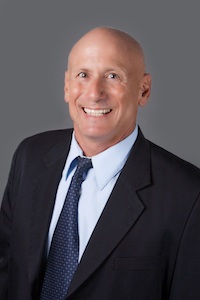
charlesFor this month’s staff spotlight, we invite you to learn more about Associate Attorney Charles S. Ward, Esq.

Attorney Ward has been a long time attorney at the Law Offices of Jacob J. Sapochnick. Charles received his Doctorate in Jurisprudence from Southern Methodist University graduating Cum Laude. Prior to attending law school, Mr. Ward worked for Delta Air Lines in the Reservations/Sales Department, where he focused on customer service issues and problems relating to traveling arrangements. He has been a California licensed attorney since 1997 and is also licensed to practice before the Federal Court system. His area of expertise includes Immigration and Family Law.

His Favorite Quote “Time and Tide Wait for No One” 

3261953789_cc710caaa5_o

The U.S. Citizenship and Immigration Services (USCIS) has released an updated policy manual addressing the policies and procedures associated with adjustment of status to lawful permanent residence under section 245a of the Immigration and Nationality Act. The policies set forth in the newly updated policy manual are effective beginning February 25, 2016.

Adjustment of status is the process by which an eligible foreign national may adjust their status to lawful permanent resident, based on a qualifying family relationship or employer-employee relationship. Additionally, special categories of green card applicants exist covering self-petitioning Amerasian, Widow(ers) seeking lawful permanent residence under the Violence Against Women Act (VAWA), refugees, asylees, certain U visa holders, humanitarian visa holders, and eligible diversity visa program immigrants. In order to file an adjustment of status application from within the United States the Beneficiary must 1) be living in the United States lawfully and 2) have been inspected, lawfully admitted, or paroled into the United States, (except in cases of 245i).

Foreign nationals living in the United States, who qualify for adjustment of status to lawful permanent residence, may file their adjustment of status application with USCIS, without having to travel abroad to obtain an immigrant visa through a procedure known as consular processing. Foreign nationals residing abroad, who qualify for adjustment of status, must apply for an immigrant visa at a United States Embassy or Consulate abroad. Consular processing is different from adjustment of status from within the United States in various ways. Adjustment of status within the United States is a much faster process, however the main drawback is that applicants cannot travel internationally once their application has been filed with USCIS, until they are issued an advance parole document by USCIS authorizing such travel. In order to obtain an advance parole document, the green card applicant must file Form I-131 with USCIS. The advance parole document is typically issued within 90 days of filing of Form I-131. One of the main benefits of applying for an immigrant visa abroad through consular processing, is that the individual does not have any travel restrictions. It is for this reason that businesspersons and other individuals opt for consular processing instead of adjustment of status despite living in the United States.

Continue reading

9374736981_85a6e772fd_z

A new factsheet published by AILA and Kids in Need of Defense (KIND) provides statistics on the representation and removal of unaccompanied children and families facing removal proceedings before immigration court. The data concludes that an overwhelming number of unaccompanied children and families are ordered removed from the United States, despite having demonstrated a legitimate fear of persecution or torture and passing a credible fear interview, making these individuals viable candidates for asylum, prosecutorial discretion, or other relief from deportation. This is due to a lack of legal representation and legitimate concern for the due process of law.

Families Passing Credible Fear in preliminary interviews with federal asylum officers

On the whole, the majority of families in detention centers demonstrate a legitimate fear of persecution or torture and maintain a high rate of approval during credible fear interviews;

  • In preliminary interviews with asylum officers, approximately 90% of families successfully demonstrated a credible fear of persecution or torture;
  • Upon completion of these interviews, approximately 88% of detained families pass their credible fear interviews;
  • The USCIS Asylum Office has indicated that the credible fear passage rates remain unchanged—at a rate of 90%;
  • DHS data indicates that 53% of 121 individuals, arrested by DHS during the January raids, lacked legal representation before immigration court;

Continue reading

4893974585_f1f7465f5f_z

For this series, we bring you our top tips for filing the perfect family-based adjustment of status application (I-130/485), as well as valuable tips concerning common mistakes to avoid when filing the adjustment of status application, from our in-house family-based legal assistant, Ms. Reagan Volkman. Ms. Volkman has worked with hundreds of clients from all over the world helping them file their adjustment of status packages from beginning to end. With her hard work and dedication, our office has enjoyed an unprecedented approval rate for these petitions.

Tip #1 Ensure accuracy on every form associated with the I-130/485, especially in regards to questions relating to criminal history and/or immigration violations

  • Double check every form to ensure that you have completed each form as thoroughly and accurately as possible, making sure all dates and social security numbers are correct.

REMEMBER: Dates should be written in the (mm/dd/yyyy) format unless otherwise stated on each form;

  • If information is unavailable/not applicable, note such on each form;
  • Review all the yes and no questions listed on pages 3-5 of form I-485. Be very careful when answering these questions and thoroughly explain any “yes” answers. These questions relate to criminal history and immigration violations (such as fraud, willful representation, or removal from the United States);
  • It is strongly advised that you seek counsel from an accredited attorney if you have any criminal history and/or have committed any immigration violations, as these issues may require you to file a waiver before seeking adjustment of status, or make you inadmissible;
  • If you have served in the military in any foreign country and/or have military training you must answer “yes” and provide the relevant information requested. For countries that require military enlistment we recommend to note that the service was ‘mandatory’ in the description;
  • If you have held a J-1 visa in the past, and have been subject to the two-year foreign residence requirement, but did not obtain a waiver, you must answer “yes” and provide the relevant information requested;

Continue reading

reagan
For this month’s staff spotlight, we invite you to learn more about Legal Assistant, Reagan Volkman.

Ms. Volkman was born and raised in San Diego, California. She pursued her studies at Cuyamaca and Grossmont College graduating in December 2014 with degrees in History, the German language, and Paralegal Studies. She is fluent in German and has knowledge of American Sign Language. At the office, she assists attorneys with drafting, compiling, and filing family-based immigration petitions including applications for adjustment of status, I-130 consular processing, removal of conditions, naturalization, fiance visas, change of status petitions, and much more.

“The best part of my job is meeting and working with such a diverse group of people. It is very rewarding to be able to make a difference in the lives of others.”

mayaFor this month’s staff spotlight, we invite you to learn more about Paralegal, Maya Elkain.

Ms. Elkain began her journey with the Law Offices of Jacob J. Sapochnick in 2014 as an intern. She quickly learned the ins and outs of employment based immigration law and was offered a position. Today, she assists attorneys with the preparation of H-1B applications, E-2 investor visas, L-1A visas, O visas, National Interest waivers, provisional waivers of unlawful presence, and much more. Ms. Elkain specializes in employment-based immigration and investor petitions. With her assistance, our law office has been able to receive affirmative decisions in numerous cases.

“The best part of my job is having the opportunity to make a difference and actually help our clients succeed in their immigration process. It is the most rewarding feeling.”

9033805851_a19992134e_z

On Thursday, December 31, 2015 the Department of Homeland Security published a new proposed rule affecting highly skilled immigrant and non-immigrant workers alike. The proposed rule, introduced in last week’s federal register, aims to improve the ability of American employers to hire and retain highly skilled workers waiting to receive their employment-based lawful permanent residence in the visa bulletin backlogs. Additionally, the proposed rule aims to enhance opportunities for such workers allowing them to be more easily promoted, to accept lateral positions with their current employers, change employers, and pursue other employment. While the proposed rule is not groundbreaking, it does address important challenges employers and their highly skilled workers have faced as the law stands today and makes recommendations for such relief. The proposed rule will be open for comment until February 29, 2016.

You may remember that on November 20, 2014 the President highlighted, as part of his executive actions on immigration, that the employment-based immigration system needed to be amended to modernize, improve, and clarify immigrant and nonimmigrant visa programs in order to create more jobs, foster innovation at home, retain a highly skilled workforce that would allow the United States to compete with other countries, and to stimulate the American economy overall.  In order to modernize the employment based immigration system, USCIS would be required to work with the Department of State to modernize and simplify the immigrant visa allocation process. Part of this process would require the Department of State to make reasoned projections of employment-based immigrant visa availability on the visa bulletin, that could be relied upon by employers and their highly skilled workers.

Presently, immigrant workers from India and China are experiencing extraordinary delays in the employment-based queue for permanent residence, while other highly skilled workers are forced to wait over a five-year period to receive company sponsorship and lawful permanent residence. Furthermore, such workers are forced to remain on temporary employment-sponsored visas in the United States while waiting for an immigrant visa to become available to them. This puts the immigrant worker in a predicament giving the employer the upper hand, while restricting the employee from seeking advancement and discouraging new employment, since this would require the employer to file a new petition and incur the expensive fees required for filing. Highly skilled works facing extortionate delays in the visa backlogs have experienced hindered employer/employee career advancement and job mobility. The new rules will provide limited relief in this area.

Continue reading

District Court Denies Request for Temporary Restraining Order to Halt Syrian Re-Settlement Program in Texas

23348054250_3bfc1cd6a0_z

First Family of Syrian Refugees Arrives in Canada

In their December suit, Texas Health and Human Services Commission V. United States, et, al., the state of Texas alleged that the United States government and the International Rescue Committee unlawfully attempted to re-settle six Syrian refugees in the city of Dallas without prior  consultation and collaboration. According to Texas, the federal government failed to consult with the state regarding re-settlement of these refugees, and prevented them from receiving vital information relating to security risks posed by Syrian refugees prior to their re-settlement. Texas also claimed that the International Rescue Committee similarly failed to collaborate and consult with the Texas Health and Human Services Commission in advance prior to the re-settlement of these refugees. To protect itself, the state of Texas asked for an injunction and a temporary restraining order to halt the resettlement of Syrian refugees until security checks could confirm that these Syrian refugees do not pose a threat to the state of Texas.

On December 9, 2015 the U.S. district court denied the temporary restraining order, adding that the state of Texas failed to provide compelling evidence to suggest that Syrian refugees pose a substantial threat of irreparable injury to its citizens. Presiding district court Judge David C. Godbey added that, “the [Texas] commission has failed to show by competent evidence that any terrorists actually infiltrated the refugee program, much less that these particular refugees are terrorists’ intent on causing harm.” Although the lawsuit still stands and will likely not receive a final ruling until early next year, the district court set an important precedent in its denial of the temporary restraining order. Judge Godbey further maintained that it is not within the purview of the district court to assess what risk, if any, Syrian refugees pose to any particular state. Such risk can only be assessed by the federal government. On this issue Godbey stated that, “the Court has no institutional competency in assessing the risk posed by refugees. That is precisely the sort of question that is, as a general matter, committed to the discretion of the executive branch of the federal government, not to a district court.” The rest of the lawsuit remains in litigation.

Continue reading

3549356643_457f255e03_z

Tashfeen Malik, a Pakistani citizen, and her husband Syed Rizwan Farook, a naturalized United States Citizen, are known globally as the couple behind the San Bernardino shootings, which took the lives of 14 people and left 21 injured. Twenty-eight-year-old Syed Farook was identified as an environmental health services inspector employed by the San Bernardino County Department of Public Health. He was attending a holiday party at the Inland Regional Center where he worked. Reports confirm that a dispute occurred between Syed and an attendee of the party causing Syed to leave the party. He later returned with his wife Tashfeen dressed in tactical gear carrying assault weapons and semi-automatic pistols. Days after the attack, it became known that the assault was inspired but not directed by the Islamic State of Iraq and the Levant (ISIL), the terrorist group which claimed responsibility for coordinated attacks that occurred in Paris just last month. Through a radio message disbursed online, ISIL confirmed that the duo were indeed supporters of the group praising them for their efforts, but stopping short of taking credit for the attack. The FBI has since confirmed that the couple had been ‘radicalized’ for some time before the actual attack took place, though it is not clear how the couple became radicalized, how they rehearsed the attack, and whether the couple maintained ties to any other terrorist organizations. It is known that Syed and his wife Tashfeen had visited gun ranges in the Los Angeles area for target practice just days before the December 2nd assault at the Inland Regional Center, a social services facility located in San Bernardino, California where Syed was employed.

Investigations have revealed that Syed and Tashfeen met one another on a Muslim dating site a couple of years ago. The relationship flourished, and eventually Tashfeen Malik obtained and entered the United States legally on a K-1 fiancé visa. Last year, Tashfeen became a United States lawful permanent resident through her marriage to Syed, a naturalized citizen. In response to the recent terror attacks around the world and the Syrian refugee crisis, President Obama delivered a rare address to the nation from the Oval Office yesterday evening declaring the San Bernardino massacre an “act of terrorism designed to kill innocent people.”

In his address, President Obama outlined his administration’s four-tier strategy to defeat ISIL and discussed necessary measures that must be taken by Congress to bring about legislation that will protect our country from extremism and combat the war on terror. Such measures include the following:

Continue reading

katie

It is our pleasure to introduce our readers to our esteemed Paralegal and Case Manager Katie Foley who has worked at the Law Offices of Jacob J. Sapochnick since 2010. Ms. Foley, originally from Santa Cruz, California holds a Bachelor’s Degree in Liberal Studies from Cal State East Bay and her paralegal certificate from San Diego Miramar College. Throughout her career, Katie Foley has assisted our attorneys with various different types of immigration petitions including family-based petitions, employment based petitions (H-1B, E-2 etc.), deferred action, marriage visas, I-751 petitions, fiancé visas, consular processing, naturalization, temporary visas (B-1/B-2, J-1, F-1 etc), deportation and removal cases.  She has successfully processed hundreds of applications and in the process has formed long standing relationships with our clients. In her role as case manager, she assists our legal assistants with their case loads and provides direction as needed. Ms. Foley is an outstanding member of our firm for her impressive attention to detail, her understanding of the law, and the extensive guidance she provides our clients to ensure every case has a successful outcome. She provides all of our client’s strong personal support and comprehensive step-by-step instructions for each immigration process. If you are an international or out of state client, not to worry, Ms. Foley has perfected an easy online case processing system to assist clients with their immigration concerns no matter where they reside. In her free time, she enjoys lap swimming, barbecues, and gardening. To read more about Ms. Foley please click here.

For immigration questions please call our office. Your Immigration is our Passion.