Articles Posted in Permanent Residents

6306315902_ef5422b274_z

At the Law Offices of Jacob J. Sapochnick we work closely with clients to address their specialized immigration needs, making their success our number one priority. Many of our clients have experienced immigration issues that could have easily been eliminated with the help of an experienced immigration attorney. Such was the case when our client, we will call him Ernesto, visited our San Diego office to discuss his naturalization case that had gone from bad to worse.

Ernesto had gained permanent residence through marriage to his U.S. Citizen spouse and was ready to apply for naturalization, having remained married to his spouse for at least 3 years before filing his application. Ernesto’s first problem was that he had relied on the assistance of a foreign attorney to prepare and file his application—an attorney who was not licensed to practice law in the United States and was not well versed in immigration law. The attorney had filed his naturalization application without carefully assessing his situation and pin pointing any potential issues he might experience. As a result of his foreign attorney’s incompetence, Ernesto’s application for naturalization was denied and his appeal—also filed by the foreign attorney– was also denied, leaving Ernesto in a very difficult position.

In the Notice of Intent to Deny Ernesto had received USCIS explained the reasons why he had been denied. The main issue was that USCIS was not convinced that he entered his marriage “in good” faith. Furthermore, USCIS argued that Ernesto had failed to present documented evidence proving that he had lived in marital union with his spouse for the 3 years preceding his examination. Due to the fact that USCIS had doubts about the legitimacy of the marital union, they conducted a home inspection at a time that Ernesto was not at his home. During the inspection, the field officers searched the bedroom he shared with his wife and discovered that his clothing was not present. Upon further examination, we found that the officers that conducted the home inspection failed to check the other bedrooms in the home and did not see that his clothing was located in an adjacent bedroom, and not in the room that he shared with his spouse. Ernesto had perfectly legitimate reasons for why he had not been at the home at the time of the inspection, and why his clothing was located in a different room of the house. Ernesto was a businessman and was typically out of town on business trips. On the particular day that the home inspection was conducted, he was out of town on a day business trip. Ernesto had also been traveling to the East Coast frequently for 4-5 months to pursue potential business investments and proposals, leaving his wife behind. Ernesto had been toying with the idea of starting a business on the East Coast, but was not certain if the plans would come to fruition, for that reason his wife had stayed behind across the country while he weighed his options. As a businessman, Ernesto maintained a non-traditional schedule that required him to work long hours, in addition to being apart from his wife. Due to the differences between his schedule and his wife’s schedule he decided to move his clothing to another bedroom so that he would not disturb his wife while he was preparing for his jam packed business schedule. In the end Ernesto’s business plans in the East Coast fell through and he returned to the state of California where he lived with his wife.

Continue reading

7301111628_dd7c4e3fb0

Q: What qualifies as a bar of “Unlawful Presence?”

A: If you have accrued more than 180 days of unlawful presence in the United States, you are subject to a 3-year bar preventing you from being re-admitted to the United States under the Immigration and Nationality Action Section §212(a)(9)(B)(i)(I). The bar is triggered once you have departed the United States.

If you have accrued one year or more of unlawful presence in the United States, you are subject to a 10-year bar preventing you from being re-admitted to the United States under §212(a)(9)(B)(i)(II).

If upon your entry to the United States, you were not inspected, admitted, or paroled by a U.S. Customs Official, then you are ineligible to adjust your status to lawful permanent resident (LPR) within the United States, even if you have an approved visa petition. This means that in order to legalize your status, you are required to depart the United States and apply for an immigrant visa at a United States embassy or consulate abroad. Your departure from the United States will then trigger a 3- or 10-year bar to readmission, preventing you from returning to the United States, depending on the amount of “unlawful presence” you accrued prior to your departure.

There are ways to waive these 3- and 10-year bars to readmission only if you can demonstrate that your refusal of admission to the United States would cause an “extreme hardship” to your U.S. Citizen immediate relative or Legal Permanent Resident spouse or parent.

Q: Can I apply for the provisional waiver if I was previously deported, removed, or excluded from the United States?

If you received a final order of removal, deportation, or exclusion you may apply for a provisional waiver of unlawful presence, however you must first apply for the I-212 Application for Permission to Reapply for Admission into the United States After Deportation or Removal, and the application must be conditionally approved.

If ICE or CBP has reinstated a prior removal order under 8 CFR §241.8, before filing of the provisional waiver application or while the application is in process, you are no longer eligible to receive a provisional waiver of unlawful presence. A provisional waiver approval would be automatically revoked if the applicant is found inadmissible under INA §212(a)(9)(C) for unlawful return to the United States after prior removal or prior unlawful presence.

Continue reading

5201457826_d79cbeac26_z

If you are a foreign entrepreneur, you have probably discovered that the United States immigration system is very limited in that there are very few visa options available to entrepreneurs that do not tie down the entrepreneur to a foreign employer, as is the case for the L and H visas. To make matters worse, if your ultimate goal is to obtain a green card to live and work in the United States permanently, you must work for an American employer willing to sponsor your adjustment of status. Although there are few exceptions, the main avenue through which entrepreneurs can gain permanent residence is either through family-sponsorship or employment-based sponsorship.

To obtain permanent residence through an employer you must either a) be a professional employed by a U.S. employer willing to sponsor your green card b) demonstrate extraordinary ability in your industry (science, arts, education, business, or athletics, c) work in a management or executive position abroad requiring international transfer to the United States or d) qualify as an EB-5 investor. In either of these cases, the U.S. employer must submit the I-140 Immigrant Petition for Alien Worker for you, before you can apply for permanent residence. If your ultimate goal is not to obtain a green card, then you have more options available to you.

We decided to write about this topic because we have found that many entrepreneurs that visit our office are not well-informed on other visa types that put them on a more direct path to permanent residence. Often times the topic of conversation leads to the E-2 Treaty trader visa, by far the most discussed visa type among entrepreneurs. Few entrepreneurs however have heard about the L-1 visa classification, that may in some ways be more beneficial to foreign entrepreneurs wishing to live and work in the United States permanently. Below we discuss both visa types and the advantages and disadvantages of both visas.

The E-2 visa, the most talked about visa:

Without a doubt, the most popular visa option entrepreneurs ask about is the E-2 visa. Many entrepreneurs however do not know that the E-2 visa is not available to everyone, and it is not a path to permanent residence. The E-2 visa is a non-immigrant treaty investor visa that is only available to foreign nationals from specific treaty countries. The E-2 visa allows foreign nationals to carry out investment and trade activities, after making a substantial investment in a U.S. business that the foreign national will control and direct. E-2 visa investors can either purchase an existing U.S. business or start a new business.

Continue reading

6991805074_a31fb26d22_c

The United States Citizenship and Immigration Services (USCIS) has published a new final rule that will expand the class of individuals who are eligible to apply for a ‘provisional’ waiver of certain grounds of inadmissibility (Form I-601A) based on their accrual of unlawful presence in the United States.

The provisional unlawful presence waiver allows certain individuals, unlawfully present in the United States, to request a provisional waiver before departing the United States for consular processing of their immigrant visas.

Previously, only immediate relatives of U.S. Citizens were eligible for this waiver. The provisional waiver is beneficial because it does not require the applicant to wait until the consular interview, to apply for a waiver, as in the case of the I-601 waiver. Provisional waivers also substantially reduce the time of separation between the applicant and his or her U.S. Citizen or legal permanent resident (LPR) relatives.

The rule was published in order to improve efficiency and reduce the amount of time that a U.S. Citizen/LPR spouse or parent is separated from his or her relatives while the relative completes the immigrant visa process. According to the 2013 rule, parents, spouses and children of U.S. Citizens were eligible to apply for provisional waivers of the 3- and 10-year unlawful presence bars before departing the United States for their immigrant visa interviews. The new rule expands upon the 2013 rule extending that benefit to family members of LPRs.

Who benefits?

The rule will expand the provisional waiver process to certain individuals who are family members of U.S. Citizens and lawful permanent residents (LPRs) who meet the statutory requirements to be eligible for an immigrant visa. The rule will expand eligibility to all individuals statutorily eligible for the waiver. In order to qualify, applicants must be able to establish that their U.S. Citizen or LPR spouse or parent would experience an “extreme hardship” if the applicant was not allowed to remain in the United States. The final rule will take effect on August 29, 2016.

Continue reading

1325250967_567-armresling-simvol

Our clients often ask us what the difference is between adjusting their status within the United States versus applying for a green card at a United States consulate abroad. In order to adjust your status to permanent resident within the United States by filing Form I-485, you and your spouse must be living inside of the United States at the time of filing. The intending immigrant must also have entered the United States legally in order to adjust status within the United States, although there are few exceptions (as is the case of individuals who qualify for 245i). This means that generally, in order to qualify for adjustment of status, you must have been inspected by a U.S. Customs official at a United States port of entry. As part of the Adjustment of status process, the green card applicant must be able to prove that they were inspected upon entry by showing their I-94 arrival/departure record. The I-94 is a small white paper that is placed in the passport containing a stamp of admission with the date of entry, place of entry, the person’s name, I-94 number, and other important details.

I-94A

Sample I-94 arrival/departure record

If you did not receive a paper I-94 in your passport, you may obtain your I-94 electronically by visiting the DHS website.

Consular processing on the other hand is an option that is typically utilized for spouses of US Citizens residing abroad and/or foreign spouses who have never visited the United States, do not have a United States visa, or cannot obtain one, because they are already married to a US Citizen. Foreign spouses who are obligated to travel frequently such as businesspersons may also prefer to obtain an immigrant visa through ‘consular processing’ because this process does not prohibit international travel. Adjustment of status applicants on the other hand are prohibited from traveling internationally once the I-485 green card application has been filed, unless they have received travel permission from USCIS known as an advance parole document. If the applicant travels without this advance parole document, the I-485 application will be considered abandoned.

Advance Parole for Adjustment of Status Applicants

In order to receive this advance parole document, the applicant must file Form, I-131 Application for Travel Document at the same time as Form, I-485 in order to return to the United States after temporary foreign travel. If the applicant wishes to apply for a work permit they must also file Form, I-765 Application for Employment Authorization. There is no additional fee for the I-131,765 applications if the applicant has a pending I-485 application with USCIS. The I-131,765 applications take approximately 90 days to process from date of filing and culminate in a travel/work permit combo card known as the EAD (Employment Authorization Document). This document allows the applicant to work, travel, obtain a SSN number, and driver’s license. Consular Processing applicants do not receive any travel or employment authorization and cannot obtain a driver’s license or SSN until they have received their green card once they enter the United States with an immigrant visa.

Adjustment of Status Benefits

There are many benefits that come with adjusting your status within the United States however to qualify you and your spouse must be living in the United States and you must have been inspected upon entry to the United States (with few exceptions), otherwise you are not eligible to apply for adjustment of status within the United States. If you have committed any immigration violations or have a serious criminal history, you must consult an attorney.

Continue reading

8125387396_783cf023fd_z

In a recent blog post, we told you all about the I-751 Removal of Conditions Application. In this segment we will briefly cover the basics of the I-751 Removal of Conditions Application and what you can expect one you have filed the application with USCIS.

Overview: 

The I-751 Removal of Conditions Application is filed by conditional permanent residents who gained their ‘conditional’ permanent resident status, based on their marriage to a United States Citizen or Legal Permanent Resident. An easy way to know whether you have been given a conditional green card is by checking the abbreviations that appear on your green card under immigrant ‘category.’ If your green card contains the abbreviation ‘CR’ under the immigrant category, then you are a conditional permanent resident. Additionally, if your green card was granted for only a 2 year period, then you have received a conditional green card.

Who must file the Removal of Conditions Application?

It is important to understand who must file the Removal of Conditions Application. If you are still married to the same person through which you gained your ‘conditional’ permanent residence (2- year green card), and you wish to obtain a 10-year permanent green card, you must file an I-751 application for removal of conditions jointly with your spouse. If you have divorced your spouse, you may still apply for removal of conditions on your own, however you must provide substantial proof of bona fide marriage. Applications that are filed by the ‘conditional’ permanent resident alone, are called I-751 waiver applications. Regardless of whether you will be filing the I-751 application with your spouse, or filing the I-751 waiver application alone, applicants must be prepared to demonstrate that they entered their marriage in ‘good faith’ and not for the purposes of evading the immigration laws of the United States. In other words, the additional process to remove the conditions on your permanent residence, is a fraud prevention mechanism to safeguard against sham marriages.

The removal of conditions application must be filed only by those individuals who were given a two-year conditional green card by USCIS. USCIS issues 2-year conditional green cards to foreign spouses (and LPRs) who have been married to a U.S. Citizen for less than to two years, on the date that the green card application is approved. Foreign spouses who have been married to their U.S. Citizen spouse for more than two years, on the date the green card application is approved, receive permanent 10-year green cards, and do not need to apply for removal of conditions.

Continue reading

27512994306_54f949109a_zDuring November 2015, a couple came to our office seeking legal assistance, after having filed the adjustment of status application on their own, and attending their initial green card interview without legal representation. The couple visited our office seeking legal representation for their second interview before USCIS, also known as the ‘STOKES’ interview. At the conclusion of their initial interview, the couple were given a request for evidence by the immigration officer.  The Request for Evidence asked the couple to prove that the Beneficiary entered the marriage in good faith, and not for the purposes of evading the immigration laws of the United States. The couple responded to the Request for Evidence, providing documents in support of their bona fide marriage, to establish that they did indeed enter the marriage in good faith. In their response, the couple provided 21 items of evidence including photographs together, lease agreements as proof of cohabitation, and other bona fides such as joint utility bills and affidavits from the Petitioner’s parents, attesting to the couple’s bona fide marriage.

Despite producing such evidence, the immigration officer found the documents provided as evidence of cohabitation and marital union unconvincing. Additionally, the immigration officer found that the testimony given during the initial interview was unconvincing. Due to this, the immigration officer scheduled the couple for a second interview to discuss their relationship in more detail. The couple came to our office seeking guidance and representation at this second interview. The second interview is commonly referred to as the ‘STOKES’ interview. At the time of the second interview or ‘STOKES’ interview, the couple is questioned separately by an immigration officer regarding the details surrounding their marriage and relationship. A ‘STOKES’ interview is typically scheduled when an immigration officer suspects that the marriage is a ‘sham marriage’ entered for the purpose of obtaining an immigration benefit. During the ‘STOKES’ interview the immigration officer probes the couple on the intimate details of their relationship. The ‘STOKES’ interview is very taxing on both the Petitioner and Beneficiary. Some ‘STOKES’ interviews have lasted anywhere form 8-10 hours depending on the complexity of the case. Due to this, it is strongly recommended for an attorney to be present with the couple during a ‘STOKES’ interview.

Continue reading

5060278174_efcf1f393f_z

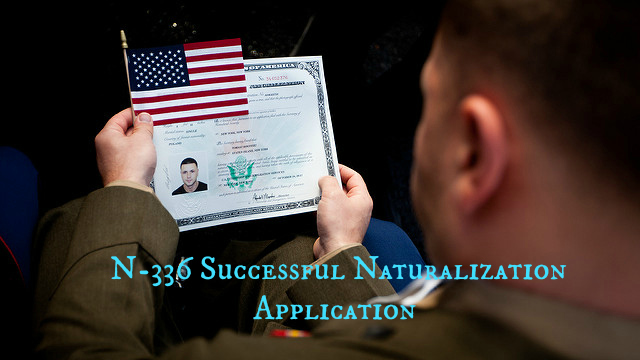
The eventual goal of most immigrants, residing in the United States temporarily, is to gain United States Citizenship, and later to immigrate their immediate relatives to the United States. It is very difficult however to obtain U.S. Citizenship, and there are important requirements that must be satisfied before applying. For starters, you must meet the minimum age requirement to apply, you must also be a legal permanent resident (LPR) of the United States (green card holder) for a certain period of time before you may apply. In addition, you must prove that you have maintained your legal permanent resident (LPR) status by demonstrating that you have remained continuously physically present in the United States. Lastly, you must be competent in the English language, and be a person of good moral character in order to apply for U.S. Citizenship. There are many valuable benefits conferred to U.S. Citizens. The most important benefit is that U.S. citizens are entitled to protection from the United States government in exchange for their allegiance to the country. Secondly, unlike green card holders, U.S. Citizens may leave the country and travel abroad for any length of time without having to worry about returning to the United States to maintain their immigration status. U.S. Citizens can also apply for immigration benefits for their immediate relatives and other family members more quickly than legal permanent residents. Legal Permanent Residents may also lose their immigration status and risk removal from the United States if they are convicted of serious crimes such as crimes of moral turpitude. U.S. Citizenship is also required for many jobs in the United States including law enforcement. Generally, there are also greater employment opportunities for American Citizens.

When applicants sign the N-400 application for naturalization they are promising to support the United States constitution, obey all of the laws of the United States, renounce foreign allegiances and/or foreign titles of nobility, and bear arms for the Armed Forces of the U.S. or to perform services for the U.S. government when called upon. The N-400 oath of allegiance must be taken very seriously. If you are not prepared to support the U.S. Constitution and bear arms for the U.S., you should not apply for citizenship.

General Naturalization Requirements

In order to apply for naturalization, applicants must satisfy all of the requirements below except for members of the armed forces and their immediate relatives. Members of the armed forces may apply for expedited naturalization as indicated below.

  • Language Requirement: You must be able to read, write, speak, and understand the English language in order to take the Citizenship test, although exemptions exist for certain applicants.

Continue reading

4525157355_47ec162df5_z

Before filing your green card application, it is important for you to carefully consider several important factors that may limit your ability to obtain employment in the United States and restrict your international travel. If you will be filing your green card application in the near future, you need to be prepared to remain in the United States for a period of at least 90 days, from the date of filing of your green card application. Applicants must also be aware that they will not receive authorization to work in the United States until this 90-day period has passed. Limited exceptions exist which may allow an applicant to expedite the adjudication process of the employment and travel authorization applications which we will discuss below.

Why the 90-day restriction period?

As part of the green card application, the applicant may file the I-765 Application for Employment Authorization and the I-131 Application for Travel Document at no additional cost. The I-765 and I-131 applications result in the issuance of a one-year temporary employment and international travel authorization card (EAD), while the green card application is being adjudicated by USCIS. It takes on average 90 days for the EAD card to be issued, from the date of filing of the green card application. This ultimately means that once you apply for permanent residence, you will not be able to seek employment or travel outside of the country until the EAD card is issued to you within 90 days. Once the green card application has been filed with USCIS, the applicant is restricted from any international travel. If the applicant travels without authorization, USCIS will consider the applicant’s green card application ‘abandoned.’ An applicant may only travel internationally if they have received a re-entry permit issued by USCIS known as an ‘advance parole’ document. The ‘advance parole’ notice will appear on the front of the EAD card itself signifying that the applicant is authorized to travel internationally using the card.  The ability to re-enter the United States after returning from temporary foreign travel is ‘discretionary.’ This means that even if you have been issued an EAD card that allows you to travel, it will ultimately be up to the customs official to admit you into the United States.

Consider the alternatives

Before applying for your green card you should carefully consider whether these travel and employment restrictions will have a significant impact on your lifestyle. If the travel restrictions are concerning to you, it may be a more beneficial option for you to apply for an immigrant visa from a U.S. Consulate abroad. There are no travel restrictions for applicants who apply for immigration benefits from abroad. Likewise, if you are concerned that you will not receive employment authorization immediately, it may be worth considering applying for a dual intent work visa first to cover any gaps in employment. There are limited work visa categories that allow for dual intent, or the intent to have a temporary visa status at the same time as having the intent to remain permanently in the United States. If this is the case, you should consult with an attorney to discuss your options.

Continue reading

5395896627_d7714ee637_z

What is Adjustment of Status?

Adjustment of Status is the process by which a foreign national can change their immigration status from a temporary nonimmigrant to an immigrant (permanent resident), while in the United States. There must be a basis under which a foreign national can apply for adjustment of status. In most cases the foreign national must have an immediate relative who is a U.S. Citizen or have an employer willing to file an immigrant petition on their behalf.

Generally, a foreign national can apply for adjustment of status, if they were inspected by a customs official at a United States port of entry and admitted or paroled into the United States, and meets all requirements to apply for a green card (permanent residence). The Immigration and Nationality Act (INA) allows an eligible foreign national already living in the United States with their U.S. Citizen spouse, to obtain permanent resident status without having to return to their home country to apply for an immigrant visa at a United States consulate abroad. Spouses of U.S. Citizens are eligible for adjustment of status to permanent residence once the US Citizen spouse files a petition on their behalf called the I-130 Petition for Alien Relative. The I-130 Petition for Alien Relative is typically filed at the same time (concurrently) as the I-485 Application to Register Permanent Residence or Adjust Status. For immigration purposes, the intending immigrant (or foreign national) is referred to as the ‘beneficiary’ of the application, while the U.S. Citizen spouse is referred to as the ‘petitioner’ of the I-130 application. The petitioner allows the beneficiary to apply for adjustment of status on the basis of their marital relationship (established with the filing of the I-130 Petition).

In general, most immigrants become eligible for permanent residence once an immigrant petition is filed on their behalf by either a qualifying family relative (I-130 Petition) or through an employer (I-140 Petition) although there are special categories of green card applicants that exist. Unlike distant relatives of U.S. Citizens and alien workers, spouses and immediate relatives of U.S. Citizens are not subject to any visa limitations. This means that they do not need to wait in line to receive permanent residence; an immigrant visa is immediately available to them and there are no quotas. The process of immigrating a foreign spouse through adjustment of status takes approximately 4-6 months depending upon the volume of adjustment of status application being processed by USCIS at the time of filing, and the amount of applications waiting in line for an interview at your local field office.

Spouses of U.S. Citizens residing abroad are not eligible for adjustment of status

For spouses of U.S. Citizens residing abroad, adjustment of status is not an option because the intending immigrant and U.S. Citizen spouse must be living together in the United States in order to apply. Instead, spouses of U.S. Citizens who are living abroad must resort to consular processing, in order to obtain an immigrant visa and permanent residency. Consular processing is also utilized to immigrate a foreign spouse who is ineligible to adjust status, for example in the case where the foreign spouse entered the United States illegally.

Continue reading