Articles Posted in DHS

international-2693200_1280

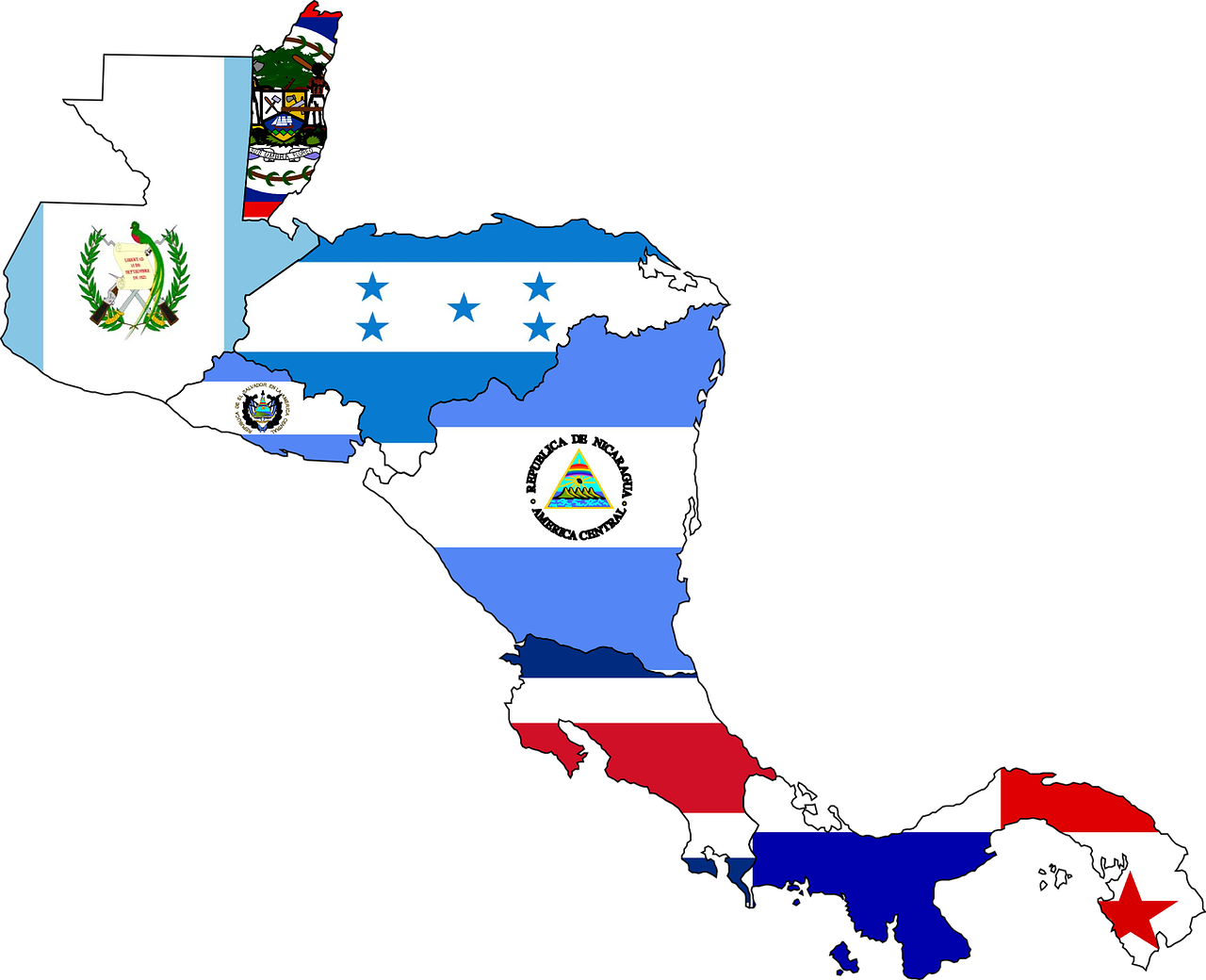
Temporary Protected Status has come under vigorous attack by the Trump administration. As previously reported, the Secretary of the Department of Homeland Security, appointed by President Trump has been instructed by the administration to scrutinize the TPS program closely to align with the President’s hard line stance on immigration. Within the last few months, the Department has mounted an aggressive attack on the TPS program, stripping El Salvador, Nicaragua, Haiti, and Nepal of its TPS designation.

As readers may recall, during November of 2017, the Secretary of Homeland Security announced that the TPS designation for Honduras would be extended for a period of 6 months from January 5, 2018 to the new expiration date of July 5, 2018, granting Hondurans under TPS an automatic extension. This extension was granted because the administration needed more information to determine whether the country’s designation would continue. As the new expiration date approaches, the day of reckoning may finally be here for nationals of Honduras under TPS.

According to reports released by the New York Times this afternoon, officials speaking on condition of anonymity have told reporters that the Trump administration has already decided to end the TPS designation for the country of Honduras, but has yet to formally announce the termination. The decision to terminate the TPS designation for Honduras is expected to be handed down on Friday.

Continue reading

basketball-888530_1280

Federal Judge John Bates of the Federal District Court for the District of Columbia has spoken to protect Dreamers from deportation, where Congress has remained silent. In a Tuesday ruling, Judge Bates called the Department of Homeland Security’s decision to rescind the DACA program “arbitrary and capricious,” and with no sufficient basis to justify rescission of the program, ordered DHS to accept and process new as well as renewal DACA applications.

As part of his opinion Judge Bates vacated the Trump administration’s decision to rescind DACA, for a period of 90 days, giving the Department of Homeland Security an opportunity to explain its decision to rescind the DACA program. If the government fails to adequately explain the grounds for finding the DACA program to be unlawful, DHS must accept and process new and renewal DACA applications. DHS has responded to the ruling in a statement where it vowed to “continue to vigorously defend” its decision to rescind the DACA program and looks “forward to vindicating its position in further litigation.”

This ruling is the third in recent months against the Trump administration’s decision to rescind the DACA program.  Earlier this year, Federal Judges in Brooklyn and San Francisco issued similar rulings to keep the DACA program in place, however the Bates ruling is the first ordering the government to accept new DACA applications.

Continue reading

37029797541_66310f645d_z

President Donald Trump is digging his heels in on DACA, although he is perhaps much more interested in securing $25 billion in funding, to build his long-promised wall between the United States and Mexico. On Friday, Congress voted to pass a $1.3 trillion spending bill, designed to fund the government through the end of fiscal year 2018.

Early on Friday, the President delivered a threatening message to Congress via Twitter, intimating that he would veto the spending bill, because it did not provide any relief to DACA recipients such as a path to citizenship. The President however failed to mention that also absent from the bill, was a promise from Congress to fully fund the President’s border wall.

Hours later, the President spoke to reporters and said that he had decided to sign the spending bill, despite the absence of a bipartisan compromise for Dreamers, because the bill ultimately provided much-needed funding for the military. The President told reporters, “My highest duty is to keep America safe. We need to take care of our military. I say to Congress, I will never sign another bill like this again.”

The President blamed the Democrats for failing to reach a deal with Republicans that would put Dreamers on a path to citizenship tweeting this morning, “DACA was abandoned by the Democrats. Very unfair to them! Would have been tied to desperately needed wall.” The President has vehemently insisted that any legislative action providing relief to Dreamers, must also concede $25 million in funding to his administration to build the border wall.

https://www.visalawyerblog.com/files/2018/03/Screen-Shot-2018-03-23-at-2.02.34-PM.png

Continue reading

40115765202_7e780f7ef7_z

During December of last year, the United States Citizenship and Immigration Services (USCIS), announced that the agency was beginning to take preliminary steps to terminate H-4 Employment Authorization for certain H-4 spouses, a privilege that has been available to eligible spouses of H-1B nonimmigrant workers since 2015. As it stands, the 2015 H-4 EAD rule allows certain H-4 dependent spouses of H-1B nonimmigrant workers the ability to obtain an employment authorization card (work permit), provided the H-1B nonimmigrant worker is in the process of obtaining an employment based green card.

Proposal to Amend the 2015 H-4 EAD Rule

On December 14, 2017, a rulemaking notice was first published in the Federal Register notifying the public that the Department of Homeland Security, in conjunction with USCIS, would be reviewing and possibly amending the 2015 H-4 EAD rule, following the issuance of Executive Order 13788, “Buy American, Hire American.”

According to the notice published in the Federal Register, DHS reserves the authority to amend the 2015 H-4 EAD rule under section 102 of the Homeland Security Act of 2002 and section 103(a) of the Immigration and Nationality Act (INA). These sections of the law give the Secretary of the Department of Homeland Security the discretionary power to amend the law so that it aligns with the policies set out in the President’s executive order.

Continue reading

32499636540_8f0a3a5897_z

U.S. Mission to Turkey Confirms Resumption of Visa Services for Turkish Nationals

On December 28, 2017, the U.S. Mission to Turkey issued an official statement confirming the full resumption of visa services for Turkish nationals. According to the statement, the United States government made the decision to resume visa services for Turkish nationals after the Government of Turkey agreed to adhere to high-level assurances that no additional employees or local staff of the U.S. Mission to Turkey would be detained, arrested, or placed under investigation by the Turkish authorities for performing their official duties for the U.S. Mission to Turkey. Turkish authorities have agreed to inform the U.S. government in advance if the Turkish government plans to detain or arrest a local staff member in the future.

The Department of State will resume all visa services for Turkish nationals given the cooperation of the Turkish government to comply with these high-level assurances. Cases brought by the Turkish authorities against U.S. Citizens will continue to be investigated by the U.S. Mission to Turkey to accomplish a resolution to those cases.

Service Disruption Causes Immigration Delays in U.S. Airports

On Monday January 1, 2018 immigration desk computers went down at various airports for approximately two hours, causing massive delays for travelers going through U.S. Customs and Border Protection following the year-end holidays. The system outage began at about 7:30 p.m. Eastern Standard Time and was resolved at approximately 9:30 p.m. Eastern Standard Time. U.S. Customs and Border Protection processed travelers using alternative procedures. The agency later confirmed that the service disruption was not malicious. Affected airports included John F. Kennedy International Airport in New York, Hartfield-Jackson International Airport in Atlanta, Georgia, Denver International Airport.

Continue reading

personal-3108155_1280It did not take long for President Trump to capitalize on the terrorist attack which took place several days ago in New York City, to attack the Diversity Visa Program and the process by which US Citizens, and in some cases green card holders, can petition for extended family members to immigrate to the United States.

Following the terrorist attack in New York City, which claimed the lives of 8 Americans, the President fired off a series of tweets calling on Congress to terminate the Diversity Visa Program, claiming that the perpetrator of the attack, Sayfullo Saipov, had gained admission to the United States seven years ago through the diversity immigrant visa program, a congressionally mandated program made possible by section 203(c) of the Immigration and Nationality Act (INA). According to CNN, the Department of Homeland Security has said that Saipov came to the United States in 2010 on a diversity visa. Department of Homeland Security archives confirm that Uzbekistan was a country participating in the Diversity Visa program as early as 2007, and continues to participate in the Diversity Visa Program.

The Diversity Immigrant Visa Program

The Diversity Immigrant Visa program is a program enacted by Congress, which allocates up to 50,000 immigrant visas per fiscal year to a special class of immigrants known as “diversity immigrants.” Each fiscal year diversity applicants register for the visa program electronically at no cost. Applicant entries are selected at random through a computerized “lottery” system to allocate the 50,000 available immigrant visas for the Diversity Immigrant Visa Program. Only diversity immigrants who are natives of countries with historically low rates of immigration to the United States qualify for the Diversity Immigrant Visa program. In other words, to qualify for a diversity visa, essentially a green card, you must be a native of a country participating in the diversity visa program. Countries with historically high rates of immigration to the United States DO NOT qualify.

Continue reading

35937452074_64d9907b89_z

Image by Perzon SEO

On September 19, 2017, the American Immigration Council in cooperation with Mayer Brown LLP, filed a lawsuit in federal district court on behalf of the National Venture Capital Association (National Venture Capital Association, et.al. v. Duke, et. al.) challenging the President’s postponement of the International Entrepreneur Rule. The Plaintiffs in the lawsuit collectively argue that the United States Department of Homeland Security (DHS), unlawfully delayed enforcement of the International Entrepreneur Rule by circumventing key provisions of the Administrative Procedure Act.

In order for a federal rule to become effective, the Act requires federal agencies to abide by a notice-and-comment rule making procedure, a process by which the government invites the public to comment on a proposed version of a government rule published in the Federal Register. After the comment period has ended, the government responds to comments, considers feedback, and decides whether such feedback will have any influence on the content of the rules. The Supreme Court has ruled that the notice-and-comment procedure is required for “legislative” or “substantive” rules that intend to “bind” the public, and that similar to a statute, these types of rules have the “force and effect” of law. The notice-and-comment rule making requirement, however does not apply to interpretive rules, which are rules that do not bind the public or have the “force” of law in the same way that legislative or substantive rules do. The National Venture Capital Association argues that the government unlawfully invoked the “good cause” exception of the APA to postpone the Rule, and that the Rule was unlawfully halted under the pretext that doing so would prevent harm to the public interest, when no emergency situation existed which would allow such a delay.

The International Entrepreneur Rule was first published in the Federal Register on January 17, 2017, and the notice-and-comment period was set to begin 30 days from the date of the rule’s publication in the federal register. However, the government never announced a comment period for the Rule. On July 13, 2017, the Department of Homeland Security announced that the implementation of the rule would be delayed to March 14, 2018, at which time the government would seek comments from the public, with a plan to rescind the rule.

Continue reading

This morning, Attorney General Jeff Sessions announced that the Trump administration is ending DACA, a program that began under former President Barack Obama, which allowed undocumented immigrants who came to the United States as children, the opportunity to obtain employment authorization and be shielded from deportation. This decision comes on the heels of swirling rumors regarding the President’s intent to terminate the program. Despite the President’s seemingly sympathetic attitude toward the plight of “Dreamers,” today’s announcement means that the DACA program will be phased out.

Effective immediately, USCIS will not accept new initial requests for DACA, but will allow current DACA recipients with permits expiring between now and March 5, 2018 to apply for a final 2-year renewal of their status and obtain employment authorization.

A conflicted President Donald Trump issued a statement following the announcement in which he defended his decision stating, “in the best interests of our country, and in keeping with the obligations of my office, the Department of Homeland Security will begin an orderly transition and wind-down of DACA, one that provides minimum disruption. While new applications for work permits will not be accepted, all existing work permits will be honored until their date of expiration up to two full years from today. Furthermore, applications already in the pipeline will be processed, as will renewal applications for those facing near-term expiration. This is a gradual process, not a sudden phase out. Permits will not begin to expire for another six months, and will remain active for up to 24 months. Thus, in effect, I am not going to just cut DACA off, but rather provide a window of opportunity for Congress to finally act.”

Continue reading

5031913197_ff4a7915ba_z

As previously reported, the Visa Waiver Program Improvement and Terrorist Prevention Act of 2015, was a bill that was signed into law at the end of 2015, which imposed new restrictions on the use of the Visa Waiver Program (VWP) for certain travelers. In this post, we update our readers regarding new information provided by CBP in their newly updated FAQ page.

What is the Visa Waiver Program?

The Visa Waiver Program allows citizens of designated countries to apply for admission to the United States as visitors (traveling for holiday, business, or in transit) without having to obtain a non-immigrant B1/B2 visa at a U.S. Embassy or Consulate abroad, using a system known as ESTA or Electronic System for Travel Authorization.

To be eligible to travel to the United States under the visa waiver program, you must be a citizen of one of thirty-eight countries eligible to participate in the program, you must have a valid machine-readable passport issued by the participating country that is valid for at least 6 months before your planned departure, you must apply for and have an approved ESTA before your proposed travel, and you must intend to remain in the United States for 90 days or less.

You may not be eligible to travel under the VWP if you have been denied a U.S. visa in the past, or have an immigration violation. In this case, you must apply for a visitor visa at a U.S. Consulate abroad, even if your country participates in the VWP.

Continue reading

6312921667_8338e27578_z

On Monday, March 6, 2017 President Donald Trump rolled out a newly revised version of the executive order “Protecting the Nation From Foreign Terrorist Entry Into the United States” following the Ninth Circuit Court of Appeals refusal to reinstate the controversial order that was originally released on January 27, 2017.  The January 27th order had called for a blank travel ban on citizens of seven Muslim majority countries, temporarily barring them from gaining admission into the United States for a period of 90 days, irrespective of their legal status in the United States. These seven Muslim majority countries were deemed “countries of particular concern” by the Trump administration based upon the Department of State’s reports designating these countries as countries presenting heightened security risks to the United States. In addition, in the original order, Donald Trump had called for a temporary 120-day suspension of the U.S. Refugee program preventing refugees from entering the United States, and finally the order suspended the Syrian refugee program indefinitely. These controversial measures threw the country into chaos as thousands of demonstrators flooded airports across the country to show their solidarity for the citizens of the seven Muslim majority countries affected by the order. The order was especially controversial because it affected all non-immigrants including immigrants with valid United States visas, as well as permanent residents. Although these measures were overruled by the Ninth Circuit Court of Appeals in February, the Trump administration has shown that it will not be discouraged by their actions.

In his new executive order, Donald Trump has scaled back the language used in the first executive order removing provisions that indefinitely banned Syrian refugees from seeking admission to the United States, and language which prioritized the admission of religious minorities persecuted in the Middle East. US officials will no longer prioritize religious minorities when considering applications for refugee admission. The new order calls for a travel ban blocking citizens from six Muslim majority countries including Syria, Iran, Libya, Somalia, Sudan, and Yemen from applying for and obtaining visas for a period of 90 days. The order leaves in place a temporary travel ban blocking the admission of refugees into the United States for a period of 120 days to allow more stringent vetting procedures to be put in place. The executive order removes Iraq from the list of Muslim majority countries, whose citizens will no longer be prevented from seeking admission to the United States.

Continue reading