Articles Posted in I-765

timeline-3168323_1280-1

If you have been waiting for U.S. Citizenship and Immigration Services to reopen in-person appointments, then this topic may interest you.

Recently, USCIS announced the launch of a new procedure to request an in-person appointment at a local USCIS field office by completing an online form. This form may be used by individuals, attorneys, and accredited representatives without the need to call the USCIS Contact Center.

The online appointment request form is currently available for use on the USCIS webpage and allows for in-person appointment requests at local field offices, only for ADIT stamps, Emergency Advance Parole (EAP), Immigration Judge Grants, Afghan Special Immigrant CPR Status, Certified Copies of Naturalization Certificate, Deferred Action, T, U, and VAWA Inquiries, I-94 Cuban Paroles and Re-Paroles, Lost Immigration Visa Packets, and more.

For more information about ADIT stamps, Emergency Advance Parole, and Immigration Judge Grants, etc. click here.

The online request system does not support self-scheduling, but individuals are allowed to request a specific date and time for an in-person appointment when making an online request. However, please keep in mind that USCIS cannot guarantee that the requested appointment date will be scheduled.

Once an online appointment request has been made, the USCIS Contact Center will review submissions along with the availability of in-person appointments at a specific field office. USCIS will then confirm and schedule the individual for an available in-person appointment date and time.

Continue reading

business-g3790f444e_1280

Did you know?

The U.S. Citizenship and Immigration Services recently announced the expansion of the myProgress online tool (formerly known as personalized processing times) to include Form I-765, Application for Employment Authorization, and Form I-131, Application for Travel Document.


What is myProgress?


The myProgress online tool allows applicants to view personalized estimates for important milestones in their cases, including final decision-making on their cases, directly from their online USCIS accounts.


How do I use myProgress?


To take advantage of myProgress, you must sign up for an online USCIS account or log into an existing online account and select your pending application.

If you have electronically filed your application or linked one of the applicable forms to your online account using an online access code, you will see a myProgress tab for your application.

Continue reading

somalia-g25c4dfb2a_1280

In this post, we share with you some great news for Somalian nationals under Temporary Protected Status (TPS) in the United States.

The Biden administration has made the decision to extend Temporary Protected Status for Somalian nationals currently receiving protections under the program for 18 months from March 18, 2023 through September 17, 2024.

A notice has been published in the Federal Register with information about how to register for TPS under Somalia’s designation.

The main benefit of applying for TPS protections is that those who are approved can remain in the country on a lawful basis, will receive protection against deportation (deferred status), and are eligible to apply for employment authorization and travel permission by filing, Form I-765 Application for Employment Authorization, and Form I-131 Application for Travel Document, with the United States Citizenship and Immigration Services (USCIS).

The registration process for Somalia began on Monday, March 13, 2023 and will end on May 9, 2023.


Extension of Designation of Somalia for TPS


On January 12, 2023, the Secretary of Homeland Security, Alejandro Mayorkas, announced an 18-month extension and re-designation of Temporary Protected Status (TPS) for the country of Somalia. This extension and re-designation will be in effect from March 18, 2023, through September 17, 2024 (an 18-month period).

Secretary Mayorkas made this decision after consulting with government officials and taking into consideration the ongoing armed conflict in Somalia, along with natural disasters, disease outbreaks, and worsening humanitarian crisis. Somalia continues to be impacted by terrorism, violent crime, civil unrest, and fighting amongst clan militias making it necessary to extend the designation of Somalia for TPS.

The extension of TPS for Somalia will allow approximately 430 current beneficiaries to retain TPS through September 17, 2024, if they re-register and continue to meet TPS eligibility requirements.

Continue reading

laptop-gdf569b03f_1920

The moment we have been waiting for has finally arrived.

Yesterday, March 6, 2023, the United States Citizenship and Immigration Services (USCIS) announced the expansion of premium processing services for certain F-1 students seeking Optional Practical Training (OPT) and F-1 students seeking science, technology, engineering, and mathematics (STEM) OPT extensions who have a pending Form I-765, Application for Employment Authorization, and wish to request a premium processing upgrade.

As of yesterday, March 6th USCIS has made possible the online filing of Form I-907, Request for Premium Processing Service, for F-1 students in these categories. USCIS will also accept the latest edition of the Form I-907 by mail.

In support of this move, USCIS Director Ur M. Jaddou said, “The availability of premium processing for certain F-1 students, in addition to the ease of online filing, will streamline the immigration experience for a great many international students.”

Regarding the decision to make online filing of Form I-907 available, he stated, “The ongoing expansion of online filing is a priority for USCIS as we continue to create operational efficiencies and increase access to the immigration system for stakeholders, applicants, petitioners, requestors, and those we serve.”

Continue reading

statue-of-liberty-gb4c4e428e_1920

The Green Card and Employment Authorization Document just got a brand-new look.

In this post, we bring you the lowdown on what you can expect. USCIS recently announced that the agency will be issuing newly redesigned Permanent Resident Cards (also known as green cards) and Employment Authorization Documents (EADs) starting Monday, January 30, 2023.

The previous design was implemented in 2017. To mitigate the risk of fraud and counterfeiting, USCIS redesigns green cards and EADs every three to five years.

The new design includes state-of-the-art technology designed to improve its security and integrity against counterfeiting.

Along with completely redesigned artwork, the new green card and EADs come with tactile printing, enhanced optically variable ink, secure holographic images on the front and back, and a new layer-reveal feature showcasing a partial window on the back photo box, and data fields that have been placed in different areas than on previous versions.

Continue reading

vintage-g8a4ee56fb_1920

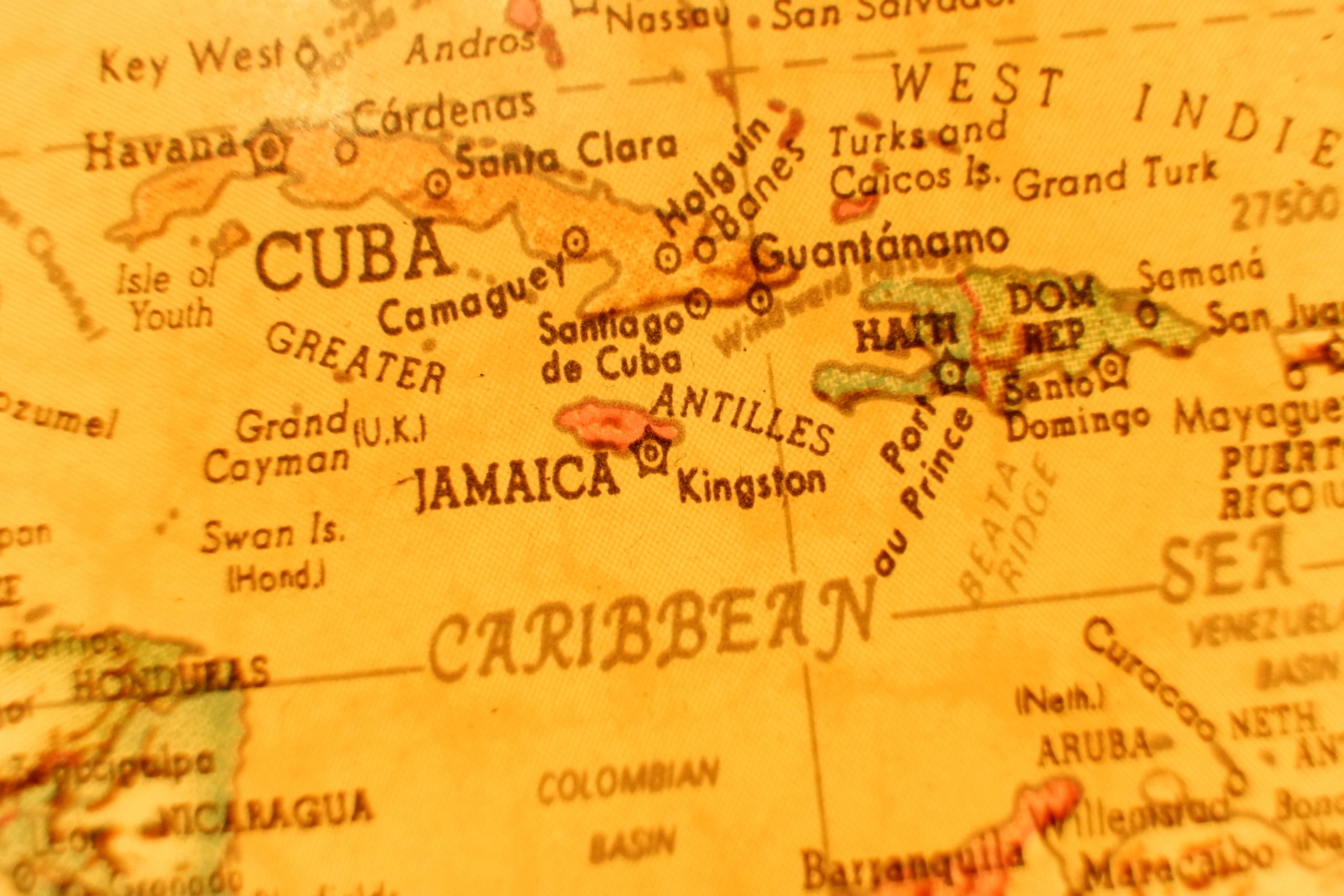
With the new year comes exciting new changes in immigration. We are happy to report that the government has just announced a brand-new parole process for Cubans, Haitians, and Nicaraguans modeled after the Uniting for Ukraine program and parole program for Venezuelans (introduced in October of 2022), granting eligible individuals two-year parole, including the ability to apply for employment authorization and remain lawfully present in the United States.

Separately, the government has released the CBP One mobile app, a new mechanism for noncitizens (land travelers only) to schedule appointments to present themselves at ports of entry, encouraging safe and orderly arrivals. Once Title 42 is no longer in place, this will be the scheduling mechanism for noncitizens to schedule a time to present themselves at a U.S. port of entry for inspection and processing, rather than arriving unannounced or attempting to cross in-between ports of entry. This includes those who seek to make asylum claims. Those who use the CBP One process will be eligible for employment authorization during their period of authorized stay.

Individuals who use the CBP One app will be able to schedule an appointment to present themselves at the following ports of entry:

  • Arizona: Nogales;
  • Texas: Brownsville, Hidalgo, Laredo, Eagle Pass, and El Paso (Paso Del Norte); and
  • California: Calexico and San Ysidro (Pedestrian West – El Chaparral).

During their inspection process, noncitizens must verbally attest to their COVID-19 vaccination status and provide, upon request, proof of vaccination against COVID-19 in accordance with Title 19 vaccination requirements.

Individuals will be able to schedule appointments in CBP One in the coming days. The CBP One application is free to download and available in the Apple and Google App Stores.


Parole Program for Nationals of Cuba, Haiti, Nicaragua, and Venezuela


The United States government has implemented a new parole program for nationals of Cuba, Haiti, Nicaragua, and Venezuela to prevent those eligible from making a dangerous trek to the United States.

*Please note Venezuela’s parole program has been in effect since October 18, 2022. 

The parole program will allow up to 30,000 qualifying nationals per month from all four of these countries to reside legally in the United States.

Eligible individuals will be able to seek advance authorization to travel to the United States and be considered, on a case-by-case basis, for a temporary grant of parole for up to two years, including employment authorization.

Continue reading

yemen-g4f3484adf_1280

In this blog post, we share with you an important announcement from the United States Citizenship and Immigration Services (USCIS).

On December 30, 2022, the Department of Homeland Security announced an extension of Temporary Protected Status (TPS) benefits for Yemeni nationals for an 18-month period beginning from March 4, 2023, through September 3, 2024.

The Biden administration has made the decision to extend Temporary Protected Status for Yemeni nationals due to ongoing armed conflict and extraordinary and temporary conditions that prevent Yemeni nationals from safely returning to their home country.

This means that Yemeni nationals (and individuals having no nationality who last habitually resided in Yemen) who are residing in the United States as of December 29, 2022, are eligible for Temporary Protected Status under Yemen’s designation.

Existing beneficiaries of TPS may re-register for benefits during the 60-day re-registration period that runs from January 3, 2023, through March 4, 2023.

Those who do not currently have TPS but who qualify for TPS benefits can register from January 3, 2023 through September 3, 2024.

It is important for re-registrants to timely re-register during the registration period and not wait until their Employment Authorization Documents (EADs) expire, as delaying reregistration could result in gaps in their employment authorization documentation.

The main benefit of applying for TPS is that those who are approved can remain in the country on a lawful basis, will receive protection against deportation (deferred status), and are eligible to apply for employment authorization and travel permission by filing, Form I-765 Application for Employment Authorization, and Form I-131 Application for Travel Document, with the United States Citizenship and Immigration Services (USCIS).

Continue reading

Welcpuzzle-g75f3e575f_1920ome back to Visalawyerblog! We hope you had a wonderful holiday break and wish you a prosperous new year ahead.

We kick off the new year with some important updates in the world of immigration.

Today, the United States Citizenship and Immigration Services (USCIS) officially announced a Notice of Proposed Rulemaking (NPRM) that will be posted in the Federal Register tomorrow Wednesday, January 4, 2023 that will increase filing fees for certain types of immigration benefits. An unpublished version is already available in the Federal Register.

A 60-day public comment period will follow the publication of the NPRM on January 4, 2023 and will close on March 5, 2023.

Fees will not change until the final rule goes into effect, and only after the public has had the opportunity to comment and USCIS finalizes the fee schedule in response to such public comments. USCIS will host a public engagement session on the proposed fee rule on January 11, 2023.

According to USCIS, the proposed fee increases are necessary to ensure that the agency will have enough resources to provide adequate services to applicants and petitioners moving forward. The agency has said that after having conducted a review of current fees, it has determined that it cannot cover the full cost of providing adjudication and naturalization services without a fee increase.

The agency cited the COVID-19 pandemic as one of the factors leading the agency to increase its fees. As you may recall, the pandemic caused a dramatic reduction in the filing of new applications, leaving USCIS with a substantial decrease in revenues of 40 percent. This unfortunate drop in applications led USCIS to reduce its workforce accordingly.

With current resources, the agency has said it is incapable of adjudicating applications in a timely manner, when considering that agency caseloads are now returning to pre-pandemic levels.

Among the new proposals included in the NPRM are measures that:

  • Incorporate biometrics costs into the main benefit fee and remove the separate biometric services fee
  • Require separate filing fees for Form I-485 and associated Form I-131 and Form I-765 filings
  • Establish separate fees for Form I-129, Petition for Nonimmigrant Worker, by nonimmigrant classification.
  • Revise the premium processing timeframe interpretation from 15 calendar days to 15 business days
  • Create lower fees for certain immigration forms filed online.

Continue reading

a-book-g7ca408570_1920

In this blog post, we bring you some unfortunate news. Recently, the U.S. Department of Education announced that it will no longer recognize the Accrediting Council for Independent Colleges and Schools (ACICS) as an accrediting agency.

Sadly, this means that certain F-1 student visa applicants will be impacted by this change, including those undertaking an English language study program. The U.S. Citizenship and Immigration Services has said that such programs are required to be accredited under the Accreditation of English Language Training Programs Act.

Additionally, this change will impact F-1 students applying for a 24-month science, technology, engineering and mathematics (STEM) optional practical training (OPT) extension, because government regulations now require use of a degree from an accredited, Student and Exchange Visitor Program (SEVP) certified school to receive a STEM OPT extension.

The regulations make clear that the school must be accredited at the time of the application (the date of the designated school official’s (DSO) recommendation on the Form I-20, Certificate of Eligibility for Nonimmigrant Student Status).


What happens next?


Students who have been impacted by this change will receive notification letters from SEVP informing them that their schools’ certification has been withdrawn.

USCIS has said that students who are enrolled at an ACICS-accredited school should contact their DSOs immediately to understand how this loss of accreditation will impact their status and/or immigration benefits.

To make matters worse, schools accredited by ACICS will not be able to issue program extensions, and students will only be allowed to finish their current session if the ACICS-accredited school chooses to voluntarily withdraw its certification or if is withdrawn by SEVP.

If a student’s ACICS-accredited school can provide evidence of a Department of Education recognized accrediting agency or evidence in lieu of accreditation within the allotted timeframe, the student may remain at the school to complete their program of study.


Requests for Evidence Imminent for I-539 Extend/Change of Status


The U.S. Citizenship and Immigration Services (USCIS) will be issuing requests for evidence (RFEs) to individuals who filed Form I-539, Application to Extend/Change Nonimmigrant Status, on or after August 19, 2022, requesting a change of status or reinstatement to attend an ACICS-accredited English language study program.

Once the individual receives the RFE, they will be given the opportunity to provide evidence in response, such as documentation showing that the English language study program they are seeking to enroll in meets the accreditation requirements.

If the student does not submit a new Form I-20 from a school accredited by an entity recognized by the Department of Education, USCIS will deny a change of status or reinstatement request.

Continue reading

ethiopia-g9818de42f_1920

Happy Halloween! In this blog post, we bring you a brand-new immigration update.

On October 21, 2022, the Department of Homeland Security (DHS) announced the designation of Ethiopia for Temporary Protected Status (TPS) for a period of 18 months. This decision marks Ethiopia’s first designation for TPS.

This designation was made based on ongoing armed conflict and extraordinary and temporary conditions in Ethiopia that prevent its nationals from safely returning to their country. Concerns relating to conflict-related violence including killings, rape, and gender-based violence prompted the Secretary of Homeland Security to make this decision. Other temporary conditions further complicate the return of Ethiopian nationals including flooding, drought, and disease outbreaks.

In response to the DHS announcement, Secretary of Homeland Security Alejandro N. Mayorkas explained, “Ethiopian nationals currently residing in the U.S. who cannot safely return due to conflict-related violence and a humanitarian crisis involving severe food shortages, flooding, drought, and displacement, will be able to remain and work in the United States until conditions in their home country improve.”

Continue reading