Articles Posted in Nonimmigrant Visas

multitasking-2840792_1280

Did you recently file an L-1 petition as an Intracompany Transferee under a previously approved blanket petition? Then you may want to hear about this important new update.

On Thursday August 3, 2023, the U.S. Citizenship, and Immigration Services (USCIS) announced new changes to the way that the agency will be issuing receipts for L-1 nonimmigrant intracompany transferees under a previously approved blanket L petition, including executives, managers, or specialized knowledge professionals.


What’s Changed?


When filing Form, I-129S, nonimmigrant petition based on blanket L Petition, together with Form I-129, Petition for a Nonimmigrant Worker, the petitioner will now receive two notices: the receipt notice and the approval notice (if the petition is approved).

Previously, petitioners would receive a stamped and signed Form I-129S along with the Form I-129 approval notice. USCIS will now do away with this practice.

Moving forward, the petitioner will receive a separate approval notice for the Form I-129S, which will serve as the endorsement.


Significance of the Approval Notice


The I-129S approval notice will serve as evidence that a USCIS officer has determined the beneficiary is eligible for L-1 status based on an approved blanket L petition and constitutes an endorsement of Form I-129S as required by 8 CFR 214.2(l)(5)(ii)(E). A copy of that notice will also be provided to the beneficiary to be included with their visa and/or admission papers.

Continue reading

business-g8a72ae439_1280

The news we have all been waiting for is finally here. Today, July 31, 2023, the U.S. Citizenship, and Immigration Services (USCIS) announced that they have conducted a second lottery to select from previously submitted electronic registrations to reach the FY 2024 numerical cap.

At this time, USCIS has notified all prospective petitioners with selected registrations from this round of selection (the second lottery) that they are eligible to file an H-1B cap-subject petition for the beneficiary named in the applicable selected registration.

Only petitioners with selected registrations are eligible to file H-1B cap-subject petitions for FY 2024, and only for the beneficiary named in the applicable selected registration notice.

Please see the information below for a reminder about what you can expect now that the second lottery has been completed.


How will I know if I was selected in the second lottery?


Petitioners with selected registrations will have their myUSCIS online accounts updated to include a selection notice, which includes details of when and where to file. If you submitted your electronic registration with the assistance of an attorney, you must contact your legal representative/case manager to determine whether you were selected in the second randomized lottery.

Continue reading

graphic-gbdf40bd31_1280

Did you participate in the H-1B electronic registration for Fiscal Year 2024? If so, we have some exciting news for you.

On Thursday, July 27, 2023, USCIS issued a news alert informing the public that they will conduct a second H-1B lottery to select additional H-1B registrations to reach the fiscal year (FY) 2024 H-1B numerical allocations, including the advanced degree exemption.

As our readers may recall, USCIS conducted its initial lottery in March of 2023, selecting a total of 110,791 registrations to meet the annual H-1B numerical cap for fiscal year 2024. Registrants had about a 14.6% chance of being selected in the initial lottery.


When will the second lottery take place?


In its announcement, USCIS has said that it they will soon select from previously submitted electronic registrations to reach the FY 2024 numerical allocations through a randomized selection process, aka “the second lottery.” However, a date has not been disclosed.

This means that in the coming weeks, petitioners or their authorized representatives should keep an eye out on their myUSCIS online accounts to know if they were selected in the second lottery.

Once the second lottery has taken place, USCIS will make an official announcement on its webpage indicating the lottery’s completion. At that point, USCIS will notify all prospective petitioners with selected registrations that they are eligible to file an H-1B cap-subject petition for the beneficiary named in the applicable selected registration.

Continue reading

flag-gd4a7b1739_1280

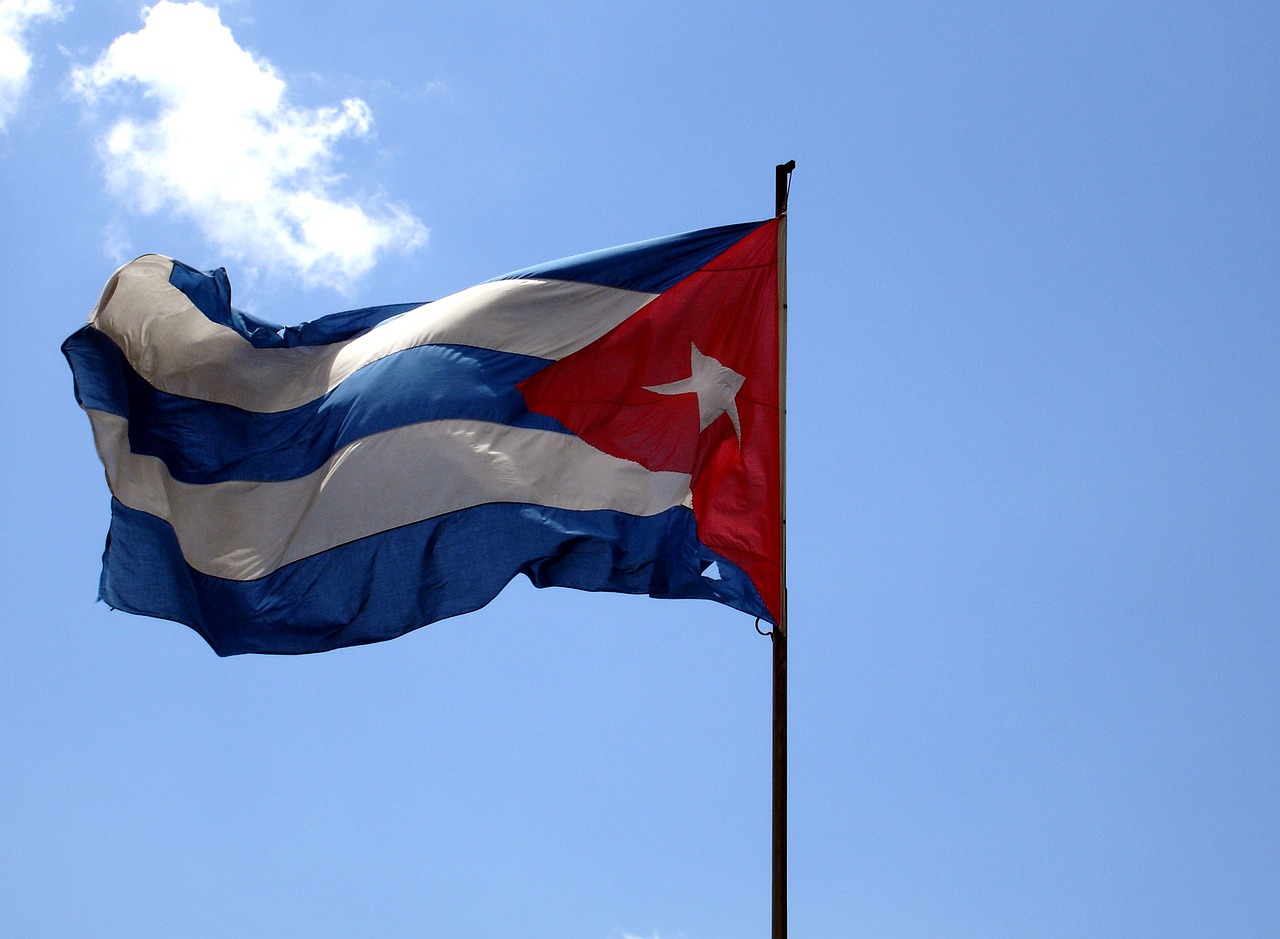
In this blog post, we share with you an important announcement from the U.S. Customs and Border Protection’s Carrier Liaison Program.

The agency has announced that certain nationals participating in the Visa Waiver Program (VWP), who have been physically present in Cuba, or who are dual nationals of Cuba and a country participating in the Visa Waiver Program, will be ineligible to gain admission to the United States using the Electronic System for Travel Authorization also known as ESTA.

According to CBP, beginning January 12, 2021, the Department of State designated Cuba as a State Sponsor of Terrorism, causing the above-mentioned individuals to become ineligible for travel to the United States under the Visa Waiver Program.

Later, on July 6th the Department of Homeland Security updated its Electronic System for Travel Authorization (ESTA) online application and mobile application to reflect these changes.


Why has this happened?


The Visa Waiver Program Improvement and Terrorist Travel Prevention Act of 2015 (“the Act”) makes nationals of Visa Waiver Program (VWP) countries who have been present in a country designated as a State Sponsor of Terrorism (SST), as well as those who are dual nationals of both a VWP country and a country designated as an State Sponsor of Terrorism at the time of applying for an Electronic System for Travel Authorization (ESTA), ineligible for travel to the United States under the Visa Waiver Program.

Since Cuba has been named a State Sponsor of Terrorism, these restrictions will now be enforced against nationals participating in the VWP program who have been present in Cuba or are dual nations of Cuba and a VWP country.

Continue reading

snail-gd2692dfc6_1280

The news you have been waiting for is finally here. The U.S. Citizenship and Immigration Services (USCIS) has announced the expansion of premium processing for applicants filing Form I-539, Application to Extend/Change Nonimmigrant Status, and seeking a change of status to F-1, F-2, M-1, M-2, J-1, or J-2 nonimmigrant status.

For the first time ever, USCIS will also allow the online filing of Form I-907, Request for Premium Processing Service, for these applicants.


When can I request Premium Processing service?


IMPORTANT: applicants may not request premium processing before the dates indicated below

The expansion of premium processing service for certain Form I-539 applicants will occur in two phases as follows:

  • Starting tomorrow Tuesday June 13, 2023, USCIS will accept Form I-907 requests, filed via paper form or online, for applicants seeking a change of status to F-1, F-2, M-1, M-2, J-1, or J-2 status, who have a pending Form I-539, Application to Extend/Change Nonimmigrant Status.
  • Starting Monday June 26, 2023, USCIS will accept Form I-907 requests, filed either via paper form or online, for applicants seeking a change of status to F-1, F-2, M-1, M-2, J-1, or J-2 statuswhen filed together with Form I-539.

Continue reading

bag-gf3e0d3e13_1280

Certain types of nonimmigrants will be expected to shell out more money for the nonimmigrant visa process.

The State Department has announced that starting June 17, 2023, nonimmigrant visa (NIV) application processing fees for visitor visas for business or tourism (B1/B2s and BCCs), and other non-petition based nonimmigrant visas such as student and exchange visitor visas (F, M, and J visas), will increase from $160 to $185.

Additionally, processing fees for certain petition-based nonimmigrant visas for temporary workers (H, L, O, P, Q, and R categories) will increase from $190 to $205.

Fees for a treaty trader, treaty investor, and treaty applicants in a specialty occupation (nonimmigrant E category) visa will also increase from $205 to $315.


What if I pay my nonimmigrant visa fee prior to June 17, 2023?


In this case you are in luck. Nonimmigrant visa fees paid prior to June 17, 2023, will remain valid through the expiration date on your nonimmigrant visa fee payment receipt.


Why the increase?


The Department of State has said that nonimmigrant visa fees are set based on the actual cost of providing nonimmigrant visa services and are determined after conducting a study of the cost of these services.

The agency uses Activity-Based Costing (ABC) methodology to calculate, annually, the cost of providing consular services, including visa services.

Continue reading

eye-gd012fb6ce_1280

The Department of State raised eyebrows earlier this month when it released information that it will be reducing the waiting period for 221(G) “administrative processing,” in an effort to process visas more efficiently.

While this is welcome news, in practice it may not mean much. Consulates and Embassies have been notoriously secretive when it comes to 221(G) administrative processing and do not reveal the reason for a visa applicant being placed in administrative processing in the first place, nor the type of security checks that are being conducted.


What is 221(G) Administrative Processing?


First, let’s explain what administrative processing is. When an applicant visits a U.S. Consulate or Embassy overseas for their visa interview, there are only two possible outcomes that can occur at the conclusion of their interview. The Consular Officer may choose to either issue or “refuse” the visa. A refusal is not the same as a denial. It simply means that the visa applicant has not established his or her eligibility for the visa they are seeking for the time being, and the Consulate needs additional time or requires further information either from the visa applicant or another source to determine the applicant’s eligibility for the visa.

In most cases, visa applicants who have been “refused” will require further administrative processing.


How will I know if I have been placed in 221(G) administrative processing?


Visa applicants placed in administrative processing are often given what is called a “Notice of 221(G) Refusal” at the conclusion of their interview, which states that the visa application has been “refused” under section 221(G) of the Immigration and Nationality Act. The Notice should indicate whether additional administrative processing is required for your case, and whether any further action is required on your part, such as providing additional documentation or further information to process your visa.

However, in some cases visa applicants are not given such a Notice and will later discover that they have been placed in 221(G) administrative processing upon checking their visa status on the Consular Electronic Application Center (CEAC) visa status check webpage.

Continue reading

student-gae3ef0852_1280

In this blog post, we alert our readers to a new broadcast message issued by U.S. Immigration and Customs Enforcement (ICE).

Earlier this year, the U.S. Department of State (DOS) provided updated guidance explaining that Consular officers have the authority to issue F or M student visas for up to 365 days in advance of an international student’s program start date.

However, in its broadcast ICE has clarified that this new guidance DOES NOT change the requirement for issuing Forms I-20, “Certificate of Eligibility for Nonimmigrant Student Status,” in the Student and Exchange Visitor Information System (SEVIS), nor paying the I-901 SEVIS Fee, nor regulations governing admission into the United States.

Despite the advance issuance of an F or M visa, ICE clarifies that students can only enter the United States 30 days before their program start date as listed on their Form I-20 Certificate of Eligibility for Nonimmigrant Student Status.

Students who attempt to enter the United States more than 30 days before their program start date may be found inadmissible by U.S. Customs and Border Protection (CBP).

ICE notes to help ensure smooth entry into the United States, students and school officials should confirm the following prior to arrival at a U.S. port of entry:

  • Students have an active I-901 SEVIS Fee payment on the Form I-20 that they are traveling under.
  • The name of the school on the Form I-20 matches the name of the school on the visa.
  • Student financial information remains up to date in SEVIS.
  • Students do not attempt to enter the United States more than 30 days in advance of their Program Start Date.

Continue reading

vaccine-g2e9472fd1_1920

CBP No Longer Requires Proof of COVID-19 Vaccination for Air Passengers from Any Country starting today May 12, 2023 


The United States Customs and Border Protection (CBP) now joins the State Department and Department of Homeland Security in announcing the end of the COVID-19 vaccination requirement for international travelers starting today Friday, May 12, 2023.

Noncitizen nonimmigrant air passengers will no longer need to show proof of being fully vaccinated with an accepted COVID-19 vaccine to board a flight to the United States.

passport-g58b60bd4e_1920

Welcome back to Visalawyerblog! In this blog post we share with you some breaking news regarding the COVID-19 vaccination requirement for non-immigrant international travelers.

On May 4, 2023, the State Department announced that the Biden administration will end the COVID-19 vaccine requirements for international air travelers at the end of the day on May 11, 2023, which marks the end of the federal COVID-19 public health emergency.

After this date, beginning May 12, noncitizen nonimmigrant air passengers will no longer need to show proof of being fully vaccinated with an accepted COVID-19 vaccine to board a flight to the United States.

Additionally, the Department of Homeland Security has released its own statement announcing that the COVID-19 vaccine requirement will also end for non-U.S. citizen travelers seeking entry through land parts of entry and ferries as indicated below:

Beginning May 12, 2023, DHS will no longer require non-U.S. travelers entering the United States via land ports of entry and ferry terminals to be fully vaccinated against COVID-19 and provide related proof of vaccination upon request. DHS intends to rescind these Title 19 travel restrictions in alignment with the end of the Public Health Emergency and the termination of the Presidential Proclamation on air travel.

Continue reading