Articles Posted in Permanent Residents

hakan-nural-niBllet7sTw-unsplash-scaled

In this blog post we share with you some breaking news for green card applicants applying for adjustment of status on Form I-485, as well as those applying for immigrant visas from abroad.

As part of the green card process, USCIS and the Department of State require applicants to undergo a medical examination with a doctor designated as a civil surgeon, to establish that the applicant is not inadmissible to the United States on public health grounds.

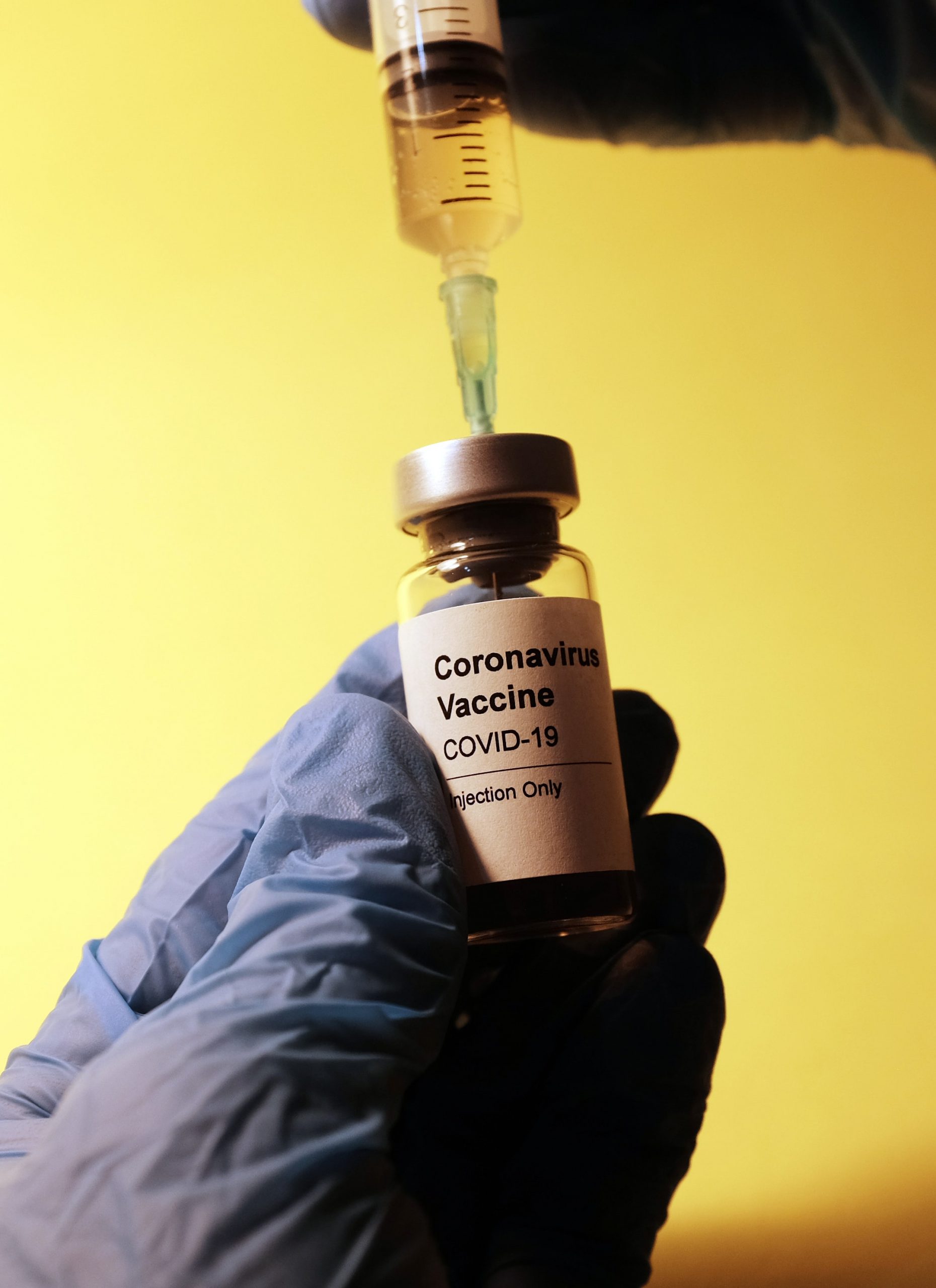
According to new guidelines released by the Centers for Disease Control, beginning October 1, 2021, green card applicants will now be required to establish that they have received a complete COVID-19 vaccine series, in order to be deemed eligible for permanent residence. Following the release of this new guidance, COVID-19 was added to the list of vaccinations required of those seeking U.S. lawful permanent residence.

The new vaccine requirement will apply to routine medical examinations necessary for both adjustment of status applicants applying for green cards in the United States and immigrant visa applicants applying at U.S. embassies and consulates abroad.


Who must take the COVID-19 vaccine?


All applicants (1) applying for I-485 adjustment of status (a green card) or (2) those applying for an immigrant visa abroad, who will receive their medical examination from a Civil Surgeon or Panel Physician on or after October 1, 2021, will be subject to this requirement and are encouraged to complete a COVID-19 vaccine series as soon  as possible.

Eligible applicants must complete the COVID-19  vaccine  series if  a  COVID-19  vaccine  listed  for  emergency  use  by  the World  Health  Organization  (WHO)  or  licensed  or  authorized  for  emergency  use  by  the  U.S. Food  and  Drug Administration  (FDA)  is  available  to  the  applicant  in  the  country  where  the  medical  examination  is  conducted.


How can I show that I have met the vaccine requirement?


Applicants must complete the COVID-19 vaccine series and provide documentation of vaccination to the civil surgeon in person before completion of the medical examination.  The COVID-19 vaccination requirement will differ from previous requirements in that the entire vaccine series (1 or 2 doses depending on formulation) must be completed in addition to the other routinely required vaccines.


How long will the COVID-19 vaccine requirement be in place?


These COVID-19 vaccine requirement will be in place until the CDC determines the vaccine is no longer needed to prevent the importation and spread of COVID-19.

Continue reading

charles-deluvio-S5meg_j_W1U-unsplash-scaled

Exciting news for adjustment of status applicants filing their green card applications! On August 12, 2021, the United States Citizenship and Immigration Services (USCIS) announced that the agency will be temporarily extending the validity period of medical examination (known as Form I-693, Report of Medical Examination and Vaccination Record), from two years to now four years due to COVID-19 related delays in processing applications. For those who are unaware, a sealed medical examination signed by a USCIS authorized civil surgeon on Form I-693 is a required component to receive lawful permanent resident status.


Who Will Benefit from this New Policy?


Effective immediately, USCIS will extend your Form I-693 medical examination if all of the following is true:

  • The civil surgeon’s signature on the medical examination (Form I-693) is dated no more than 60 days before the applicant filed Form I-485, Application to Register Permanent Residence or Adjust Status;
  • No more than four years have passed since the date of the civil surgeon’s signature on Form I-693; and
  • A decision on the applicant’s Form I-485 is issued on or before Sept. 30, 2021.

Why is the validity of the medical exam being extended?


According to USCIS, this change is being made temporarily due to COVID-19 related processing delay that have affected the ability of many applicants to complete the required immigration medical examination. Previously, USCIS considered a completed Form I-693 to retain its validity for two years after the date the civil surgeon signed, as long as the date of the civil surgeon’s signature was no more than 60 days before the applicant filed for adjustment of status. Now the validity of the medical examination Form I-693 is being extended to four years (see the criteria above).

USCIS also revealed that it will be approving a record number of employment-based adjustment of status applications, with more approvals than it has issued since FY 2005.  The agency has prioritized the processing and adjudication of employment-based adjustment of status applications during this fiscal year. The agency vows to continue to make processing and resource allocation decisions to increase the pace of adjudications and limit the potential for employment-based visa numbers to go unused.

Continue reading

fringer-cat-hddmXlPaFGo-unsplash-scaled
Welcome back to Visalawyerblog! In this blog post we share with you an overview of the State Department’s September 2021 Q&A answer session with Charlie Oppenheim, Chief of the Immigrant Visa Control and Reporting Division of the U.S. Department of State, also known as “Chats with Charlie,” broadcasted every month on the State Department’s YouTube channel.

This new series features a monthly Question-and-Answer session with Mr. Charles Oppenheim and a Consular officer, where they answer many of the public’s frequently asked questions and provide a monthly analysis of each month’s Visa Bulletin. This discussion will provide details regarding what to expect in terms of the movement or retrogression of both family and employment-based preference categories on each month’s Visa Bulletin.

Questions for Charlie can be emailed in advance to VisaBulletin@state.gov ahead of each monthly session with “Chat with Charlie Question” in the subject line.

blessing-ri-mBRtqyC_Iq0-unsplash-scaled

Welcome back to Visalawyerblog! In this blog post, we will cover the release of the September Visa Bulletin 2021 and what you can expect for employment based and family preference categories during the month of September 2021.

The Department of State releases the visa bulletin on a monthly basis, which summarizes the availability of immigrant visa numbers for that particular month. The “Final Action Dates” and “Dates for Filing Applications,” charts indicate when immigrant visa applicants should be notified to assemble and submit the required documentation to the National Visa Center.

If you would like to follow along on each month’s progress for the Visa Bulletin please be on the lookout for the next “Chats with Charlie” on the DOS YouTube Channel, which will take place on August 19, 2021, at 1:00 p.m. ET.

Chats with Charlie is a monthly series recently launched by the State Department where Charlie Oppenheim, Chief of the Immigrant Visa Control & Reporting Division of the U.S. Department of State, answers your frequently asked questions regarding each month’s Visa Bulletin. Questions can be emailed to VisaBulletin@state.gov ahead of the event with “Chat with Charlie Question” in the subject line.


Adjustment of Status Filings for those lawfully residing in the United States


Unless otherwise indicated on the U.S. Citizenship and Immigration Services (USCIS) website at www.uscis.gov/visabulletininfo, individuals seeking to file applications for adjustment of status with USCIS must use the “Final Action Dates” charts to determine when they can file such applications. When USCIS determines that there are more immigrant visas available for the fiscal year than there are known applicants for such visas, USCIS will state on its website www.uscis.gov/visabulletininfo that applicants may instead use the “Dates for Filing Visa Applications” charts in this Bulletin.


Adjustment of Status Filing Chart September 2021


For Family-Sponsored Filings:

Pursuant to guidance released by USCIS, in the F2A category, there is a cutoff date on the Dates for Filing chart. However, the category is “current” on the Final Action Dates chart. This means that applicants in the F2A category only may file using the Final Action Dates Chart in the Department of State Visa Bulletin for September 2021.

For all other family-sponsored preference categories, applicants must use the Dates for Filing Chart in the Department of State Visa Bulletin for September 2021.

Continue reading

finger-2081169_1280
Exciting news for green card applicants! On August 9, 2021, the United States Citizenship and Immigration Services (USCIS) announced a new partnership with the Social Security Administration that will allow most applicants filing for adjustment of status to register lawful permanent residence, to apply for a new Social Security number or replacement Social Security card using the newly updated Form I-485 Application to Register Permanent Residence or Adjust Status.

As many of you know, a foreign national must show evidence of their identity and employment eligibility before they can lawfully work in the United States. An acceptable document showing such employment eligibility is an unrestricted Social Security card issued by the Social Security Administration.

Previously, applicants granted lawful permanent resident status were required to attend their local Social Security office and submit documentation in person in order to obtain their Social Security card.

cup-1615074_1920

The National Interest Waiver, a subcategory of the EB-2 employment based, second preference visa, is a great option for professionals who can demonstrate possession of an advanced degree or exceptional ability in their proposed field or endeavor. The National Interest Waiver is an extremely attractive choice for those who qualify because it allows applicants to self-petition for permanent residence without having to submit a Labor Certification Application (LCA) with the Department of Labor.

It is also an interesting choice because the professions that qualify for a National Interest Waiver are not defined by statute, however, to be successful applicants must demonstrate their exceptional ability and prove that their employment in the United States would be of benefit to the nation. Without the filing of a National Interest Waiver, applicants must have employment sponsorship and their employers must go through the lengthy PERM (Program Electronic Review Management) Labor Certification process.


Why is NIW an attractive choice over traditional Labor Certification?


Simply put the National Interest Waiver takes a lot less time and is much easier to file when compared to the traditional EB-2 visa requiring labor certification. Obtaining approval of a labor certification application is no easy task. It can take anywhere from 6 months to more than 1 year to obtain approval, depending on a variety of different factors.

The PERM process is also time consuming for both the U.S. employer and the applicant, making the National Interest Waiver option extremely advantageous. For instance, during the PERM process, the U.S. employer is required to undergo a series of recruitment activities to test the labor market before filing the labor certification application. As part of these activities, the employer must go through a recruitment process where the employer must prove that there is not a sufficient number of able, qualified, and willing applicants, whether U.S. citizens or permanent residents, to fill the position. The employer must also go through an advertising period for the position and wait a mandatory 30-day period after the last advertisement runs before the PERM application can be filed.

The National Interest Waiver does away with these arduous steps, and instead allows an applicant to request a waiver of the Labor Certification process, by demonstrating that his or her proposed endeavor is in the interest of the United States. The applicant does not need employment sponsorship but must demonstrate possession of an advanced degree (master’s or bachelor’s) or exceptional ability in their field or endeavor. Exceptional ability is defined as having a degree of expertise that is significantly above that ordinarily encountered in the profession. That means that you must be prepared to prove to USCIS that you are an expert in your field and have attained a level of mastery in your field and/or achievements such that that you are considered “exceptional.”

Continue reading

loading-bar-5514290_1920

Welcome back to Visalawyerblog! In this blog post we share with you an overview of the State Department’s August 2021 Q&A answer session with Charlie Oppenheim, Chief of the Immigrant Visa Control and Reporting Division of the U.S. Department of State, also known as “Chats with Charlie,” broadcasted every month on the State Department’s YouTube channel.

This new series features a monthly Question-and-Answer session with Mr. Charles Oppnheim and a Consular officer, where they answer many of the public’s frequently asked questions and provide a monthly analysis of each month’s Visa Bulletin. This discussion will provide details regarding what to expect in terms of the movement or retrogression of both family and employment-based preference categories on each month’s Visa Bulletin.

Questions for Charlie can be emailed in advance to VisaBulletin@state.gov ahead of each monthly session with “Chat with Charlie Question” in the subject line.

Be sure to subscribe to the State Department’s YouTube Channel and turn on your notifications so you do not miss any of these important updates.

Below are the highlights of the trends and visa projections for August 2021 and beyond.


DOS Q&A Session with Charlie Oppenheim: August 2021 Visa Bulletin Projections & Beyond


https://www.youtube.com/watch?v=b3R4daHUOj8


Charlie Oppenheim advises against sending “mass like” chain emails to the Charlie Chats email address

Before we get into the questions for this session, I wanted to add that I have seen a significant number of questions being received that maybe online chat groups have provided in a suggested “copy this text” approach that were sent to the Charlie Chat email address. I want to say that this is a very unproductive approach to asking questions, since we must open a significant number of messages with the same question, and that diminishes our ability to review the hundreds and hundreds of questions which are coming in each month. Therefore, it’s likely that we may miss important questions which listeners would like addressed. I am happy to see questions come in but this massive number of duplicates is unproductive to the listener group.


The Top 8 Advance Questions Sent in By Listeners


Q: I submitted all my documentation to NVC a long time ago and I confirmed on their website that everything is completed correctly. My priority date became eligible in March, but I have not yet been scheduled for my final visa interview. Why haven’t I been scheduled despite the eligibility and when can I expect to be scheduled?

A: This is a question we have been getting a lot. It’s important to say that throughout the COVID-19 pandemic, the NVC has continued to schedule appointments and is warehousing cases for Consular sections that have not been able to resume the routine Immigrant Visa processing. Depending on the country’s local restrictions and resources, the Consular sections abroad provide their projected capacity for scheduling to the NVC about 30-60 days in advance.

This allows NVC to begin scheduling those appointments and getting the information out to the applicants early. Other than age-out cases, inter-country adoption cases, and expedite requests, based on certain FAM regulations upon visa availability, the NVC schedules their Immigrant Visa appointments for visa categories in chronological order, based on the date in which the case was deemed “documentarily qualified,” meaning they have been asked to submit certain required documents, all those documents have been received, and have been verified. Then the NVC fills the available appointment slots in a first come, first out manner within each visa class, in accordance with each Consular section’s capacity.

I would advise listeners to refer to the guidance on the NVC Immigrant Visa backlog report website to view the worldwide data count of applicants which have been processed by NVC. Then that will determine how many have become documentarily complete. NVC and the overseas posts are trying to get to all the appointments and applicants as quickly as possible. It’s being done in chronological order and basically, they’re having to catch up on cases that could have been scheduled as far back as March 2020.

Continue reading

sharon-mccutcheon-JngP0kqu6JQ-unsplash-scaled

Welcome back to Visalawyerblog! It is the start of a brand-new week, and we are excited to bring you the latest updates in immigration news.


Biden Administration Launches Nationwide Initiative to Promote Citizenship


On July 2, 2021, the Biden administration and the Department of Homeland Security announced a joint nationwide initiative to encourage long time permanent residents to take the plunge and become U.S. Citizens. The President’s campaign known as the Interagency Strategy for Promoting Naturalization, aims to promote naturalization to all who are eligible, consistent with President Biden’s February 2nd Executive Order 14012 “Restoring Faith in our Legal Immigration Systems and Strengthening Integration and Inclusion Efforts for New Americans.”

Through joint efforts, USCIS, the Department of Homeland Security, and the Biden administration will work together to empower permanent residents to pursue their citizenship opportunities, by leading community outreach efforts to the more than 9 million estimated green card holders living in the United States.

The Naturalization Working Group (NWG) is the agency that will be primarily responsible for implementing this initiative. The NWG will be tasked with developing strategies to promote naturalization through citizenship education and awareness by establishing partnerships with the local community. The Group maintains the following goals and outcomes to bring the President’s agenda to fruition:

  • Raising awareness of the importance of citizenship
  • Promoting civic integration and inclusion
  • Providing immigrants with opportunities and tools to become fully engaged citizens
  • Building community capacity to prepare immigrants for citizenship
  • Eliminating sources of fear and other barriers that prevent individuals from accessing available naturalization service and
  • Advancing and ensuring equity through the citizenship and naturalization processes, including on the basis of race, disability, language access, national origin, gender, gender identity, and sexual orientation, providing support to traditionally underserved communities

Continue reading

fabian-fauth-1_EedIBc6jY-unsplash-scaled

Welcome back to Visalawyerblog and a very happy Thursday to all our loyal readers. In this blog post, we bring you the latest information regarding the expiration of the EB-5 Regional Center program.


What is the EB-5 Regional Center Program?


To become eligible to receive a green card (permanent residence) under the EB-5 Immigrant Investor Program, a foreign national must make either (1) a direct investment in a new commercial enterprise or (2) an investment in a Regional Center project, resulting in the creation of at least 10 jobs, during the time that the investor is granted conditional permanent residence. These are considered the two different “types” of investments under the EB-program. The amount required to be invested depends on whether the investment is “direct” or made in a Regional Center project.

Several considerations need to be taken into account by the investor when deciding which type of investment is right for them (whether “direct” or in a Regional Center). Most often “direct” investment is the most suitable option where the foreign investor wishes to open and operate his own commercial enterprise in the United States and wants to have full control over his or her investment.

The “direct” EB-5 program has three basic requirements: (1) investment in a “new commercial enterprise” (2) of at least $1,000,000 (or $500,000 if the investment is being made in a Targeted Employment Area (TEA) that is underserved) (3) that results in the creation of at least 10 new full-time jobs. Investors are also required to take an active enough role in the business having at least a policy-making position.

Continue reading

idea-5208967_1920

Federal District Judge Rules to Reinstate $500,000 Minimum Investment For the EB-5 Visa Program

In this blog post, we share with you a new landmark court decision affecting the EB-5 Immigrant Investor Visa Program, known as matter of Behring Regional Center LLC V. Chad Wolf et al.

In this case, decided on June 22, 2021, the U.S. District Court of the Northern District of California vacated the controversial 2019 ‘EB-5 Modernization Rule’ that sought to ‘modernize’ the EB-5 visa program, by increasing the minimum investment amount from $500,000 to $900,000.  In her ruling, Judge Corley concluded that the 2019 Modernization Rule should be vacated because the former acting DHS Security, Kevin McAleenan was not properly appointed in his position under the Federal Vacancies Reform Act when he implemented the Regulations.  Therefore, the officials had no legal authority to make and to announce the changes.

The judge’s new ruling means that the district court’s decision will restore the original rules for the EB-5 program, initially established by the Immigration Act of 1990 as a legal pathway to provide qualified foreign/immigrant investors the opportunity to obtain permanent residency in the U.S. (commonly known as the “green card”). The now-defunct EB-5 Modernization Regulations of 2019 had increased the minimum investment amount from $500,000 to $900,000, but with this new ruling the minimum investment amount has again reverted to $500,000.

Continue reading