Articles Posted in Work Visas

loudspeaker-1459128_1280

Welcome back to Visalawyerblog! On behalf of our Law Office we wish you and your families a very Happy New Year. We are hopeful that the new year will bring more positive developments and new possibilities for immigrants around the world with the upcoming change in administration.

In today’s blog post we bring you more updates regarding President Trump’s recent decision to extend Presidential Proclamations 10014 and 10052 until March 31, 2021.

Following the unveiling of the new Proclamation, the Department of State issued their own announcement notifying the public that Proclamations 10014 and 10052 will continue to be enforced through March 31, 2021 in compliance with the directive.

As you know P.P. 10014 suspends the entry to the United States of certain immigrant visa applicants, while P.P. 10052 suspends the entry to the United States of certain nonimmigrant visa applicants who present a risk to the U.S. labor market during the economic recovery following the novel coronavirus outbreak.

As a result, with certain limited exceptions, immigrant visa (green card) interviews are suspended at the Consular level (as opposed to within the US) until March 31, 2020 for the following groups of people:

Continue reading

immo-wegmann-U2sp_4k9gIc-unsplash-scaled

Welcome back to Visalawyerblog! Happy New Year to all of our readers. We hope that you had a relaxing holiday with your loved ones. We look forward to providing you with the latest updates on immigration as we soon enter the Biden administration on January 20th.

Although Biden’s inauguration looms on the horizon, the Trump administration continues to make last minute efforts to derail the issuance of visa applications for thousands of green card applicants residing abroad.

On New Year’s Eve, President Trump signed a new proclamation extending the enforcement of his previously issued April 22nd Proclamation 10014 entitled, “Suspension of Entry of Immigrants Who Present a Risk to the United States Labor Market During the Economic Recovery Following the 2019 Novel Coronavirus Outbreak,” as well as Proclamation 10052 issued on June 22, 2020.

The new proclamation extends the enforcement of these previously issued Proclamations until March 31, 2021. 


P.P. 10014 Overview

As you may recall the April 22nd Proclamation (10014) imposed a 60-day ban on the issuance of visas at U.S. Consulates and Embassies abroad and limited the entry of certain classes of aliens beginning April 23, 2020 and terminating on June 22, 2020.

Pursuant to P.P. 10014, the entry of the following aliens was suspended and limited until June 22, 2020:

  • Aliens outside of the United States on the effective date of the Proclamation (April 23)
  • Aliens without an immigrant visa that was valid on the effective date of the Proclamation (April 23rd) and
  • Aliens who did not have an official travel document other than a visa on the effective date of the proclamation (April 23rd) or issued on any date thereafter that permitted him or her to travel to the United States and seek entry or admission

The order did not apply to the following classes of aliens:

Continue reading

calvin-lupiya-yPg8cusGD8-unsplash-scaled

Can a social media influencer and OnlyFans model with a large online following qualify for the O-1B visa, as an individual of extraordinary ability in the arts or entertainment?

In this blog post, we share with you how our office was able to do just that despite several challenges presented to us by USCIS, in which the adjudicating officer downplayed our client’s achievements, and unnecessarily applied a narrow interpretation of the standard “fashion model” to our client who did not fit the traditional mold of a “fashion model.”

Through a detailed presentation of additional evidence, we advocated for our client and explained that although our client did not neatly fit into the traditional category of “fashion model,” she did in fact satisfy at least three of the eight criteria for O-1B, based on her extraordinary achievement as a social media influencer and model, prominence, recognition, and her lead/critical role as founder of her own successful web platform.

Here, we will share with you how we were able to overcome such challenges and ultimately obtain an approval for our client.


The Rise of Social Media Influencers

Before the social media boom, fashion models were considered the primary vehicle by which companies promoted and advertised commercial products for global audiences. For those seeking success in today’s modeling landscape, social media platforms like Instagram, TikTok, Facebook, YouTube, and Only Fans provided fertile ground for a new type of “model” to emerge – the social media influencer and “instafamous” model.

While such influencers do not fit the traditional “model” prototype, they have taken an unconventional approach to developing their social media presence, and leveraging their online presence in such a way that has enabled them to achieve and sustain an extraordinary level of achievement and recognition within their respective industries. Such influencers have been able to amass millions of followers and achieve an extraordinary level of achievement by inking lucrative brand deals, partnerships, and collaborations with some of the world’s largest companies.

There can be no doubt that the rise of the social media influencer marketing has revolutionized the way that companies do business. That is because the industry has recognized that influencers can engage and connect with their large audiences in a way that cannot be replicated through traditional media figures.

For instance, influencers build relationships with their audiences through sharing their opinions and personal stories, thereby establishing a sense of credibility and authenticity that differentiates them from most conventional models.

Those influencers that have achieved a high level of achievement in their field, by way of sustained national or international acclaim, and a degree of recognition that is substantially above that ordinarily encountered in the field, may qualify for the O-1B visa to live and work in the United States in the area of extraordinary ability.

Continue reading

question-2519654_1280

Welcome back to Visalaywerblog! We kick off the start of a brand new week with the release of a very interesting Question and Answer session recently published by the Department of State.

This Question and Answer session took place on December 11, 2020, by and between the Department of State and the American Immigration Lawyers Association (AILA)’s Department Liaison Committee.

The Question and Answer session addressed a broad range of visa-related questions including burning questions regarding the phased reopening of Consulates and Embassies worldwide, national interest exception procedures, expansion of visa interview waivers, information regarding visa cancellations, MRV validity, the treatment of IV applications with approved I-601A Provisional Waivers, expired immigrant visas, pandemic related delays in obtaining documents for Consular related requests, and much more.

We have rounded up the most interesting questions and responses in this post. To read the government’s complete responses to questions asked, please click here.


Phased Reopening of Routine Visa Services


Q: It is AILA’s understanding that consular posts will reopen in phases based on the following Diplomacy Strong Framework included in Appendix A.

Please confirm:

  • Are the phases and priorities listed in Appendix A still accurate, or have there been any modifications to the Diplomacy Strong framework?
  • Are the phases in Diplomacy Strong standard across posts or are they merely guidelines within which posts have some flexibility in terms of setting priorities?
  • Please confirm whether a post will always be at the same phase for both IV and NIV processing, or whether it may be at a certain phase for IV processing and a different phase for NIV processing (e.g., If Sydney is at phase 3 for IV services, must it also be at phase 3 for NIV services?).
  • While we see references to Diplomacy Strong on a variety of post websites, it is not clear what phase the post is operating under. Would DOS advise posts to share their current operating phase on their websites in order to better inform the public of what they are prioritizing?

A: Although phased reopening of routine visa services originally corresponded with phases of Diplomacy Strong, posts were instructed on November 12 that they are no longer obligated to be in a specific Diplomacy Strong phase before providing additional categories of visa services.

Continue reading

mike-stoll-5-3pb2I4tiE-unsplash-scaled

Welcome back to Visalaywerblog! In this blog post we share with you an interesting new piece of legislation that will have a profound impact on the visa quota system for family-based and employment sponsored immigration.

The Fairness for High Skilled Immigrants Act (S. 386) was unanimously passed by the U.S. Senate on December 2, 2020 and sent back to the House of Representatives for approval.

At its core, the bill seeks to eliminate per-country numerical limitations for employment-based immigrants and increase per-country numerical limitations for family-sponsored immigrants.

Previously, the House of Representatives had passed its own version of the bill, but it has since been amended substantially by the Senate.

Amendments were added to Sections 8 and 9 of the bill. These changes are in addition to those amendments previously introduced by Senator Grassley on H-1B visas, Senator Perdue creating a set aside for Schedule A health care professionals and their family members, and Senator Durbin’s amendments which include a delayed effective date of the bill, transition periods for EB-2 and EB-3 immigrants, early adjustment filing provisions, and an age out protection for children.


What does the December 2020 version of this bill look like?

Among its major provisions are the following.

Green card reforms:

  • The bill would phase out employment-based per county limits on green cards: The main purpose of the legislation is to treat all employment-based immigrant visa applicants on a first-come, first-served basis without regard to birthplace. Under current law, immigrants from no single birthplace can receive more than 7% of the total number of immigrant visas or green cards issued in a year unless they would otherwise go unused. The effect of this provision is that while Indians are half the skilled employer-sponsored applicants, they receive just 10 percent of those green cards and—as a result—are nearly 90 percent of the backlogged applicants.
  • The bill would provide for an 11-year phase out period: The bill’s green card changes would take effect on October 1, 2022. For the EB-2 and EB-3 categories for non-executive level employees of U.S. businesses, the bill guarantees immigrants which are not from the top two origin countries (India and China) a certain percentage of the green cards for 9 years: year 1 (30%), year 2 (25%), year 3 (20%), year 4 (15%), years 5 and 6 (10%), and years 7 through 9 (5%). No more than 25 percent of these “reserved” green cards can go to immigrants from any single country. No more than 85 percent of the other “unreserved” green cards can go to a single country (India). In addition, a minimum of 5.75% of all EB-2 or EB-3 green cards will go to immigrants from these non-top 2 countries for 9 years prioritizing spouses and minor children of immigrants already in the United States and immigrants awaiting visas abroad.

Continue reading

jonathan-borba-Yf1SegAI84o-unsplash-scaled

Welcome back to Visalawyerblog! In this blog post, we celebrate a client’s recent success story and share with you how our office was able to successfully obtain an O-1A visa approval for a jiu jitsu athlete of extraordinary ability.

First, let’s go over the O-1A visa process for individuals of extraordinary ability.

The O-1A is a perfect fit for those who can demonstrate a sustained level of national or international acclaim, as well as recognition for achievements received in their field of expertise. An O-1A applicant must demonstrate that he or she is one of a small percentage of individuals who has risen to the very top of his or her field, and that he or she will work in an area of extraordinary ability.

It is important to note that an O-1A applicant may not self-petition for their visa. A valid employer-employee relationship must exist, and the employer must petition for the applicant’s visa by filing Form I-129 with USCIS. Alternatively, a U.S. agent may file as a petitioner for an O-1 beneficiary if they are the actual employer of the beneficiary, the representative of both the employer or beneficiary, or authorized by the employer to act in place of the employer as its agent.

In general, three of eight criteria must be satisfied to successfully obtain an O-1A visa.

These criteria are as follows:

(1) Documentation of the alien’s receipt of nationally or internationally recognized prizes or awards for excellence in the field of endeavor;

(2) Documentation of the alien’s membership in associations in the field for which classification is sought, which require outstanding achievements of their members, as judged by recognized national or international experts in their disciplines or fields;

(3) Published material in professional or major trade publications or major media about the alien, relating to the alien’s work in the field for which classification is sought, which shall include the title, date, and author of such published material, and any necessary translation;

Continue reading

delivery-guy-1424808_1280

Happy Monday! Welcome back to Visalawyerblog. We kick off the start of a brand new week with very exciting news.

We are happy to report that on October 1, 2020, Congress passed H.R. 8337, an appropriations bill that will expand the availability of premium processing service provided by the United States Citizenship and Immigration Services (USCIS) to a larger pool of applicants for immigration benefits.

The legislation calls for expansion of premium processing to most employment-based immigration applications and potentially all USCIS benefits. This move could prove enormously beneficial especially during the Coronavirus pandemic to help move cases along more quickly than ever before. Applicants who request an employment authorization document (EAD) for example can seek premium processing service along with their applications, allowing for EADs to be issued within 15 calendar days.

During this pandemic, the processing of EAD applications has slowed significantly with most taking at least 7 months or longer to be issued. This new legislation will dramatically improve processing times for those that are willing to pay for premium processing service.

Before H.R. 8337, USCIS allowed certain employment-based petitioners to request premium processing service for E-1, E-2, H-1B, H-2B, H-3, L-1A, L-1B, LZ (blanket L-1), O-1, O-2, P-1, P-2, P-3, Q-1, R-1, TN-1 and TN-2 applications for a fee of $1,440 with guaranteed processing of applications within 15 calendar days. For immigrant petitions, premium processing was available, with certain exceptions, for the employment-based first, second and third preferences (EB-1, EB-2 and EB-3).


What types of petitions will benefit from the expansion of premium processing service?

The new legislation will now allow premium processing service for:

(A) employment-based nonimmigrant petitions and associated applications for dependents of the beneficiaries of such petitions;

(B) employment-based immigrant petitions filed by or on behalf of aliens described in paragraph (1), (2), or (3) of section 203(b); [the first three employment-based preferences]

(C) applications to change or extend nonimmigrant status;

(D) applications for employment authorization; and

(E) any other immigration benefit type that the Secretary deems appropriate for premium processing.


Continue reading

judge-5313542_1920
On October 1, 2020, federal judge Jeffrey White of the U.S. Court for the Northern District of California issued a preliminary injunction that prevents the government from enforcing Presidential Proclamation 10052 issued on June 22, 2020, but only against the Plaintiffs in the lawsuit which include the National Association of Manufacturers, the United States Chamber of Commerce, the National Retail Federation, Technet, and Intrax, Inc. See National Association of Manufacturers v. Department of Homeland Security.

The plaintiffs brought the lawsuit before the court to challenge the issuance of Presidential Proclamation 10052, which suspends visa issuance for certain nonimmigrant workers until December 13, 2020, with discretion to be continued “as necessary.” Those impacted by this Proclamation include applicants who were not in the United States on June 24th or in possession of a valid visa as of that date, who seek visas in any of the following categories:

(1) H-1B or H-2B visa nonimmigrant visa applicants, and any alien accompanying or following to join such alien;

sincerely-media-vcF5y2Edm6A-unsplash-scaled

Welcome to the start of a new week! In this blog post we discuss an exciting new announcement and a quick reminder regarding upcoming increases in filing fees.

USCIS Announces Extension of Flexibility for RFE, NOID, and Similar Responses

On September 11, 2020, the United States Citizenship and Immigration Services (USCIS) extended its previous policy granting applicants additional time to respond to requests for evidence, notices of intent to deny, and such similar notices.

Specifically, USCIS has stated that an applicant who has received a request, notice or decision dated between March 1, 2020 and January 1, 2021, may respond to such request or notice within 60 calendar days after the due date/deadline provided in the notice or request.

This flexibility is granted for the following types of notices, so long as the notice or request is dated between March 1, 2020 and January 1, 2021:

  • Requests for Evidence;
  • Continuations to Request Evidence (N-14);
  • Notices of Intent to Deny;
  • Notices of Intent to Revoke;
  • Notices of Intent to Rescind and Notices of Intent to Terminate regional investment centers;
  • Motions to Reopen an N-400 Pursuant to 8 CFR 335.5, Receipt of Derogatory Information After Grant;
  • Filing date requirements for Form N-336, Request for a Hearing on a Decision in Naturalization Proceedings (Under Section 336 of the INA); or
  • Filing date requirements for Form I-290B, Notice of Appeal or Motion.

This flexibility has been provided to allow applicants the opportunity to gather important documentation needed to respond to the request or notice, given the extraordinary delays applicants have been facing in obtaining documents during the Coronavirus pandemic.

This policy ensures that USCIS will not take any adverse action on a case without first considering a response to the request or notice issued to the applicant.

USCIS will also consider a Form N-336 and Form I-290B “received” up to 60 calendar days from the date of the decision, before taking any action.

Continue reading

visuals-vnfyiXo0BR8-unsplash-scaled

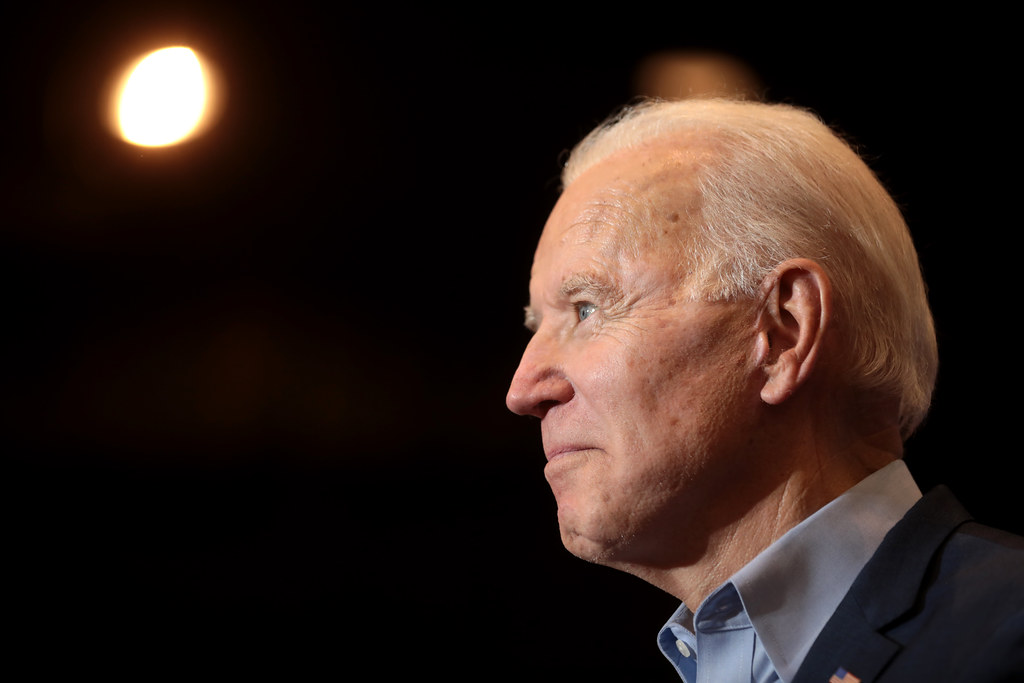
We are just 60 days away from Election day in the United States which falls on Tuesday, November 3rd. Do you know where your candidate stands on immigration? In this post, we cover Presidential nominee Joe Biden’s stance on important immigration issues, and everything you need to know about his vision for America.

We would also like to take this opportunity to remind those of our readers who are American citizens to exercise their right to vote. It is your civic duty and will help shape the nation’s immigration policy for the next four years. For voter registration information please click here.


Immigration under Joe Biden

If elected President of the United States, Joe Biden has stated that he will enact a number of policies during his four-year term. Among these policies, he promises to take urgent action to undo destructive policies implemented by the Trump administration, modernize the immigration system, reassert America’s commitment to asylum-seekers and refugees, and implement effective border screening.


Comprehensive Immigration Reform

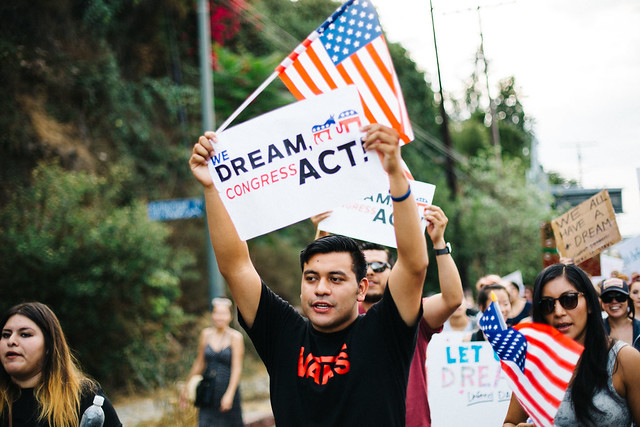
First and foremost, Joe Biden supports working with Congress to pass a comprehensive immigration solution that would offer nearly 11 million undocumented immigrants a path to citizenship. As vice president, Joe Biden worked alongside former President Obama to push forward a bill that would do just that. Unfortunately, the Republican-led Congress refused to approve the bill, leaving millions of undocumented immigrants in limbo including Dreamers.

Joe Biden advocates for the creation and expansion of the Deferred Action for Childhood Arrivals program (DACA), the Deferred Action for Parents of Americans (DAPA) program,  the Central American Minors program, which allows parents with legal status in the U.S. to apply to bring their children from Central America to live with them, and the creation of a White House task force to support new Americans to integrate into American life and their communities.

Continue reading