Articles Posted in Work Visas

nils-huenerfuerst-xkq3mbthlh0-unsplash-scaledThe U.S. government has issued a revised travel ban that takes effect at 12:01 a.m. ET on January 1, 2026, significantly expanding restrictions on visa issuance for nationals of 39 countries and individuals travelling with Palestinian Authority–issued travel documents.

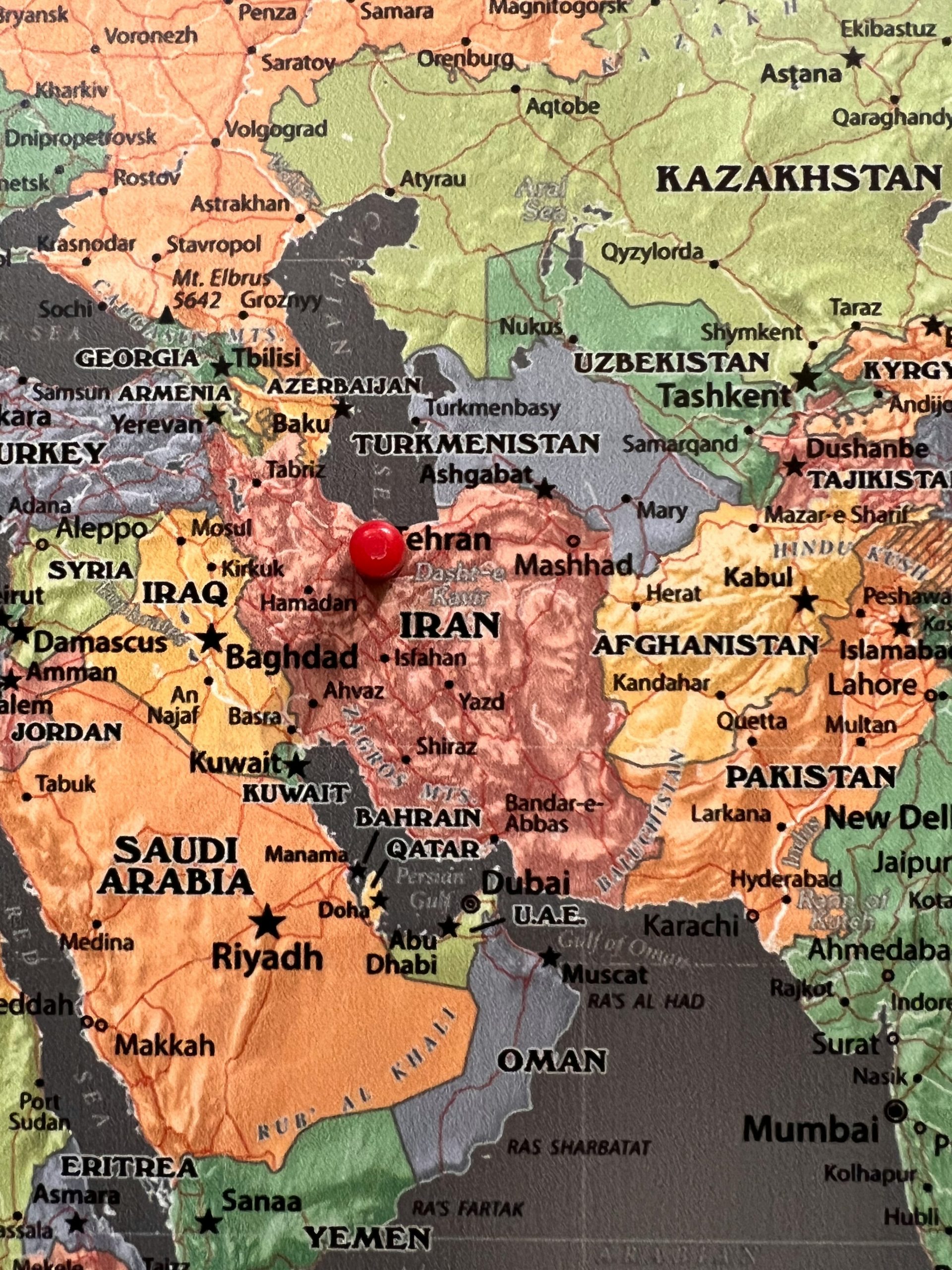
Under the new presidential proclamation, immigrant and nonimmigrant visas are fully suspended for nationals of 19 countries, which now include seven newly added nations. An additional 19 countries face partial restrictions — limiting immigrant visas and certain nonimmigrant categories (e.g., B, F, M, J visas). One country, Turkmenistan, now faces only immigrant visa restrictions.

Importantly, the ban does not revoke existing visas or apply to foreign nationals already in the United States on January 1, 2026, with valid visas. Other exceptions include U.S. lawful permanent residents, dual nationals travelling on a non-designated passport, certain diplomats, and athletes travelling for major events.

This expanded travel ban marks one of the most sweeping visa restrictions in recent U.S. policy, with potential impacts on U.S. employers, and visa holders.


What are the countries subject to full restrictions


The proclamation adds seven countries to the existing 12 countries whose nationals are barred from both immigrant and nonimmigrant visa issuance. The initial 12 countries with continued full visa restrictions are:

  • Afghanistan
  • Burma
  • Chad
  • Republic of Congo
  • Equatorial Guinea
  • Eritrea
  • Haiti
  • Iran
  • Libya
  • Somalia
  • Sudan
  • Yemen

The proclamation adds the following seven countries to the full restriction list:

  • Burkina Faso
  • Laos (previously on the June travel ban “partially restricted” list)
  • Mali
  • Niger
  • Sierra Leone (previously on the June travel ban “partially restricted” list)
  • South Sudan
  • Syria

Continue reading

january-lettering-9278218_1280We are pleased to report that the U.S. Department of State’s Bureau of Consular Affairs has published the January 2026 Visa Bulletin.

In this blog post, we breakdown the movement of the employment-based and family-sponsored categories in the coming month.


USCIS Adjustment of Status


For adjustment of status filings to permanent residence in the month of January, USCIS has not yet indicated which filing chart it will use for the employment-based and family-sponsored categories.


Highlights of the January 2026 Visa Bulletin


At a Glance

What can we expect to see in the month of January?

Employment-Based Categories


Final Action Advancements

EB-1 Aliens of extraordinary ability, Outstanding Professors and Researchers, and Certain Multinational Managers or Executives

  • EB-1 India will advance by 10 months to February 1, 2023
  • EB-1 China will advance by 10 days to February 1, 2023

EB-2 Members of the Professions and Aliens of Exceptional Ability

  • EB-2 India will advance by 2 months to July 15, 2013
  • EB-2 China will advance by 3 months to September 1, 2021
  • All other countries will advance by 2 months to April 1, 2024

EB-3 Professionals and Skilled Workers

  • EB-3 India will advance by 1.8 months to November 15, 2013
  • EB-3 China will advance by 1 month to May 1, 2021
  • All other countries will advance by 1 week to April 22, 2023

EB-3 Other Workers

  • EB-3 India will advance by 1.8 months to November 15, 2013
  • EB-3 China will advance by 1 year to December 8, 2018
  • All other countries will advance by 1 month to September 1, 2021

Continue reading

mobile-1087845_1280

DHS Ends Family Reunification Parole Programs

On December 12, 2025, the Department of Homeland Security (DHS) announced that it is terminating all categorical Family Reunification Parole (FRP) programs for citizens of Colombia, Cuba, Ecuador, El Salvador, Guatemala, Haiti, and Honduras, including their immediate family members.

These programs allowed certain relatives of U.S. citizens and permanent residents to enter the United States on parole while awaiting completion of the immigrant visa process.

DHS described the move as an effort to end what they described as the “abuse of humanitarian parole,” arguing that these programs allowed individuals to bypass traditional immigration procedures without sufficient vetting. Under the new policy, parole will be granted on a case-by-case basis.

The termination takes effect December 15, 2025, and parole for individuals already admitted under FRP will generally expire on January 14, 2026, unless they have a pending Form I-485 Application to Adjust Status that is postmarked or electronically filed on or before December 15 and it is still pending on January 14, 2026.

If an individual has a pending Form I-485, their parole will remain valid until either their period of parole expires or USCIS makes a final decision on their pending Form I-485, whichever is sooner. If the Form I-485 is denied, the period of parole will be terminated, and they will be required to depart the United States or seek relief through alternative legal pathways.

Continue reading

thanksgiving-7606342_1280

As we reflect on the past year, we are sincerely grateful for the trust and confidence you place in our office. It is our privilege to serve you, and we appreciate the opportunity to support you and your families.

In observance of the Thanksgiving holiday, our office will be closed on Thursday November 27th and Friday November 28th. We will resume normal business hours on the following business day.

We wish you and your loved ones a warm, safe, and joyful Thanksgiving.

bike-7071098_1280
On November 12, 2025, a federal court ruling in the case Moody et al. v. Mayorkas et al. granted relief to new investors in the EB-5 program by halting the increased application fees introduced by the U.S. Citizenship and Immigration Services (USCIS) on April 1, 2024.


What fees were increased?


Here’s a quick breakdown of the fee changes that were challenged:

hiring-1977803_1280On October 29, 2025, the Department of Homeland Security (DHS) announced an interim final rule that will end the automatic extension of employment authorization documents (EADs) for most renewal applicants effective October 30, 2025.

In this post, we’ll unpack what’s changing, who it affects, the rationale behind the change, and what individuals and employers should do to prepare.

What was the previous policy?


Historically, noncitizens who held valid EADs (Form I-766) and timely filed a renewal application (Form I-765) before their current EAD expired often automatically received continued employment authorization while the renewal was pending. This “automatic extension” policy served as a buffer to prevent employment gaps.

These policies helped many workers avoid a lapse in authorization while waiting for processing of their renewal application.

What is changing now?


Starting October 30, 2025, the automatic extension of work authorization for most renewal applicants will end.

What to know

  • If you file your I-765 renewal on or after October 30, 2025, you will not receive an automatic extension of your EAD for most categories.
  • The rule affects many categories of renewal applicants, including (but not necessarily limited to) those applying under asylum, adjustment of status, H-4 dependent spouses (EAD category C26), etc.
  • Automatic extensions that were already granted (for renewal applications filed before the cut-off) remain valid.
  • Some limited exceptions remain, notably for certain categories such as those tied to TPS (Temporary Protected Status) where automatic extension may still be provided by law or Federal Register notice.

In short, you will not be authorized to keep working simply because you filed a renewal — you must wait for the new EAD to be approved by USCIS.

Continue reading

payment-terminal-6400952_1280On September 19, 2025, the President issued a Proclamation on the Restriction on Entry of Certain Nonimmigrant Workers, requiring any new H-1B petitions to include an additional $100,000 payment as a condition for eligibility.

Following the President’s announcement, USCIS released clarification on the new fee requirement, specifying that the surcharge only applies to new H-1B petitions filed on or after 12:01 a.m. EDT on September 21, 2025. The fee is triggered only when the foreign national beneficiary is outside the United States at the time the petition is filed, and the petition requires visa issuance at a U.S. or port of entry notification.

Importantly, the USCIS guidance also clarifies who is exempt from the surcharge. For example, H-1B petitions filed before the effective date are not subject to the fee. Additionally, individuals already in H-1B status in the U.S.—such as those seeking extensions, amendments, or a change of employer—are not required to pay the surcharge under the current guidance. The responsibility for paying the fee rests with the petitioner (employer), and proof of payment must be included with the petition at the time of filing. USCIS instructs employers to submit the required fee using pay.gov, following the payment instructions.  

ai-generated-8775233_1280On October 3, 2025, a coalition of labor unions, healthcare providers, academic institutions, and religious groups, filed a lawsuit urging a federal court to strike down the $100,000 fee imposed on new H-1B petitions by the Trump administration for workers outside the United States.

What the Lawsuit Says


The lawsuit, filed in the U.S. District Court for the Northern District of California, argues that the fee which took effect September 21, violates both the Immigration and Nationality Act and the Administrative Procedure Act. Plaintiffs claim the President lacks authority to unilaterally impose a fee of this kind, especially one designed to raise revenue or direct government spending.

The Trump administration’s sudden rollout of the H-1B fee caused immediate disruptions:

  • Workers abroad scrambled to return to the United States, paying steep travel costs.
  • Others inside the U.S. canceled planned international travel.
  • Some even asked to deplane midflight upon hearing the news.

The fee is seen by critics as a threat to institutions that rely heavily on skilled foreign workers—such as universities, health systems, and religious groups—particularly in fields already facing staffing shortages.

Continue reading

people-4009327_1280On September 24, 2025, the Department of Homeland Security (DHS) issued a proposed rule that would change the current selection process for selecting H-1B visa petitions subject to the annual numerical limits established by the Immigration and Nationality Act.

Under the proposed rule, the current random lottery system would be replaced with a wage-based selection process that prioritizes the selection of H-1B workers offered higher salaries by sponsoring employers.

The goal is to better align the H-1B program with U.S. labor market needs by increasing the chances of selection for higher-paid, and presumably higher-skilled, foreign workers. This change aims to reduce the potential for abuse in the system, discourage mass low-wage registrations, and ensure that the most economically valuable positions are filled through the H-1B program.

What may change


Currently, the U.S. government selects H-1B visa petitions through a randomized lottery system due to the annual numerical cap on available visas. Employers first submit electronic registrations for each prospective H-1B worker during a designated registration period, typically held in March. Because the demand for H-1B visas consistently exceeds the supply, the U.S. Citizenship and Immigration Services (USCIS) conducts a lottery to determine which petitions can proceed with applying for H-1B visas.

There are two separate caps under the H-1B program: the regular cap of 65,000 visas and an additional 20,000 visas reserved for individuals who hold advanced degrees from U.S. institutions (commonly referred to as the master’s cap). All registered beneficiaries, including those with U.S. advanced degrees, are first entered into the regular cap lottery. After 65,000 are selected, those with U.S. master’s degrees who were not chosen in the initial round are entered into a second lottery for one of the 20,000 advanced degree slots.

This current system does not prioritize applicants based on wage levels, qualifications, or skills. Selection is purely random as long as the minimum eligibility requirements are met.

However, the Department of Homeland Security (DHS) is proposing changes that would shift the selection process to favor higher-paid workers.

Continue reading

ai-generated-9069946_1280The legal immigration landscape was shaken once again late Friday evening when the President issued a new proclamation barring new H-1B workers from entering the United States—unless their employers pay a $100,000 fee for each sponsored employee.

The proclamation took effect at 12:01 a.m. EDT on Sunday, September 21, and will remain in effect until a court order halts its implementation.

Emergency Litigation


A surge of emergency lawsuits is expected to be filed by impacted H-1B workers and their sponsoring employers, seeking a nationwide injunction to stop the implementation of the executive order. A court could issue an injunction as early as Monday. We will provide litigation updates as they develop in the coming days.

Highlights of the Executive Order


  • Effective today September 21, 2025, certain H-1B workers will be denied entry into the United States unless their employer pays a $100,000 fee on their behalf, according to the proclamation signed by President Trump late Friday.
  • Application: The ban on entry and the associated fee requirement applies only to any new H-1B visa petitions submitted after 12:01 a.m. eastern daylight time on September 21, 2025. This includes the 2026 lottery, and any other H-1B petitions submitted after 12:01 a.m. eastern daylight time on September 21, 2025.
  • The proclamation does not apply to:
    • any previously issued H-1B visas, or any petitions submitted prior to 12:01 a.m. eastern daylight time on Sept. 21, 2025.
    • does not change any payments or fees required to be submitted in connection with any H-1B renewals. The fee is a one-time fee on submission of a new H-1B petition.
    • does not prevent any holder of a current H-1B visa from traveling in and out of the United States.
  • Misuse of B Visas: The proclamation warns that individuals with approved H-1B petitions should not misuse B visas to enter the U.S. for jobs that start before October 1, 2026.
  • National Interest Exemptions: The proclamation grants the Department of Homeland Security authority to issue exemptions for individuals, specific employers, or workers in designated industries—if the agency determines that the H-1B employment serves the national interest and poses no threat to U.S. security or public welfare.
  • Termination: Absent a court order, this restriction will remain in effect for 12 months but may be extended based on recommendations from federal immigration agencies. An extension would continue the ban for individuals approved under the FY 2027 H-1B cap.
  • Changes to the Prevailing Wage: Besides restricting H-1B entry, the proclamation directs the Department of Labor to revise prevailing wage levels and prioritize H-1B approvals to high-skilled, high-paid H-1B workers.

In the hours after the proclamation was issued, chaos unfolded as H-1B visa holders, advised by their employers and legal counsel, abandoned flights and canceled international travel due to uncertainty about how the proclamation would be enforced at the U.S. border.

Adding to the uncertainty was the absence of clear guidance from immigration authorities, including the Department of Homeland Security (DHS) and Customs and Border Protection (CBP), about how the proclamation is to be enforced against current H-1B visa holders and approved beneficiaries.

Continue reading