Articles Posted in Asylum

washington-dc-4457050_1280

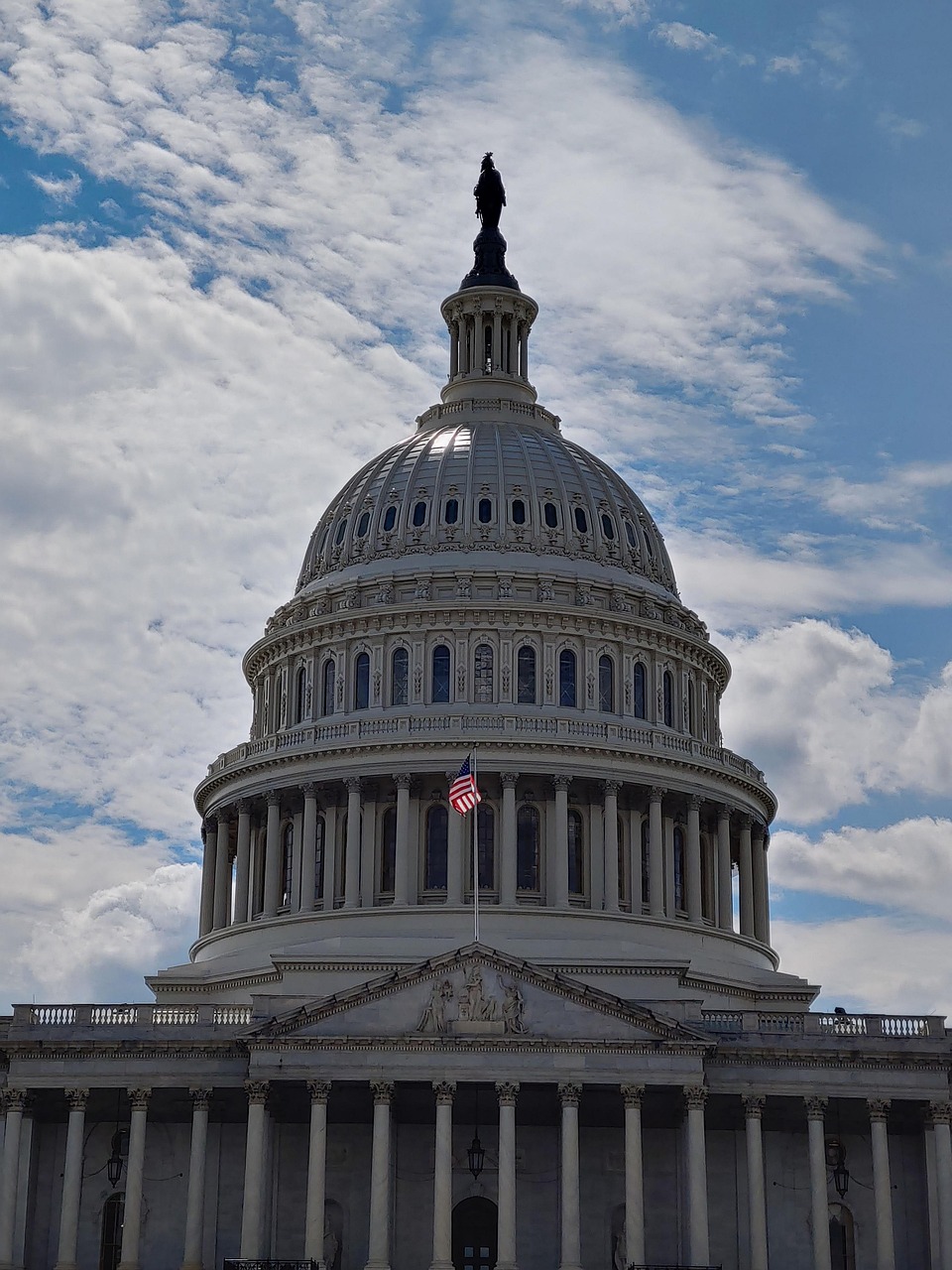
In the wake of a deadly shooting of two National Guard members in Washington, D.C., U.S. Citizenship and Immigration Services (USCIS) has been instructed to pause all asylum decisions until further notice.

Asylum officers at USCIS, a branch of the Department of Homeland Security, have been told to refrain from approving, denying or closing affirmative asylum applications received by the agency.

The directive comes after authorities reported that the perpetrator of the shooting was an Afghan national who had previously been granted asylum.

Officials have framed the pause as a measure to “reassess immigration and vetting procedures” in light of public safety concerns. This decision will create delays for thousands of asylum seekers who are already navigating a complex and uncertain system.

In-person appointments for applicants seeking updates on their cases are also canceled until further notice.

According to internal guidance, officers may continue conducting asylum interviews and reviewing cases up to the point of issuing a decision. “Once you’ve reached decision entry, stop and hold,” the directive stated.

On November 28th USCIS Director Joseph Edlow confirmed the news on X.

Continue reading

dollar-2931882_1280On Tuesday, the U.S. Citizenship and Immigration Services (USCIS) will issue a Federal Register notice enforcing new fees for certain immigration benefit requests postmarked on or after July 22, 2025. Benefit requests submitted to the agency without the proper fees will be rejected.

These new fees are part of the H.R. 1 Reconciliation Bill. A portion of these new fees will be deposited into a U.S. Treasury account that primarily funds the operations of USCIS.

Please be aware that the Federal Register Notice does not include all the new fees mandated by the new bill. The Department of Homeland Security (DHS) will issue a future announcement regarding the implementation of fees that have not been addressed in Tuesday’s notice.


What are the new fees?


Continue reading

prison-370112_1280A new lawsuit filed by a man detained in San Diego, California, is challenging the controversial practice of courthouse arrests by U.S. Immigration and Customs Enforcement (ICE) taking place in recent months. The case could offer critical insight into the government’s approach in making these arrests. (A.M. v. Larose (3:25-cv-01412))

The man identified in court filings as A.M. is seeking asylum in the United States after being subjected to torture in his home country from his human rights advocacy. On June 3, he arrived for what he believed would be a routine immigration court hearing but was shocked to find that the judge had dismissed his case and ICE agents were waiting outside, ready to arrest him and take him to Otay Mesa’s Detention Facility to eventually be deported.

Unfortunately, A.M.’s case is not unique. In recent months, the Trump administration has enforced a controversial policy in immigration courts to expedite deportations by instructing judges to swiftly dismiss cases, subjecting individuals to expedited removal without giving them a meaningful opportunity to contest the government’s claims or consult attorneys.

This approach, detailed in a May 30 directive from the Executive Office for Immigration Review, encourages judges to grant oral motions to dismiss without the standard 10-day response period, effectively eliminating opportunities for individuals to contest their cases. Once dismissed, individuals are immediately eligible for expedited removal, making it possible for ICE officers to arrest them.

Continue reading

lawyer-3819044_1280The growing presence of U.S. Immigration and Customs Enforcement (ICE) officials at immigration courthouses nationwide has prompted several states to enact laws preventing ICE from arresting or detaining individuals attending their immigration hearings.

One such law passed by the state of New York is the “Protect Our Courts Act,” which shields individuals from being arrested by federal immigration authorities like ICE while traveling to, attending, or leaving court proceedings. This law is designed to guarantee that people can access the justice system without fearing immigration-related repercussions. It forbids arrests in these situations unless a judicial warrant or court order is shown to court personnel.

On June 12th the Justice Department sued the state of New York challenging the constitutionality of the Act under the supremacy clause. The government argues that it unlawfully obstructs federal immigration enforcement operations.

The Trump administration is seeking to invalidate these laws to facilitate detention and removal. According to the government, arrests at courthouses helps prevent individuals from evading authorities and decreases safety risks because of the security offered by courthouses.

In response to the lawsuit, the New York Civil Liberties Union issued a statement defending the state law adding, “This latest attempt by the Trump administration to meddle in our laws would push immigrant communities further into the shadows, throw due process out the window, and weaken trust in our justice system — making everyone less safe. It sends a dangerous message: that ICE can and should operate wherever it wants, regardless of the human cost.”

Continue reading

court-5665886_1280
On Wednesday, May 28, 2025, a federal judge from the United States District Court for the District of Massachusetts issued a nationwide court order lifting the Trump administration’s suspension of adjudications for immigration benefit applications submitted by noncitizens who were lawfully paroled into the United States under certain categorical parole programs implemented during the Biden administration.

Those affected by the suspensions were parolees in the following programs:

  • Military Parole in Place (MPIP) for members of the U.S. armed forces to petition their relatives for parole
  • Uniting for Ukraine (U4U), for Ukrainian citizens and their family members to apply for advanced authorization to travel to the United States to request parole for up to two years and apply for employment authorization with USCIS
  • Noncitizens from Cuba, Haiti, Nicaragua, and Venezuela (CHNV) authorizing parole requests of up to two years, and the ability to apply for employment authorization from USCIS
  • Family Reunification Parole (FRP) programs permitting individuals from Colombia, Cuba, Guatemala, Ecuador, Haiti, Honduras, and El Salvador to receive advanced authorization to travel to the United States while their family-based immigrant visas are pending.
  • Central American Minors Program (CAM) for individuals from El Salvador, Honduras, and Guatemala lawfully present in the United States to request immediate relatives not present in the United States to be granted access to the Refugee Admissions Program.

Continue reading

tingey-injury-law-firm-S2rcAJbBxX0-unsplash-scaledWe are pleased to report that on April 14, 2025, a Massachusetts federal judge issued a temporary nationwide injunction, suspending the Department of Homeland Security’s (DHS) termination of the Cuba, Haiti, Nicaragua, and Venezuela (CHNV) parole programs. The termination was set to take effect on April 24, 2025, and would have ended parole authorization and any associated benefits, including work authorization for individuals in the United States under the CHNV parole programs. The judge’s decision suspends the Trump administration’s cancellation of these programs.

What You Need to Know

  • A federal district court judge has issued a temporary nationwide injunction immediately blocking the Department of Homeland Security from terminating the Cuba, Haiti, Nicaragua, and Venezuela (CHNV) parole programs, which were expected to terminate on April 24, 2025.

poster-7297156_1280

In President Trump’s latest legal battles, a federal judge from the U.S. District Court of Massachusetts has dealt a blow to the administration’s plans to fast-track the deportations of thousands of undocumented migrants with final orders of removal.

Today, federal judge Brian Murphy issued a nationwide temporary restraining order immediately blocking U.S. Immigration and Customs Enforcement (ICE) from deporting migrants from the United States to countries with which they have no existing relationship, without first providing them written notice and a meaningful opportunity to claim relief under the Convention Against Torture (CAT) for immigrants fearing persecution.

This decision was made in response to a lawsuit filed by a group of migrants challenging ICE policies that expedite the removal of undocumented immigrants released from detention to third countries.

The judge’s court order specifically prohibits the U.S. government from:

“Removing any individual subject to a final order of removal from the United States to a third country, i.e., a country other than the country designated for removal in immigration proceedings, UNLESS and UNTIL [the government] provide[s] that individual, and their respective immigration counsel, if any, with written notice of the third country to where they may be removed, and UNTIL Defendants provide a meaningful opportunity for that individual to submit an application for CAT protection to the immigration court, and if any such application is filed, UNTIL that individual receives a final agency decision on any such application.”

Continue reading

statue-of-liberty-9275095_1280Today March 21, 2025, the Department of Homeland Security (DHS) released an advance copy of a notice in the Federal Register ending four Biden-era parole programs for Cuba, Haiti, Nicaragua, and Venezuela (CHNV).

When


The temporary parole period of aliens in the United States under the CHNV parole programs will terminate on April 24th (30 days from the date of the notice’s publication in the Federal Register)

Parolees without a lawful basis to remain in the United States following this termination of the CHNV parole programs must depart the United States before the program’s termination date.

Who will be impacted


Nationals from Cuba, Haiti, Nicaragua and Venezuela who flew to the U.S. under Biden’s CHNV humanitarian parole program.

Parolees granted admission under CHNV were given a temporary two-year parole period to remain in the U.S., work authorization, and protection from deportation. The purpose of the program was to reduce illegal immigration at the southern border and provide alternative legal avenues.

Approximately 532,000 nationals entered the United States using this program.

Termination of Employment Authorization Documents


Parole-based employment authorization for CHNV parolees will also automatically terminate on April 24th and will be revoked pursuant to 8 CFR 274a.14(b).

Expedited Removal


Following parole termination, DHS intends to promptly remove aliens who entered the United States under the CHNV parole programs, who do not depart the United States before their parole termination date and who do not have any lawful basis to remain in the United States.

Continue reading

international-2693195_1280-1The first 30 days of the Trump administration have involved dismantling Biden-era immigration protections including ending Temporary Protected Status (TPS) for Venezuelans, and now Haitians.

Before leaving office, the former Secretary of the Department of Homeland Security Alejandro Mayorkas had extended Temporary Protected Status (TPS) protections for Haiti for an 18-month period (until February 3, 2026).

Acting under the Trump administration, today DHS Secretary Kristi Noem partially vacated the Mayorkas extension reducing it from 18 months to 12 months.

As a result, Haiti’s TPS extension and new designation will end on August 3, 2025, instead of February 3, 2026, unless extended by the Trump administration.

First-time registration for Haitians seeking TPS protections will remain in effect until August 3, 2025, instead of February 3, 2026.

DHS said in a statement that by taking action it was making good on its promise to “rescind [Biden] policies that were magnets for illegal immigration,” highlighting that TPS is meant to provide only “temporary” immigration status to certain nationals from countries facing ongoing armed conflict, environmental disasters, and other extraordinary conditions.

The statement went on to say, “for decades the TPS system has been exploited and abused. For example, Haiti has been designated for TPS since 2010. The data shows each extension of the country’s TPS designation allowed more Haitian nationals, even those who entered the U.S. illegally, to qualify for legal protected status.”

Continue reading

donald-2911302_1280Trump Administration Plans Revocation of CHNV Parole Leaving Thousands Without Legal Status


In a shocking turn of events, new information has been released by CBS News about the Trump administration’s imminent plans to revoke the legal status of those who were granted humanitarian parole under the Cuba, Haiti, Nicaragua, and Venezuela (CHNV) humanitarian parole programs.

It is estimated that more than 530,000 Cubans, Haitians, Nicaraguans and Venezuelans are currently in the U.S. under these programs.

What is CHNV Parole?


The CHNV parole program was first enacted in 2023 by the Biden administration. Much like the Uniting for Ukraine parole program, nationals from qualifying countries (Cuba, Haiti, Nicaragua, and Venezuela) were required to have a U.S.-based supporter, pass enhanced security vetting, and meet other criteria to gain admission to the U.S.

Those admitted were granted entry to the U.S. for a temporary period of up to two years, including the ability to apply for temporary employment authorization with the U.S. Citizenship and Immigration Services (USCIS).

Following President Trump’s day one executive order entitled, “Securing Our Borders,” on January 28th USCIS stopped the acceptance of Form I-134A, Online Request to be a Supporter and Declaration of Financial Support, for these parole programs pending further review. This was the first sign of trouble for the CHNV program. The CHNV parole webpage is no longer available on the USCIS website.

DHS Notice to Revoke CHNV


According to internal government documents reviewed by CBS News, the Department of Homeland Security will soon publish a notice in the Federal Register terminating the CHNV parole programs and revoking the parole status of all who were granted entry to the United States under the CHNV humanitarian parole programs.

Such individuals will be placed in removal proceedings if they do not have any other lawful basis to remain in the country.

What this means: 

  • Those whose parole classification is revoked, and who lack another immigration status, will be immediately ineligible to remain in the United States, and can no longer work on a lawful basis.
  • Accelerated Deportations: The Department of Homeland Security has expanded expedited removal procedures, targeting individuals without permanent legal status
  • Alternative Legal Pathways: those in the U.S. under CHNV parole must explore alternative legal avenues to remain in the U.S. or prepare to depart

Continue reading