Articles Posted in Undocumented

haiti-162313_1280On Friday June 27, 2025, the Secretary of Homeland Security Kristi Noem announced that the government will not renew Temporary Protected Status (TPS) benefits for Haiti once the current designation expires on August 3, 2025.

Beneficiaries will be granted a 60-day transition period to make preparations to either depart the United States or seek alternative lawful immigration status in the United States, before Haiti’s designation officially terminates on September 2, 2025.

Employment Authorization

lawyer-3819044_1280The growing presence of U.S. Immigration and Customs Enforcement (ICE) officials at immigration courthouses nationwide has prompted several states to enact laws preventing ICE from arresting or detaining individuals attending their immigration hearings.

One such law passed by the state of New York is the “Protect Our Courts Act,” which shields individuals from being arrested by federal immigration authorities like ICE while traveling to, attending, or leaving court proceedings. This law is designed to guarantee that people can access the justice system without fearing immigration-related repercussions. It forbids arrests in these situations unless a judicial warrant or court order is shown to court personnel.

On June 12th the Justice Department sued the state of New York challenging the constitutionality of the Act under the supremacy clause. The government argues that it unlawfully obstructs federal immigration enforcement operations.

The Trump administration is seeking to invalidate these laws to facilitate detention and removal. According to the government, arrests at courthouses helps prevent individuals from evading authorities and decreases safety risks because of the security offered by courthouses.

In response to the lawsuit, the New York Civil Liberties Union issued a statement defending the state law adding, “This latest attempt by the Trump administration to meddle in our laws would push immigrant communities further into the shadows, throw due process out the window, and weaken trust in our justice system — making everyone less safe. It sends a dangerous message: that ICE can and should operate wherever it wants, regardless of the human cost.”

Continue reading

investigation-9604083_1280On June 4, 2025, the Department of Homeland Security (DHS) announced that the agency will expand its efforts to crackdown on visa overstays, due to a recent terrorist attack in Boulder Colorado. The attack was perpetrated by an Egyptian national who had been in the United States unlawfully since overstaying his visa in 2022.

What this Means

  • Swift policy action: Under Secretary of Homeland Security Kristi Noem’s directive, federal partners are now reviewing immigration files more aggressively, identifying visa overstays, and initiating enforcement actions

passport-8621284_1280

Harvard Travel Ban Blocked by Federal Judge

Earlier this month President Trump had signed an Executive Order suspending the entry of all nonimmigrants and exchange visitors attending Harvard University, for a period of 6 months starting June 4th (the effective date of the proclamation).

Those affected by the executive order were F, J, and M visa holders outside of the United States as of the date of the proclamation. The suspension did not apply to nonimmigrants entering the United States to attend other universities.

Shortly after the executive order was issued, a federal judge granted a preliminary injunction, temporarily halting its enforcement until the court can rule on the merits of the case.

Following the court’s actions, the State Department ordered embassies and consulates around the world to resume visa processing for Harvard University students and exchange visitors.

As a result, Harvard students can breathe easier. While the preliminary injunction remains in effect, consulates are barred from denying visas to Harvard students and exchange visitors, and visa holders attending Harvard cannot be refused entry to the United States.

For more information, please click here.

Continue reading

airport-8081875_1280On Friday May 9, 2025, President Trump signed executive order “Establishing Project Homecoming,”a new White House initiative aimed at encouraging the voluntary departure of undocumented immigrants from the United States.

This new policy offers financial incentives and logistical support to those who facilitate self-deportation, with the stated goal of reducing the fiscal and social burdens associated with deportation to prioritize funding for Americans in need.

Key Provisions of Project Homecoming:

  • Free Government-Funded Flights:Undocumented immigrants are offered complimentary flights to any country willing to accept them, excluding the United States.This service is accessible through the government’s new “CBP Home” mobile application and at participating airport
  • $1,000 Exit Bonus: Individuals who voluntarily and permanently depart the U.S. under this program are allegedly eligible to receive a $1,000 “exit bonus” upon successful relocation.
  • Concierge Travel Assistance: A government-provided concierge service is available at airports to assist individuals, even those lacking valid travel documents from their home countries, in booking flights and navigating the voluntary departure process.

Continue reading

pieter-van-de-sande-r6BdUpN_iSk-unsplash-scaledPresident Trump’s first 100 days in office have been marred by controversial actions targeting both legal and illegal immigration.

In its latest move, the Trump administration is going even further by targeting “sanctuary” cities which are state and local jurisdictions that limit their cooperation with federal immigration law enforcement officials. “Sanctuary” cities have been known to enact policies that prohibit the detention of individuals solely based on their immigration status and restrict the sharing of information about immigrants with federal authorities.

To force them into compliance, the Trump administration has begun filing lawsuits against sanctuary cities seeking to penalize them for their disobedience.

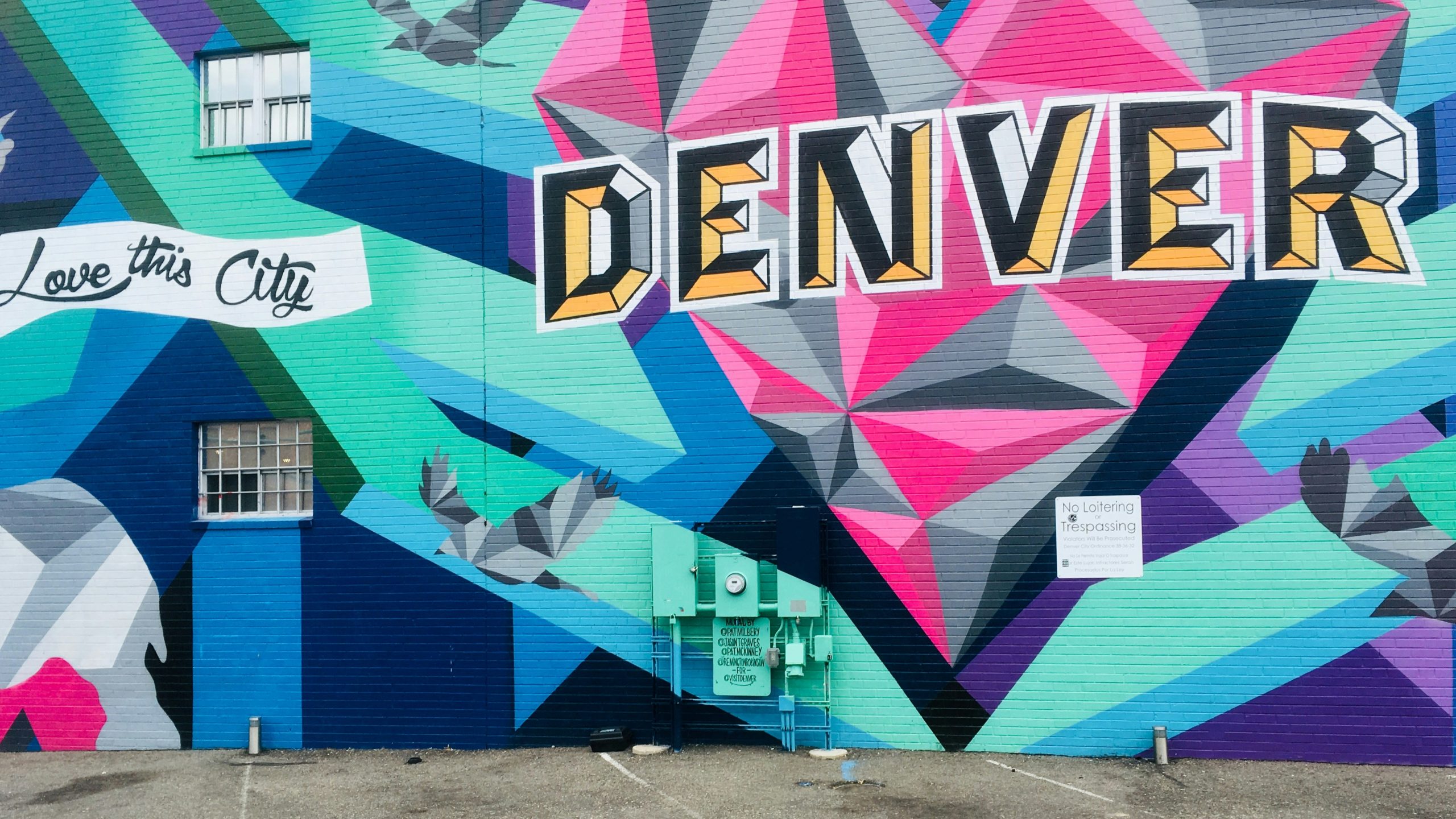
The first of these lawsuits targets Colorado and Denver for impeding federal immigration authorities from carrying out deportations. Denver is one of many states with state laws that prevent state and local officials from cooperating with federal immigration authorities. For instance, a Denver state law prevents the use of the city’s resources to assist with immigration enforcement, while a separate executive order establishes Denver as a “sanctuary city,” welcoming undocumented immigrants.

If Trump has it his way, the lawsuit would undo Colorado’s sanctuary state laws by declaring them unconstitutional and prohibiting their enforcement.

Interestingly, in responding to the lawsuit, the governor of Colorado Jared Polis denied Colorado’s status as a sanctuary state and said that Colorado regularly cooperates with federal law enforcement authorities.

Continue reading

donald-trump-4921211_1280On April 28th, President Donald Trump signed two new executive orders that significantly impact U.S. immigration policy and enforcement.

These presidential actions are a continued effort to prioritize national security by enhancing law enforcement capabilities and imposes penalties on “sanctuary” cities that limit cooperation with federal immigration authorities.

  • Strengthening and Unleashing America’s Law Enforcement to Pursue Criminals and Protect Innocent Citizens

The first executive order entitled Strengthening and Unleashing America’s Law Enforcement to Pursue Criminals and Protect Innocent Citizens,” empowers state and local law enforcement agencies to take stronger action against crime by expanding their authority and increasing investment in prison infrastructure. It also holds state and local officials accountable for obstructing criminal law enforcement or violating civil rights.

Specifically, it directs the Attorney General to prosecute officials who

willfully and unlawfully direct the obstruction of criminal law, including by directly and unlawfully prohibiting law enforcement officers from carrying out duties necessary for public safety and law enforcement; or

unlawfully engage in discrimination or civil-rights violations under the guise of “diversity, equity, and inclusion” initiatives that restrict law enforcement activity or endanger citizens.

Continue reading

arrested-8303916_1280In the latest clash between the Trump administration and the judiciary—Milwaukee County Circuit Court Judge Hannah Dugan has been arrested by agents from the Federal Bureau of Investigation (FBI) for accusations of helping a man evade immigration authorities.

This all went down on Friday April 25th after allegations that the judge directed an undocumented immigrant and his lawyer to exit her courtroom through a side door after learning that federal immigration agents were waiting in the hallway to arrest him.

Upon being spotted by agents outside the courthouse, the man was pursued on foot and was ultimately taken into custody.

These actions have prompted a showdown over allegations of obstruction of justice amid Trump’s immigration crackdowns. The U.S. attorney general Pam Bondi has accused the judge of interfering with the government’s enforcement priorities claiming the arrest sends a “strong message” to judges that they will be prosecuted if they “escort a criminal defendant out a back door.”

The circumstances surrounding the judge’s arrest remain unclear. What is known is that six federal officers descended upon the Milwaukee County Courthouse to arrest Eduardo Flores-Ruiz, a Mexican national attending a court hearing to respond to battery charges in connection with a criminal complaint filed by his roommate.

Continue reading

sam-balye-w1FwDvIreZU-unsplash-scaled

Following a wave of lawsuits from international students whose visas and Student and Exchange Visitor Information System (SEVIS) records were terminated without prior notice, the Trump administration has suddenly changed its course.

In recent weeks, U.S. Immigration and Customs Enforcement (ICE) has begun reinstating SEVIS records that were previously terminated, after seemingly recognizing that the government did not go through the appropriate channels to do so.

Over the past month, it is estimated that the State Department and ICE collectively cancelled over 300 F-1 student visas and terminated more than 4,736 SEVIS records primarily due to student encounters with law enforcement, criminal charges that were dismissed, and old misdemeanors pre-dating visa issuance. These SEVIS terminations automatically exposed students to unlawful presence in the United States, and the risk of deportation.

It was further discovered that ICE utilized AI assisted programs to screen the social media posts of F-1 international students and terminated their legal status based on antisemitic activity or alleged support for terrorist organizations such as Hamas and Hezbollah.

In response, students across the country sued the government to preserve their status, leading federal judges to issue a series of emergency orders to stop the government from cancelling visas and SEVIS records.

Continue reading

tingey-injury-law-firm-S2rcAJbBxX0-unsplash-scaledWe are pleased to report that on April 14, 2025, a Massachusetts federal judge issued a temporary nationwide injunction, suspending the Department of Homeland Security’s (DHS) termination of the Cuba, Haiti, Nicaragua, and Venezuela (CHNV) parole programs. The termination was set to take effect on April 24, 2025, and would have ended parole authorization and any associated benefits, including work authorization for individuals in the United States under the CHNV parole programs. The judge’s decision suspends the Trump administration’s cancellation of these programs.

What You Need to Know

  • A federal district court judge has issued a temporary nationwide injunction immediately blocking the Department of Homeland Security from terminating the Cuba, Haiti, Nicaragua, and Venezuela (CHNV) parole programs, which were expected to terminate on April 24, 2025.