Articles Posted in Visa Appointments

mana5280-XiF1p97u3fc-unsplash-scaled

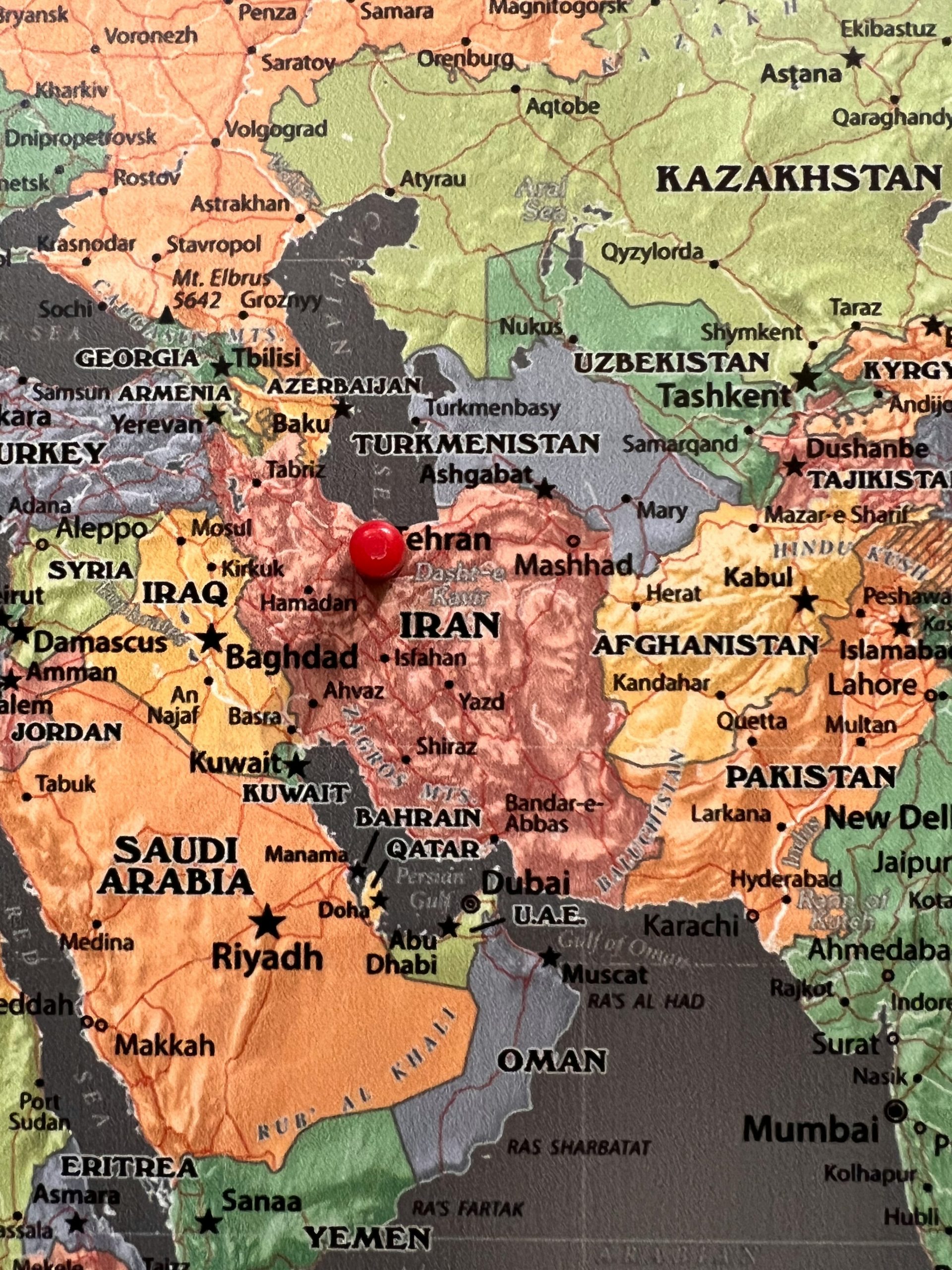
Rising tensions in the Middle East are causing immediate disruptions to visa processing and international travel across the region. According to the State Department, several embassies throughout the Middle East have halted or significantly limited visa services following airstrikes targeting Iran and subsequent retaliatory actions.

The situation is fluid and is evolving on a daily basis.

Widespread Travel Disruptions Across the Middle East


The escalating security situation has triggered widespread travel interruptions throughout the region. Airspace closures have been reported in Iran, Israel, Kuwait, the United Arab Emirates, Bahrain, Iraq, and Qatar. Airlines have suspended flights throughout the region, and there are reports of land border closures and shelter-in-place advisories in several countries.

These disruptions are expected to significantly affect visa issuance, passport returns, and the movement of workers.

U.S. Embassy Visa Services Suspended or Limited


The following U.S. diplomatic missions across the region have implemented operational changes, including canceled appointments, and the suspension of routine visa services until further notice.

  • United Arab Emirates: The U.S. Embassy in Abu Dhabi and the U.S. Consulate in Dubai canceled all visa and U.S. citizen services appointments from March 2–4 while personnel sheltered in place.
  • Beirut: Since February 23rd non-emergency personnel have departed and all consular visa services have been suspended.
  • Qatar: Routine consular appointments at the U.S. Embassy in Doha have been canceled due to ongoing security concerns until further notice.
  • Israel: The U.S. Embassy in Jerusalem and the Tel Aviv branch office have suspended all routine visa services through March 13 and are prioritizing assistance to U.S. citizens.
  • Jordan: The U.S. Embassy in Amman issued a shelter-in-place directive and visa services are suspended for the foreseeable future.
  • Kuwait: Embassy personnel have been ordered to shelter in place and all routine visa have been suspended.
  • Dubai: The U.S. Embassy in Abu Dhabi and the Dubai branch office issued a shelter-in-place directive and all routine visa services and appointments have been postponed.
  • Pakistan: The State Department has ordered non-emergency U.S. government employees from U.S. Consulates Lahore and Karachi to leave Pakistan due to safety risks.  At the U.S. Embassy Islamabad, the consulate will not be open for routine services on March 6, but staff remain available for emergency services only.
  • Cyprus: The State Department ordered non-emergency U.S. government employees to leave Cyprus due to the threat of armed conflict. All routine visa services and U.S. Citizen services have been suspended.
  • Saudi Arabia: The U.S. Mission in Saudi Arabia has suspended all routine and emergency consular services until further notice. The State Department has authorized non-emergency U.S. government employees to leave Saudi Arabia. The U.S. Consulate in Dhahran has specifically ordered the public to stay away from the area due to ongoing attacks and security concerns.

Continue reading

kreatikar-globe-3411506_1280

On January 21, the Trump administration quietly froze immigrant visa processing for people from 75 countries — a move that instantly threw thousands of families, workers, and employers into uncertainty.

Just weeks later, civil rights organizations and affected U.S. citizens who were separated from their family members have filed a federal lawsuit seeking to overturn the visa ban.

The government has described the pause on immigrant visa issuance as a temporary measure tied to concerns about immigrants becoming a “public charge.” But the new lawsuit argues that the freeze applies broadly, without individualized review, and affects people who have already spent years navigating the legal immigration system — including spouses of U.S. citizens and highly skilled workers with approved petitions.

graphic-4067697_1280As the FY 2027 H-1B cap season approaches, employers will need to take additional steps to prepare for the new wage-based weighted selection system and to assess whether their petitions will be subject to the recently implemented $100,000 H-1B fee.


Registration Opens March 4, 2026


USCIS recently announced that the initial registration period for the FY 2027 H-1B cap will open at 12:00 p.m. Eastern on March 4, 2026, and will close at 12:00 p.m. Eastern on March 19, 2026.

During this window, employers and their representatives must use a USCIS online account to electronically register each prospective H-1B cap beneficiary for the selection process and pay the required $215 registration fee for each registration.


New Changes to the H-1B Lottery


Pursuant to a new regulation, the Department of Homeland Security (DHS) is replacing the traditional random H-1B cap lottery with a weighted selection process that prioritizes beneficiaries offered the highest wages under the Department of Labor’s four-level prevailing wage structure.

DHS plans to implement the system on February 27, 2026, in advance of the FY 2027 H-1B cap season beginning in March 2026.

As a result, employers will be required to indicate, for each prospective beneficiary registered in the H-1B cap system, the applicable Department of Labor (DOL) prevailing wage level corresponding to the offered salary.

Continue reading

map-of-the-world-2401458_1280

In a new change to U.S. consular policy, the State Department has announced it will indefinitely pause immigrant visa issuance for nationals of 75 countries (see listed countries below), while it establishes a process for determining whether applicants are likely to become financially dependent on the U.S. government (also known as public charge).

The agency initially announced the news on social media and later published official guidance on the State Department website.

Under this new suspension—effective January 21, 2026—U.S. consular posts overseas will not issue immigrant visas (including family- and employment-based green cards) for applicants from the listed countries until the public charge policy is implemented. Applicants from these countries may still submit applications and attend interviews, but visas cannot be printed and issued during the pause.

Many of the affected nations are already subject to full or partial travel bans, meaning the practical impact may be limited for some applicants. Dual nationals applying with a passport from a country not on the list are exempt from the suspension.

The reason behind this policy shift is a renewed focus on the statutory “public charge” ground of inadmissibility, which allows visa refusal when an applicant is deemed likely to depend on U.S. government financial assistance in the future. The reassessment follows updated internal guidance that broadens the factors consular officers consider—including health, age, education, employment prospects, and financial stability—in evaluating public charge risk.

It remains unclear how long the suspension will last or how the public charge review process will ultimately change. Immigrant visa applicants from the affected countries should monitor communications from the State Department and prepare for potential delays in visa issuance.

Continue reading

calendar-8705482_1280We are pleased to report that the U.S. Department of State’s Bureau of Consular Affairs has published the February 2026 Visa Bulletin.

In this blog post, we breakdown the movement of the employment-based and family-sponsored categories in the coming month.


USCIS Adjustment of Status


For adjustment of status filings to permanent residence in the month of February, USCIS will be using the Dates for Filing Chart for the employment-based and family-sponsored categories.


Highlights of the February 2026 Visa Bulletin


At a Glance

What can we expect to see in the month of February?

Employment-Based Categories


Final Action Advancements

EB-3 Professionals and Skilled Workers

  • Except India and China, all countries will advance by 5.7 weeks to June 1, 2023

Dates for Filing Advancements

EB-3 Professionals and Skilled Workers

  • Except India and China, all other countries will advance by 3 months to October 1, 2023

Continue reading

ball-4623653_1280We are pleased to report that the U.S. Department of State’s Bureau of Consular Affairs has published the December 2025 Visa Bulletin.

In this blog post, we breakdown the movement of the employment-based and family-sponsored categories in the coming month.


USCIS Adjustment of Status


For adjustment of status filings to permanent residence in the month of December, USCIS will be using the Dates for Filing Chart for the employment-based and family-sponsored categories.


Highlights of the December 2025 Visa Bulletin


At a Glance

What can we expect to see in the month of December?

Employment-Based Categories


Final Action Advancements

EB-1 Aliens of extraordinary ability, Outstanding Professors and Researchers, and Certain Multinational Managers or Executives

  • India will advance by one month to March 15, 2022
  • China will advance by one month to January 22, 2023
  • All other countries remain current

EB-2 Members of the Professions and Aliens of Exceptional Ability

  • India will advance by six weeks to May 15, 2013
  • China will advance by two months to June 1, 2021
  • All other countries will advance by 2 months to February 1, 2024

EB-3 Professionals and Skilled Workers

  • India will advance by one month to September 22, 2013
  • China will advance by one month to April 1, 2021
  • All other countries will advance by two weeks to April 15, 2023

Continue reading

november-5650851_1280We are pleased to report that the U.S. Department of State’s Bureau of Consular Affairs has published the November 2025 Visa Bulletin.

In this blog post, we breakdown the movement of the employment-based and family-sponsored categories in the coming month.


USCIS Adjustment of Status


For adjustment of status filings to permanent residence in the month of November, USCIS will be using the Dates for Filing Chart for the employment-based and family-sponsored categories.


Highlights of the November 2025 Visa Bulletin


At a Glance

What can we expect to see in the month of November?

Employment-Based Categories


There are no changes to the Dates for Filing and Final Action charts for the employment-based categories when compared to the October Visa Bulletin.

Family-Sponsored Categories


Final Action Advancements

  • F2B Worldwide, China, and India will advance by 9 days to December 1, 2016
  • F3 Mexico will advance by 16 days to May 1, 2001

Continue reading

pumpkin-5517221_1280We are pleased to report that today the U.S. Department of State’s Bureau of Consular Affairs published the October 2025 Visa Bulletin.

In this blog post, we breakdown the movement of the employment-based and family-sponsored categories in the coming month.


USCIS Adjustment of Status


For adjustment of status filings to permanent residence in the month of October, USCIS will be using the Dates for Filing Chart for the employment-based and family-sponsored categories.


Highlights of the October 2025 Visa Bulletin


At a Glance

What can we expect to see in the month of October?

Employment-Based Categories


Final Action Advancements


  • At the start of the new fiscal year in October, the Final Action Dates for several EB-1, EB-2 and EB-3 countries will move forward, but none will advance by more than three and a half months, except for two notable exceptions:
    • EB-3 Other Workers China which will advance by 7 months and
    • The Final Action Date for EB-5 India will advance by almost 14 months

Continue reading

26493199526_8a6efa5192_z

Flickr Creative Commons Attribution Jeroen Akkermans

In the last months, the U.S. Department of State released two significant policy updates that impact both immigrant and nonimmigrant visa applicants. These updates focus on a core change: applicants will now be required to have their visa interviews in their place of residence or country of nationality.

This change has significant consequences for third-country nationals who have traditionally applied for U.S. visas outside their country of nationality, particularly those renewing H-1B, E, O, and L visas, as well as immigrant visa applicants outside the United States.

Immigrant Visa Applicants Must Apply in their Country of Residence


On August 28, 2025, the State Department announced that, starting November 1, 2025, immigrant visa applicants must attend their interviews at a U.S. consulate or embassy located in their country of residence, or in their country of nationality, with limited exceptions. The update applies across all immigrant visa categories, including Diversity Visas.

There are exceptions to this rule, though they are limited. Exceptions may be granted in rare cases involving humanitarian or medical emergencies, or in circumstances involving specific foreign policy considerations. Applicants residing in countries where routine U.S. visa services have been suspended or paused will need to process their case at a designated consular post, which is typically assigned by the State Department to handle cases from those particular regions.

Existing appointments for immigrant visa interviews scheduled prior to November 1st will not be cancelled or rescheduled.

Same Policy Applies to Nonimmigrant Visa Applicants


A similar change was later announced on September 6, 2025, for nonimmigrant visa applicants. Effective immediately, nonimmigrant visa applicants must also apply for their visa in their country of residence or nationality. This means that individuals cannot simply choose a different country’s embassy based on convenience or shorter wait times unless they reside there or are citizens of that country. This applies to all third country nationals who previously traveled to embassies or consulates in Mexico or Canada to renew their nonimmigrant visas.

Continue reading