Articles Posted in US Employers

payment-terminal-6400998_1280On August 29, 2025, U.S. Citizenship and Immigration Services (USCIS) announced a major update to how filing fees for USCIS forms are paid.

Starting October 28, 2025, all payments must be made electronically through ACH bank transfer from a U.S. bank account or with credit/debit cards. Paper checks and money orders will no longer be accepted.

Payment Methods


  • USCIS offers ACH (electronic debit) payments, allowing applicants and petitioners to authorize fees directly from a U.S. bank account using Form G‑1650 Authorization for ACH Transactions.
  • Applicants can also make payments with a credit or debit card using Form G‑1450—Authorization for Credit Card Transactions.

Applicants should confirm that the bank account or card used has sufficient funds to avoid rejected filings.

Why the Change


This initiative supports Executive Order 14247, “Modernizing Payments to and from America’s Bank Account,” which seeks to streamline the processing of checks and money orders, reduce staff workload, and minimize risks related to fraud, lost payments, and theft.

USCIS spokesman Matthew J. Tragesser, cited in the agency’s press release, stated, “Over 90% of our payments come from checks and money orders, causing processing delays and increasing the risk of fraud and lost payments.”

For additional guidance on making a payment for USCIS filing fees, please reach out to your caseworker or an attorney at the Law Offices of Jacob Sapochnick.

To learn more about this announcement, please click here.

Continue reading

payment-terminal-6400952_1280On September 19, 2025, the President issued a Proclamation on the Restriction on Entry of Certain Nonimmigrant Workers, requiring any new H-1B petitions to include an additional $100,000 payment as a condition for eligibility.

Following the President’s announcement, USCIS released clarification on the new fee requirement, specifying that the surcharge only applies to new H-1B petitions filed on or after 12:01 a.m. EDT on September 21, 2025. The fee is triggered only when the foreign national beneficiary is outside the United States at the time the petition is filed, and the petition requires visa issuance at a U.S. or port of entry notification.

Importantly, the USCIS guidance also clarifies who is exempt from the surcharge. For example, H-1B petitions filed before the effective date are not subject to the fee. Additionally, individuals already in H-1B status in the U.S.—such as those seeking extensions, amendments, or a change of employer—are not required to pay the surcharge under the current guidance. The responsibility for paying the fee rests with the petitioner (employer), and proof of payment must be included with the petition at the time of filing. USCIS instructs employers to submit the required fee using pay.gov, following the payment instructions.  

people-4009327_1280On September 24, 2025, the Department of Homeland Security (DHS) issued a proposed rule that would change the current selection process for selecting H-1B visa petitions subject to the annual numerical limits established by the Immigration and Nationality Act.

Under the proposed rule, the current random lottery system would be replaced with a wage-based selection process that prioritizes the selection of H-1B workers offered higher salaries by sponsoring employers.

The goal is to better align the H-1B program with U.S. labor market needs by increasing the chances of selection for higher-paid, and presumably higher-skilled, foreign workers. This change aims to reduce the potential for abuse in the system, discourage mass low-wage registrations, and ensure that the most economically valuable positions are filled through the H-1B program.

What may change


Currently, the U.S. government selects H-1B visa petitions through a randomized lottery system due to the annual numerical cap on available visas. Employers first submit electronic registrations for each prospective H-1B worker during a designated registration period, typically held in March. Because the demand for H-1B visas consistently exceeds the supply, the U.S. Citizenship and Immigration Services (USCIS) conducts a lottery to determine which petitions can proceed with applying for H-1B visas.

There are two separate caps under the H-1B program: the regular cap of 65,000 visas and an additional 20,000 visas reserved for individuals who hold advanced degrees from U.S. institutions (commonly referred to as the master’s cap). All registered beneficiaries, including those with U.S. advanced degrees, are first entered into the regular cap lottery. After 65,000 are selected, those with U.S. master’s degrees who were not chosen in the initial round are entered into a second lottery for one of the 20,000 advanced degree slots.

This current system does not prioritize applicants based on wage levels, qualifications, or skills. Selection is purely random as long as the minimum eligibility requirements are met.

However, the Department of Homeland Security (DHS) is proposing changes that would shift the selection process to favor higher-paid workers.

Continue reading

ai-generated-9069946_1280The legal immigration landscape was shaken once again late Friday evening when the President issued a new proclamation barring new H-1B workers from entering the United States—unless their employers pay a $100,000 fee for each sponsored employee.

The proclamation took effect at 12:01 a.m. EDT on Sunday, September 21, and will remain in effect until a court order halts its implementation.

Emergency Litigation


A surge of emergency lawsuits is expected to be filed by impacted H-1B workers and their sponsoring employers, seeking a nationwide injunction to stop the implementation of the executive order. A court could issue an injunction as early as Monday. We will provide litigation updates as they develop in the coming days.

Highlights of the Executive Order


  • Effective today September 21, 2025, certain H-1B workers will be denied entry into the United States unless their employer pays a $100,000 fee on their behalf, according to the proclamation signed by President Trump late Friday.
  • Application: The ban on entry and the associated fee requirement applies only to any new H-1B visa petitions submitted after 12:01 a.m. eastern daylight time on September 21, 2025. This includes the 2026 lottery, and any other H-1B petitions submitted after 12:01 a.m. eastern daylight time on September 21, 2025.
  • The proclamation does not apply to:
    • any previously issued H-1B visas, or any petitions submitted prior to 12:01 a.m. eastern daylight time on Sept. 21, 2025.
    • does not change any payments or fees required to be submitted in connection with any H-1B renewals. The fee is a one-time fee on submission of a new H-1B petition.
    • does not prevent any holder of a current H-1B visa from traveling in and out of the United States.
  • Misuse of B Visas: The proclamation warns that individuals with approved H-1B petitions should not misuse B visas to enter the U.S. for jobs that start before October 1, 2026.
  • National Interest Exemptions: The proclamation grants the Department of Homeland Security authority to issue exemptions for individuals, specific employers, or workers in designated industries—if the agency determines that the H-1B employment serves the national interest and poses no threat to U.S. security or public welfare.
  • Termination: Absent a court order, this restriction will remain in effect for 12 months but may be extended based on recommendations from federal immigration agencies. An extension would continue the ban for individuals approved under the FY 2027 H-1B cap.
  • Changes to the Prevailing Wage: Besides restricting H-1B entry, the proclamation directs the Department of Labor to revise prevailing wage levels and prioritize H-1B approvals to high-skilled, high-paid H-1B workers.

In the hours after the proclamation was issued, chaos unfolded as H-1B visa holders, advised by their employers and legal counsel, abandoned flights and canceled international travel due to uncertainty about how the proclamation would be enforced at the U.S. border.

Adding to the uncertainty was the absence of clear guidance from immigration authorities, including the Department of Homeland Security (DHS) and Customs and Border Protection (CBP), about how the proclamation is to be enforced against current H-1B visa holders and approved beneficiaries.

Continue reading

button-7850713_1280

We are pleased to report that today the U.S. Department of State’s Bureau of Consular Affairs published the July 2025 Visa Bulletin.

In this blog post, we breakdown the movement of the employment-based and family-sponsored categories in the coming month.


USCIS Adjustment of Status


For employment-based preference categories, the U.S. Citizenship and Immigration Services (USCIS) has confirmed it will continue to use the Final Action Dates chart to determine filing eligibility for adjustment of status to permanent residence in the month of July.

For family-sponsored preference categories, USCIS will also continue to use the Dates for Filing chart to determine filing eligibility for adjustment of status to permanent residence in the month of July.

Please click here for more information.


Highlights of the July 2025 Visa Bulletin


At a Glance

What can we expect to see in the month of July?

Employment-Based Categories


Final Action Advancements


EB-1 Aliens of extraordinary ability, Outstanding Professors and Researchers, and Certain Multinational Managers or Executives

  • EB-1 China will advance by 1 week to November 15, 2022

EB-2 Members of the Professions and Aliens of Exceptional Ability

  • EB-2 China will advance by 2 weeks to December 15, 2020

Continue reading

manu-ros-wvlwZ00eIRk-unsplash-scaledIn recent days, the Trump administration has launched an aggressive campaign targeting international students studying at colleges and universities throughout the United States.

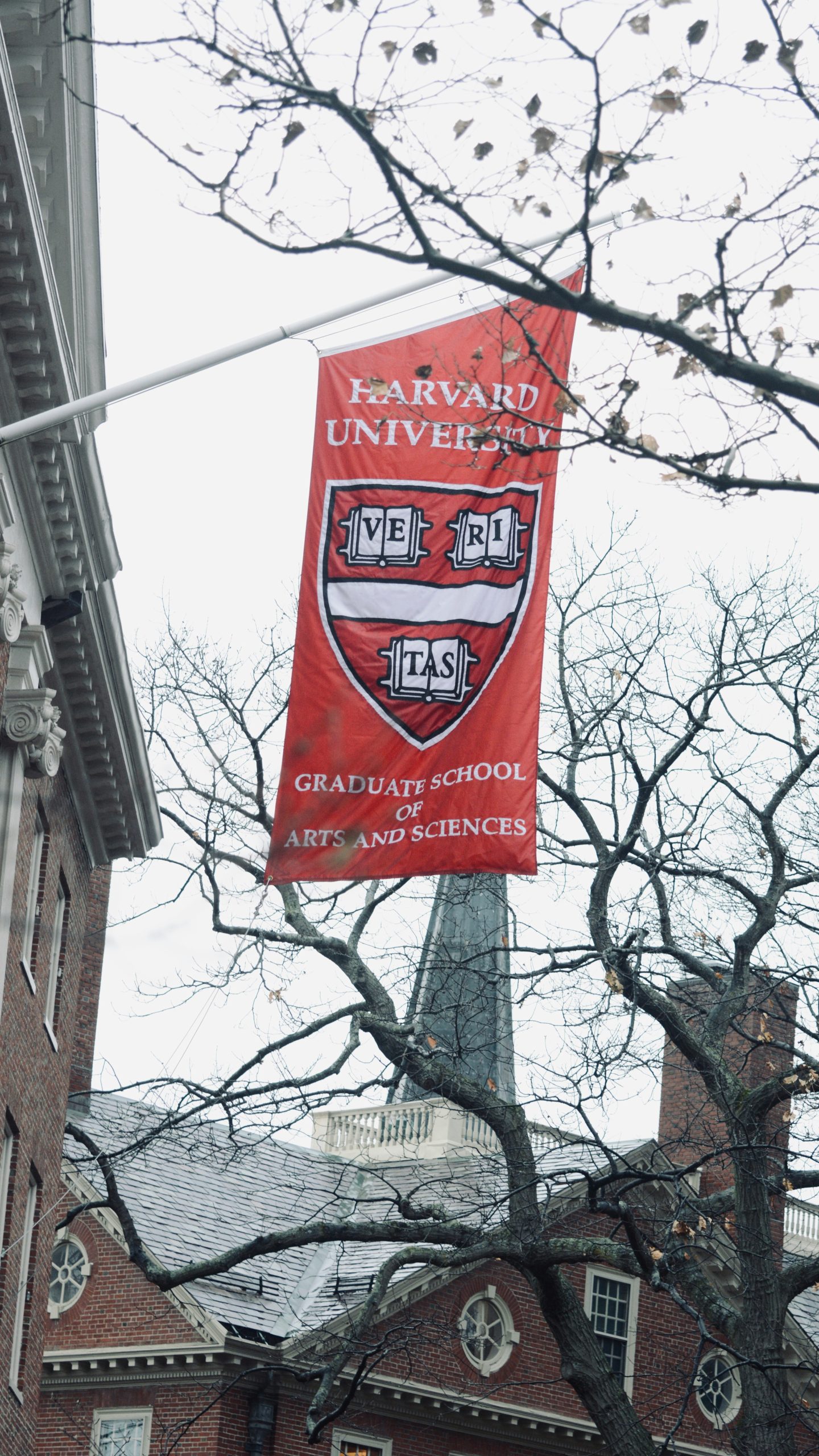
These attacks escalated Thursday last week when the administration first announced that it would be halting Harvard University’s ability to enroll international students by revoking their Student and Exchange Visitor Program (SEVP) certification—a certification that is necessary for U.S. schools to enroll and issue Forms I-20 to F and M international students.

The move sent shockwaves throughout the academic community because it meant Harvard could no longer enroll foreign students, and its more than 7,000 existing international students would be required to transfer or lose their legal status in the United States.

According to the Secretary of the Department of Homeland Security Kristi Noem, such drastic steps were taken due to Harvard’s alleged failure to comply with Student Exchange Visa Program (SEVP) regulations, as well as “encouraging and allowing antisemitic and anti-American violence to rage on its campus and coordinating with Chinese Communist Party officials on training that undermined American national security.”

Less than 24 hours later, Harvard filed a lawsuit in federal court requesting and obtaining a temporary restraining order to block the Trump administration from cutting off its ability to enroll foreign students. The judge found that absent the court order, Harvard would “suffer immediate and irreparable injury.”

Today, that same judge granted Harvard a preliminary injunction extending Harvard’s ability to maintain its SEVP certification intact while the lawsuit moves forward in federal court. This action effectively protects Harvard’s students and allows them to remain in the United States.

Continue reading

engineer-4690505_1280The United States Citizenship and Immigration Services (USCIS) recently released detailed statistics and data regarding the number of beneficiaries selected during the fiscal year 2026 H-1B cap season, highlighting the highly competitive nature of the visa process.

Each year, the H-1B visa program allows U.S. employers to temporarily employ foreign workers in specialty occupations, and demand for these visas has consistently gotten tougher throughout the years.

The FY 2026 data shows a significant drop in H-1B registrants, with 126,361 fewer applicants compared to the previous year.

Overview


During the fiscal year 2026 H-1B cap season:

  • USCIS received eligible registrations for 336,153 unique beneficiaries and selected just 118,660 – or approximately 35.3% – of these beneficiaries.
  • The overall number of registrations submitted in FY 2026 decreased dramatically from 470,342 eligible registrations filed last year to just 343,981 eligible registrations filed this year.
  • On average, each beneficiary only had approximately one registration submitted on their behalf.
  • USCIS is not expected to announce a second cap lottery until at least July 2025, after the current H-1B filing period closes.

Continue reading

may-4999078_1280We are pleased to report that today the U.S. Department of State’s Bureau of Consular Affairs published the May 2025 Visa Bulletin.

In this blog post, we breakdown the movement of the employment-based and family-sponsored categories in the coming month.


USCIS Adjustment of Status


For employment-based preference categories, the U.S. Citizenship and Immigration Services (USCIS) has confirmed it will continue to use the Final Action Dates chart to determine filing eligibility for adjustment of status to permanent residence in the month of May.

For family-sponsored preference categories, USCIS will also continue to use the Dates for Filing chart to determine filing eligibility for adjustment of status to permanent residence in the month of May.

Please click here for more information.


Highlights of the May 2025 Visa Bulletin


At a Glance

What can we expect to see in the month of May?

Employment-Based Categories

Dates for Filing Advancements


  • No change

Final Action Advancements & Retrogressions


EB-3 Professionals and Skilled Workers

  • EB-3 India will advance by 2 weeks to April 15, 2013

EB-3 Other Workers

  • EB-3 India will advance by 2 weeks to April 15, 2013

EB-5 Unreserved Categories (C5, T5, I5, and R5)

  • India will retrogress by 6 months to May 1, 2019

Continue reading

winner-4443135_1280In this blog post, we bring you an important announcement regarding the H-1B visa fiscal year (FY) 2026 cap season.

Today, March 31st the U.S. Citizenship and Immigration Services (USCIS) announced that it received sufficient electronic registrations during the initial registration period to meet the annual numerical limitations for fiscal year 2026, including for the advanced degree exemption (also known as the master’s cap).

Due to this, the agency has completed the H-1B visa lottery and selected unique beneficiaries at random from the properly submitted electronic registrations to reach the H-1B cap.

As of today, March 31st USCIS has notified all prospective petitioners of their selection via their myUSCIS organizational accounts. Please be aware that only selected beneficiaries are eligible to file an H-1B cap-subject petition with USCIS.

Congratulations to all those who were selected!


How will I know if I was selected in the lottery?


Petitioners with selected registrations will have their myUSCIS online organizational accounts updated to include a selection notice, which includes details of when and where to file. If you submitted your electronic registration with the assistance of an attorney, you should contact your legal representative to determine whether you were selected in the randomized lottery and your next steps.

Please note that a registrant’s USCIS online account will show one of the following statuses for each beneficiary registered:

  • Submitted: The registration has been submitted and is eligible for selection. If the initial selection process has been completed, this registration remains eligible, unless subsequently invalidated, for selection in any subsequent selections for the fiscal year for which it was submitted.
  • Selected: Selected to file an H-1B cap petition.
  • Not Selected: Not eligible to file an H-1B cap petition based on this registration.
  • Denied – duplicate registration: Multiple registrations were submitted by or on behalf of the same registrant for the same beneficiary. If denied as a duplicate registration, all registrations submitted by or on behalf of the same registrant for this beneficiary for the fiscal year are invalid.
  • Invalidated –failed payment: A registration was submitted but the payment method was declined, not reconciled, or otherwise invalid.
  • Deleted: The submitted registration has been deleted and is no longer eligible for selection.

Continue reading

50484974517_c9a324e36a_b

This image is licensed under the Creative Commons Attribution License Fibonacci Blue

Watch the Press Conference here.

On Wednesday February 26th House lawmakers reintroduced the American Dream and Promise Act of 2025—a bill that would create a legal pathway to citizenship for undocumented immigrants brought to the United States as children known as “Dreamers.” The bill would also include beneficiaries of Temporary Protected Status or Deferred Enforced Departure.

The Deferred Action for Childhood Arrivals (DACA) program was first created in 2012 by the Obama administration to protect eligible undocumented immigrants who were brought to the U.S. as children from deportation, while allowing them to apply for work authorization for temporary, renewable periods.

After a lengthy legal battle, the U.S. Court of Appeals for the Fifth Circuit allowed the U.S. Citizenship and Immigration Services (USCIS) to continue to accept and process DACA renewal applications and accompanying applications for employment authorization. However, USCIS is prohibited from processing initial requests for DACA.

In a statement accompanying the reintroduction of the bill, Congresswoman Sylvia Garcia, one of its authors said, “Dreamers are American in every way but on paper. For decades, they have contributed to and shaped the fabric of America. Yet, they are currently denied their place in the American story.

Continue reading