Articles Posted in Green card

greg-bulla-P0tam674vzY-unsplash-scaled

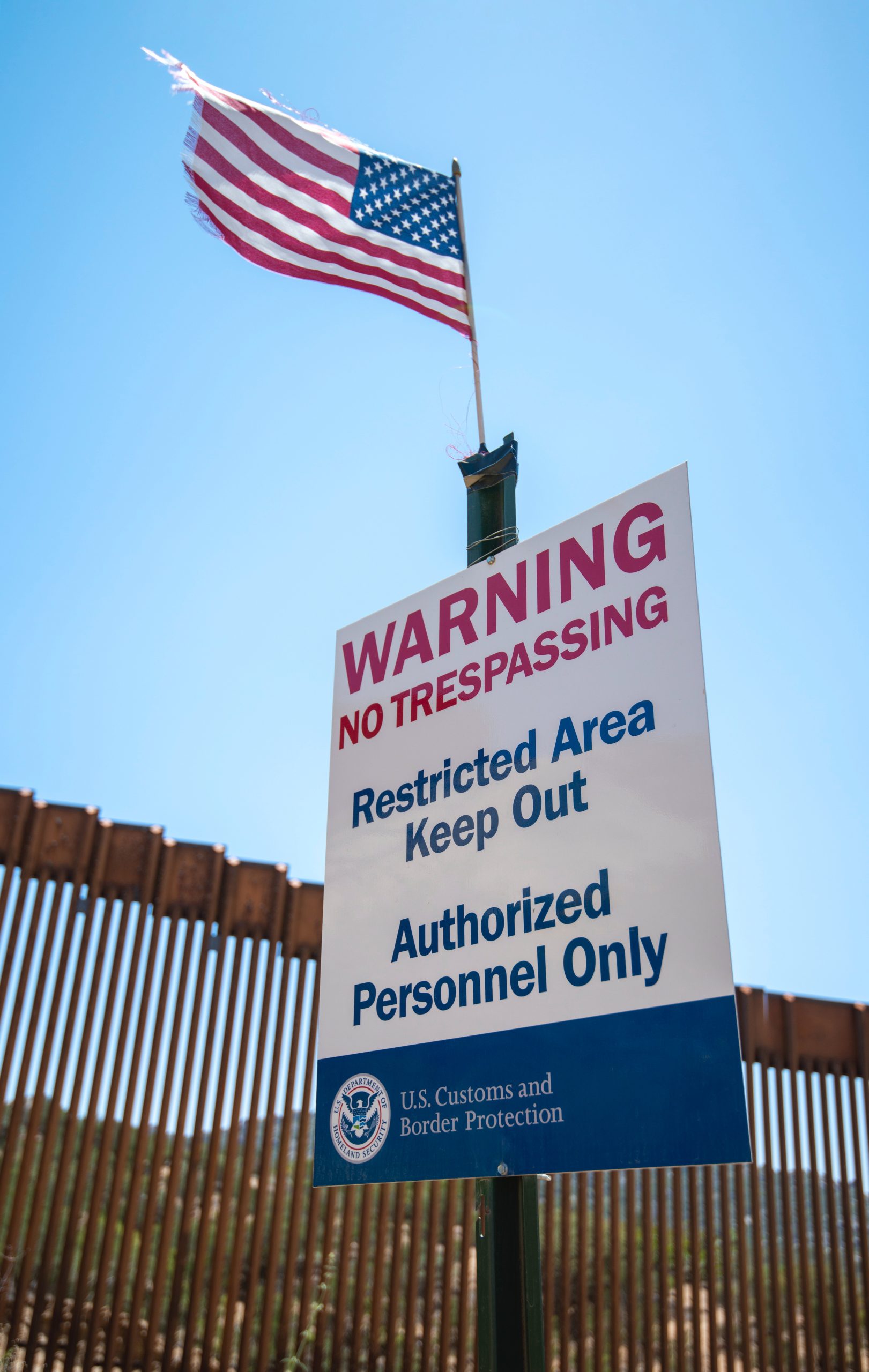
With a new year comes new travel restrictions. In this blog post, we share with you a recent announcement published in the Federal Register by the U.S. Customs and Border Protection.

CBP has just released a notice of action informing the public of a brand-new temporary travel restriction that will apply to certain unvaccinated travelers seeking to enter into the United States along U.S. land ports of entry, including ferry terminals (‘‘land POEs’’) with Mexico and Canada.


What is this new travel restriction all about?


According to the new directive announced on January 24th, land ports of entry along the United States-Mexico border and United States-Canada border will continue to suspend normal operations and will allow processing for entry into the United States of only those noncitizen non-LPRs who are ‘‘fully vaccinated against COVID–19’’ and can provide ‘‘proof of being fully vaccinated against COVID–19’’ upon request, as those terms are defined under Presidential Proclamation and the CDC’s Order.


Who will the restriction apply to?


These restrictions will apply to non-citizens who are neither U.S. nationals nor lawful permanent residents (‘‘noncitizen non-LPRs’’) with limited exceptions.

Under the temporary restrictions, DHS will allow processing for entry into the United States of only those noncitizen non-LPRs who are fully vaccinated against COVID–19 and can provide proof of being fully vaccinated against COVID–19 upon request.


When do these travel restrictions go into effect?


These restrictions went into effect at 12 a.m. Eastern Standard Time (EST) on January 22, 2022 and will remain in effect until 11:59 p.m. Eastern Daylight Time (EDT) on April 21, 2022, unless amended or rescinded prior to that time.


Are there any exceptions for unvaccinated travelers?


This travel restriction does not apply to U.S. citizens, U.S. nationals, lawful permanent residents of the United States, or American Indians who have a right by statute to pass the borders of, or enter into, the United States.

In addition, the following exceptions to these restrictions have been authorized for the following categories of noncitizen non-LPRs:

  • Certain categories of persons on diplomatic or official foreign government travel as specified in the CDC Order;
  • persons under 18 years of age;
  • certain participants in certain COVID–19 vaccine trials as specified in the CDC Order;
  • persons with medical contraindications to receiving a COVID– 19 vaccine as specified in the CDC Order;
  • persons issued a humanitarian or emergency exception by the Secretary of Homeland Security;
  • persons with valid nonimmigrant visas (excluding B–1 [business] or B–2 [tourism] visas) who are citizens of a country with limited COVID–19 vaccine availability, as specified in the CDC Order;
  • members of the U.S. Armed Forces or their spouses or children (under 18 years of age) as specified in the CDC Order; and,
  • persons whose entry would be in the U.S. national interest, as determined by the Secretary of Homeland Security.

Continue reading

confused-gda7145471_1280

In today’s blog post, we share some interesting Question and Answer responses recently provided by the Department of State’s Office of the Assistant Legal Adviser for Consular Affairs (L/CA), in a meeting with the American Immigration Lawyers Association (AILA).

The responses below provide some important insight into current immigration policies and procedures taking place amid the ongoing COVID-19 pandemic.

Here, we summarize the most interesting questions covered during the January 20 meeting:


Department of State/AILA Liaison Committee Meeting


January 20, 2022 Q & A Highlights


Q: What role do Consular sections assume when determining whether an individual is exempt from the CDC COVID-19 vaccine requirement to gain entry to the U.S.?

A: Consular sections’ role in the process is to ensure that an individual’s request for a [vaccine] exception is filled out in full, and to transmit those requests to the CDC.


Q: If consular posts are involved in transmitting information in support of a humanitarian exception to CDC, what is the process, if any, for making such a request of a consular post outside the context of a visa interview?

A: Travelers should contact the consular section of the nearest embassy or consulate using the information provided on that embassies or consulate’s website


Q: What is the Department of State doing to alleviate the substantial backlogs created by the slowdown of operations at Consular posts and Embassies worldwide?

A: The Department is planning to hire foreign service officers above attrition in FY 2022. The majority will be assigned to a consular position after initial training. Additionally, the Department continues to recruit Limited Non-career Appointment (LNA) Consular Professionals. With very limited LNA hiring in FY 2020 and a pause on LNA hiring in FY 2021 due to CA’s budgetary constraints, Consular Affairs plans to hire more than 60 LNAs in FY 2022

Consular Affairs is working with State’s office of Global Talent Management to ramp up hiring in FY 2022, but many posts will not see these new officers until the second half of FY 2022 or FY 2023, particularly for officers assigned to positions requiring language training. Increased hiring will not have an immediate effect on reducing current visa wait times. Because local pandemic restrictions continue to impact a significant number of our overseas posts, extra staff alone is not sufficient to combat wait times for interviews.


Q: Can Consular Affairs please advise regarding efforts to resume routine consular services?

A: Consular sections abroad must exercise prudence given COVID’s continuing unpredictability. The emergence of the Omicron variant has prompted countries to reevaluate plans to relax travel bans, thereby leading consular sections abroad to recalibrate plans to resume services. Some posts have already fully resumed routine services. Others, in an abundance of caution and out of concern for the health of both consular staff and clientele, are slowly reintroducing some routine services.

Continue reading

calendar-gfe196abeb_1920

It is that time of the month again! In this blog post, we will cover the release of the February Visa Bulletin 2022 and what you can expect for employment based and family preference categories during the month of February 2022.

The Department of State releases the visa bulletin on a monthly basis, which summarizes the availability of immigrant visa numbers for that particular month. The “Final Action Dates” and “Dates for Filing Applications,” charts indicate when immigrant visa applicants should be notified to assemble and submit the required documentation to the National Visa Center.


Adjustment of Status Filings for those lawfully residing in the United States


In general, if USCIS determines there are more immigrant visas available for a fiscal year than there are known applicants for such visas, the agency will provide instructions on the www.uscis.gov/visabulletininfo webpage that applicants may use the Dates for Filing chart. Otherwise, USCIS will indicate that applicants must use the Final Action Dates chart to determine when they may file their adjustment of status application with USCIS. If a particular immigrant visa category is “current” on the Final Action Dates chart or the cutoff date on the Final Action Dates chart is later than the date on the Dates for Filing chart, applicants in that immigrant visa category may file using the Final Action Dates chart during that month.

Information has not yet been posted regarding the adjustment of status filing charts that should be used for green card filings. However, applicants are encouraged to monitor the USCIS webpage mentioned above within the next weeks.


February 2022 Visa Bulletin Final Action Cutoff Dates


Employment Based Categories


FINAL ACTION DATES FOR EMPLOYMENT-BASED PREFERENCE CASES


According to the Department of State’s February 2022 Visa Bulletin, the following final cutoff dates will apply for the issuance of an immigrant visa for employment-based categories:

  • EB-1: All countries, including India and China, will remain current.
  • EB-2: India will advance by nearly 6 months to January 1, 2013, and China will advance by more than 5 weeks to March 1, 2019. All other countries will remain current.
  • EB-3 Professionals and Skilled Workers: EB-3 India and China will remain the same as the previous months at January 15, 2012 and March 22, 2018 respectively. All other countries will remain current.
  • EB-5: The Non-Regional Center program will be current for all countries, including China. The Regional Center program has expired and is listed as unavailable in the February 2022 Visa Bulletin. If reauthorized, the Regional Center program will mirror the Non-Regional Center final action dates, except China, which would be subject to a November 22, 2015, final action date.

Continue reading

hr-process-g16e007946_1920

We are happy for you to join us today. In this blog post we share some new updates in the world of immigration law for Diversity Visa Program selectees.

The Department of State has just released important procedures for Diversity Visa Applicants selected in the 2022 DV program with cases assigned to the U.S. Embassy in Kabul or Baghdad.

The agency is asking all such DV selectees to contact the Embassy in Kabul or Baghdad to request reassignment of their cases to another Embassy or Consulate processing immigrant visa applications abroad. Under the law, cases can be transferred to another Consular post (provided the alternate Consular post will accept them) however applicants must be physically present in the Consular district where the Embassy or Consulate is located at the time of their interview, and have permission to remain in the country by the host government for a period sufficient to complete the processing of their visa application.

Applicants may wish to contact a Congressman for assistance with the transfer of their case. Applicants should also be aware that they should first contact the alternate Embassy to confirm whether their case can be processed there. Each Consular post may have their own rules and regulations governing the DV application process.


What is the procedure for my case to be reassigned?


Under new guidance released by the Department of State, DV 2022 selectees can request reassignment by emailing KCC (Kentucky Consular Center) at KCCDV@state.gov with the subject line “Kabul/Baghdad Reassignment Request.”

To process your request, your email should include the following information:  (1)  full name, (2)  date of birth, (3) case number, and (4) the name of the embassy or consulate where you would like your case to be reassigned.  After KCC reviews your request, you will receive an email confirmation that your reassignment request was successful or, alternatively, requesting more information.  According to KCC, all emails will be reviewed in the order they are received.


When will my reassigned case be scheduled for an immigrant visa interview?


DOS guidance informs DV applicants that reassignment of their case to another embassy or consulate does not mean that it will be automatically scheduled for an immigrant visa interview.  Instead, interviews will be scheduled after the DS-260 immigrant visa application has been fully processed, your case number is current according to the Visa Bulletin, and when the reassigned embassy or consulate has an interview appointment available.

Continue reading

briefcase-g42c2ff040_1920

Welcome back to Visalawyerblog! In this post, we share with you an exciting new update from the United States Citizenship and Immigration Services (USCIS) that will provide relief to those who have received a Request for Evidence, Notice of Intent to Deny (NOID), or such similar request.


USCIS RFE/NOID Flexibility Continued for Responses to Agency Requests


USCIS has announced that it will continue its flexibility policy giving applicants and petitioners more time to respond to Requests for Evidence during the COVID-19 pandemic and such related requests.

Today, Thursday December 30, 2021, USCIS made the announcement stating it will continue to give applicants who have received a request for evidence, notice of intent to deny, or such a related document, an additional 60 calendar days after the response deadline indicated on the notice or request, to submit a response to a request or notice, provided the request or notice was issued by USCIS between March 1, 2020 through March 26, 2022. 

This is great news because it will allow applicants and petitioners more time to gather documents that are hard to obtain during the COVID-10 pandemic.


What documents qualify for this flexibility in responding?


Applicants who receive any of the below mentioned documents dated between March 1, 2020 and March 26, 2022 can take advantage of the additional 60 calendar days to respond to the request or notice:

  • Requests for Evidence;
  • Continuations to Request Evidence (N-14);
  • Notices of Intent to Deny;
  • Notices of Intent to Revoke;
  • Notices of Intent to Rescind;
  • Notices of Intent to Terminate regional investment centers; and
  • Motions to Reopen an N-400 pursuant to 8 CFR 335.5, Receipt of Derogatory Information After Grant.

In addition, USCIS will consider a Form I-290B, Notice of Appeal or Motion or Form N-336, Request for a Hearing on a Decision in Naturalization Proceedings, if:

Continue reading

recruitment-g440add50f_1280

We have very exciting news for nonimmigrant visa applicants. Today, December 23rd, the Department of State announced that the agency has granted Consular officers the discretionary power to waive the in-person interview requirement for certain temporary employment nonimmigrant visa applicants, provided such applicants have a petition approved by USCIS.  This new discretionary power will apply to temporary workers applying for H-1, H-3, H-4, L, O, P, and Q visas who are applying for a visa in their country of nationality or residence.


Interview Waiver Policy for Certain Nonimmigrant Workers


Pursuant to this new policy, Consular officers now have the discretion to waive the visa interview requirement for:

  • individual petition-based H-1, H-3, H-4, L, O, P, and Q applicants who were previously issued any type of visa, and that have not had any visa refusal or ineligibility issues in the past OR
  • first-time individual petition-based H-1, H-3, H-4, L, O, P, and Q who are citizens or nationals of a country that participates in the Visa Waiver Program (VWP), provided that they have no ineligibility issues and have previously traveled to the United States using an authorization obtained via the Electronic System for Travel Authorization (ESTA)

Interview Waiver Policy for Certain F, M, and academic J visa applicants


At the same time, the Secretary of State has extended a previously approved policy designed to waive the in-person interview requirement for certain students, professors, research scholars, short-term scholars, or specialists (F, M, and academic J visa applicants) through the end of 2022.

To be eligible for the interview waiver as citizens or nationals of a country participating in the Visa Waiver Program, applicants must (1) have previously traveled to the United States using an authorization obtained via ESTA and (2) must apply for a visa in their country of nationality or residence.

Additionally, just like the policy applied to certain non-immigrant workers, Consular officers will also have the discretion to waive the visa interview requirement for:

  • F, M, and academic J visa applicants who were previously issued any type of visa, and that have not had any visa refusal or ineligibility issues in the past OR
  • first-time F, M, and academic J visa applicants that are (1) citizens or nationals of a country that participates in VWP and (2) that have previously traveled to the United States via an ESTA authorization, and that have not had any visa ineligibility issues in the past

Continue reading

new-years-day-gac062269a_1920

It is that time of the month again! In this blog post, we will cover the release of the January Visa Bulletin 2022 and what you can expect for employment based and family preference categories during the month of January 2022.

The Department of State releases the visa bulletin on a monthly basis, which summarizes the availability of immigrant visa numbers for that particular month. The “Final Action Dates” and “Dates for Filing Applications,” charts indicate when immigrant visa applicants should be notified to assemble and submit the required documentation to the National Visa Center.


Adjustment of Status Filings for those lawfully residing in the United States


In general, if USCIS determines there are more immigrant visas available for a fiscal year than there are known applicants for such visas, the agency will provide instructions on the www.uscis.gov/visabulletininfo webpage that applicants may use the Dates for Filing chart. Otherwise, USCIS will indicate that applicants must use the Final Action Dates chart to determine when they may file their adjustment of status application with USCIS. If a particular immigrant visa category is “current” on the Final Action Dates chart or the cutoff date on the Final Action Dates chart is later than the date on the Dates for Filing chart, applicants in that immigrant visa category may file using the Final Action Dates chart during that month.


Adjustment of Status Filing Chart January 2022


For Family-Sponsored Filings:

Pursuant to guidance released by USCIS, in the F2A category, there is a cutoff date on the Dates for Filing chart. However, the category is “current” on the Final Action Dates chart. This means that applicants in the F2A category only may file using the Final Action Dates Chart in the Department of State Visa Bulletin for January 2022.

For all other family-sponsored preference categories, applicants must use the Dates for Filing Chart in the Department of State Visa Bulletin for January 2022.


For Employment-Based Preference Filings:

All applicants, except EB-5 Regional Center, falling under employment-based preference categories, must use the Dates for Filing chart in the Department of State Visa Bulletin for January 2022. This means that USCIS will accept employment-based adjustment of status applications (except EB-5 Regional Center) with a priority date that is earlier than the Dates for Filing listed in the November Visa Bulletin.

NOTE: USCIS will not accept any new employment-based fifth preference adjustment of status applications based on the Regional Center Program until that program is reauthorized by Congress.

Continue reading

convertkit-htQznS-Rx7w-unsplash-1-scaled

Breaking news! The Department of State has published a final rule in the Federal Register announcing a new temporary final rule that grants consular officers flexibility to waive the personal appearance of certain “replacement” immigrant visa applicants who were approved for an immigrant visa in the same classification and on the same basis as the current application on or after August 4, 2019.

Under this new policy, consular officers will have the discretion to allow this subset of immigrant visa applicants to affirm the accuracy of the contents of their DS-260 application without appearing for an in-person interview before a consular officer. The temporary final rule is effective immediately and will expire after 24 months on December 13, 2023.


Who does the new temporary rule apply to?


This temporary final rule for a discretionary waiver of personal appearance and interview applies to immigrant visa applicants who were issued a U.S. immigrant visa on or after August 4, 2019, and meet the following additional criteria:

  • the applicant must be seeking an immigrant visa in the same classification (or another classification as the result of automatic conversion due to the death or naturalization of the petitioner of the previously issued immigrant visa)
  • the applicant seeks and remains qualified for an immigrant visa pursuant to the same approved petition as their previously approved application, and
  • they must continue to qualify for the immigrant visa sought.

Interview Waivers


Under this temporary final rule, the personal appearance and interview of certain applicants for an immigrant visa may be waived in the discretion of the consular officer, provided that the applicant is willing to affirm under penalty of perjury to the information provided on their Online Immigrant Visa and Alien Registration Application, known as Form DS-260.

The consular officer may decide to either (1) communicate with the applicant by telephone or email, (2) request that the applicant provide additional information that the consular officer deems necessary, or (3) may request the applicant to appear in person.

Continue reading

online-marketing-hIgeoQjS_iE-unsplash-scaled

In this blog post we share with you the latest news for medical examinations filed by green card applicants.

Today, December 9, 2021, the U.S. Citizenship and Immigration Services announced that it is temporarily waiving the requirement that civil surgeons sign Form I-693, Report of Medical Examination and Vaccination Record, no more than 60 days before an applicant files an application for the underlying immigration benefit (including Form I-485, Application to Register Permanent Residence or Adjust Status). This temporary policy change will be in effect until September 30, 2022.


Why the change?


USCIS has stated that it is offering this “temporary waiver” to help applicants who have been adversely affected by the COVID-19 pandemic and related processing delays brought about by the USCIS office closures that occurred in 2020. Ultimately, all these factors have caused applicants to experience delays in completing the immigration medical examination known as Form I-693, Report of Medical Examination and Vaccination Record.

The service has said that this new change will allow applicants to submit their underlying application for an immigration benefit (I-485 green card application) with a completed Form I-693, even if the civil surgeon signed the medical examination more than 60 days prior. Such applicants will no longer need to undergo another immigration medical examination provided the completed Form I-693 is otherwise valid.


Who will benefit?


The temporary waiver will benefit all applicants applying for adjustment of status to become lawful permanent residents, including Afghan nationals evacuated under Operation Allies Welcome who have completed immigration medical examinations at government-run facilities who were not able to apply for adjustment of status within 60 days of the completed examination. Form I-693 is a required form to establish that green card applicants are not inadmissible to the United States on public health grounds. The medical examination must be conducted by a designated USCIS civil surgeon. To find a qualified medical office please visit our helpful links below.

Continue reading

martin-sanchez-j2c7yf223Mk-unsplash-scaled

Welcome back to Visalawyerblog! We hope that you had a restful Thanksgiving holiday break with your friends and family members.

In this blog post, we share with you some unfortunate new developments relating to the ongoing Coronavirus pandemic that will restrict the entry of foreign nationals from certain countries to the United States.

Just as the United States was beginning to ease restrictions on international air travel for the fully vaccinated starting November 8th, the world has once again been thrown into turmoil as a new Coronavirus variant known as “omicron” has been revealed with new cases emerging throughout Europe, Australia, South Africa, and the Netherlands.


President Biden Signs New Travel Ban Proclamation Amid Omicron Variant impacting South Africa, Botswana, Zimbabwe, Namibia, Lesotho, Eswatini, Mozambique, and Malawi


President Biden and his Chief Medical Adviser were briefed on the unfolding situation, and on Friday, November 26, 2021, President Biden signed Presidential Proclamation, “A Proclamation on Suspension of Entry as Immigrants and Nonimmigrants of Certain Additional Persons Who Pose a Risk of Transmitting Coronavirus Disease 2019,” that restricts the entry of non- U.S. Citizens who were physically present within the Republic of South Africa, Republic of Botswana, Zimbabwe, Republic of Namibia, Kingdom of Lesotho, Kingdom of Eswatini, the Republic of Mozambique, and Republic of Malawi, during the 14-day period preceding their entry or attempted entry to the United States.

The new travel ban becomes effective at 12:01 a.m. eastern standard time on Monday, November 29, 2021, as part of a global effort to reduce the spread of the omicron variant to the United States. The Proclamation does not apply to persons aboard a flight scheduled to arrive in the United States that departed prior to 12:01 am eastern standard time on November 29th.

While no confirmed cases of the variant have yet been announced in the United States, the Chief Medical Adviser has explained that its eventual spread will be inevitable. The new travel ban indicates that the Republic of South Africa informed the World Health Organization (WHO) of the new Omicron variant on November 24, 2021, and two days thereafter the WHO announced the new “Omicron” variant as a cause for concern that has been increasing in almost all provinces in the Republic of South Africa. Based on this information, and the lack of genomic sequencing throughout Southern Arica, the government has imposed the new travel restrictions from the named regions.


How long will the travel ban last?


At this time, we do not know how long the bans will remain in place, however it is very likely that they will remain until the Biden administration believes it is safe to rescind the travel bans. As has occurred with the previous COVID-19 geographic travel bans, it is highly likely that the new travel ban will remain in place until it is determined that current vaccinations approved by the U.S. Centers for Disease Control and Prevention are effective against the emerging Omicron variant. The Proclamation indicates that it will remain in effect until terminated by the President. Within 30 days, the Secretary of Health and Human Services must recommend whether the President should continue, modify, or terminate the Proclamation.

Continue reading