Articles Posted in DOS

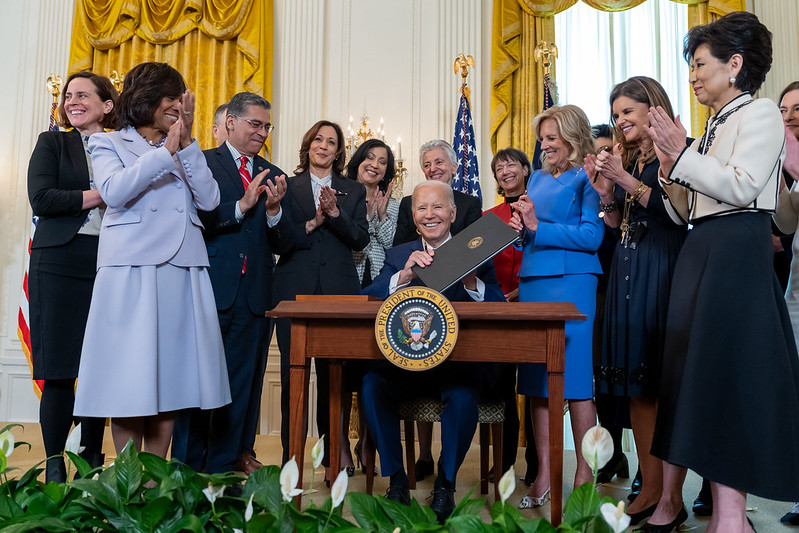
53598884922_4742d81a60_cLast week the world of immigration experienced a seismic event. The President announced a historic executive action on immigration that will forever change the lives of undocumented spouses of U.S. citizens and streamline the nonimmigrant work visa process for DACA recipients and other individuals. In this blog post, we share with you everything we know about how the executive order will benefit U.S. college graduates seeking work visas.

President Biden’s executive action was announced on the 12th anniversary of the Deferred Action for Childhood Arrivals (DACA) program, first enacted under the Obama administration. In addition to providing individuals protection from deportation, the order provides relief to potentially thousands of DACA recipients and other Dreamers who have earned academic degrees in the U.S. and are seeking employment opportunities in fields related to their course of study.

In doing so, the government will allow Dreamers to explore existing employment-based visa options such as H-1B, TN, L, O visas, etc.

Key Highlights


What the Executive Order does

  • Work Visas: DACA recipients and other undocumented individuals could soon apply for expedited waivers and receive temporary work visas, granting them legal status to live and work in the United States without fear of deportation
  • Eligibility: To be eligible for nonimmigrant work visas, individuals must have earned a degree at an accredited U.S. institution of higher education in the United States, and have an offer of employment from a U.S. employer in a field related to their course of study
  • Path to Residency: There is potential for these temporary work visas to create a path to permanent residency through employment-based sponsorship options.

Why This Matters


Due to the contentious political climate, the U.S. congress has failed to bring about meaningful immigration reform that provides a legal pathway for Dreamers to remain in the United States and positively contribute to the U.S. economy, utilizing the skills and education they gained here in the United States.

For the first time ever, the government will direct the State Department (DOS) and Department of Homeland Security (DHS) to issue clarifying guidance making it possible for DACA recipients and other individuals without legal status to apply for expedited waivers and temporary work visas.

How will this process work?


While complete details have not yet been released, the government will facilitate expedited review of waivers of visa ineligibility by clarifying that it is within a Consular officer’s discretion to grant a waiver for such individuals, making it easier for them to apply for work visas.

212(d)(3) Waivers and the Ten-Year Unlawful Presence Bar


Under current immigration law, DACA recipients and other undocumented immigrants face additional barriers to obtaining temporary work visas due to their unlawful presence. Under the law, anyone who has accrued unlawful presence for a year or more is subject to a ten-year bar that is triggered upon departing the United States. As a result, the ten-year bar prevents an individual from re-entering the United States for at least ten-years after their departure. This has been a long-standing problem for undocumented immigrants because the bar is triggered even when an individual leaves to obtain a visa at a U.S. Consulate or Embassy abroad.

To overcome the ten-year bar, work visa applicants are forced to obtain a discretionary waiver from the U.S. Customs and Border Protection’s Admissibility Review Office. This waiver is known as the INA 212(d)(3) waiver and is designed to excuse certain grounds of inadmissibility including unlawful presence. An approved waiver removes the bar and allows such individuals to apply for temporary work visas at U.S. Consulates and Embassies. Only once the U.S. work visa is issued, can the individual re-enter the United States in nonimmigrant visa status and work for their employer pursuant to the terms of the employment visa.

Continue reading

48554137807_fa4094864c_e

Source: Flickr Creative Commons Attribution Gage Skidmore

A estas alturas ya habrás visto los titulares de las noticias. Ahora analicemos la nueva acción ejecutiva histórica del Presidente Biden sobre inmigración y vayamos al meollo de todo lo que necesitas saber sobre esta orden diseñada para mantener unidas a las familias y brindar más oportunidades a los Dreamers.


Proceso para Promover la Unidad y Estabilidad de las Familias– Legalización de cónyuges Indocumentados de Ciudadanos Estadounidenses


Hoy, 18 de junio de 2024, el Presidente Biden anunció un nuevo proceso que permitirá la protección y legalización de los cónyuges indocumentados de ciudadanos estadounidenses que hayan residido en los Estados Unidos durante al menos diez años a partir del 17 de junio de 2024.

En virtud de la autoridad ejecutiva del Presidente, el Departamento de Seguridad Nacional (DHS), en coordinación con los Servicios de Ciudadanía e Inmigración de los Estados Unidos (USCIS), crearán un nuevo programa discrecional de “permanencia temporal” para que los cónyuges indocumentados de ciudadanos estadounidenses legalicen su estatus mientras permaneciendo en los Estados Unidos.

Aquellos que sean aprobados después de la evaluación caso por caso de su solicitud por parte del DHS tendrán un período de tres años para solicitar la residencia permanente. A los elegibles se les permitirá permanecer con sus familias en los Estados Unidos y ser elegibles para una autorización de trabajo por hasta tres años.

Las personas deben cumplir ciertos requisitos de elegibilidad para convertirse en residentes permanentes legales (titulares de tarjeta verde) bajo este nuevo proceso,

A continuación se encuentran respuestas a preguntas frecuentes sobre esta orden ejecutiva.


Q: ¿Cuáles son los requisitos para que los cónyuges sean elegibles para solicitar el permiso de permanencia temporal y legalizar su estatus en los Estados Unidos?


Para ser considerado caso por caso para una concesión discrecional de permiso de permanencia temporal en virtud de este proceso, una persona debe:

  • Estar presente en Estados Unidos sin admisión ni permiso de permanencia temporal;
  • Haber estado presente continuamente en Estados Unidos durante al menos 10 años a partir del 17 de junio de 2024; y
  • Tener un matrimonio legalmente válido con un ciudadano estadounidense a partir del 17 de junio de 2024
  • No tener antecedentes penales que lo descalifiquen o de otra manera constituir una amenaza a la seguridad nacional o la seguridad pública y
  • Merecer un ejercicio favorable de discreción para recibir permiso de permanencia temporal

Continue reading

48554137807_fa4094864c_e

Source: Flickr Creative Commons Attribution Gage Skidmore

By now you’ve seen the headlines in the news. Now let us break down President Biden’s historic executive action on immigration and get to the nitty gritty of everything you need to know about this order designed to keep families together and provide further opportunities for Dreamers.


Process to Promote the Unity and Stability of Families – Legalization of Undocumented Spouses of U.S. Citizens


Today, June 18, 2024, President Biden announced a new process that will allow for the legalization of undocumented spouses of U.S. Citizens who have been residing in the United States for at least ten years as of June 17, 2024.

By virtue of the President’s executive authority, the Department of Homeland Security (DHS) in coordination with the U.S. Citizenship and Immigration Services (USCIS) will create a new discretionary “parole in place” program for undocumented spouses of U.S. Citizens to legalize their status while remaining in the United States.

Those who are approved after DHS’s case-by-case assessment of their application will be afforded a three-year period to apply for permanent residency. They will be allowed to remain with their families in the United States and be eligible for work authorization for up to three years.

Individuals must meet certain eligibility requirements to become lawful permanent residents (green card holders).

Below are answers to frequently asked questions regarding this executive order. 


Q: What are the requirements for spouses to be eligible to apply for parole and legalize their status in the United States?


To be considered for a discretionary grant of parole in place under this process, spouses of U.S. Citizens must:

  • Be present in the United States without admission or parole;
  • Have been continuously present in the United States for at least 10 years as of June 17, 2024; and
  • Have a legally valid marriage to a U.S. citizen as of June 17, 2024
  • Have no disqualifying criminal history or otherwise constitute a threat to national security or public safety and
  • Merit a favorable exercise of discretion to receive parole

Q: Are Noncitizen Children of Undocumented Spouses eligible for parole?


Yes. In addition to undocumented spouses of U.S. Citizens, their noncitizen children may also be considered for parole on a case-by-case basis under this process along with their parent, if they are:

  • Physically present in the United States without admission or parole and
  • Have a qualifying stepchild relationship with a U.S. citizen parent as defined by the Immigration and Nationality Act as of June 17, 2024

To qualify as a stepchild under the Immigration and Nationality Act, the noncitizen child must be unmarried, under the age of 21, and the marriage of their noncitizen parent and U.S. citizen stepparent must have taken place prior to the child’s 18th birthday.


Q: How is this new parole program different from the current laws in place?


This new “parole in place” program will eliminate the need for spouses of U.S. Citizens to travel outside of the United States to legalize their status through what is known as an extreme hardship “waiver” process.

The “waiver” process is an extremely cumbersome and lengthy process that requires the undocumented spouse to depart the United States and be interviewed and approved for an immigrant visa overseas. Only once the visa is issued can the applicant return to the United States.

This process has unnecessarily torn families apart and created much fear and uncertainty among applicants forced to remain away from their families for prolonged periods of time. Many applicants are the sole providers for their families and take care of children with disabilities, making this process extremely difficult to bear.

This executive action will instead open a pathway to permanent residence by allowing eligible undocumented spouses of U.S. Citizens to adjust their status to permanent residence while in the United States, without requiring them to depart the country.

Continue reading

joshua-sukoff-SYHi8oX0JC8-unsplash-scaledThis is a developing story

The world of immigration has been shaken up by new reports that the Biden administration intends to release a groundbreaking executive action on immigration. The President’s order could soon allow spouses of U.S. Citizens to legalize their status in the United States.

According to government officials speaking on condition of anonymity, full details of the executive action are expected to be released as early as Tuesday – the twelfth anniversary of the Deferred Action for Childhood Arrivals (DACA) program. If passed, it would be one of the largest immigration relief proposals in recent history.

Essentially, a plan has been in the works to create a program known as “Parole in Place” that would offer work permits and deportation protections to undocumented immigrants married to U.S. Citizens, so long as they have lived in the United States for at least 10 years.

Such a program would eliminate the need for spouses of U.S. Citizens to travel outside of the United States to legalize their status through an extreme hardship “waiver” process, that has posed obstacles for many to become legalized.

Instead, the program would open a pathway to permanent residence for spouses of U.S. Citizens to adjust their status to permanent residence from the United States, without having to depart the country.

If passed, the White House’s measure could benefit more than 1.1 million undocumented spouses of U.S. Citizens, if they can meet the eligibility requirements.

Continue reading

news-7091305_1280

On May 13, 2024, the State Department announced record breaking milestones including the issuance of a whopping 5.2 million nonimmigrant visas at U.S. Embassies and Consulates worldwide in the first half of fiscal year 2024 – more than any previous year over the same period.

In the past six months alone, 30 percent of U.S. Embassies and Consulates worldwide set all-time records for nonimmigrant visas issued.

In particular, travel and tourism has been a focal point for the State Department considering that international visitors contribute as much as $239 billion annually to the U.S. economy and support approximately 9.5 million jobs.

Some of the key highlights from the State Department’s announcement are as follows:

In the first half of fiscal year 2024:

  • Almost 4.1 million B visitor visas and border crossing cards were issued for tourists and temporary business travelers worldwide, with nearly two-thirds from Mexico, India, Brazil, the People’s Republic of China, Colombia, Argentina, the Dominican Republic and Ecuador.

By the middle of fiscal year 2024, the State Department issued:

  • Approximately 134,000 visas for exchange visitor program participants and 115,000 visas for students. International students contributed almost $38 billion to the U.S. economy in the year 2022 and made up more than 335,000 jobs
  • A record breaking 205,000 visas were issued for temporary or seasonal workers in agriculture and other sectors
  • Almost 160,000 nonimmigrant visas were issued to airline and shipping crew members to support global transportation and supply chains—the second-highest half-year issuance record in this category in history
  • Almost 25,000 employment-based immigrant visas—75 percent more than same period in fiscal year 2019

Continue reading

hourglass-1046841_1280

The U.S. Department of State’s Bureau of Consular Affairs has published the June Visa Bulletin. In this blog post we breakdown the projected movement of the employment-based and family-sponsored categories in the month of June.


USCIS Adjustment of Status


For employment-based preference categories, the U.S. Citizenship and Immigration Services (USCIS) confirmed that in June it will use the Final Action Dates chart to determine filing eligibility for adjustment of status to permanent residence.

For family-sponsored preference categories, USCIS will use the Dates for Filing chart to determine filing eligibility for adjustment of status to permanent residence.


Highlights of the June 2024 Visa Bulletin


Employment-Based Categories

The June Visa Bulletin shows no advancement in most employment-based categories.

  • The Dates for Filing chart in June remains unchanged from the previous months.
  • The Final Action Dates for EB-1, EB-2, and EB-5 remain unchanged.
  • Only EB-3 India will advance by one week.

Family-Sponsored Categories

For the family-sponsored preference categories, the Dates for Filing Chart remains unchanged from the previous month, with the exception of:

  • F2B Mexico will advance by 2 months to November 1, 2004
  • F3 Worldwide, China, and India will advance by 3 months to September 1, 2010
  • F4 Mexico will advance by 5 days to April 27, 2001

Continue reading

headset-6617715_1280

If your case remains pending with U.S. Citizenship and Immigration Services (USCIS) beyond the posted processing times for your immigration benefit request, you may consider requesting assistance from the Ombudsman’s Office.


What is the USCIS Ombudsman?


The Office of the Citizenship and Immigration Services Ombudsman (CIS Ombudsman) helps individuals and employers resolve difficulties they are experiencing with USCIS. The Ombudsman functions independently and is part of the Department of Homeland Security (DHS).

Before an applicant can request for help from the Ombudsman, they must have contacted USCIS within the last 90 days and given the agency at least 60 days to resolve their problem. If a Congressional representative is already assisting you, the Ombudsman’s office cannot help you.

If USCIS does not resolve the issue (via submission of an e-request, or other communication method) the applicant can prepare and submit a case assistance request with the Office of the Ombudsman.

The most common issues the Ombudsman can assist with are:

  • Cases involving an emergency or a hardship that falls under the USCIS expedite criteria
  • Expedite requests approved by USCIS more than 2 months ago
  • Typographical errors
  • Improper rejections
  • Cases involving U.S. military personnel and their families
  • Aging out of eligibility
  • Undelivered USCIS notices or decisions
  • Transfers to the Department of State for approved petitions

Continue reading

queue-869258_1280

In this blog post, we cover the newly released Immigrant Visa Backlog Report published by the Department of State. April’s report provides the latest data and statistics relating to the processing of immigrant visa applications at the National Visa Center.

This data includes information about the number of documentarily complete immigrant visa cases currently at the National Visa Center waiting for interviews, the number of cases that were scheduled for interviews by the end of the month, and the number of immigrant visa cases still waiting to be scheduled for a visa interview after interview appointment scheduling was completed.


The April Immigrant Visa Backlog Report


According to the National Visa Center’s April Immigrant Visa Backlog Report there has been an increase in the overall immigrant visa (IV) backlog from 326,415 pending cases in the month of March, to 351,624 pending cases still waiting to be scheduled for a visa interview at the end of April. By comparison, in February, there were 338,256 pending cases waiting for interview scheduling.

On the bright side, the Final Action dates in the April and May Visa Bulletin have shown substantial forward movement for nearly all family-sponsored categories. This has enabled more family-based immigrant visa applications to become documentarily complete and receive interview scheduling at U.S. Consulates and Embassies worldwide. Unfortunately, the same cannot be said for the employment-based categories, which have remained stagnant with little to no forward movement in recent months.

Additionally, when comparing the March and April Immigrant Visa backlog reports, we can see that the number of immigrant visa applicants whose cases were documentarily complete and therefore ready to be scheduled for an interview at Consulates and Embassies increased from 374,532 (as of February 29, 2024) to 404,459 (as of March 31, 2024). Of these cases, only 52,835 applicants whose cases became documentarily complete were scheduled for interview appointments in April 2024. By comparison, only 48,117 applicants were scheduled for interview in March.

Continue reading

community-3245739_1280

If you’ve been a long-time follower of our blog, you’ll know that on January 29th the Department of State launched a pilot program giving certain H-1B applicants the ability to renew their visas without ever having to leave the United States.

The State Department accepted applications for this pilot program until April 1, 2024, granting domestic visa renewals for approximately 20,000 qualifying applicants, whose prior H-1B visas were issued by either Mission Canada (with an issuance date from January 1, 2020, through April 1, 2023) or by Mission India (with an issuance date of February 1, 2021, through September 30, 2021).

What was so exciting about the pilot program’s announcement was the government’s intention to potentially expand the scope of the domestic visa renewal program to more applicants and other visa categories.

In a recent Committee Liaison meeting with the American Immigration Lawyers Association (AILA), State Department representatives said that the pilot program was a resounding success. The pilot program benefitted thousands of workers and saw strong participation from big companies, including a broad spectrum of employers from the hospitality, retail, manufacturing, technology, finance, and academic sectors.

When asked whether the State Department could release statistics about the program, representatives responded that such data is not yet available but revealed that the average turnaround time for approved applications was under two weeks.

Continue reading

speech-7228844_1280

The long-awaited May 2024 Visa Bulletin has arrived! If you’d like to know all about the projected movement of the employment-based and family-sponsored categories in the month of May, we’ve got you covered.


Highlights of the May 2024 Visa Bulletin


Dates for Filing Chart


For the family-sponsored preference categories, the Dates for Filing Chart remains unchanged from the previous month, with the exception of the F2B category for Mexico which will advance by 1 month to September 1, 2004. Additionally, F3 Worldwide, China, and India will advance by 3 months to June 1, 2010. Finally, F4 India will advance by 2.2 months to June 15, 2006, F4 Mexico will advance by 1 week to April 22, 2001, and F4 Philippines will advance by over 1 month to June 1, 2005.

For the employment-based petitions, the Dates for Filing remain unchanged from the previous month.


Employment-based categories Final Action Chart


The Final Action Dates Chart shows no movement for all employment-based preference categories.


Family-sponsored categories


Movement in the Final Action Dates


On the other hand, the Final Action Dates Chart for the family-sponsored categories advanced in almost all categories as follows:

  • F1 Mexico will advance by 5.5 months to October 15, 2001
  • F1 Philippines will remain the same at March 1, 2012
  • F1 All other countries will advance by 4.9 months to July 8, 2015
  • F2A Mexico will advance by 2.8 months to November 8, 2020
  • F2A Philippines will advance by 8.7 months to June 1, 2021
  • F2A All other countries will advance by 8.7 months to June 1, 2021
  • F2B Mexico will advance by 4.3 months to March 1, 2004
  • F2B Philippines will remain at October 22, 2011
  • F2B All other countries will advance by 4.3 months to April 1, 2016
  • F3 Mexico will advance by 10.4 months to July 22, 1999
  • F3 Philippines will advance by 1.8 months to August 1, 2002
  • F3 All other countries will advance by 3 months to January 1, 2010
  • F4 Worldwide and China will advance by 1.4 months to July 22, 2007
  • F4 India will advance by 1 month to January 15, 2006
  • F4 Mexico will advance by 3.3 months to January 22, 2001
  • F4 Philippines will advance by 2.8 months to September 8, 2003

Continue reading