Articles Posted in Executive Actions

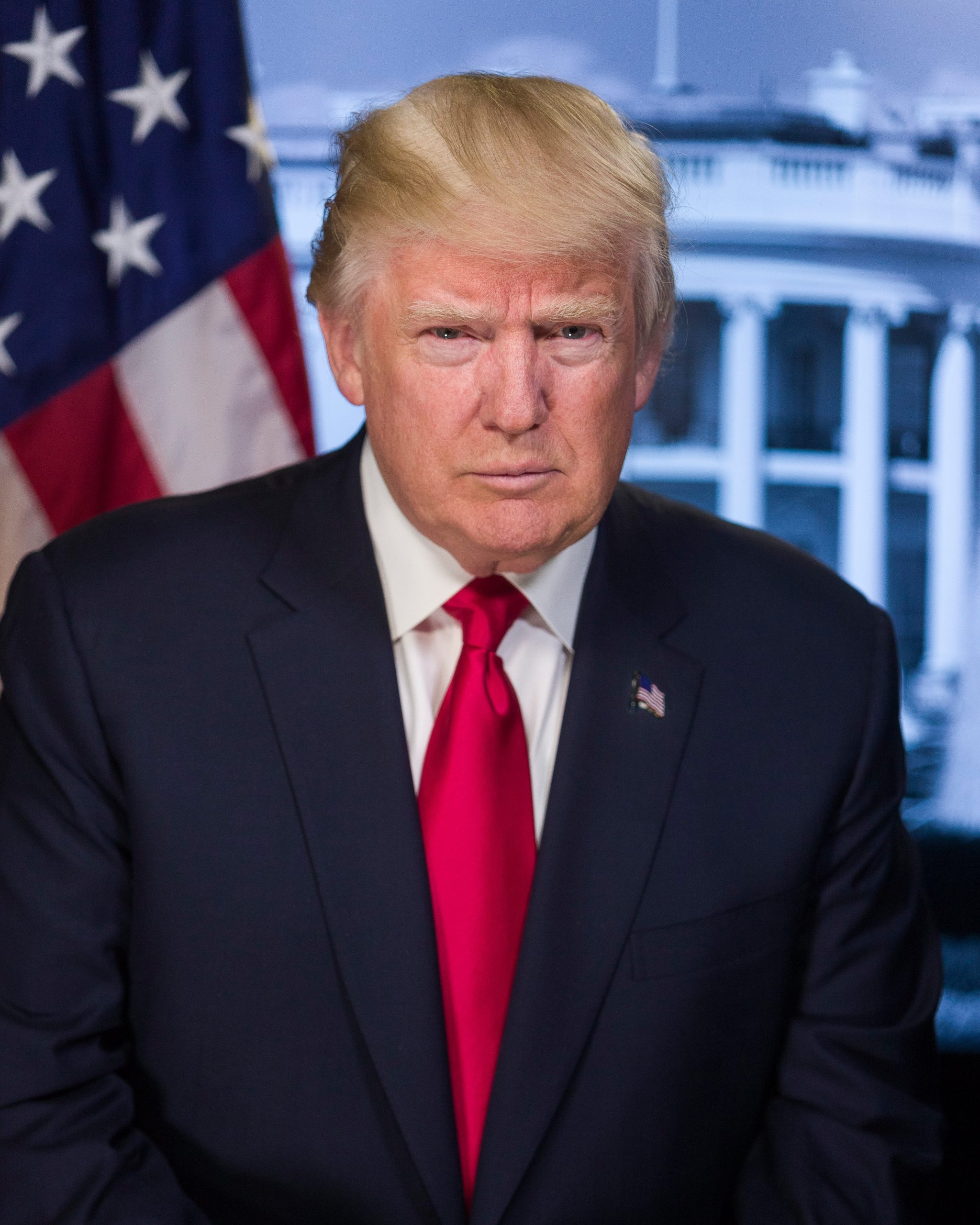
donald-trump-4817333_1280

The long-awaited Executive Order temporarily suspending the immigration of certain aliens into the United States has been released.


WHO IS IMPACTED BY THE EXECUTIVE ORDER?


The order entitled, “Proclamation Suspending the Entry of Immigrants Who Present Risk to the U.S. Labor Market During the Economic Recovery Following the COVID-19 Outbreak,” suspends and limits the entry of the following types of aliens (for a 60-day period) beginning 11:59 p.m. eastern daylight time on April 23, 2020.


Your entry is suspended and limited if all of the following are true:

THREE PART TEST


  • You are an alien outside of the United States on the effective date of the Proclamation (April 23rd)
  • You are an alien that does not have an immigrant visa that is valid on the effective date of the Proclamation (April 23rd) and
  • You are an alien that does not have an official travel document other than a visa on the effective date of the proclamation (April 23rd) or issued on any date thereafter that permits him or her to travel to the United States and seek entry or admission
    • Official travel documents include a transportation letter, an appropriate boarding foil, or advance parole document.

ENFORCEMENT


This Proclamation shall be enforced by U.S. Consulates worldwide at their discretion giving them the power to determine whether an immigrant has established his or her eligibility and is otherwise exempted from the Proclamation. The Department of State will implement the proclamation as it applies to immigrant visas, at the discretion of the Secretary of State in consultation with the Secretary of Homeland Security.

The Department of State governs the immigration process outside of the United States, while the Department of Homeland Security governs the immigration process within the United States and guides the United States Citizenship and Immigration Services (USCIS).


WHO IS EXEMPT FROM THE EXECUTIVE ORDER?


The order expressly exempts:

  • Lawful Permanent Residents of the U.S.
  • Aliens who are the spouses of U.S. Citizens
  • Members of the U.S. Armed Forces and any spouse and child of a member of the U.S. Armed Forces
  • Aliens under 21 years of age who are children of United States Citizens and prospective adoptees
  • Aliens seeking to enter the U.S. on an immigrant visa as a physician, nurse, or other healthcare professional
  • Aliens seeking to enter the U.S. to perform medical research or other research intended to combat the spread of COVID-19
  • Any spouse any unmarried child under 21 years of age of any such alien who is accompanying or following to join the alien
  • Any alien applying for a visa pursuant to the EB-5 Immigrant Investor Program
  • Aliens whose entry furthers important United States law enforcement objectives
  • Any alien seeking entry pursuant to a Special Immigrant Visa in the SI or SQ classification, and any spouse and child of any such individual
    • SI: Certain aliens employed by the U.S. Government in Iraq or Afghanistan as translators or interpreters
    • SQ: Certain Iraqis or Afghans employed by or on behalf of the U.S. Government
  • Any alien whose entry would be in the national interest of the United States (national interest waivers)
  • Aliens seeking entry for asylum, refugee status, withholding of removal, or protection under the Convention Against Torture and Other Cruel, Inhuman or Degrading Treatment or Punishment

Continue reading

library-of-congress-jPN_oglAjOU-unsplash-scaled

Yesterday evening, President Donald Trump made an unusual announcement via twitter stating, “In light of the attack from the Invisible Enemy [COVID-19], as well as the need to protect the jobs of our GREAT American Citizens, I will be signing an Executive Order to temporary suspend immigration into the United States!”

Since that tweet, no executive order has been released by the White House and no details have been provided relating to what that executive order might include, who might be affected, and how long the temporary suspension might last.

According to NPR, an official from the Department of Justice reported that the draft executive order is currently under review by the Office of Legal Counsel.

Is it worth noting that at present United States Consulates and Embassies abroad have already suspended routine visa processing and are not taking appointments for visa interviews until further notice. USCIS is still accepting and adjudicating petitions for immigration benefits as usual, however USCIS field offices, ASC offices, and asylum offices are closed to the public until May 3rd.

Responding to the President’s tweet, White House Press Secretary Kayleigh McEnany said today in a statement that the President, “is committed to protecting the health and economic well-being of American citizens as we face unprecedented time,” she continued, “As President Trump has said, ‘Decades of record immigration have produced lower wages and higher unemployment for our citizens, especially for African American and Latino workers. At a time when Americans are looking to get back to work, action is necessary.”

Continue reading

48144527222_dc4e177e49_b

Credit: EpicTop10.com


UPDATE—The Latest on DACA: Last summer, the United States Supreme Court accepted the Trump administration’s writ of certiorari, agreeing to review several federal court cases challenging the Trump administration’s decision to terminate DACA. The Supreme Court could, at any moment, decide the fate of DACA, making this an extremely uncertain time for Dreamers. A decision is expected to be handed down by the Supreme Court in early 2020, just before the 2020 presidential election. In the meantime, given that no final decision has yet been made by the Supreme Court, DACA recipients may continue to submit renewal applications pursuant to three U.S. district court orders that remain in effect. As required by these orders, United States Citizenship and immigration Services (USCIS) resumed accepting renewal requests for DACA, however those who have never before been granted deferred action cannot apply.


DACA FREQUENTLY ASKED QUESTIONS


USCIS Continues to Accept DACA Renewal Requests

In early January of 2018, the U.S. District Court for the Northern District of California issued a preliminary injunction in favor of the plaintiffs in the case Regents of the University of California, et al. v. Department of Homeland Security, et al., which challenged the government’s decision to terminate DACA. The preliminary injunction had the effect of temporarily blocking the termination of the DACA program until a final decision is reached on the merits of the case. The injunction applied nationwide and required USCIS to resume accepting DACA renewal applications. Shortly after this court order, USCIS announced that it would resume accepting DACA renewal applications.

The Sapochnick Law Firm has drafted the following answers to your frequently asked questions regarding the current state of DACA, CIS’ announcement informing the public that it will continue accepting DACA requests, and further developments relating to DACA.


WHY YOU SHOULD APPLY FOR YOUR DACA RENEWAL NOW


At this time the fate of the DACA program is extremely uncertain. The United States Supreme Court is set to make a final decision regarding the legality of the DACA program at any time. Given that the liberal justices on the court are outnumbered by 5-4, it is more and more probable that the DACA program will be terminated. Once the Supreme Court casts the final vote, DACA recipients will likely lose the opportunity to apply for renewal of their benefits. Now more than ever DACA holders should take advantage of their ability to apply for a final renewal of their benefits. We hope that the Supreme Court will be on the right side of history, but there can be no guarantees.


1. I have never applied for DACA before, can I still submit an application?

No. The preliminary injunction does not require USCIS to accept DACA applications from first-time applicants. USCIS has made clear that it will not be accepting DACA applications from those who have never before been granted deferred action. The agency will only continue accepting applications to renew a grant of deferred action under DACA.

2. Why did I hear that applications for first-time applicants would be accepted?

In a previous case out of the U.S. District Court for the District of Columbia, NAACP v. Trump, federal judge John D. Bates ordered the government to submit additional information to justify its decision to terminate DACA—failure to do so meant that USCIS would be required to accept first-time applications for DACA as well as applications from DACA holders for advance parole.

The government did respond within the required period of time, issuing a memorandum outlining the government’s rationale for terminating the DACA program. Having satisfied the court’s requirement to produce the information, the U.S. District Court for the District of Columbia, “stayed” its previous order requiring that the DACA program be fully reinstated. As a result, the portions of the court order that would have allowed first-time applicants to seek DACA and allowed for DACA recipients to apply for advance parole, were stopped.

Given that the government complied with the court order, at this time, USCIS is not accepting DACA applications from first-time applicants, nor applications for advance parole from DACA recipients.

Continue reading

hands-998986_1920

With just a few weeks into the new year, the judicial branch has been hard at work issuing decisions that spell trouble for the Trump administration.

On Wednesday, January 15th a federal judge in Maryland issued a temporary injunction preventing the Trump administration from implementing the President’s executive order “Enhancing State and Local Involvement in Refugee Resettlement,” issued by the President on September 26th of last year.

As part of the executive order, the President authorized state and local governments to refuse the placement or resettlement of refugees in their communities stating that, the Federal government, as an exercise of its broad discretion, “should resettle refugees only in those jurisdictions in which both the State and local governments” consent to receive refugees under the Department of State’s Reception and Placement Program.

The government by its order sought to tighten the placement of refugees in the United States by allowing refugees into the United States only if both the State and local government consent to their placement in the State or locality.

In response to a lawsuit filed by refugee-resettlement organizations challenging the executive order, U.S. District Judge Peter Messitte said that the plaintiffs were “clearly likely to succeed in showing, that, by giving states and local governments veto power over the resettlement of refugees within their borders, the [executive] order is unlawful.”

To preserve the status quo, until a final decision is made on the merits, Judge Messitte issued a temporary injunction blocking the government from enforcing any part of the executive order on a nationwide basis.

Continue reading

trump-1843504_1920

As we approach the end of the year, in this blog post, we look back at the major policy changes implemented by the Trump administration in the year 2019 that have had a profound impact on the way our immigration system functions today.

JANUARY 

Government Shutdown Woes

The start of 2019 began on a very somber note. From December 22, 2018 to January 25, 2019 Americans experienced the longest government shutdown in American history (lasting a period fo 35 days) largely due to political differences between the Republican and Democratic parties on the issue of government funding to build a border wall along the U.S. Mexico border.

The government shutdown created a massive backlog for non-detained persons expecting to attend hearings in immigration court. Because of limited availability of federal workers, non-detained persons experienced postponements and were required to wait an indeterminate amount of time for those hearings to be re-scheduled.

To sway public opinion, 17 days into the government shutdown, the President delivered his first primetime address from the Oval office where he called on Democrats to pass a spending bill that would provide $5.7 billion in funding for border security, including the President’s border wall.

With no agreement in sight, on January 19, 2019, the President sought to appease Democrats by offering them a compromise solution. In exchange for funding his border wall and border security, the President announced a plan that would extend temporary protected status of TPS recipients for a three-year period and provide legislative relief to DACA recipients for a three-year period. The President’s proposal however did not provide a pathway to residency for Dreamers, and was quickly rejected by Democrats.

On January 25, 2019, with still no solution and pressure mounting, the President relented and passed a temporary bill reopening the government until February 15, 2019.

Meanwhile, immigration courts across the country were forced to postpone hundreds of immigration hearings, with Minnesota, Pennsylvania, and Kentucky being the most deeply affected by the shutdown.

Changes to the H1B Visa Program

On January 30, 2019, the Department of Homeland Security announced proposed changes to the H-1B visa program including a mandatory electronic registration requirement for H1B petitioners filing cap-subject petitions beginning fiscal year 2020, and a reversal in the selection process for cap-subject petitions. The government outlined that it would first select H-1B registrations submitted on behalf of all H-1B beneficiaries (including regular cap and advanced degree exemption) and then if necessary select the remaining number of petitions from registrations filed for the advanced degree exemption. Moreover, only those registrations selected during fiscal year 2020 and on, would be eligible to file a paper H1B cap petition.

Continue reading

politics-2361943_1920

In this blog post we cover where the top democratic presidential candidates stand on the issue of immigration. At the moment only three Republicans have announced their participation in the 2020 election, therefore we will focus on the democratic candidates until more Republican candidates have formally announced their presidential bids.

On the democratic front, over sixteen candidates have formally announced their participation in the 2020 Presidential election, with many more rumored to join their ranks in the coming months.

Over the last five months, presidential hopefuls, Former Vice President Joe Biden, U.S. Senator Bernie Sanders, U.S. Senator Kamala Harris, U.S. Senator Elizabeth Warren, and U.S. Senator Amy Klobuchar, have battled one another taking part in debates across the country. Not surprisingly, the topic of interest in these debates has turned to immigration.

Joe Biden

Joe Biden is a familiar face to all Americans, having served as former Vice President during the Obama administration for 8 years, but Joe Biden’s performances in the latest democratic debates have been lackluster at best.

In a recent debate moderators criticized Joe Biden for being part of an administration that was responsible for deported 3 million people, the most in United States history. When asked if he did anything to prevent the deportations, Biden deflected stating that his own power was limited and that the former President “did the best that was able to be done.”

Joe Biden has appeared weak on immigration. Although he has acknowledged that the American immigration system is broken, he has provided few solutions on how to unify Congress to pass comprehensive immigration reform. Joe Biden has also prioritized securing the South West border and publicly stated during debates that undocumented immigrants need to “get in line,” to obtain legalization like everyone else.  Like his predecessors Joe Biden’s immigration policy prioritizes the entry of highly skilled immigrant workers, and fails to offer solutions to the millions of undocumented immigrants living and working in the United States for decades.

Continue reading

handshake-2056021_1920

In its latest act of defiance against the judicial branch, the Trump administration has published an Interim Final Rule entitled “Visas: Ineligibility Based on Public Charge Grounds,” designed to give Consular officers wider discretion to deny immigrant and nonimmigrant visas to applicants on public charge grounds based on a variety of factors that could weigh positively or negatively on an applicant.

According to the rule, consular officials will now be able to weigh a variety of factors to determine whether a visa applicant is likely to become a public charge. These factors include the applicant’s age, health, educational background, and financial status. In addition, consular officers will have increased discretion to scrutinize certain applications more closely than others based on the type of visa classification sought by the applicant, as well as the duration of stay.

Applicants who are seeking a long-term visa, for example may be scrutinized more heavily than applicant’s seeking a short-term visa (such as a tourist visa).

How will these factors be weighed by Consular officials?

Age: Consular officers will consider whether the alien’s age makes the alien more likely than not to become a public charge in the totality of the circumstances, such as by impacting the alien’s ability to work. Consular officers will consider an alien’s age between 18 and 62 as a positive factor.

Health: Consular officers will consider whether the alien’s health serves as a positive or negative factor in the totality of the circumstances, including whether the alien has been diagnosed with a medical condition that is likely to require extensive medical treatment or institutionalization or that will interfere with the alien’s ability to provide and care for himself or herself, to attend school, or to work (if authorized).

Continue reading

john-schnobrich-520019-unsplash

Today, November 30, 2018, the United States Department of Homeland Security announced a notice of proposed rulemaking (NPRM) that seeks to impose a registration requirement for H-1B petitioners seeking to file an H-1B petition on behalf of beneficiaries under the regular cap and advanced degree exemption.  An unpublished version of the proposed rule has been made available in the federal register.

Under the proposed rule H-1B Petitioners would be required to electronically register with USCIS during the designated registration period, in order to file a H-1B cap-subject petition on behalf of a foreign worker. In addition, DHS is proposing to change the order in which H-1B cap-subject registrations would be selected to meet the annual H-1B regular cap and advanced degree exemption. This change would increase the odds of selection for H-1B beneficiaries who have earned a U.S. master’s degree or higher from a U.S. institution.

Under the proposed rule, all petitioners seeking to file an H-1B cap-subject petition on behalf of a foreign worker would be required to submit to a mandatory registration process. Only those whose registrations are selected, would be eligible to file an H-1B cap-subject petition during the associated filing period.

The mandatory Internet-based registration process for petitioners seeking to file H-1B petitions for beneficiaries to be counted under the regular cap or advanced degree exemption, would begin before April 1st, in advance of the period during which H-1B petitions can be filed for a new fiscal year. An H-1B cap-subject petition would not be considered properly filed unless the petition is based on a valid registration selection for that fiscal year.

Continue reading

border-3806969_1920-1
Several weeks ago, the President signed an executive order preventing undocumented immigrants from applying for asylum.

On Monday, a federal judge from San Francisco issued a nationwide injunction, forcing the government to continue to accept asylum claims by undocumented immigrants, regardless of where or how they entered the United States. As a result, the President’s executive order will be suspended until a decision is reached by the court in the lawsuit East Bay Sanctuary Covenant et al., v. Donald J. Trump, et al.,

The President hoped that his executive order would curb illegal immigration at the Southern border, ahead of the arrival of a large immigrant caravan from Central America.

robert-hickerson-38585-unsplash

On November 9, 2018, the President unveiled a new executive order, this time targeting asylum seekers from Central America.

Over the last few weeks, a large caravan of immigrants from Central America, bound for the United States, has made headlines. In a recent campaign ad, the Trump administration depicted individuals forming part of the immigrant caravan as criminals and violent gang members.

The President has not shied away from commenting on the caravan. In an October tweet, when news first spread of the caravan, the President said, “In addition to stopping all payments to these countries, which seem to have almost no control over their population, I must, in the strongest of terms, ask Mexico to stop this onslaught—and if unable to do so I will call up the U.S. Military and CLOSE OUR SOUTHERN BORDER!”

Trump is now delivering on his promise. Trump has now signed an executive order to temporarily suspend the entry of certain aliens entering through the southern border.

The executive order reads:

Under this suspension, aliens entering through the southern border, even those without proper documentation, may, consistent with this proclamation, avail themselves of our asylum system, provided that they properly present themselves for inspection at a port of entry.  In anticipation of a large group of aliens arriving in the coming weeks, I am directing the Secretary of Homeland Security to commit additional resources to support our ports of entry at the southern border to assist in processing those aliens — and all others arriving at our ports of entry — as efficiently as possible.

But aliens who enter the United States unlawfully through the southern border …. will be ineligible to be granted asylum …. Those aliens may, however, still seek other forms of protection from persecution or torture.

Who does the Executive Order apply to:

Aliens who enter the United States across the international boundary between the United States and Mexico after November 9, 2018. The suspension will expire 90 days after November 9, 2018, or the date on which an agreement permits the United States to remove aliens to Mexico.

Continue reading