Articles Posted in Permanent Residents

bingo-g2727c83b3_1920

We close off the week with an immigration roundup summarizing recent news in the world of immigration.

In this week’s post, we have Diversity Visa Program updates. Yesterday, the Department of State provided guidance for Diversity Visa applicants selected for fiscal year 2023. Such applicants are advised to submit to the Kentucky Consular Center (KCC) the DS-260 immigrant visa application form for themselves and any accompanying family members.

After submission of the DS-260 immigrant visa application, the Kentucky Consular Center will review it for completeness, and place your application in a queue to be scheduled for an in-person visa interview, provided that your priority date is current on to the Visa Bulletin.

For now, this will be the procedure required of Diversity Visa selectees for fiscal year 2023.

The Kentucky Consular Center warns applicants not to submit any other required supporting documents, other than the completed DS-260 application. This is because, all supporting documentation for DV-2023 selectees will be collected and evaluated at the time of the applicant’s in-person visa interview at the embassy or consulate where the visa application has been made.

Selected candidates should carefully review the Department of State website for the necessary supporting documentation they must bring on the day of their scheduled interview to establish eligibility for an immigrant visa. Those who are unsure of the requirements, should consider working with an experienced attorney for assistance.

Continue reading

international-g0a4ba2900_1920

This week in immigration news, we share new developments for Afghan nationals. The Biden administration recently announced its plan to launch a new portal that would facilitate the reunification of Afghans immigrants with their family members.


What is it all about?


The U.S. Department of State run portal would provide a place for Afghans in the United States to search for family members who were separated from them following the U.S. withdrawal from Afghanistan last year.

Previously, Afghans needed the help of nonprofit groups such as the United National Refugee Agency (UNHCR) and U.S. Department of State liaisons to help them locate family members left behind. Individuals were required to complete lengthy questionnaires, provide information, and submit documentation that would be independently verified by state department liaisons.

Now, the state-run portal will provide a central location where users can upload information to help locate their family members. Users will be able to enter their own status on the website, and complete forms to enable their relative to gain entry to the United States.

Additionally, the Biden administration is said to be considering waiving the $535 government filing fee associated the filing of Form I-130 Petition for Alien Relative, which allows a U.S. citizen to petition the entry of their relative to the United States.

According to a Department of State spokesperson, through the resettlement effort known as Operation Allies Welcome, immediate family members of Afghans who relocated to the United States are strongly being considered for parole. Immediate relatives of U.S. Citizens, lawful permanent residents, formerly locally employed staff members of the U.S. Embassy in Kabul, and certain Special Immigrant Visa (SIV) applicants are also being prioritized to receive parole.

Continue reading

work-g269ab8f6e_1280

Welcome back to Visalawyerblog. We kick off the start of a brand-new week with unfortunate news for asylum-based applicants for I-765 employment authorization.

New data from the U.S. Citizenship and Immigration Services (USCIS) indicates that the agency has been woefully inadequate at processing work permits, failing to meet the 30-day required processing time for employment authorization cards, also known as EADs, filed by asylum seekers.

By law, USCIS must process work permits (EADs) within 30 days of receipt of an asylum seekers I-765 application for employment authorization. However new data shows that USCIS has not been meeting this required timeline throughout 2022, and processing has been declining to a record low.

Data released by USCIS, as part of ongoing litigation, shows that during the last three weeks of February 2022, 93 percent of I-765 applications had been pending for at least 30 days. In March 2022, this figure plummeted to just 68 percent of I-765’s being processed within the 30 days.  Sadly, in recent months, the data shows that processing of EADs has been getting worse and worse on a monthly basis. For instance, in April of this year, this figure dropped to 41 percent of I-765 applications being processed within 30 days. In May the drop continued to just 21 percent, and in June to just 6 percent. Finally, this past month of July, the agency processed less than 5 percent of EAD applications within the required 30-day window. This trend puts on full display the asylum visa processing crisis with no end in sight.

The drop in EAD processing coincides directly with a court ruling handed down in February. USCIS appears to be clearing out the backlog by first processing work permit applications pending the longest, creating substantial delays for more recent applications for employment authorization.

The data indicates that the vast majority of applications USCIS processed over the past three months had been pending for more than 120 days (nearly 4 months).

Due to the EAD processing crisis, USCIS now faces a backlog of more than 77,000 pending work permit requests received by the agency within the past three months alone.

Continue reading

ehr-g1f2dd91fa_1280
Welcome back to a brand-new week. We have some interesting news for employment-based adjustment of status applicants.

Today, Monday, June 27, 2022, the U.S. Citizenship and Immigration Services (USCIS) issued a public engagement notice recommending that members of the public submit their Form I-693 sealed medical examinations as soon as possible to ensure efficient processing of employment based green cards.

According to USCIS, the agency is ramping up its efforts to process as many employment-based immigrant visas as possible to avoid wasting visa numbers before the end of fiscal year 2022, which ends on September 30, 2022.

bulletin-board-g6e84eee26_1920

In this blog post, we cover the release of the July Visa Bulletin 2022 and what you can expect for employment based and family preference categories during the upcoming month of July.

The Department of State releases the visa bulletin on a monthly basis, which summarizes the availability of immigrant visa numbers for that particular month. The “Final Action Dates” and “Dates for Filing Applications,” charts indicate when immigrant visa applicants should be notified to assemble and submit the required documentation to the National Visa Center.


Adjustment of Status Filing Chart July 2022


For Family-Sponsored Filings:

Pursuant to guidance released by USCIS, for all family-sponsored preference categories, applicants must use the  Dates for Filing chart in the Department of State Visa Bulletin for July 2022.

For Employment-Based Preference Filings:

All applicants, falling under employment-based preference categories, must use the Final Action Dates chart in the Department of State Visa Bulletin for July 2022. 


July 2022 Visa Bulletin Final Action Cutoff Dates


Employment-Based Categories


FINAL ACTION DATES FOR EMPLOYMENT-BASED PREFERENCE CASES


According to the Department of State’s July 2022 Visa Bulletin, the following Final Action cutoff dates will apply for the issuance of an immigrant visa for employment-based categories:

  • EB-1: All countries, including India and China, will remain current.
  • EB-2: India will advance by 3 months, to December 1, 2014, and China will advance by 1 month to April 1, 2019. All other countries will remain current.
  • EB-3 Professionals and Skilled Workers: EB-3 India and EB-3 China will remain unchanged from the previous month, at January 15, 2012 and March 22, 2018, respectively. All other countries will remain current.
  • EB3 Other Workers: For this category, the Department of State has established a worldwide cutoff date of May 8, 2019, to avoid exceeding the annual numerical limits. EB-3 India and China will remain unchanged at January 15, 2012 and June 1, 2012, respectively.
  • EB-5: The Department of State has taken corrective action by establishing a Final Action cutoff date of November 22, 2015, for the EB-5 China Unreserved Non-Regional Center (C5 and T5) categories. It will also apply to EB-5 Unreserved Regional Center (I5 and R5) case types. EB-5 Final Action dates will remain current for all countries and for all EB-5 “Set-Aside” categories (Rural, High Unemployment, and Infrastructure).

Continue reading

outline-g101176714_1920

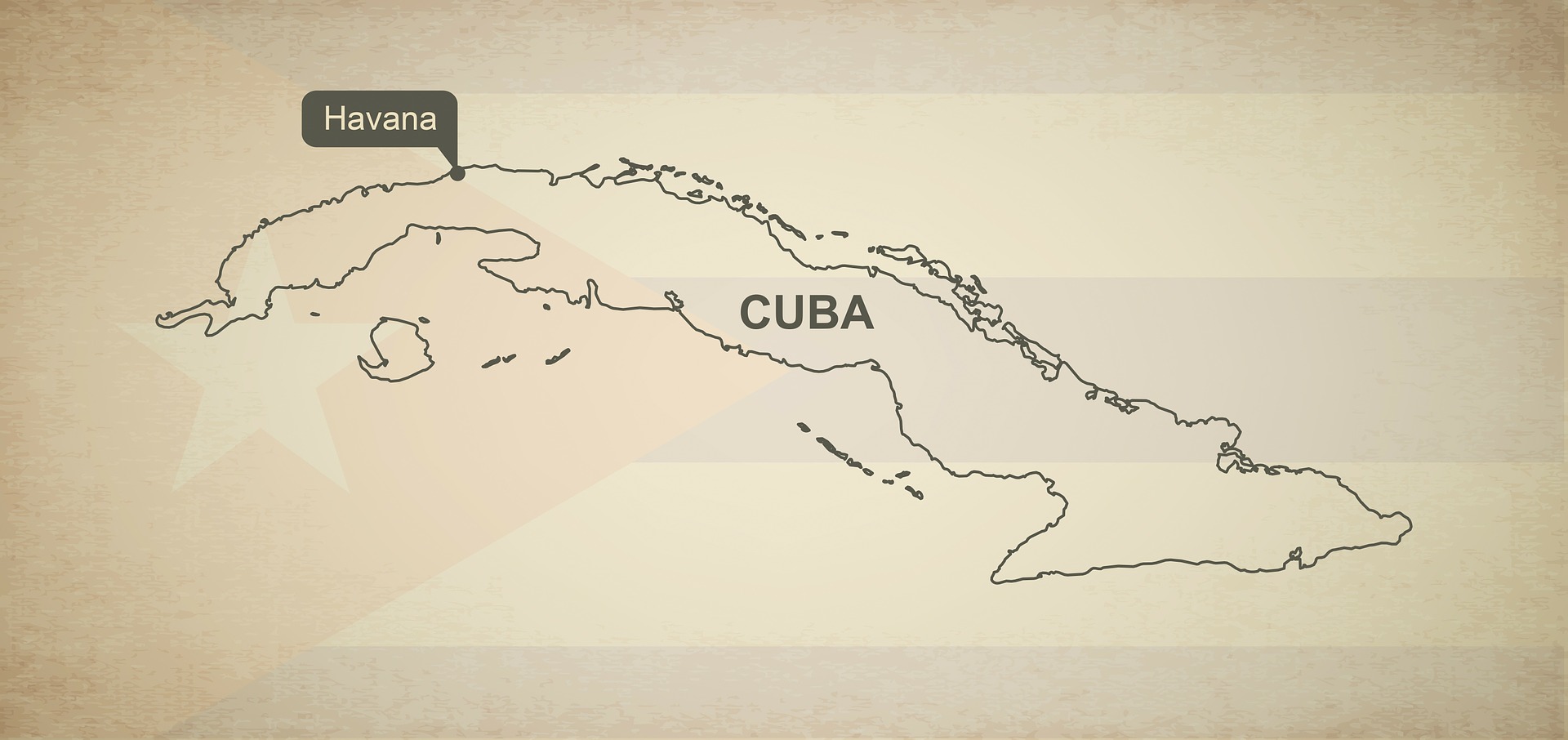
Are you a Cuban national with a pending immigrant visa application? If so, we have some great news for you.

The Department of State today announced that the U.S. Embassy in Havana, Cuba will now be responsible for scheduling all immediate relative immigrant visa appointments, including those of spouses and children under 21 of U.S. citizens (IR/CR-1 and IR/CR-2), with interviews beginning in July 2022.

Previously, the Department of State announced that Havana would be scheduling interviews for applicants in the IR-5 category (parent of a U.S. Citizen) that began their processing there in May 2022.  While the government is working to expand services to reduce the ongoing backlogs, the U.S. Embassy in Georgetown, Guyana will continue to remain the primary processing location for all other Cuban immigrant visa applicants (IR/CR-1, IR/CR-2 and IR-5).


Documentarily Qualified Notifications on or after June 8th – U.S. Embassy Havana


IR/CR-1 and IR/CR-2 applicants who were notified on or after June 8, 2022 that their case is ready to be processed will have their interview scheduled at the U.S. Embassy Havana, not the U.S. Embassy in Georgetown, beginning in July.


Documentarily Qualified Notifications before June 8th – U.S. Embassy Georgetown


IR/CR-1 and IR/CR-2 applicants who were notified prior to June 8, 2022 that their case was ready to be processed will be interviewed at the U.S. Embassy Georgetown, also beginning in July.

The Department of State has said that neither the U.S. Embassy in Havana nor the U.S. Embassy in Georgetown will be able to assist with requests to transfer cases due to resource constraints.

The government will continue to evaluate, further expansion of visa processing in Havana depending on resources and country conditions.

Additionally, the U.S. Embassy in Havana will continue to offer services for American Citizens and limited emergency nonimmigrant visa processing. For further information please review the embassy’s website for updates at https://cu.usembassy.gov/consular-services-available-at-u-s-embassy-havana/.

Continue reading

calendar-g8c8b99c36_1920

In this blog post, we cover the release of the June Visa Bulletin 2022 and what you can expect for employment based and family preference categories during the upcoming month of June.

The Department of State releases the visa bulletin on a monthly basis, which summarizes the availability of immigrant visa numbers for that particular month. The “Final Action Dates” and “Dates for Filing Applications,” charts indicate when immigrant visa applicants should be notified to assemble and submit the required documentation to the National Visa Center.


Adjustment of Status Filing Chart June 2022


USCIS has not yet released the adjustment of status filing chart for the June Visa Bulletin, but it should be available soon on the following webpage:

In this chart, USCIS will define the cutoff dates for acceptance of adjustment of status applications next month (whether adjustment of status applications will be accepted based on the Final Action dates chart, or the Dates for Filing chart).


June 2022 Visa Bulletin Final Action Cutoff Dates


Employment-Based Categories


FINAL ACTION DATES FOR EMPLOYMENT-BASED PREFERENCE CASES


According to the Department of State’s June 2022 Visa Bulletin, the following final cutoff dates will apply for the issuance of an immigrant visa for employment-based categories:

  • EB-1: All countries, including India and China, will remain current.
  • EB-2: India will advance by one year, to September 1, 2014, and China will remain at March 1, 2019. All other countries will remain current.
  • EB-3 Professionals and Skilled Workers: EB-3 India and EB-3 China will remain unchanged from the previous month, at January 15, 2012 and March 22, 2018, respectively. All other countries will remain current.
  • EB3 Other Workers: For this category, the Department of State has established a worldwide cutoff date of May 8, 2019, to avoid exceeding the annual numerical limits. EB-3 India and China will remain unchanged at January 15, 2012 and June 1, 2012, respectively.
  • EB-5: The Department of State has taken corrective action by establishing a Final Action cutoff date of November 22, 2015, for the EB-5 China Unreserved Non-Regional Center (C5 and T5) categories. It will also apply to EB-5 Unreserved Regional Center (I5 and R5) case types. EB-5 Final Action dates will remain current for all countries and for all EB-5 “Set-Aside” categories (Rural, High Unemployment, and Infrastructure).

Continue reading

friendship-g19ec5f524_1920

We kick off the start of a brand-new week with some interesting revelations. On April 28, 2022, President Biden issued a letter proposing a new immigration measure that, if passed, could offer highly educated Russian nationals a pathway to permanent residency.

What is it all about?


The Russian invasion of Ukraine has left scientists and engineers seeking stable ground, with many young STEM talent looking to its European neighbors for employment opportunities.

In a letter to the House of Representatives, the Biden administration called for a measure to be approved as part of requested legislation for emergency supplemental funding to Ukraine.

Biden’s proposals seek amendment of Section 203(b)(2) of the Immigration and Nationality Act (8 U.S.C. 1153(b)(2)) effectively welcoming Russian STEM talent to the United States.


What does the measure propose?


By amending Section 203(b)(2), the U.S. government would essentially eliminate the need for Russian nationals, with a master’s or doctoral degree in a STEM field, to obtain an employment sponsor (job offer from a U.S. employer) and eliminate placement in the green card backlogs.

Under Biden’s proposal, adjudication of visas for such individuals would occur within just 90 days if possible, taking into account the need for security assessments. The proposed measure would end after four years (unless extended by Congress).

The measure has been proposed to ensure retention of talented Russian scientists and engineers. Interestingly, the letter highlights that the prospects of obtaining H-1B visa status for this group are lowered considering the numerical limits, and record H-1B registrations that far outweigh the number of available visas. In fiscal year 2023, USCIS announced that it received 483,927 H-1B registrations, a 57% increase over the last year. Only 127,600 registrations were selected to meet the H-1B quota (or 26% of total registrations).


Legislative Text


The legislative text of the provision reads as follows:

“IN GENERAL.— Section 203(b)(2) of the Immigration and Nationality Act (8 U.S.C. 1153(b)(2)) is amended by adding at the end the following:

“(D) Notwithstanding subparagraph (B), the requirements of subparagraph (A) that an alien’s services in the sciences, arts, professions, or business be sought by an employer in the United States shall not apply to aliens (and the parents, spouses, and children of such aliens if accompanying or following to join) who—

“(i) are citizens of Russia;

(ii) have earned a masters or doctoral degree in the United States or an equivalent foreign degree in a field involving science, technology, engineering, or mathematics, including but not limited to degrees relevant to the following fields: Advanced Computing, Advanced Engineering Materials, Advanced Gas Turbine Engine Technologies, Advanced Manufacturing, Advanced and Networked Sensing and Signature Management, Advanced Nuclear Energy Technologies, Advanced Particle Detector Instrumentation Technologies, Artificial Intelligence, Autonomous Systems and Robotics, Biotechnologies, Communication and Networking Technologies, Cybersecurity, Directed Energy, Financial Technologies, Human-Machine Interfaces, Hypersonics, Advanced Missile Propulsion Technologies, Networked Sensors and Sensing, Quantum Information Technologies, Renewable Energy Generation and Storage, Semiconductors and Microelectronics, Space Technologies and Systems; and “(iii) are seeking admission to engage in work in the United States in an endeavor related to science, technology, engineering, or mathematics.”

Continue reading

couple-g86465ecab_1920USCIS Updates Policy Guidance Highlighting Discretionary Power to Waive In-Person Interviews for I-751 Applicants


On April 7, 2022, the United States Citizenship, and Immigration Services (USCIS) updated its Policy Manual on the interview waiver criteria for family-based conditional permanent residents filing to remove the conditions on permanent residence on Form I-751 Removal of Conditions.

Under the law, those who attained their permanent resident status (green card) based on a marriage that was less than 2 years old at the time of approval, receive a conditional green card, also known as “conditional permanent residency.”

This conditional green card is issued for a 2-year period. Prior to the expiration of the 2-year green card, the applicant must file Form I-751 to remove their conditions on permanent residence within the 90-day window before it expires.

The Immigration and Nationality Act stipulates that a conditional permanent resident must appear for an in-person interview as part of the I-751 Removal of Conditions adjudication process, so that the immigration officer can verify the accuracy of the information included in the petition and determine whether the conditions on permanent residence should be removed.

The Act also carves out discretionary powers that allow USCIS officers to authorize waiver of the in-person interview.

The April 2022 updated Policy Guidance clarifies that USCIS officers may consider waiving an interview, if, generally, the applicant meets all eligibility requirements for removal of conditions, and the record contains sufficient evidence for approval, and there is no indication of fraud, misrepresentation, criminal bars, or such factors that would require an interview.

The Guidance also eliminates automatic referrals in cases where a conditional permanent resident obtained status by way of Consular processing.

The language of the pertinent section indicates the following:

Volume 6: Immigrants, Part I, Family-Based Conditional Permanent Residents, Chapter 3, Petition to Remove Conditions on Residence [6 USCIS-PM I.3]


CPRs who file a Form I-751 must appear for an interview at a USCIS field office, unless USCIS waives the interview requirement. USCIS officers may consider waiving the interview in cases where:

Continue reading

ukraine-g74f4fa246_1920

The ongoing turmoil in Ukraine, Afghanistan, and Ethiopia has prompted the U.S. Department of State to issue new guidance regarding the possibility of filing a Form I-130 Petition for Alien Relative at U.S. Embassies and Consulates overseas for Afghan, Ethiopian, and Ukrainian immediate relatives fleeing conflict zones.

DOS has clarified that U.S. Citizens who are physically present with their Afghan, Ethiopian, or Ukrainian, immediate family members overseas, who have not yet filed the Form I-130 Petition for Alien Relative with the United States Citizenship and Immigration Services (USCIS), may do so by filing the application locally at their nearest U.S. Embassy or Consulate that processes immigrant visas.

Only U.S. Citizens impacted by the large-scale disruptive events in Afghanistan, Ethiopia, and Ukraine, are allowed to locally file Form I-130 at U.S. Embassies or Consulates overseas. It is required that the U.S. Citizen be physically present in the country where they wish to file their petition.


Who can you petition for with Local Filing?


DOS has stated that U.S. Citizens may locally file Form I-130 on behalf of their spouses, unmarried children under the age of 21, and parents, provided their relative fled:

  • Afghanistan after August 2, 2021
  • Ethiopia after November 1, 2020 or
  • Ukraine after February 1, 2022

Continue reading