Articles Posted in Work Visas

alexander-schimmeck-HcI3I8mTaQU-unsplash-scaled

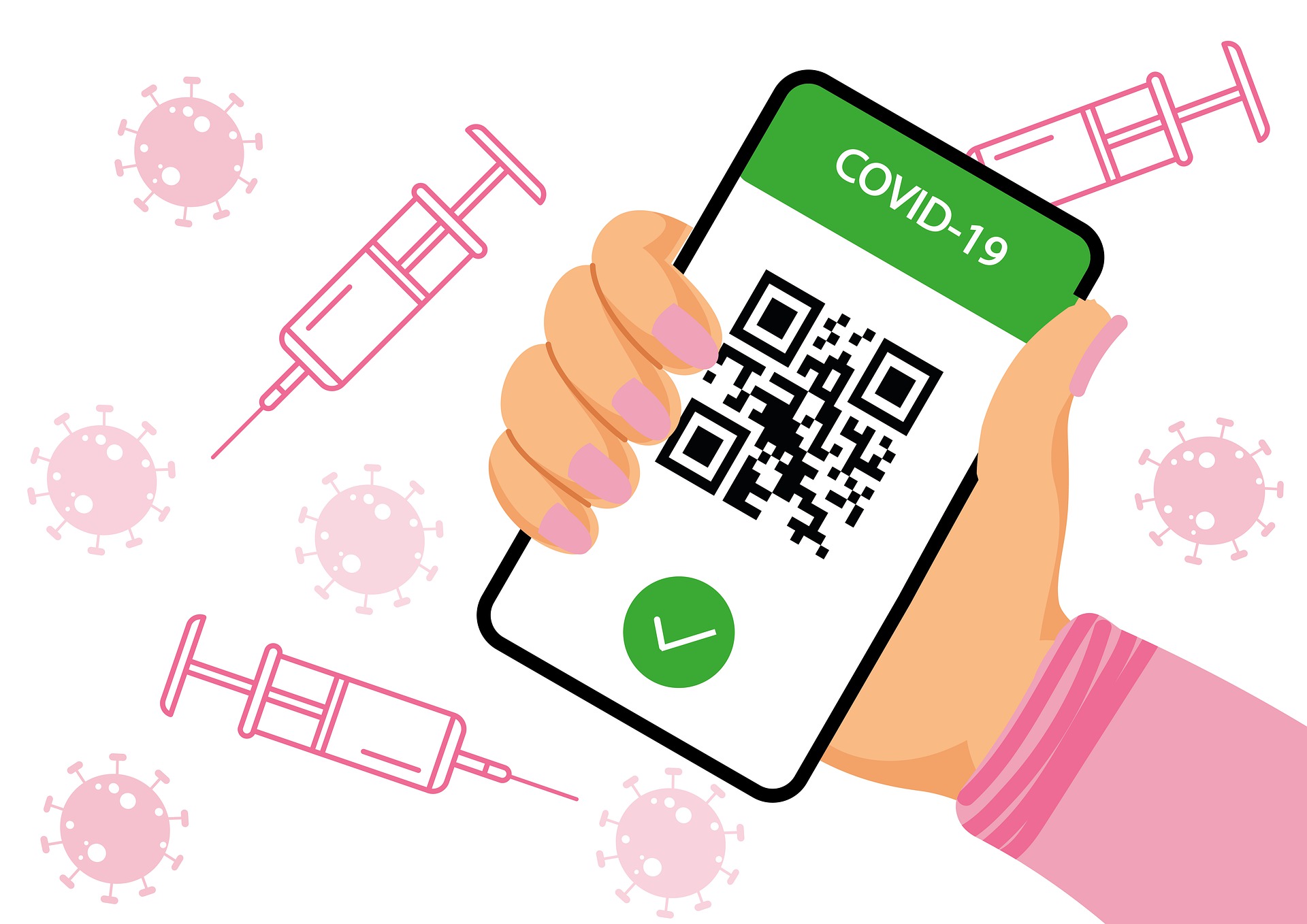
We kick off the start of a brand-new week with some breaking news. On Tuesday, December 2, 2021, the Centers for Disease Control and Prevention (CDC) updated its international travel guidance to require all air passengers, regardless of vaccination status, to show a negative COVID-19 test taken no more than 1 day before travel to the United States starting today, Monday, December 6, 2021.

The CDC has also published a new webpage that summarizes the international travel requirements and recommendations for U.S. Citizens, Lawful Permanent Residents, and Immigrants. Another webpage also provides information for non-U.S. Citizens, non-U.S. immigrants traveling by air to the United States.


International Air Travel Guidance for non-U.S. Citizens and non-U.S. immigrants


Starting today, Monday December 6, 2021, all air passengers, regardless of vaccination status, must show a negative COVID-19 test taken no more than 1 day before travel to the United States.

Additionally, non-U.S. citizens and non-U.S. immigrants (those who are not a U.S. citizen, U.S. national, lawful permanent resident, or traveling to the United States on an immigrant visa) must be fully vaccinated against COVID-19 to travel to the United States by plane. Only limited exceptions apply.

Travelers are required to show a negative COVID-19 test result or documentation of recovery from COVID-19 when traveling to the United States by air.

Wearing a mask over your nose and mouth are also required in indoor areas of public transportation (including airplanes) traveling into, within, or out of the United States and indoors in U.S. transportation hubs (including airports).


What if I am not fully vaccinated?


Non-citizens who are nonimmigrants and seeking to enter the United States by air are required to show proof of being fully vaccinated against COVID-19 before boarding a flight to the United States from a foreign country.

If you are not fully vaccinated against COVID-19, you will NOT be allowed to board a flight to the United States, unless you meet the limited criteria for an exception under the Proclamation and CDC’s Order.

Continue reading

Happy Thanksgiving from Sapochnick Law!

This Thanksgiving, we want to share our genuine appreciation for our clients, subscribers, and faithful readers of our blog. Without your trust and support, we would not be where we are today. We’re so thankful for all of your support throughout the year. 

Today, we take time to reflect upon how grateful we are to have amazing clients from all over the world and from all walks of life. Our firm is also reminded of all the wonderful blessings and hard work that goes into making it possible to achieve the dreams of our clients. We’re thankful for our wonderful staff each and every day. We’re also exceptionally thankful to our social media community. You’ve stuck by us and trusted us to bring you the latest in immigration news, through the good times, and the tough times, we will always be here to serve you. You inspire us and challenge us! You are a constant reminder of why we do what we do, and we’re grateful to be able to serve you.

balls-g3ba217f48_1920
Did you participate in the H-1B electronic registration for Fiscal Year 2022? If so, we have some exciting news for you.

In this post we share with you some exciting news for individuals who submitted H-1B registrations for the fiscal year 2022 H-1B cap. On Friday, November 19, 2021, USCIS issued a news alert informing the public that they have selected additional H-1B registrations to reach the fiscal year (FY) 2022 H-1B numerical allocations, including the advanced degree exemption to reach the mandated cap for the H-1B program.

As our readers may recall, USCIS conducted a second lottery on July 28, 2021, making this the third lottery conducted to meet the Congressionally mandated FY 2022 cap.

megaphone-ge64a5e7b4_1920

We are happy to deliver some amazing news for H-4, E, and L dependent spouses! On November 12, 2021, following a settlement agreement known as Shergill v. Mayorkas, the United States Citizenship, and Immigration Services (USCIS) issued a new Policy Memorandum (Policy Alert PA-2021-25) outlining that the agency will automatically allow for employment authorization for dependent E, L, and certain H-4 spouses of principal visa holders, without requiring spouses to file I-765 application for employment authorization to be eligible to work in the United States.

The new Policy Memorandum also rescinds the agency’s previous 2002 Memorandum which did not allow dependent spouses in E, L and certain H-4 visa holders to automatically qualify for work authorization in the United States.

Following this new settlement, E, L, and certain H-4 spouses will be able to work just by having their valid visas, and they will not need to file any separate applications nor need an employment authorization card (work permit) to lawfully work in the United States.

While some doubt initially arose regarding whether E dependent spouses would qualify for automatic employment authorization, USCIS has now explicitly confirmed that it will indeed consider E and L dependent spouses to be employment authorized incident to their valid E or L nonimmigrant status.

The new November 12, 2021, Policy Memorandum outlines the following:

  • Certain H-4, E, or L dependent spouses to qualify for an automatic extension of their existing employment authorization and accompanying employment authorization document (EAD) if they properly filed an application to renew their H-4, E or L-based EAD before the document expires and they have an unexpired Form I-94 evidencing their status as an H-4, E, or L nonimmigrant;
  • The automatic extension of the EAD will continue until the earlier of: end date on Form I-94 evidencing valid status the approval or denial of the EAD renewal application, or 180 days from the date of expiration of the prior EAD document; Form I-94, evidencing unexpired nonimmigrant status (H-4, E or L), Form I797C receipt for a timely – filed EAD renewal application stating “Class requested as “(a)(17),” “(a)(18) or ((c)(26)”, and the facially expired EAD issued under the same category);

Continue reading

win-gaa7fe7f08_1920

In this blog post we share amazing news with our readers regarding the settlement of a recent class-action lawsuit filed against the U.S. Department of Homeland Security. The agreement reached under the settlement will immediately allow for automatic renewals of employment authorization for: L-2 spouses of L-1 nonimmigrants and qualifying H-4 dependent spouses who (a) properly file an application to renew their H-4 based employment authorization document before expiration (b) have an unexpired Form I-94 showing their status as an H-4 nonimmigrant and (c) who will continue to have H-4 status beyond the expiration date of their employment authorization document. Shergill v. Mayorkas, No. 21-1296 (W.D. Wash.)


What does this new settlement mean?


 Effective immediately, the Shergill settlement will make it a lot easier for L-2 and H-4 dependent spouses to continue working in the United States without having to apply for a renewal of their employment authorization and without interruptions to their employment. As many are already aware, the processing of I-765 employment authorization applications is currently subject to extreme delays due to the pandemic and burdens on USCIS offices. This new settlement will prevent L-2 and certain H-4 dependent spouses from being stuck in these backlogs. Not to mention L-2 and certain H-4 spouses will no longer have to pay the required $410 filing fee to renew their employment authorization. Following this new settlement, L-2 spouses and certain H-4 spouses will be able to work just by having their valid H-4 and L-2 visas, and they will not need to file any separate applications nor need an employment authorization card (work permit) to work in the United States.


Guidelines for Dependent Spouses under the Settlement Agreement


Under the terms of the Shergill settlement agreement, as it relates to L-2 dependent spouses, USCIS will now interpret 8 CFR § 274a.13(d) to recognize that employment authorization for such spouses is now linked (incident) to their visa status. USCIS will also allow up to 180-day automatic employment authorization extensions when the applicant has already had the H-4 or L-2 status extension granted either through USCIS or through travel.

Automatic Renewals of Employment Authorization for applications that already have valid H-4 status

  • Pursuant to the settlement agreement, USCIS is now interpreting the law so that H-4 nonimmigrants who have timely filed their I-765 EAD renewal applications and continue to have H-4 status beyond the expiration date of their EAD, qualify for the automatic extension based on their (c)(26) EAD.
  • This automatic extension will terminate on the earlier of: the end date of the H-4 status, adjudication of the EAD renewal application, or 180 days from the previous card’s expiration date.

Continue reading

darren-halstead-WyDX5tLahLo-unsplash-scaled

A new House reconciliation bill adds new language that could open a path to permanent residency for highly skilled immigrants without waiting for their priority date to become current.

The new bill, known as H.R. 5376 “the Build Back Better Act,” is the latest initiative backed by the Biden administration to strengthen the middle class and enhance economic ingenuity.  Interestingly, the bill provides a framework that would improve and reform our immigration system with particular benefits for highly skilled immigrants.

If passed section 60003 of the reconciliation bill would exempt an alien (and the spouse and children of such alien) from the numerical limitations described in the employment-based immigration section of the Immigration and Nationality Act, and allow the alien and any follow-to-join dependents to adjust their status to permanent residence provided such alien submits or has submitted an application for adjustment of status and . . . is the beneficiary of an approved petition . . . that bears a priority date that is more than 2 years before the date the alien requests a waiver of the numerical limitations; and pays a supplemental fee of $5,000.” (Emphasis added.)

If passed these legislative measures would be extremely beneficial to highly skilled workers because it would allow employees in the visa backlogs to file for adjustment of status without waiting for a priority date to become available. Following this proposal, once a labor certification application would be approved by the Department of Labor, an employee could be eligible to file his or her I-485 adjustment of status application concurrently with his or her I-140 petition for alien worker and apply for temporary work authorization while the applications would remain pending with USCIS.

The House reconciliation bill would also allow family-based immigrants inside the United States to gain permanent residence outside the numerical limits if their priority date is “more than 2 years before” and the individual pays a $2,500 supplement fee. EB-5 category (immigrant investor) applicants would need to pony up a $50,000 supplement fee. The provisions to pay a supplemental fee to receive a green card outside the numerical limits would expire on September 30, 2031.

Continue reading

on-air-4901461_1920

Welcome back to Visalawyerblog! In this blog post we share with you an overview of the State Department’s October 2021 Q&A answer session with Charlie Oppenheim, Chief of the Immigrant Visa Control and Reporting Division of the U.S. Department of State, also known as “Chats with Charlie,” broadcasted every month on the State Department’s YouTube channel.

This new series features a monthly Question-and-Answer session with Mr. Charles Oppenheim and a Consular officer, where they answer many of the public’s frequently asked questions and provide a monthly analysis of each month’s Visa Bulletin. This discussion will provide details regarding what to expect in terms of the movement or retrogression of both family and employment-based preference categories on each month’s Visa Bulletin.

Questions for Charlie can be emailed in advance to VisaBulletin@state.gov ahead of each monthly session with “Chat with Charlie Question” in the subject line.

Be sure to subscribe to the State Department’s YouTube Channel and turn on your notifications so you do not miss any of these important updates.

Below are the highlights of the visa projections for October 2021.


DOS Q&A Session with Charlie Oppenheim: October 2021 Visa Bulletin Projections & Beyond


Continue reading

cup-1615074_1920

The National Interest Waiver, a subcategory of the EB-2 employment based, second preference visa, is a great option for professionals who can demonstrate possession of an advanced degree or exceptional ability in their proposed field or endeavor. The National Interest Waiver is an extremely attractive choice for those who qualify because it allows applicants to self-petition for permanent residence without having to submit a Labor Certification Application (LCA) with the Department of Labor.

It is also an interesting choice because the professions that qualify for a National Interest Waiver are not defined by statute, however, to be successful applicants must demonstrate their exceptional ability and prove that their employment in the United States would be of benefit to the nation. Without the filing of a National Interest Waiver, applicants must have employment sponsorship and their employers must go through the lengthy PERM (Program Electronic Review Management) Labor Certification process.


Why is NIW an attractive choice over traditional Labor Certification?


Simply put the National Interest Waiver takes a lot less time and is much easier to file when compared to the traditional EB-2 visa requiring labor certification. Obtaining approval of a labor certification application is no easy task. It can take anywhere from 6 months to more than 1 year to obtain approval, depending on a variety of different factors.

The PERM process is also time consuming for both the U.S. employer and the applicant, making the National Interest Waiver option extremely advantageous. For instance, during the PERM process, the U.S. employer is required to undergo a series of recruitment activities to test the labor market before filing the labor certification application. As part of these activities, the employer must go through a recruitment process where the employer must prove that there is not a sufficient number of able, qualified, and willing applicants, whether U.S. citizens or permanent residents, to fill the position. The employer must also go through an advertising period for the position and wait a mandatory 30-day period after the last advertisement runs before the PERM application can be filed.

The National Interest Waiver does away with these arduous steps, and instead allows an applicant to request a waiver of the Labor Certification process, by demonstrating that his or her proposed endeavor is in the interest of the United States. The applicant does not need employment sponsorship but must demonstrate possession of an advanced degree (master’s or bachelor’s) or exceptional ability in their field or endeavor. Exceptional ability is defined as having a degree of expertise that is significantly above that ordinarily encountered in the profession. That means that you must be prepared to prove to USCIS that you are an expert in your field and have attained a level of mastery in your field and/or achievements such that that you are considered “exceptional.”

Continue reading

balls-6005924_1920

Did you participate in the H-1B electronic registration for Fiscal Year 2022? If so, we have some exciting news for you.

This morning, July 29, 2021, USCIS announced via its official website that the agency has conducted a second randomized lottery to select additional registrations to reach the Congressionally mandated Fiscal Year 2022 numerical allocations for the H-1B visa program.


When did the second lottery take place?


On July 28, 2021, USCIS selected from previously submitted electronic FY 2022 registrations, using a randomized process, to meet the necessary visa quota numbers.


How will you know if you were selected?


Petitioners with selected registrations will have their myUSCIS accounts updated to include a selection notice, which includes details of when and where to file. If you submitted your electronic registration with the assistance of an attorney, you must contact your legal representative/case manager to determine whether you were selected in the July 28 lottery.


If I was selected in the second lottery, when can I submit my paper application by mail?


Only petitioners who were selected in the second lottery will be able to file a paper application with USCIS on behalf of the alien worker, beginning August 2, 2021, through November 3, 2021. Petitioner’s must include a printed copy of the applicable registration selection notice with the FY 2022 H-1B cap-subject petition. No online filing system is currently available. Petitioners should ensure that they send their paper application to the correct service center within the filing period indicated on the registration selection notice.

Continue reading

planner-3485976_1920

Welcome back to Visalawyerblog! In this blog post, we will cover the release of the August 2021 Visa Bulletin and what you can expect for employment based and family preference categories during the month of August.

The Department of State releases the visa bulletin on a monthly basis, which summarizes the availability of immigrant visa numbers for that particular month. The “Final Action Dates” and “Dates for Filing Applications,” charts indicate when immigrant visa applicants should be notified to assemble and submit the required documentation to the National Visa Center.

If you would like to follow along on each month’s progress for the Visa Bulletin please be on the lookout for the next “Chats with Charlie” on the DOS YouTube Channel, a monthly series recently launched by the State Department where Charlie Oppenheim, Chief of the Immigrant Visa Control & Reporting Division of the U.S. Department Of State, answers your frequently asked questions regarding each month’s Visa Bulletin.


Adjustment of Status Filings for those lawfully residing in the United States


Unless otherwise indicated on the U.S. Citizenship and Immigration Services (USCIS) website at www.uscis.gov/visabulletininfo, individuals seeking to file applications for adjustment of status with USCIS must use the “Final Action Dates” charts to determine when they can file such applications. When USCIS determines that there are more immigrant visas available for the fiscal year than there are known applicants for such visas, USCIS will state on its website www.uscis.gov/visabulletininfo that applicants may instead use the “Dates for Filing Visa Applications” charts in this Bulletin.


Adjustment of Status Filing Chart August 2021


For Family-Sponsored Filings:

Pursuant to guidance released by USCIS, in the F2A category, there is a cutoff date on the Dates for Filing chart. However, the category is “current” on the Final Action Dates chart. This means that applicants in the F2A category only may file using the Final Action Dates chart in the Department of State Visa Bulletin for August 2021.

For all other family-sponsored preference categories, applicants must use the Dates for Filing chart in the Department of State Visa Bulletin for August 2021.

For Employment-Based Preference Filings:

All applicants falling under employment-based preference categories, must use the Final Action Dates chart in the Department of State Visa Bulletin for August 2021.

Continue reading