Articles Posted in Embassies

usa-2058430_1920
In this post, we would like to keep our readers informed about Visa Bulletin projections for the coming months. Charles Oppenheim, Chief of the Visa Control and Reporting Division of the U.S. Department of State provides a monthly analysis of each month’s Visa Bulletin including discussion of current trends and future projections for immigrant preference categories. This post will focus on the EB-1, EB-2, EB-3, and EB-5 categories.

Below are the highlights of those trends and projections for the coming months.

Employment-Based Immigration: First Preference EB-1

el-salvador-878218_1280
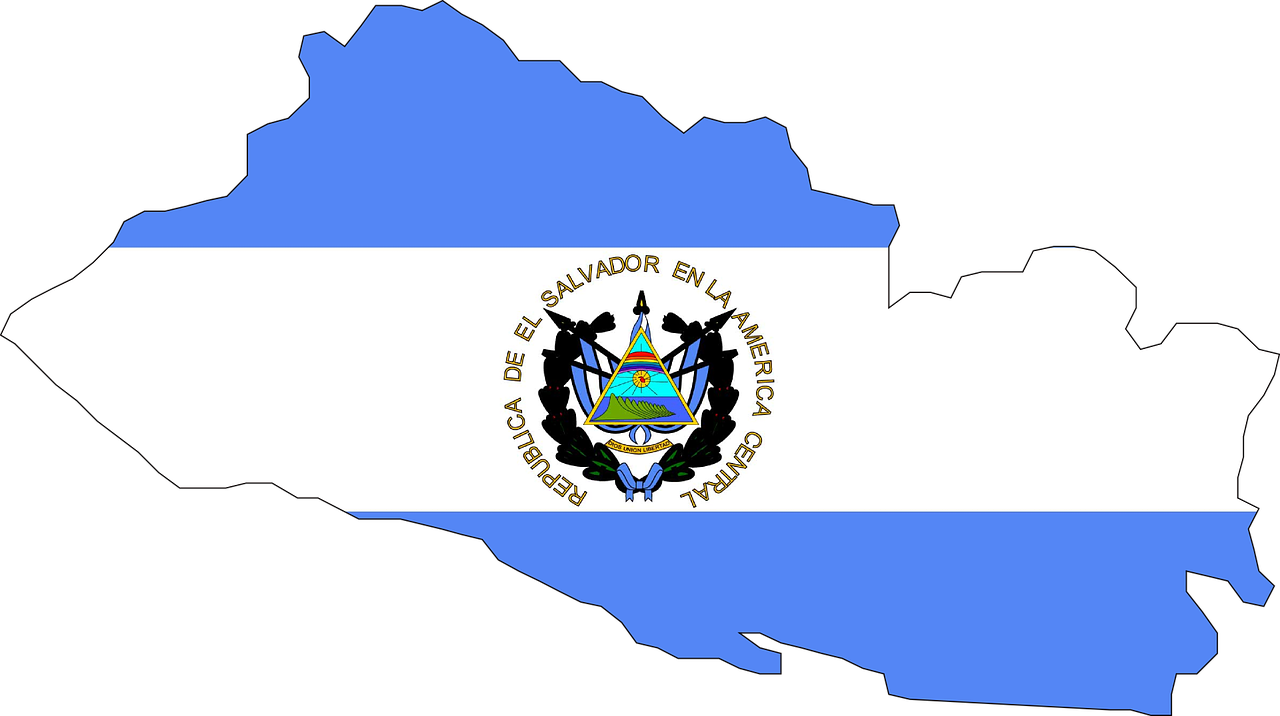
Validity of TPS EADs with a September 9, 2019 Expiration Date Remain Valid through January 2, 2020 for El Salvador, Sudan, Nicaragua, and Haiti

The DOJ has announced that Employment Authorization Cards received under the Temporary Protected Status country designation for El Salvador, Sudan, Nicaragua, and Haiti, with a September 9, 2019 expiration date will remain valid through January 2, 2020.

Earlier this year, the government published a notice in the Federal Register indicating that DHS would be automatically extending through January 2, 2020, the validity of TPS-related Employment Authorization Documents (EADs), Forms I-797, Notice of Action (Approval Notice), and Forms I-94 (Arrival/Departure Record) (collectively “TPS-Related Documentation”), for beneficiaries under the TPS designations for Sudan, Nicaragua, Haiti, and El Salvador, provided that the affected TPS beneficiaries remain otherwise individually eligible for TPS.

sara-kurfess-6lcT2kRPvnI-unsplash
The Trump administration has published a proposed rule in the Federal Register expanding the social media information that can be collected as part of the non-immigrant and immigrant visa process.

This new proposed rule is part of the President’s plan to “Protect the Nation from Foreign Terrorist Entry into the United States,” as stated in Executive Order 13780.

As you may recall this Executive order seeks to “establish screening and vetting standards and procedures to enable DHS to assess an alien’s eligibility to travel to or be admitted to the United States or to receive an immigration-related benefit from DHS.”

jessica-radanavong-0ZkAINlmtOs-unsplash

On August 28, 2019, the United States Citizenship and Immigration Services (USCIS) issued new policy guidance defining “residence” as it relates to U.S. Citizenship.

The new policy guidance clarifies what it means to “reside in the United States” for the purpose of acquiring citizenship and sets out new policy guidelines as it relates to the acquisition of citizenship of children of U.S. government employees and U.S. armed forces members employed or stationed outside the United States.

Effective October 29, 2019, children residing abroad with their U.S. citizen parents (who are U.S. government employees or members of the U.S. armed forces stationed abroad) will not be considered to be residing in the United States for acquisition of citizenship. Similarly, leave taken in the United States while stationed abroad is not considered residing in the United States even if the person is staying in property he or she owns.

Therefore, U.S. citizen parents who are residing outside the United States with children who are not U.S. citizens should apply for U.S. citizenship on behalf of their children, by filing Form N-600K Application for Citizenship and Issuance of Certificate Under Section 322 and must complete the process before the child’s 18th birthday.

The child of a member of the U.S. armed forces accompanying his or her parent abroad on official orders may be eligible to complete all aspects of the naturalization proceedings abroad. This includes interviews, filings, oaths, ceremonies, or other proceedings relating to naturalization.

Continue reading

masaaki-komori-iaSzwYccV28-unsplash

USCIS has announced that it will be closing all of its International Immigration Offices by March 10, 2020.

As of June 30, 2019, USCIS has already permanently closed its field office in Ciudad Juarez, Mexico, and on July 5th, the office in Manila, Philippines permanently closed.

By the end of January 2020, the majority of international USCIS field offices are expected to be closed, including offices in Mexico City, London, Athens, and Guatemala City.

The first offices to close will be those in Monterrey, Mexico, Seoul, South Korea, and Manila, Philippines, with a projected closing date of September 2019.

The following is a complete list of USCIS International Immigration Offices expected to close:

Latin America, Canada and the Caribbean (LACC) District

Continue reading

alexander-mils-lCPhGxs7pww-unsplash
The Trump administration is bringing about more changes to the world of immigration, this time targeting the EB-5 Immigrant Investor Program.

USCIS has just announced that it is planning to revise regulations governing the EB-5 Immigrant Investor Program.

Tomorrow, the agency will be publishing a final rule in the federal register outlining these changes. The final rule becomes effective on November 21, 2019.

nordwood-themes-359015-unsplash

Foreign nationals applying for a non-immigrant or immigrant visa at a U.S. Consulate or Embassy abroad are now required to disclose information relating to their social media presence on their online nonimmigrant and immigrant visa applications known as the DS-160 and DS-260 respectively.

These changes were introduced early last week by the Department of State. Applicants must now provide information about each social media platform they have used within the last five years, including the name of the platform, and the username or handle used on that platform.

Applicants must also provide their current email and phone number, as well as email addresses and phone numbers they have had during the last five years.

Consular officials can use information found on social media during the visa adjudication process to determine whether the individual is eligible for the visa they are requesting. If officials find any information on social media that would lead them to believe the applicant is misrepresenting their true intentions or attempting to gain entry through means of fraud or deceit, the applicant’s visa application may be denied.

In the past, the Department of State only required social media information of individuals that were flagged for further inspection and individuals posing security risks to the United States. This information was provided in a supplemental questionnaire known as the DS-5535. Now, these questions are asked directly on the DS-160/DS-260 applications.

Continue reading

flag-1195392_1920

Exciting news for Filipino nurses. The EB-3 employment-based category will become current in July 2019 through the summer.

This means that if you have an approved PERM application that was filed by your employer, your employer may file Form I-140 Immigrant Petition for Alien Worker on your behalf. Please note that registered nurses and physical therapists are not required to go through the PERM process and may proceed straight to the I-140.

Since there will be no waiting period in July 2019 through the summer, EB-3 Filipino nurses will be able to apply for the I-140 straight away, and for their adjustment of status. Applicants who are outside of the United States, may apply for their immigrant visa at a U.S. Consulate/Embassy in their country of residence.

Important Steps

If your employer has not filed a PERM application for you, they should do so as soon as possible. The PERM requirement does not apply to registered nurses or physical therapists.

After the PERM application is approved, your employer must file Form I-140 Petition for Alien Worker on your behalf. Registered nurses and physical therapists do not need to file a PERM application, and their employers may proceed with the immigrant visa petition (I-140).

Continue reading

kobby-mendez-1399442-unsplash-1

USCIS Issues Notice Extending TPS Designation for Beneficiaries from Sudan, Nicaragua, Haiti, and El Salvador

In compliance with a court ordered preliminary injunction issued in the case Ramos v. Nielsen, USCIS has issued a notice formally announcing the automatic extension of TPS documentation for beneficiaries from Sudan, Nicaragua, Haiti, and El Salvador until January 2, 2020.

Beneficiaries under the Temporary Protected Status (TPS) designations for Sudan, Nicaragua, Haiti, and El Salvador will retain their TPS while the preliminary injunction remains in effect, provided that an individual’s TPS is not withdrawn under Immigration and Nationality Act (INA) section 244(c)(3) or 8 CFR 244.14 because of ineligibility.

DHS has further announced that it is automatically extending through January 2, 2020, the validity of TPS related Employment Authorization Documents (EADs), Forms I–797, Notice of Action (Approval Notice), and Forms I–94 (Arrival/Departure Record) (‘‘TPS-Related Documentation’’), for beneficiaries under the TPS designations for Sudan, Nicaragua, Haiti, and El Salvador, provided that the affected TPS beneficiaries remain otherwise eligible for TPS.

TPS for these countries will not be terminated unless and until any superseding, final, nonappealable judicial order permits such terminations.

Venezuelan Immigrant Visa Processing

The Department of State recently announced that the U.S. Embassy in Bogota, Colombia is now the designated primary site to process immigrant visas for residents of Venezuela. Beginning April 2019, the National Visa Center will begin scheduling Venezuelan immigrant visa interviews at the U.S. Embassy in Bogota. Appointment notices for all future immigrant visa interviews will take place at the U.S. Embassy in Bogota.

Continue reading

yiran-ding-731066-unsplash

DOS Update for Chinese H and L Visa Applicants

The Department of State recently released an update notifying the public that beginning March 1, 2019, interviews for H and L visas will only be conducted at the U.S. Embassy in Beijing or at one of the U.S. Consulates General in either Guangzhou or Shanghai.

H and L interviews will no longer be scheduled at the U.S. Consulates in Chengdu and Shenyang.

Russians May Apply for a U.S. Visa at a U.S. Visa Processing Post in China

The DOS website also provides notice to visa applicants residing in the Russian Federation:

Individuals who normally reside in Russia, but who are unable to apply for a U.S. visa in a timely manner may submit their application at one of the U.S. visa processing-posts in China. Applicants are not required to be a resident of China to apply for a visa at one of these posts, but they must be physically present in China at the time of visa application and visa interview. In-mail applications are not accepted from individuals while they are outside of China. Applicants may include a local address in China such as a hotel, a relative’s residence, or office in China when scheduling an appointment for a visa interview.

This is a good option for Russian applicants doing business in China.

Continue reading