Articles Posted in Naturalization

raul-najera-TAqspfWom04-unsplash-1-scaledOn September 18, 2025, the U.S. Citizenship and Immigration Services (USCIS) published a notice in the Federal Register announcing the implementation of a newly revised civics test for naturalization applicants, known as the 2025 Naturalization Civics Test.

This updated version builds on the 2020 test—and will replace the existing 2008 civics examination for most applicants.

The civics test remains a key component of the naturalization process, intended to evaluate an applicant’s knowledge of U.S. history, government, and civic responsibilities. While the English language portion of the test remains unchanged, the civics section has been updated to improve clarity and educational relevance.

What’s New & What’s the Same


  • The 2025 Civics Test builds off the 2020 version (which had been previously introduced by the Trump administration but not widely used), making modifications in content and procedure.
  • About 75% of the questions come from the 2008 test—some carried over exactly, others reworded or updated to reflect current educational goals. The rest (~25%) are entirely new content. Some 2008 questions were removed altogether.
  • English‑language requirements remain the same. The focus is on updating the civics portion only.

Key Changes in Test Procedure


  • The question bank used is the same 128‑question bank that had been introduced in 2020.
  • Applicants will be asked up to 20 questions and must answer at least 12 correctly to pass.
  • A procedural change: the USCIS officer can stop asking additional questions once the applicant either passes (i.e. reaches 12 correct answers) or fails (i.e. accumulates 9 incorrect answers). This reduces extra, unnecessary questions for both parties.


Continue reading

raul-najera-TAqspfWom04-unsplash-scaledOn Friday August 15th, the U.S. Citizenship and Immigration Services (USCIS) released a new policy memorandum (PM-602-0188) increasing the scrutiny of applications for U.S. citizenship, as part of the Trump administration’s latest efforts to tighten eligibility for naturalization.

Specifically, USCIS has directed immigration officers to evaluate additional factors when assessing whether applicants demonstrate “good moral character,” a key requirement for naturalization, alongside passing English and civics tests.

The requirement of “good moral character” is typically met when applicants have no criminal history or have not engaged in conduct that would disqualify them from U.S. citizenship, such as committing violent crimes or aggravated felonies.

Friday’s policy memorandum however expands this determination stating that the “good moral character” assessment must involve more than a “cursory mechanical review focused on the absence of wrongdoing.” The expanded policy will now require “a holistic assessment of an alien’s behavior, adherence to societal norms, and positive contributions that affirmatively demonstrate good moral character.”

This directive mandates greater scrutiny of factors that could show a lack of “good moral character,” which go beyond the crimes and disqualifying conduct previously taken into consideration by USCIS.

Continue reading

hand-634653_1280In a recent interview with the New York Times, published on July 25th the new director of the U.S. Citizenship and Immigration Services (USCIS) Joseph Edlow told reporters that the agency is planning sweeping changes to the way the agency awards visas for H-1B high-skilled workers in specialty occupations.

Under current provisions, USCIS conducts a random lottery to select enough applicants to fill the government’s annual H-1B visa quota of 85,000 visas. But that may all soon change.

As we reported last week, the government has been quietly advancing efforts to reform the H-1B visa selection process. On Thursday last week, the Department of Homeland Security submitted a proposed rule—RIN 1615-AD01, titled “Weighted Selection Process for Registrants and Petitioners Seeking to File Cap-Subject H-1B Petitions” aimed at significantly restructuring the selection system for cap-subject H-1B specialty occupation visas. The proposal is now under review by the White House Office of Information and Regulatory Affairs.

It has not yet been made public, but once approved, the government is required to publish the proposed rule in the Federal Register for public comment as part of the formal rulemaking process.

Continue reading

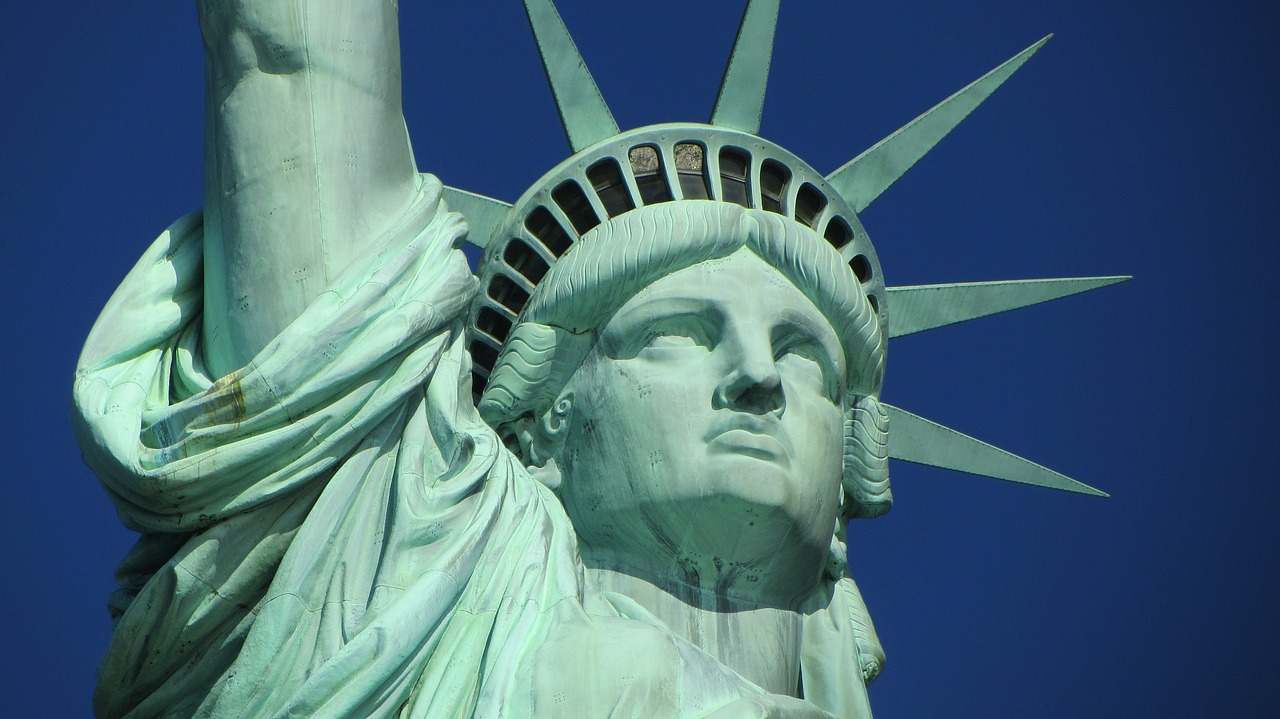
statue-of-liberty-267948_1280

SSN Updates for New N-400 Applicants


If you have been thinking of applying for U.S. Citizenship, you may be pleased to learn that starting April 1st applicants will have the option of requesting an original or replacement Social Security number (SSN) or card and have the chance to update their immigration status with the Social Security Administration (SSA), without having to visit an SSA office in person.

This is all part of the new edition of Form N-400, Application for Naturalization (edition date 04/01/24) which will allow these requests to be made when submitting the application with the U.S. Citizenship and Immigration Services (USCIS).

Previously, green card holders were required to visit an SSA office in person to notify them of their new U.S. Citizenship status and apply for a replacement SSN card reflecting their new immigration status.

Unfortunately, this new update only applies to applicants filing the new edition of the N-400 application (04/01/24) on or after April 1st.  Those who applied using the previous edition of the form (09/17/19) cannot take advantage of this option.


When will the new edition of the N-400 be available for use?


The new edition of the Form N-400 (04/01/24) will be available for online filing on April 1.

To file Form N-400 online, applicants must first create a USCIS online account, a convenient and secure method to submit forms, pay fees, and track the status of any pending USCIS immigration request throughout the adjudication process.


H-1B FY 2025 Cap Season Updates: What to Expect


You may be aware that the electronic registration period for the FY 2025 H-1B cap season closed at noon Eastern on March 25, 2024.

Within the next few days, USCIS will conduct a lottery to randomly select within the pool of properly submitted registrations to reach the FY 2025 H-1B annual numerical allocations, including the advanced degree exemption (master’s cap). USCIS will notify the public once the lottery has been completed.

Continue reading

poverty-4561704_1280

On January 30, 2024, the U.S. Citizenship and Immigration Services (USCIS) published a final rule in the Federal Register making significant fee increases for various immigration applications and benefit requests. This fee increase will be the first major adjustment in the filing fees since 2016. The increase is meant to address the agency’s operational and financial challenges to support the timely processing of new applications.

The fee increase will take effect starting April 1, 2024. All applications postmarked after this date will be subject to the fee increases in the final rule.

TIP: To avoid paying the higher fees, USCIS must receive applications before April 1, 2024.


Highlights


  • Form I-130 (Petition for Alien Relative), used to petition for family members, including marriage green cards, will increase by 26% to $675 for paper filing, and $625 for online filers.
  • Form I-129F (Petition for Alien Fiancé(e)), used by U.S. Citizens to petition for their fiancé(e) to enter the U.S., will increase by 26 percent from $535 to $675
  • Form I-485 (Application to Register Permanent Residence or Adjust Status), used by immigrants seeking a green card for permanent residency, will increase by 18% from $1,225 to $1,440. Employment authorization, and advance parole, will now cost an additional $260 and $630, respectively. Previously these applications carried no additional cost when filing them alongside adjustment of status applications

Continue reading

According to recent data released by the U.S. Citizenship and Immigration Services (USCIS), applications for U.S. Citizenship surpassed pre-pandemic levels in fiscal year 2023, welcoming 878,500 new citizens from all over the world.

To be eligible for naturalization, applicants must meet certain eligibility requirements set forth in the Immigration and Nationality Act (INA).

The requirements generally include being a lawful permanent resident (LPR) for at least five years or at least three years for spouses of U.S. Citizens. Applicants must establish that they have good moral character, have continuously and physically resided in the United States as a green card holder, be proficient in basic spoken and written English, pass the required civics and English examination, among other requirements. Please note that there are other special naturalization provisions that exempt certain applicants, including certain spouses of U.S. citizens and applicants with military service, from one or more of the general requirements for naturalization.

Continue reading

business-gca18a20a3_1280

In this blog post, we give you an update on the status of the proposed rule increasing the filing fees for certain applications and petitions filed with the United States Citizenship and Immigration Services (USCIS).

As you may remember, on January 4, 2023, USCIS published a Notice of Proposed Rulemaking (NPRM) in the Federal Register proposing an increase in the filing fees of many types of applications, including but not limited to, the I-485 Application to Register Permanent Residence or Adjust Status, N-400 Application for Naturalization, I-129F petition for alien fiancé(e), Form I-130 Petition for Alien Relative, Form I-751 Petition to Remove Conditions on Permanent Residence, Form I-129 Petition for Nonimmigrant Worker for H, L, and O classifications, Form I-526 Immigrant Petition for the EB-5 Immigrant Investor Program, Form I-765 Application for Employment Authorization, among many others.

The proposed rule also sought to do the following:

  • Incorporate biometrics costs into the main benefit fee and remove the separate biometric services fee
  • Require separate filing fees for Form I-485 and associated Form I-131 and Form I-765 filings
  • Establish separate fees for Form I-129, Petition for Nonimmigrant Worker, by nonimmigrant classification.
  • Revise the premium processing timeframe interpretation from 15 calendar days to 15 business days
  • Create lower fees for certain immigration forms filed online.

Under the Administrative Procedure Act, before the government can implement a proposed rule they must abide by a mandatory notice-and-comment rule-making process. This includes offering a public comment period of at least 60 days from the date of the NPRM’s publication in the Federal Register.

Continue reading

border-g740e70764_1280

USCIS Updates Policy Manual Clarifying Physical Presence Requirement for Asylees and Refugees


The U.S. Citizenship and Immigration Services (USCIS) recently updated its Policy Manual to clarify that BOTH asylees and refugees must have been physically present in the United States for one year at the time the Immigration Officer adjudicates their Form I-485, Application to Register Permanent Residence or Adjust Status, rather than at the time the individual files their adjustment of status application.

This policy is effective immediately and applies to all Form I-485 Applications to Register Permanent Residence or Adjust Status and Form N-400, Applications for Naturalization, that are pending on February 2, 2023, and applications filed on or after that date.


What does this mean?


This means that in order to be eligible for adjustment of status (a green card), an asylee or refugee must have been physically present in the United States for at least 1 year after either being granted asylum status or admitted as a refugee.

Additionally, the policy manual:

  • Provides that asylees and refugees are required to accrue 1 year of physical presence by the time of adjudication of the adjustment of status application, rather than by the time they file the application (and that USCIS may request additional information to determine such physical presence in the United States).
  • Clarifies that asylee and refugee adjustment applicants who have held the immigration status of exchange visitor (J-1 or J-2 nonimmigrants) and who are subject to the 2-year foreign residence requirement under INA 212(e) are not required to comply with or obtain a waiver of such requirement in order to adjust status under INA 209.
  • Makes technical updates, including clarifying processing steps for refugees seeking waivers of inadmissibility and removing references to the obsolete Decision on Application for Status as Permanent Resident (Form I-291).
  • Provides that USCIS considers a refugee or asylee who adjusted status to a permanent resident despite filing for adjustment before accruing 1 year of physical presence to have been lawfully admitted for permanent residence for purposes of naturalization if the applicant satisfied the physical presence requirement at the time of approval of the adjustment of status application.

Continue reading

Welcpuzzle-g75f3e575f_1920ome back to Visalawyerblog! We hope you had a wonderful holiday break and wish you a prosperous new year ahead.

We kick off the new year with some important updates in the world of immigration.

Today, the United States Citizenship and Immigration Services (USCIS) officially announced a Notice of Proposed Rulemaking (NPRM) that will be posted in the Federal Register tomorrow Wednesday, January 4, 2023 that will increase filing fees for certain types of immigration benefits. An unpublished version is already available in the Federal Register.

A 60-day public comment period will follow the publication of the NPRM on January 4, 2023 and will close on March 5, 2023.

Fees will not change until the final rule goes into effect, and only after the public has had the opportunity to comment and USCIS finalizes the fee schedule in response to such public comments. USCIS will host a public engagement session on the proposed fee rule on January 11, 2023.

According to USCIS, the proposed fee increases are necessary to ensure that the agency will have enough resources to provide adequate services to applicants and petitioners moving forward. The agency has said that after having conducted a review of current fees, it has determined that it cannot cover the full cost of providing adjudication and naturalization services without a fee increase.

The agency cited the COVID-19 pandemic as one of the factors leading the agency to increase its fees. As you may recall, the pandemic caused a dramatic reduction in the filing of new applications, leaving USCIS with a substantial decrease in revenues of 40 percent. This unfortunate drop in applications led USCIS to reduce its workforce accordingly.

With current resources, the agency has said it is incapable of adjudicating applications in a timely manner, when considering that agency caseloads are now returning to pre-pandemic levels.

Among the new proposals included in the NPRM are measures that:

  • Incorporate biometrics costs into the main benefit fee and remove the separate biometric services fee
  • Require separate filing fees for Form I-485 and associated Form I-131 and Form I-765 filings
  • Establish separate fees for Form I-129, Petition for Nonimmigrant Worker, by nonimmigrant classification.
  • Revise the premium processing timeframe interpretation from 15 calendar days to 15 business days
  • Create lower fees for certain immigration forms filed online.

Continue reading