Articles Posted in Immigrant Visas

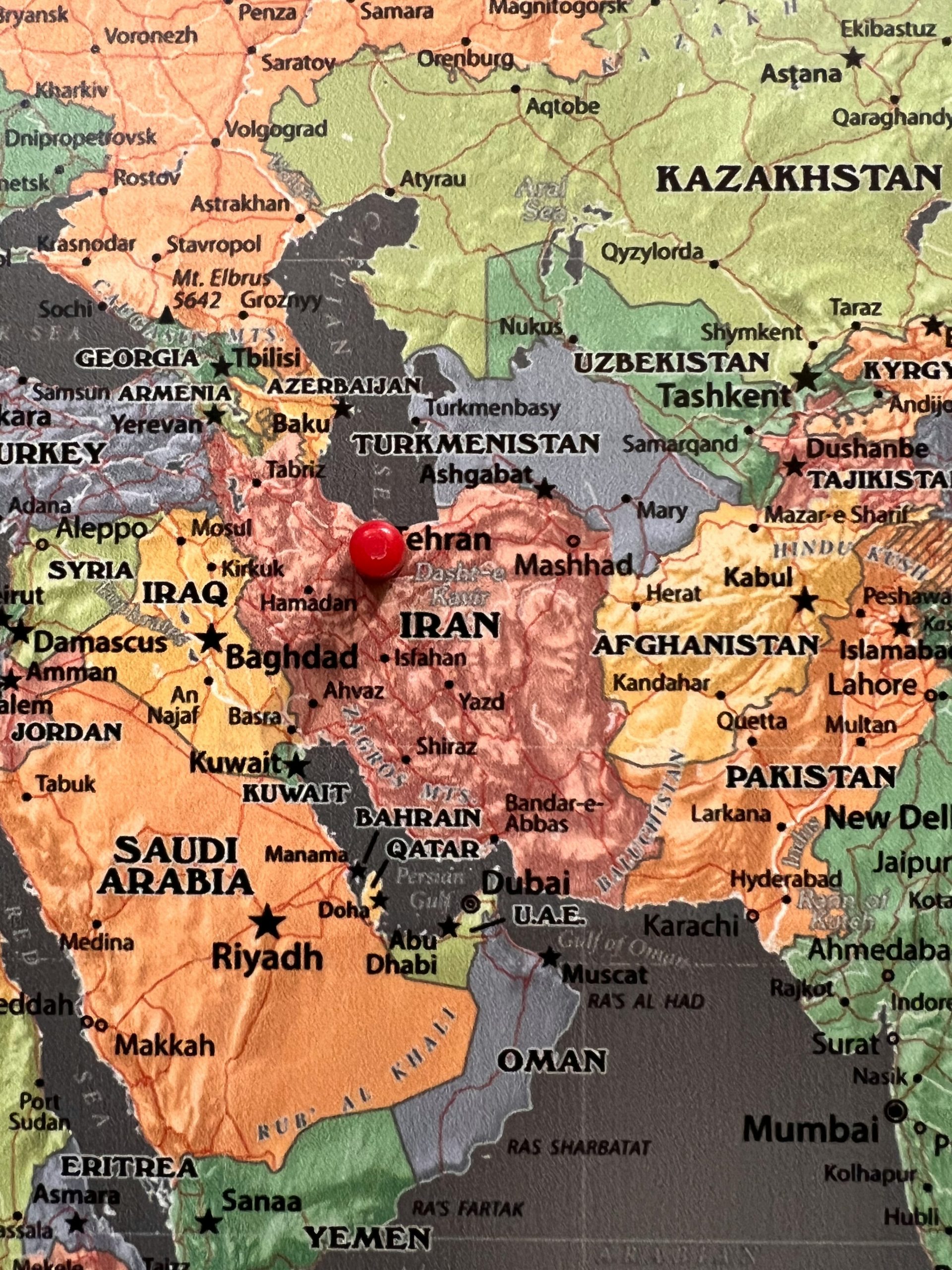
gdj-borders-2099239_1280The U.S. Department of Homeland Security (DHS) has officially terminated the Temporary Protected Status (TPS) designation for Yemen, ending protections that shielded Yemeni nationals from deportation and allowed them to work legally in the United States.

The change, announced on February 13, 2026, takes effect 60 days after the notice is published in the Federal Register.

Yemen was first designated for TPS in September 2015 due to severe armed conflict that made return unsafe. Since then, Yemeni nationals in the U.S., roughly 1,300–1,400 people were able to live and work here under this humanitarian status.

In announcing the termination, DHS said its review found that Yemen no longer meets the law’s requirements for TPS and that ending the designation was in the national interest. Affected individuals who have no other lawful status will have the 60-day wind-down period to either depart the U.S. voluntarily or pursue alternative immigration pathways.

The decision marks another step in the administration’s broader effort to roll back TPS protections that have been in place for decades for people from countries experiencing war, natural disaster, or other extraordinary conditions.

Continue reading

barelydevi-bakery-4737781_1280Beginning March 1, 2026, the U.S. Small Business Administration (SBA) will restrict its flagship loan programs—like the 7(a) and 504 loans—to businesses that are 100 % owned by U.S. citizens or U.S. nationals whose primary residence is in the United States.

Under the revised policy, lawful permanent residents (green card holders) are no longer permitted to hold any ownership stake (direct or indirect) in businesses seeking SBA‑backed loans.

A notice published by the agency earlier this month explains, “SBA is requiring that 100% of all direct and/or indirect owners of a small business applicant be U.S. Citizens or U.S. Nationals who have their Principal Residence in the United States, its territories or possessions.”

This rule removes a long-standing exception that previously allowed limited minority ownership of up to 5% by non‑citizens (such as E-2 investors) or green card holders under certain conditions.

Officials say the new rules implement President Trump’s January 2025 executive order, “Protecting the American People Against Invasion,” described as an effort to enforce U.S. immigration laws and safeguard public safety.

Continue reading

owantana-donald-trump-2333743_1280The Trump administration’s “Gold Card” visa program, which lets ultra-wealthy immigrants obtain permanent U.S. residency in exchange for a $1 million gift, is now the target of a federal lawsuit challenging its legality.

The lawsuit filed by the American Association of University Professors argues that the program is unlawful, claiming it violates the Administrative Procedure Act, the Immigration and Nationality Act, and was implemented without statutory authority.

Instead of calling on Congress to establish a new visa category, President Trump unilaterally created the Gold Card program by executive order. The order instructs federal agencies to utilize visa numbers from the existing EB-1 “extraordinary ability” and EB-2 “exceptional ability” green card categories, which have been specifically reserved by Congress for highly skilled individuals at the top of their field.

Under the Gold Card program, a $1 million payment by an individual—or $2 million paid by a corporation on their behalf—is treated as proof that the applicant satisfies the EB-1 or EB-2 visa criteria.

Continue reading

kreatikar-globe-3411506_1280

On January 21, the Trump administration quietly froze immigrant visa processing for people from 75 countries — a move that instantly threw thousands of families, workers, and employers into uncertainty.

Just weeks later, civil rights organizations and affected U.S. citizens who were separated from their family members have filed a federal lawsuit seeking to overturn the visa ban.

The government has described the pause on immigrant visa issuance as a temporary measure tied to concerns about immigrants becoming a “public charge.” But the new lawsuit argues that the freeze applies broadly, without individualized review, and affects people who have already spent years navigating the legal immigration system — including spouses of U.S. citizens and highly skilled workers with approved petitions.

map-of-the-world-2401458_1280

In a new change to U.S. consular policy, the State Department has announced it will indefinitely pause immigrant visa issuance for nationals of 75 countries (see listed countries below), while it establishes a process for determining whether applicants are likely to become financially dependent on the U.S. government (also known as public charge).

The agency initially announced the news on social media and later published official guidance on the State Department website.

Under this new suspension—effective January 21, 2026—U.S. consular posts overseas will not issue immigrant visas (including family- and employment-based green cards) for applicants from the listed countries until the public charge policy is implemented. Applicants from these countries may still submit applications and attend interviews, but visas cannot be printed and issued during the pause.

Many of the affected nations are already subject to full or partial travel bans, meaning the practical impact may be limited for some applicants. Dual nationals applying with a passport from a country not on the list are exempt from the suspension.

The reason behind this policy shift is a renewed focus on the statutory “public charge” ground of inadmissibility, which allows visa refusal when an applicant is deemed likely to depend on U.S. government financial assistance in the future. The reassessment follows updated internal guidance that broadens the factors consular officers consider—including health, age, education, employment prospects, and financial stability—in evaluating public charge risk.

It remains unclear how long the suspension will last or how the public charge review process will ultimately change. Immigrant visa applicants from the affected countries should monitor communications from the State Department and prepare for potential delays in visa issuance.

Continue reading

calendar-8705482_1280We are pleased to report that the U.S. Department of State’s Bureau of Consular Affairs has published the February 2026 Visa Bulletin.

In this blog post, we breakdown the movement of the employment-based and family-sponsored categories in the coming month.


USCIS Adjustment of Status


For adjustment of status filings to permanent residence in the month of February, USCIS will be using the Dates for Filing Chart for the employment-based and family-sponsored categories.


Highlights of the February 2026 Visa Bulletin


At a Glance

What can we expect to see in the month of February?

Employment-Based Categories


Final Action Advancements

EB-3 Professionals and Skilled Workers

  • Except India and China, all countries will advance by 5.7 weeks to June 1, 2023

Dates for Filing Advancements

EB-3 Professionals and Skilled Workers

  • Except India and China, all other countries will advance by 3 months to October 1, 2023

Continue reading

arrow-9487436_1280The U.S. Citizenship and Immigration Services (USCIS) recently announced that the agency will increase the fees for premium processing service for certain employment-based applications and petitions on March 1, 2026 to reflect inflationary adjustments.

Those who plan to file a request for premium processing postmarked on or after March 1, 2026, must include the new fee for the specific benefit requested.

The new premium processing fees are as follows:

Case type  Current Premium Processing Fee New Premium Processing Fee Increase

Form I-140
$2,805 $2,965 $160

Form I-129
$2,805
$1,685 (H-2B & R-1)
$2,965
$1,780 (H-2B or R-1)
$160
$95

Form I-539
$1,965 $2,075 $110

Form I-765
(F-1 OPT)
$1,685 $1,780 $95

Applicants and employers who wish to avoid the upcoming increase in the premium processing fee should make sure to submit their requests well in advance of the March 1st deadline.

Submitting early not only helps lock in the current lower fee but also reduces the risk of processing delays that could occur as the fee change approaches. Careful planning and timely submission are essential for those looking to take advantage of the existing rate before the new, higher fee takes effect.

For more information, please click here.


Contact Us. If you would like to schedule a consultation, please text 619-483-4549 or call 619-819-9204.


Helpful Links


JOIN OUR NEW FACEBOOK GROUP


Need more immigration updates? We have created a new facebook group to address the impact of the new executive orders and other changing developments. Follow us there!

children-5606239_1280
Nearly 200 immigrants, including six from Massachusetts, have filed a federal lawsuit against the U.S. government over a sudden pause in processing green cards, citizenship applications, and asylum petitions. The pause was announced by U.S. Citizenship and Immigration Services (USCIS) shortly after the Trump administration expanded travel restrictions to 39 countries—20 of them facing partial restrictions.

Why USCIS Paused Green Card Processing for Travel Ban Countries


USCIS has paused the processing of green card applications for individuals from countries subject to the travel ban to ensure that all applicants are thoroughly vetted before being allowed to enter or remain in the United States. The agency stated that the pause allows it to review and strengthen security screenings for people from the affected countries. According to the Department of Homeland Security, the temporary halt is intended to maximize the effectiveness of background checks and other vetting procedures, with the goal of protecting public safety while the agency implements the updated immigration restrictions.

us-capitol-1533368_1280The U.S. Citizenship and Immigration Services (USCIS) is temporarily pausing the processing of adjustment of status applications for Diversity Visa Lottery winners, and related filings, following the recent shootings in New England.

This was announced in a brief social media post by the Secretary of the Department of Homeland Security, Kristi Noem shortly after the alleged shooter was identified.

While the Diversity Visa (DV) program is administered by the State Department, USCIS is responsible for adjudicating green card adjustment applications and related filings submitted by DV lottery selectees who are already in the United States.

Before Secretary Noem’s announcement, parts of the DV Lottery program have been placed on hold for several months. The start of the DV-2027 program has been delayed since early November.


Security Vetting for Pending Diversity Visa Lottery Green Card Applicants


USCIS plans to conduct a review of pending diversity visa adjustment of status applications, including:

  • Screening against terrorist databases
  • Reviewing whether the applicant has been or is connected to activities, individuals, or organizations that pose national security or criminal concerns
  • Reviewing whether the applicant is or has been involved with activities, individuals, or organizations that pose serious risks to the community due to criminal conduct, mental health issues, or national security concerns and
  • Determining whether the foreign national is able to establish their identity.

Continue reading

santa-claus-1614994_1280As the year draws to a close, we would like to extend our sincere thanks for the trust you have placed in our firm.

We wish you and your loved ones a joyful Christmas and a New Year filled with good health, peace, and success. It has been our privilege to work with you, and we look forward to continuing to serve you in the year ahead.

In observance of the Christmas holiday, our office will be closed on Wednesday December 24th through Friday December 26th. We will resume normal business hours on Monday December 29th.