Articles Posted in Biden administration

ukraine-g7a5669d1b_1920

We have some breaking news for Ukrainian nationals. In a swift and unprecedented move, the Department of Homeland Security, today announced the designation of Ukraine to receive Temporary Protected Status (TPS) for an 18-month period.


What is Temporary Protected Status?


Established by the U.S. Congress in 1990, temporary protected status (TPS) is a program that allows migrants whose home countries are considered unsafe, the right to live and work in the United States for a temporary, but extendable, period of time. Though they are not considered lawful permanent residents (green card holders) or U.S. citizens, they are authorized to live in the United States without fear of deportation under temporary protected status. Applicants may also apply for employment authorization by filing Form I-765 Application for Employment Authorization with USCIS along with their application for TPS.

A country may be designated for TPS when conditions in the country fall into one or more of the three statutory bases for designation: ongoing armed conflict, environmental disasters, or extraordinary and temporary conditions.

Ukraine’s designation is based on both ongoing armed conflict and extraordinary and temporary conditions in Ukraine that prevent Ukrainian nationals, and those of no nationality who last habitually resided in Ukraine, from returning to Ukraine safely.


Who can apply?


Individuals eligible for TPS under this designation must have continuously resided in the United States since Tuesday, March 1, 2022. Eligible applicants must be a national of Ukraine or a person without nationality who last habitually resided in Ukraine.

Any Ukrainian nationals who attempt to travel to the United States after Tuesday, March 1, 2022, will not be eligible for Temporary Protected Status.

Ukraine’s 18-month designation will go into effect on the publication date of the forthcoming Federal Register notice. The Federal Register notice will provide instructions for applying for Temporary Protected Status, and an Employment Authorization Document (EAD).


Continue reading

woman-g17c538cc9_1920

Today, Americans woke up to the tragic news of Russia’s targeted attack on Ukraine, adding to increased anxieties surrounding the already uncertain global climate during the COVID-19 pandemic.

To provide some relief in these unprecedented circumstances, the U.S. government and Centers for Disease Control (CDC) have amended their regulations to determine that it is in the national interest to permit the entry of Ukrainian noncitizen nonimmigrants who (1) are traveling with a U.S. citizen or lawful permanent resident; (2) were physically present in Ukraine as of February 10, 2022; and (3) possess valid travel documents allowing them to travel to the United States.

For their part, the CDC has announced that, based on a request from the U.S. Department of State and consistent with the determination made by the Secretary of Homeland Security, it will exercise its enforcement discretion regarding certain aspects of its “Amended Order: Requirement for Proof of Negative COVID-19 Test Result or Recovery from COVID-19 for All Airline Passengers Arriving into the United States,” and its Amended Order Implementing Presidential Proclamation on Advancing the Safe Resumption of Global Travel During the COVID-19 Pandemic pdf icon[PDF – 52 pages],” effective immediately.


What does this mean?


The CDC will exercise enforcement discretion effectively immediately for the following groups of individuals, to the extent they were physically present in Ukraine as of February 10, 2022:

U.S. citizens; lawful permanent residents; noncitizens in possession of a valid U.S. immigrant visa; as well as noncitizen nonimmigrants who are traveling with a U.S. citizen or lawful permanent resident and possess valid travel documents allowing them to travel to the United States, known as “covered persons.”

Pursuant to this exercise of enforcement discretion, covered persons will not be required to provide proof of a negative COVID-19 test result prior to boarding a flight to the United States or to complete the attestation at Section 1 of the Combined Passenger Disclosure and Attestation to the United States of America pdf icon[PDF – 7 pages] form.

CDC is requesting that all air carriers cooperate in this exercise of enforcement discretion. Noncitizen nonimmigrants must continue to complete Section 2 of the Combined Passenger Disclosure and Attestation to the United States of America pdf icon[PDF – 7 pages] form attesting to either being fully vaccinated and providing proof of being fully vaccinated against COVID-19 or, if traveling pursuant to an exception, including a national interest exception, that they have made arrangements to receive a COVID-19 test within three to five days of arrival in the United States, to self-quarantine for seven days, to self-isolate in the event of a positive COVID-19 test or the development of COVID-19 symptoms, and to become fully vaccinated for COVID-19 within 60 days of arrival in the United States if intending to stay in the United States for more than 60 days.

Continue reading

ukraine-1524617_1280

Welcome back to Visalawyerblog! New developments in the world of immigration are happening on a daily basis. In today’s post we cover the status of consular services at the U.S. Embassy in Kyiv, Ukraine.

As you may know, the region has been embroiled in political turmoil with U.S. sanctions on Russia escalating. To protect Americans in the region, the Department of State has announced the departure of all diplomatic employees from the U.S. Embassy in Kyiv.

Beginning February 13th, the Embassy in Kyiv has suspended Consular visa services including interview waiver services. The Department of State has indicated that applicants who had visa appointments in Kyiv can apply for their visas in any other country in which they are physically present, so long as appointments are available. Applicants are advised to contact the U.S. Embassy or Consulate where they wish to apply to inquire about case transfers.

Those with immigrant visas that were pending in Kyiv can request a transfer of their case to another U.S. Embassy by contacting the receiving U.S. Embassy’s country to authorize and initiate the transfer. Each Embassy will have a list of requirements that must be satisfied to initiate the transfer process.

Non-immigrants and immigrant visa holders must continue to abide by the vaccination mandate in order to gain admission to the United States.


Vaccination Mandate


 Effective November 8, all non-citizen, nonimmigrant (not a U.S. citizen, U.S. national, lawful permanent resident, or traveling to the United States on an immigrant visa) airline passengers traveling to the United States, must demonstrate proof of vaccination as defined by the U.S. Centers for Disease Control and Prevention (CDC) Director Order prior to boarding a U.S. bound aircraft. More details regarding what constitutes full vaccination are available on this page of the CDC website.

All travelers to the United States, regardless of vaccination status, must show a pre-departure negative COVID-19 viral test taken within one (1) day of travel to the United States prior to boarding. This applies to all travelers – U.S. citizens, lawful permanent residents (LPRs), and foreign nationals. Additional information may be found on CDC’s website.

Continue reading

animal-gdb1232b6c_1280

Happy Valentine’s Day! Welcome back to Visalawyerblog. In this blog post, we share with you some important updates in the world of immigration. But first, we hope you are having a wonderful holiday spent with friends and loved ones.


What’s New?


USCIS Updates its Guidelines to Increase Validity Period of Employment Authorization Documents for Certain Applicants


Last week, the U.S. Citizenship and Immigration Services announced new updates to its policy changing the maximum validity period granted to certain individuals applying for Employment Authorization Documents (EADs), also known as work permits.

Effective February 7, 2021, USCIS has announced that it will generally grant new and renewed EADs valid for a 2-year validity period to applicants in the following categories:

  • Admitted as a refugee (a)(3);
  • Granted asylum (a)(5);
  • Granted withholding of deportation or removal (a)(10); and
  • VAWA self-petitioner (c)(31).

USCIS will also be granting new and renewed EADs up to the end of the parole or deferred action period to applicants in the following categories:

  • Paroled into the United States for urgent humanitarian reasons or significant public benefit (c)(11); and
  • Granted deferred action (non-DACA) (c)(14).

This benefit will apply to those in the impacted categories seeking new and renewed EADs issued on or after February 7, 2022. EADs issued on or after this period will reflect the updated 2-year validity period. EADs issued prior to February 7, 2022, will not benefit from the change.


Why the change?


USCIS has said that this validity period extension will help ease processing backlogs because these applicants will no longer need to apply to renew their EADs every year. It will also help prevent interrupts in employment authorization.

Continue reading

travel-g9748ded53_1920

In this blog post, we share great news for E and L dependent spouses!

As we previously reported on our blog, pursuant to a new USCIS policy, E and L nonimmigrant dependent spouses are now considered employment authorized “incident to their status.”

This means that upon admission and issuance of a valid I-94 arrival/departure document showing E or L-2 spousal status, E and L nonimmigrant spouses will automatically be authorized to work without the need to apply for an Employment Authorization Document (EAD). Previously, E or L dependent spouses were required to apply for an EAD by filing Form I-765 Application for Employment Authorization with USCIS.


How does this system work?


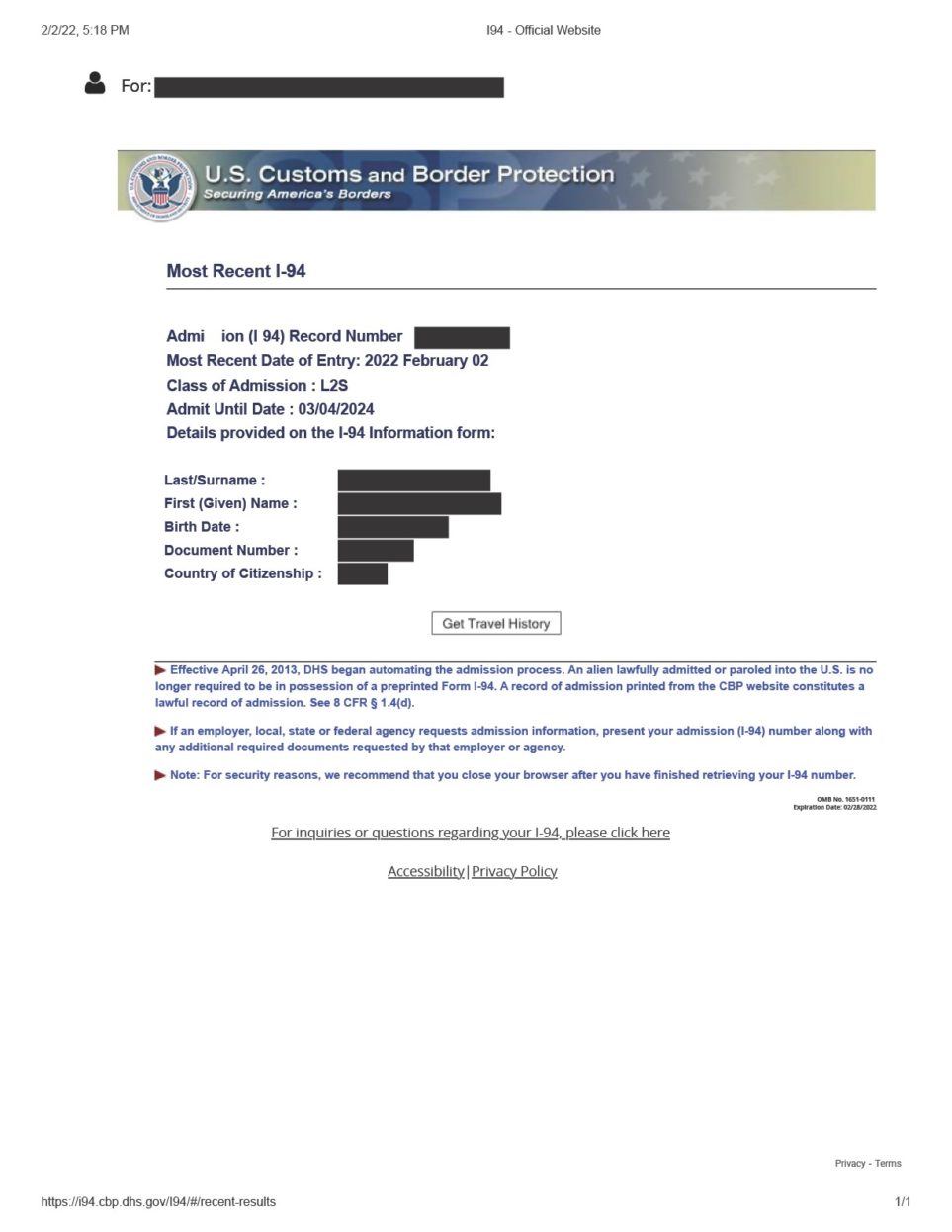
Effective January 31, 2022, CBP Office of Field Operations (OFO), in coordination with both USCIS and Department of State, began issuing new classes of admission on the I-94 arrival/departure record for E and L dependent spouses entering the U.S. at a Port of Entry. The new I-94 admission records indicate an “S” designation after the E or L class of admission to indicate that the spouse is authorized to work in the United States. The “S” designation is meant to indicate that the E or L nonimmigrant is a dependent “spouse” of a principal E or L visa holder. Please note that the new designation will not explicitly state that the spouse is “work authorized,” however the “S” designation signals to U.S. employers that the spouse is authorized to work for I-9 employment verification purposes.

Spouses who applied for an extension of their E or L visa status with USCIS, will receive I-94s that carry the new “S” designation at the bottom of their approval notices.


How can I prove that I am authorized to work as an E or L dependent spouse?


If you are an L or E dependent spouse who wishes to work in the United States without having to obtain an Employment Authorization Document (EAD), you must present an I-94 admission document with the “S” spousal annotation.

CBP has confirmed that the agency has been issuing new I-94’s with the “S” spousal annotation to E and L spouses who gained admission to the United States on or after January 31, 2022.


How does the annotation look?


sample-I94-963x1246-1

E/L Spousal Annotation

The I-94 will be annotated with an “S” next to the E or L-2 status designation, signaling to prospective employers that the individual is authorized to work during the validity period of the I-94. Spouses admitted in E or L-2 status should review their I-94 document immediately upon admission to ensure that it contains the appropriate annotation.


What if I gained admission to the United States prior to January 31, 2022 and I do not have the spousal designation on my I-94?


If you are an E or L dependent spouse who gained admission to the U.S. prior to January 31, 2022, and you do not have the “S” spousal annotation on your I-94, you must contact your closest CBP Deferred Inspection Office to determine whether they may, in their discretion, amend your I-94 arrival/departure record to include the “S” spousal annotation without requiring international travel. CBP may or may not agree to amend your I-94.

In cases where CBP will not amend your I-94 to include the spousal annotation, you may consider discussing with your immigration attorney whether you should depart the United States and re-enter at a U.S. port of entry to secure the new spousal annotated I-94. You must exercise caution before making any international travel plans. An immigration attorney will need to evaluate whether you have the proper documentation to gain re-admission after temporary foreign travel and determine whether your planned travel would result in the issuance of a new annotated I-94. Certain brief international trips may not result in a new I-94 issued by CBP.

Please note that if you are an E or L spouse admitted prior to January 31, 2022, and you have filed an application to extend your L or E status while in the U.S., USCIS is expected to issue the “S” spousal annotation on I-94’s printed at the bottom of USCIS-issued approval notices.

Continue reading

hiring-g89bff9159_1920

This week brings positive immigration news indeed. We are happy to report that the United States Citizenship and Immigration Service (USCIS) has updated its policy guidelines regarding validity periods for Employment Authorization Documents (EADs) for asylees and refugees, noncitizens with withholding of deportation or removal, noncitizens with deferred action, parolees, and Violence Against Women Act (VAWA) self-petitioners.


What is the new policy all about?


In the new policy alert, USCIS points out that under current guidelines the agency has been issuing initial and renewal Employment Authorization Documents (EADs) with a 1-year validity period, to asylees and refugees, noncitizens with withholding of deportation or removal, and VAWA self-petitioners.

Furthermore, in at least some cases involving deferred action or parolees, initial and renewal EADs are being issued for an even shorter duration, than that of the underlying deferred action or parole period, forcing applicants to file multiple applications for Employment Authorization to prevent employment gaps to cover their entire period of deferred action or parole.

The government is now recognizing its incredible inefficiency and is changing its policy to align with the Biden administration’s agenda. The USCIS policy manual has now been revised to state that initial and renewal EADs may be issued with a maximum validity period of up to 2 years for asylees and refugees, noncitizens with withholding of deportation or removal, and VAWA self-petitioners. For deferred action and parolee applicants, USCIS will now issue EADs up to the end of the authorized deferred action or parole period for individuals seeking an EAD in these filing categories.

Please note that replacement EADs will not be affected by this policy change.  USCIS will continue to issue replacement EADs with the same validity date as the original EAD.


When is this new policy effective?


The updated policy guidance, contained in Volume 10, Part A of the USCIS Policy Manual, is effective as of today Monday, February 7, 2022.

Accordingly, USCIS will immediately apply the updated validity period guidelines to EADs issued for impacted categories on or after February 7, 2022.

Continue reading

greg-bulla-P0tam674vzY-unsplash-scaled

With a new year comes new travel restrictions. In this blog post, we share with you a recent announcement published in the Federal Register by the U.S. Customs and Border Protection.

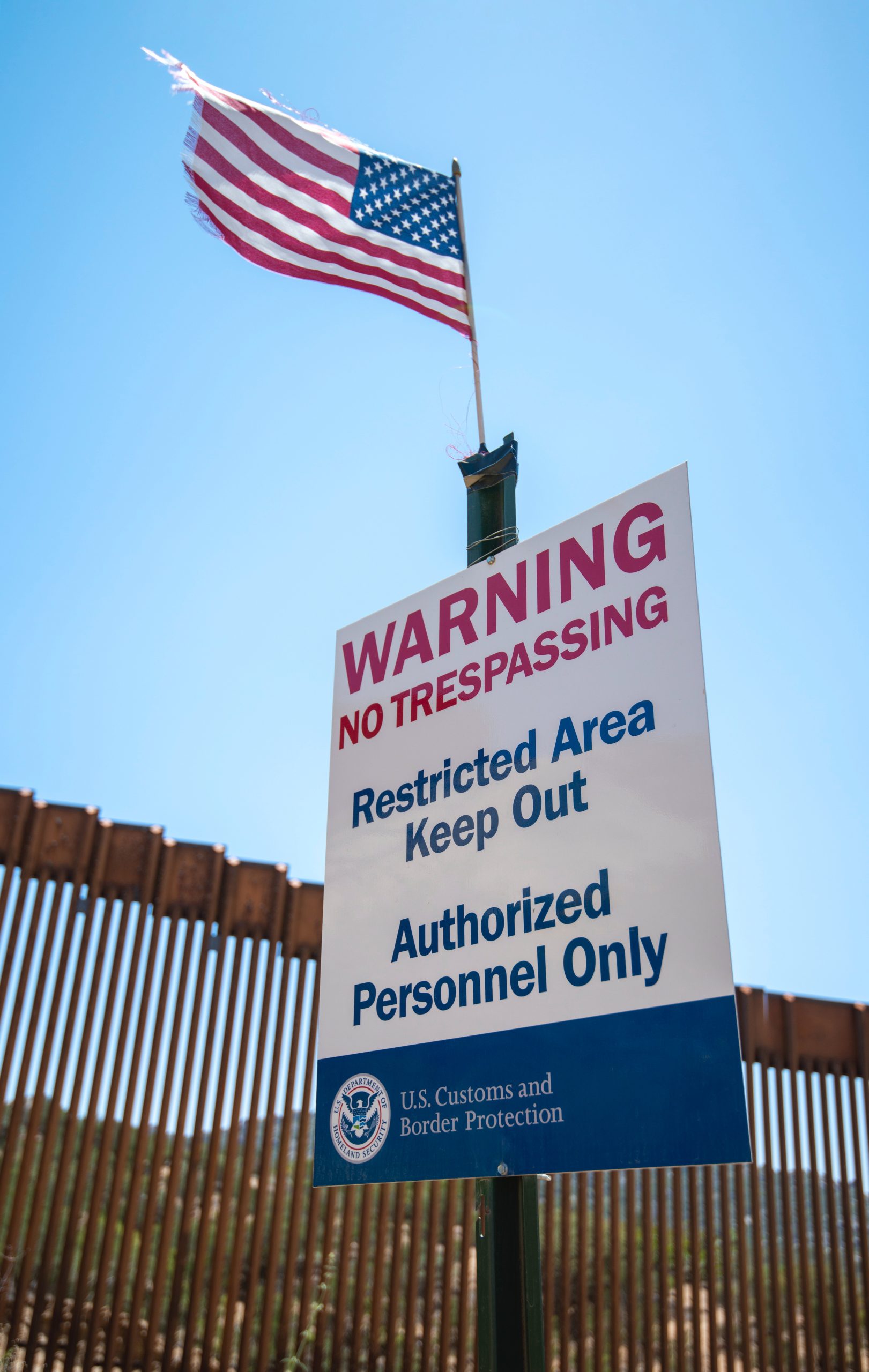
CBP has just released a notice of action informing the public of a brand-new temporary travel restriction that will apply to certain unvaccinated travelers seeking to enter into the United States along U.S. land ports of entry, including ferry terminals (‘‘land POEs’’) with Mexico and Canada.


What is this new travel restriction all about?


According to the new directive announced on January 24th, land ports of entry along the United States-Mexico border and United States-Canada border will continue to suspend normal operations and will allow processing for entry into the United States of only those noncitizen non-LPRs who are ‘‘fully vaccinated against COVID–19’’ and can provide ‘‘proof of being fully vaccinated against COVID–19’’ upon request, as those terms are defined under Presidential Proclamation and the CDC’s Order.


Who will the restriction apply to?


These restrictions will apply to non-citizens who are neither U.S. nationals nor lawful permanent residents (‘‘noncitizen non-LPRs’’) with limited exceptions.

Under the temporary restrictions, DHS will allow processing for entry into the United States of only those noncitizen non-LPRs who are fully vaccinated against COVID–19 and can provide proof of being fully vaccinated against COVID–19 upon request.


When do these travel restrictions go into effect?


These restrictions went into effect at 12 a.m. Eastern Standard Time (EST) on January 22, 2022 and will remain in effect until 11:59 p.m. Eastern Daylight Time (EDT) on April 21, 2022, unless amended or rescinded prior to that time.


Are there any exceptions for unvaccinated travelers?


This travel restriction does not apply to U.S. citizens, U.S. nationals, lawful permanent residents of the United States, or American Indians who have a right by statute to pass the borders of, or enter into, the United States.

In addition, the following exceptions to these restrictions have been authorized for the following categories of noncitizen non-LPRs:

  • Certain categories of persons on diplomatic or official foreign government travel as specified in the CDC Order;
  • persons under 18 years of age;
  • certain participants in certain COVID–19 vaccine trials as specified in the CDC Order;
  • persons with medical contraindications to receiving a COVID– 19 vaccine as specified in the CDC Order;
  • persons issued a humanitarian or emergency exception by the Secretary of Homeland Security;
  • persons with valid nonimmigrant visas (excluding B–1 [business] or B–2 [tourism] visas) who are citizens of a country with limited COVID–19 vaccine availability, as specified in the CDC Order;
  • members of the U.S. Armed Forces or their spouses or children (under 18 years of age) as specified in the CDC Order; and,
  • persons whose entry would be in the U.S. national interest, as determined by the Secretary of Homeland Security.

Continue reading

balls-gb03403383_1920

The H-1B cap season for FY 2023 is almost here!

USCIS has just announced that the H-1B initial registration period for the FY 2023 cap is scheduled to open at noon ET on March 1, 2022 and will remain open until noon ET on March 18, 2022.

As our readers are aware, in 2020 USCIS implemented a mandatory H-1B electronic registration system for the H-1B cap.

Under this new electronic registration process, prospective petitioners (also known as registrants), and their authorized representatives, who are seeking authorization to employ H-1B workers subject to the cap, must complete an electronic registration process on the USCIS website to receive a chance at selection. The registration process is simple and easy asking basic information about the prospective petitioner and each requested worker.

The H-1B selection process will be based off properly submitted electronic registrations. Only those with selected registrations will be eligible to file H-1B cap-subject petitions.

That means that in order to have a chance of being selected, all prospective petitioners and their authorized representatives seeking to file H-1B cap-subject petitions for FY 2023, including for beneficiaries eligible for the advanced degree exemption, must first register during the registration period (March 1, 2022, to March 18, 2022) and pay the associated $10 registration fee for each beneficiary.

Registrants will be able to create new accounts beginning at noon ET on February 21, 2022.

Continue reading

confused-gda7145471_1280

In today’s blog post, we share some interesting Question and Answer responses recently provided by the Department of State’s Office of the Assistant Legal Adviser for Consular Affairs (L/CA), in a meeting with the American Immigration Lawyers Association (AILA).

The responses below provide some important insight into current immigration policies and procedures taking place amid the ongoing COVID-19 pandemic.

Here, we summarize the most interesting questions covered during the January 20 meeting:


Department of State/AILA Liaison Committee Meeting


January 20, 2022 Q & A Highlights


Q: What role do Consular sections assume when determining whether an individual is exempt from the CDC COVID-19 vaccine requirement to gain entry to the U.S.?

A: Consular sections’ role in the process is to ensure that an individual’s request for a [vaccine] exception is filled out in full, and to transmit those requests to the CDC.


Q: If consular posts are involved in transmitting information in support of a humanitarian exception to CDC, what is the process, if any, for making such a request of a consular post outside the context of a visa interview?

A: Travelers should contact the consular section of the nearest embassy or consulate using the information provided on that embassies or consulate’s website


Q: What is the Department of State doing to alleviate the substantial backlogs created by the slowdown of operations at Consular posts and Embassies worldwide?

A: The Department is planning to hire foreign service officers above attrition in FY 2022. The majority will be assigned to a consular position after initial training. Additionally, the Department continues to recruit Limited Non-career Appointment (LNA) Consular Professionals. With very limited LNA hiring in FY 2020 and a pause on LNA hiring in FY 2021 due to CA’s budgetary constraints, Consular Affairs plans to hire more than 60 LNAs in FY 2022

Consular Affairs is working with State’s office of Global Talent Management to ramp up hiring in FY 2022, but many posts will not see these new officers until the second half of FY 2022 or FY 2023, particularly for officers assigned to positions requiring language training. Increased hiring will not have an immediate effect on reducing current visa wait times. Because local pandemic restrictions continue to impact a significant number of our overseas posts, extra staff alone is not sufficient to combat wait times for interviews.


Q: Can Consular Affairs please advise regarding efforts to resume routine consular services?

A: Consular sections abroad must exercise prudence given COVID’s continuing unpredictability. The emergence of the Omicron variant has prompted countries to reevaluate plans to relax travel bans, thereby leading consular sections abroad to recalibrate plans to resume services. Some posts have already fully resumed routine services. Others, in an abundance of caution and out of concern for the health of both consular staff and clientele, are slowly reintroducing some routine services.

Continue reading

russia-ge75ac68e9_1280

Happy Monday! Welcome back to Visalawyerblog!

In this blog post we share some great news for Russian nationals seeking F, M, and J nonimmigrant visa interviews. On January 21, 2022, the Department of State announced that the agency has now designated several posts overseas to process these nonimmigrant visa applications for persons who are residents of Russia. This change was made to provide relief to such applicants that have not been able to obtain visa interviews due to the severely limited operations currently available at the U.S. Embassy in Moscow.

Under this designation, Russia-based student visa applicants (F and M categories) as well as academic exchange visitors (student, professor, research scholar, short-term scholar, and specialist J visa categories) and participants in U.S. government-funded exchange visitor programs may now apply for their visas and be interviewed at the following posts:


Where do I find more information about the application process?


The Department of State has said that applicants should review the Embassy’s webpage for the latest information on services and appointment availability at that specific post.


What if I am physically present in another country? Can I apply for my F, M, J visa at the Embassy where I reside?


The Department of State has made clear that this designation does not prevent Russia-based F, M, and J applicants from applying at another post where they are physically present.  It also  does not exempt travelers from the Centers for Disease Control’s (CDC) requirement that all air travelers to the United States be vaccinated against COVID-19 with a WHO emergency use listed vaccine.

Information about accepted COVID-19 vaccines and the CDC’s requirements, is available here.

Continue reading