Articles Posted in Immigrant Visas

update-gcfbe3363f_1920

In this blog post, we share with you some recent updates in the world of immigration.


Suspension of Visa Services in Sudan


Today, April 24, 2023, the Department of State announced suspension of non-immigrant and immigrant visa services in Sudan, due to armed conflict in the country. The U.S. Embassy in Khartoum suspended all operations on April 22, 2023, and all personnel have been evacuated under orders of the Department of State.

All Immigrant and Diversity Visa interviews have been cancelled until further notice.  Those with an inquiry about a pending post-interview Immigrant Visa case, are advised to send only one email to KhartoumIV@state.gov.  The inbox will remain unmonitored for a certain period of time, until officials can begin to resume normal or alternative operations.

The mission is unable to conduct passport or document passback for the time being.

Applicants for U.S. nonimmigrant visas are encouraged to apply in any country in which they are physically present and where there are appointments available. As each U.S. Embassy and Consulate has specific application procedures, applicants should contact the U.S. Embassy where they wish to apply directly. Contact information for U.S. Embassies is available at usembassy.gov.


ICE launches online CeBONDS capability to automate bond payments


Last week, U.S. Immigration and Customs Enforcement (ICE) announced its implementation of a new web-based system called, Cash Electronic Bonds Online (CeBONDS), which provides a fully automated, online capability to request verification of bond eligibility, make cash immigration bond payments, and send electronic notifications to cash bond obligors. The web-system will benefit detained noncitizens determined by the Immigration Judge or ERO to be suitable for release on bond and enables ICE to send electronic notifications to cash bond obligors.

Individuals will still have the option of making in-person bond payments until the online system fully takes over on June 1st.


CeBONDS Frequently Asked Questions


Who can utilize CeBONDS?


U.S. citizens, lawful permanent residents, law firms, and non-profit organizations can use CeBONDS to post a delivery bond, voluntary departure bond, or order of supervision bond. Noncitizens can also post a voluntary departure bond or order of supervision bond on their own behalf.

Continue reading

may-g8ac2abccd_1920

It’s that time of the month again. The Department of State has released the May 2023 Visa Bulletin, giving you the latest updates on visa availability for family-sponsored and employment-based preference categories.

To help you prepare for your upcoming immigrant visa or green card filing, we share what you can expect to see in the upcoming month’s visa bulletin.

Here are some of the highlights from the May 2023 Visa Bulletin:


  • For employment-based preference adjustment of status filings, USCIS will continue to use the Final Action Dates chart, as they did in April.
  • For the month of May, EB-1 India and China will maintain their Final Action cutoff date of February 1, 2022, and Dates for Filing cutoff date of June 1, 2022. All other countries remain current. DOS warns applicants that cutoff dates for EB1 China and India will likely retrogress in the near future.
  • For the month of May, the EB-2 India Final Action and Dates for Filing cutoff dates will remain at January 1, 2011, and May 1, 2012, respectively.
  • For all other countries, except China and India, the EB-2 Final Action cutoff date will retrogress by four and a half months to February 15, 2022. Their Dates for Filing cutoff date will remain at December 1, 2022.
  • In May, the EB-3 China Professional/Skilled Worker category will advance by five months to April 1, 2019, for Final Action, and by four months to June 1, 2019 for Dates for Filing.
  • The EB-3 India Professional/Skilled Worker Final Action date will remain at June 15, 2012, and the Dates for Filing cutoff will remain at August 1, 2012.
  • Future retrogressions are expected for EB-1 India and China in the coming months, as well as EB-2 and EB-5 India as early as June.

Continue reading

laura-chouette-FyIuYxpCNrw-unsplash-scaled

In this blog post, we discuss major changes in the April 2023 Visa Bulletin for both family-sponsored and employment-based categories.

To help you prepare for your upcoming immigrant visa or green card filing, we share what you can expect to see in the employment based and family preference categories for the month of April.

Before we dive in, here are some of the highlights:


  • For employment-based preference adjustment of status filings, USCIS will use the Final Action Dates chart, putting applicants at a disadvantage given that the Dates for Filing chart has been more flexible
  • EB-1A India and China maintains a Final Action cutoff date of February 1, 2022
  • EB-2 Worldwide Final Action date will retrogress to July 1, 2022 (4 months)
  • EB-2 India Final Action date will retrogress to January 1, 2011 (8 months)
  • EB-2 China Final Action date will remain at June 8, 2019
  • The F-2A category Final Action date (spouses and unmarried children under age 21 of U.S. green card holders) is no longer current for the first time in several years.

What is the Visa Bulletin?


The Department of State releases the visa bulletin on a monthly basis, which summarizes the availability of immigrant visa numbers for that particular month in the employment and family preference categories.

To be eligible to file an employment-based adjustment of status application in April 2023, foreign nationals must have priority dates that are earlier than the Final Action Dates chart of the Department of State’s April Visa Bulletin.

Family-sponsored applicants currently residing in the United States, may file for adjustment of status once their priority dates become current, following the Dates for Filing chart according to the adjustment of status filing guidance published by the U.S. Citizenship and Immigration Services (USCIS).

Continue reading

simon-fairhurst-Oho7DRkEucU-unsplash-scaled
USCIS has just made it a lot easier for Lawful Permanent Residents with a lost, stolen, or misplaced green card to obtain evidence of their immigration status. Last week, the Service announced that LPRs may now request an Alien Documentation, Identification, and Telecommunication (ADIT) or I-551 stamp by mail as temporary evidence of their permanent resident status, instead of having to visit a local USCIS field office.


Who needs an ADIT stamp?


The ADIT (Alien Documentation, Identification and Telecommunication systems) stamp (also known as an I-551 stamp) is placed on an individual’s passport or I-94 card as temporary evidence of the alien’s lawful permanent resident status, where the alien no longer has the green card in their possession either due to loss, theft, or where a replacement green card has not yet been issued, or where the alien is waiting for an extension of his or her LPR status to be approved and their extension notice has expired.

money-g0bd54e988_1280

In this blog post, we share with you the most recent updates in immigration news.

We have important information for EB-5 Regional Center Investors. The United States Citizenship and Immigration Services (USCIS) recently announced that beginning Wednesday March 15, 2023, the biometrics requirement and its associated $85 biometrics fee will be eliminated for EB-5 investors filing Form I-526E, Immigrant Petition by Regional Center Investor.

Regional Center investors are those that are pooling their investment with one or more qualified immigrants participating in the Regional Center Program.

This means that starting March 15, investors will no longer need to submit the fee for biometrics services with Form I-526E.


Why the change?


USCIS has determined that universal biometrics collection is no longer necessary. However, in some circumstances, the agency may still request biometrics from certain investors  under INA 203(b)(5)(H)(iii)8 CFR 103.2(b)(9), or under other applicable authorities.

Continue reading

japanese-g2f35dc6d1_1920

In this blog post, we share with you new information provided by the American Immigration Lawyers Association (AILA) Department of State Liaison Committee following a meeting with the National Visa Center (NVC) addressing some common issues of concern for immigrant visa applicants waiting for their visas to be processed at the NVC and immigrant visa scheduling at U.S. Embassies and Consulates abroad.

We provide a summary of the questions asked and responses from the Department of State down below. This discussion was part of a meeting with representatives from the Bureau of Consular Affairs, taking place on February 9, 2023.


NVC Statistics for Documentarily Complete Cases


Question: Can NVC confirm how many cases were completed in FY2022 compared with the 342,392 completed in FY2021?

Answer: Documentarily Complete cases (documents received, reviewed, and case entered into scheduling queue) by Fiscal Year:

  • FY 2020 = 321,274
  • FY 2021 = 342,392
  • FY 2022 = 343,277

Question: Can NVC confirm how many cases have been completed so far in FY 2023?

Answer: The number of immigrant visa cases determined to be documentarily complete by the National Visa Center thus far in fiscal year 2023 (as of 27 January 2023) is 140,084.

Question: What is the monthly volume of immigrant visa cases that the NVC processes?

Answer: On average, during FY 2022, NVC performed case creation for nearly 14,974 immigrant visa petitions, received 20,987 ELIS petitions from USCIS, and reviewed supporting forms and documents for another 72,337 immigrant visa cases per month.

Question: What is the monthly volume of nonimmigrant (fiancé) visa cases that the NVC processes?

Answer: On average, during FY 2022, NVC performed case creation for 1,138 l-129F petitions for Alien Fiancé(e)s per month.

Question: If a document is not considered acceptable, and the attorney re-submits the requested documents, on average, how long does the NVC take to review the new evidence?

Answer: When missing documentation is subsequently provided, it is reviewed in the order it was received. NVC processing times have dropped significantly in the past year. Applicants may refer to the NVC Timeframes page on travel.state.gov to track the current Document Review processing time. NVC Processing dates are updated weekly.

Continue reading

march-gf5094352a_1920

The U.S. Department of State has released its March 2023 Visa Bulletin.

To help you prepare for your upcoming immigrant visa or green card filing, we share what you can expect to see in the employment based and family preference categories for the month of March.


What is the Visa Bulletin?


The Department of State releases the visa bulletin on a monthly basis, which summarizes the availability of immigrant visa numbers for that particular month in the employment and family preference categories.

To be eligible to file an employment-based adjustment of status application in March 2023, foreign nationals must have a priority date that is earlier than the Dates for Filing chart as listed in the Department of State’s March Visa Bulletin.

Those currently residing in the United States, may file for adjustment of status once their priority dates become current, following the Dates for Filing chart according to the adjustment of status filing guidance published by the U.S. Citizenship and Immigration Services (USCIS).


Adjustment of Status Filing Chart March 2023


For Family-Sponsored Filings:

Pursuant to guidance released by USCIS, for all family-sponsored preference categories, applicants must use the Dates for Filing chart in the Department of State Visa Bulletin for March 2023.

Continue reading

border-g740e70764_1280

USCIS Updates Policy Manual Clarifying Physical Presence Requirement for Asylees and Refugees


The U.S. Citizenship and Immigration Services (USCIS) recently updated its Policy Manual to clarify that BOTH asylees and refugees must have been physically present in the United States for one year at the time the Immigration Officer adjudicates their Form I-485, Application to Register Permanent Residence or Adjust Status, rather than at the time the individual files their adjustment of status application.

This policy is effective immediately and applies to all Form I-485 Applications to Register Permanent Residence or Adjust Status and Form N-400, Applications for Naturalization, that are pending on February 2, 2023, and applications filed on or after that date.


What does this mean?


This means that in order to be eligible for adjustment of status (a green card), an asylee or refugee must have been physically present in the United States for at least 1 year after either being granted asylum status or admitted as a refugee.

Additionally, the policy manual:

  • Provides that asylees and refugees are required to accrue 1 year of physical presence by the time of adjudication of the adjustment of status application, rather than by the time they file the application (and that USCIS may request additional information to determine such physical presence in the United States).
  • Clarifies that asylee and refugee adjustment applicants who have held the immigration status of exchange visitor (J-1 or J-2 nonimmigrants) and who are subject to the 2-year foreign residence requirement under INA 212(e) are not required to comply with or obtain a waiver of such requirement in order to adjust status under INA 209.
  • Makes technical updates, including clarifying processing steps for refugees seeking waivers of inadmissibility and removing references to the obsolete Decision on Application for Status as Permanent Resident (Form I-291).
  • Provides that USCIS considers a refugee or asylee who adjusted status to a permanent resident despite filing for adjustment before accruing 1 year of physical presence to have been lawfully admitted for permanent residence for purposes of naturalization if the applicant satisfied the physical presence requirement at the time of approval of the adjustment of status application.

Continue reading

statue-of-liberty-gb4c4e428e_1920

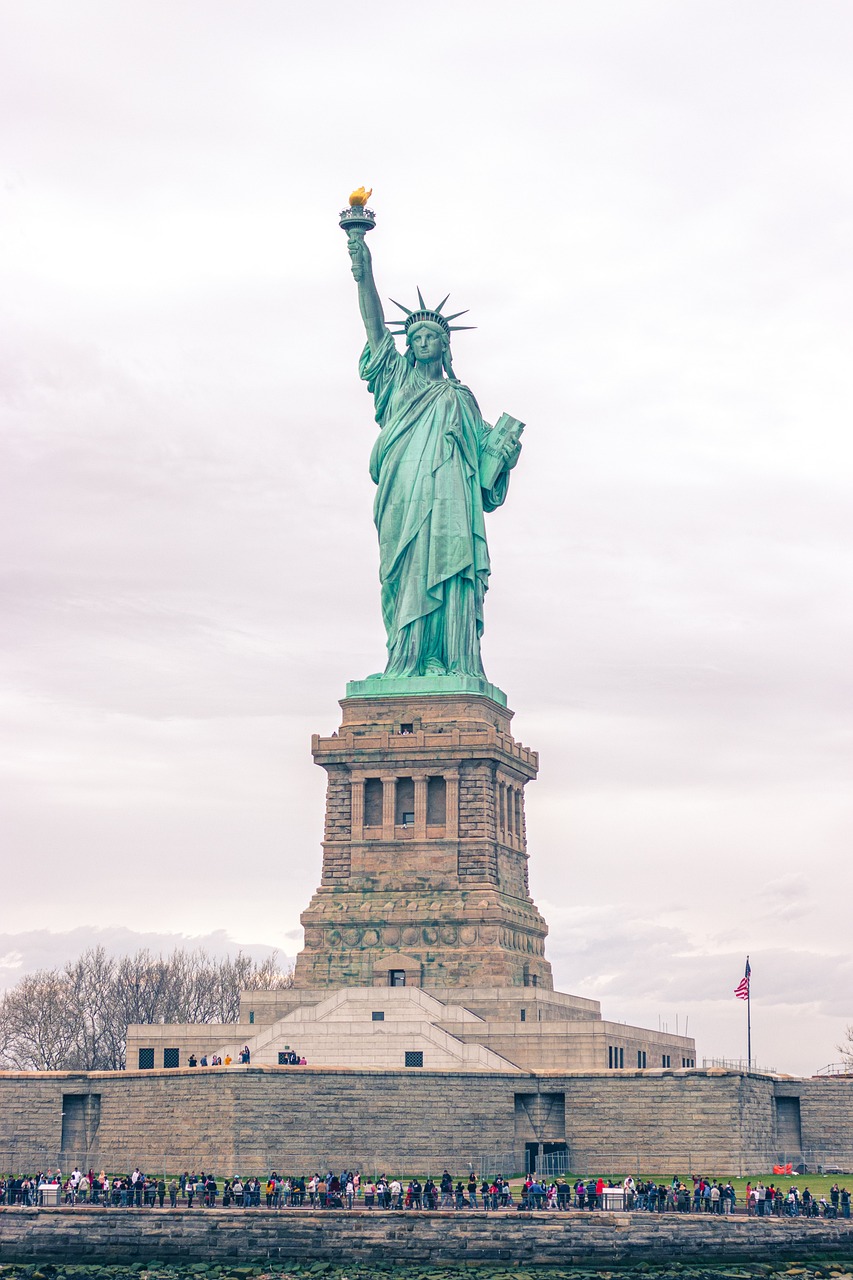
The Green Card and Employment Authorization Document just got a brand-new look.

In this post, we bring you the lowdown on what you can expect. USCIS recently announced that the agency will be issuing newly redesigned Permanent Resident Cards (also known as green cards) and Employment Authorization Documents (EADs) starting Monday, January 30, 2023.

The previous design was implemented in 2017. To mitigate the risk of fraud and counterfeiting, USCIS redesigns green cards and EADs every three to five years.

The new design includes state-of-the-art technology designed to improve its security and integrity against counterfeiting.

Along with completely redesigned artwork, the new green card and EADs come with tactile printing, enhanced optically variable ink, secure holographic images on the front and back, and a new layer-reveal feature showcasing a partial window on the back photo box, and data fields that have been placed in different areas than on previous versions.

Continue reading

comic-gb7c507c77_1920

Today, January 12, 2023, the U.S. Citizenship and Immigration Services (USCIS) announced that it is implementing the final phase of its expansion of premium processing for Form I-140, Immigrant Petition for Alien Workers, under the EB-1 and EB-2 immigrant classifications.


Who does this phase apply to?


This phase applies to new (initial) petitions, and all previously filed Form I-140 petitions under an E13 multinational executive and manager (EB-1C) classification or E21 classification as a member of professions with advanced degrees or exceptional ability seeking a national interest waiver (NIW) (EB-2).


When does premium processing open for new and pending EB-1C and EB-2 petitions?


Under the final phase of premium processing, effective January 30, 2023, USCIS will begin accepting premium processing upgrades for:

  • All pending E13 multinational executive and manager petitions (EB-1C) and E21 NIW petitions (EB-2), and
  • All initial E13 multinational executive and manager petitions (EB-1C) and E21 NIW petitions (EB-2)
  • Petitioners who wish to request a premium processing upgrade must file Form I-907, Request for Premium Processing Service.

The expansion of premium processing was first known to the public with the release of the final rule entitled, “Implementation of the Emergency Stopgap USCIS Stabilization Act,” published in the Federal Register on March 30, 2022. As part of this final rule, USCIS announced the gradual expansion of premium processing to certain additional form types over a three-year period.


Background of the Planned Expansion of Premium Processing


The first phase of the planned expansion of premium processing was announced during May of 2022 and applied to certain pending EB-1 Multinational Executive and Manager and EB-2 NIW petitions.

Later, in July the agency announced a second phase of premium processing expanding premium processing of these categories to EB-1C petitions received by USCIS on or before July 1, 2021, and EB-2 petitions received by USCIS on or before August 1, 2021.

Continue reading