Articles Posted in Travel Restrictions

martin-sanchez-j2c7yf223Mk-unsplash-scaled

Welcome back to Visalawyerblog! We hope that you had a restful Thanksgiving holiday break with your friends and family members.

In this blog post, we share with you some unfortunate new developments relating to the ongoing Coronavirus pandemic that will restrict the entry of foreign nationals from certain countries to the United States.

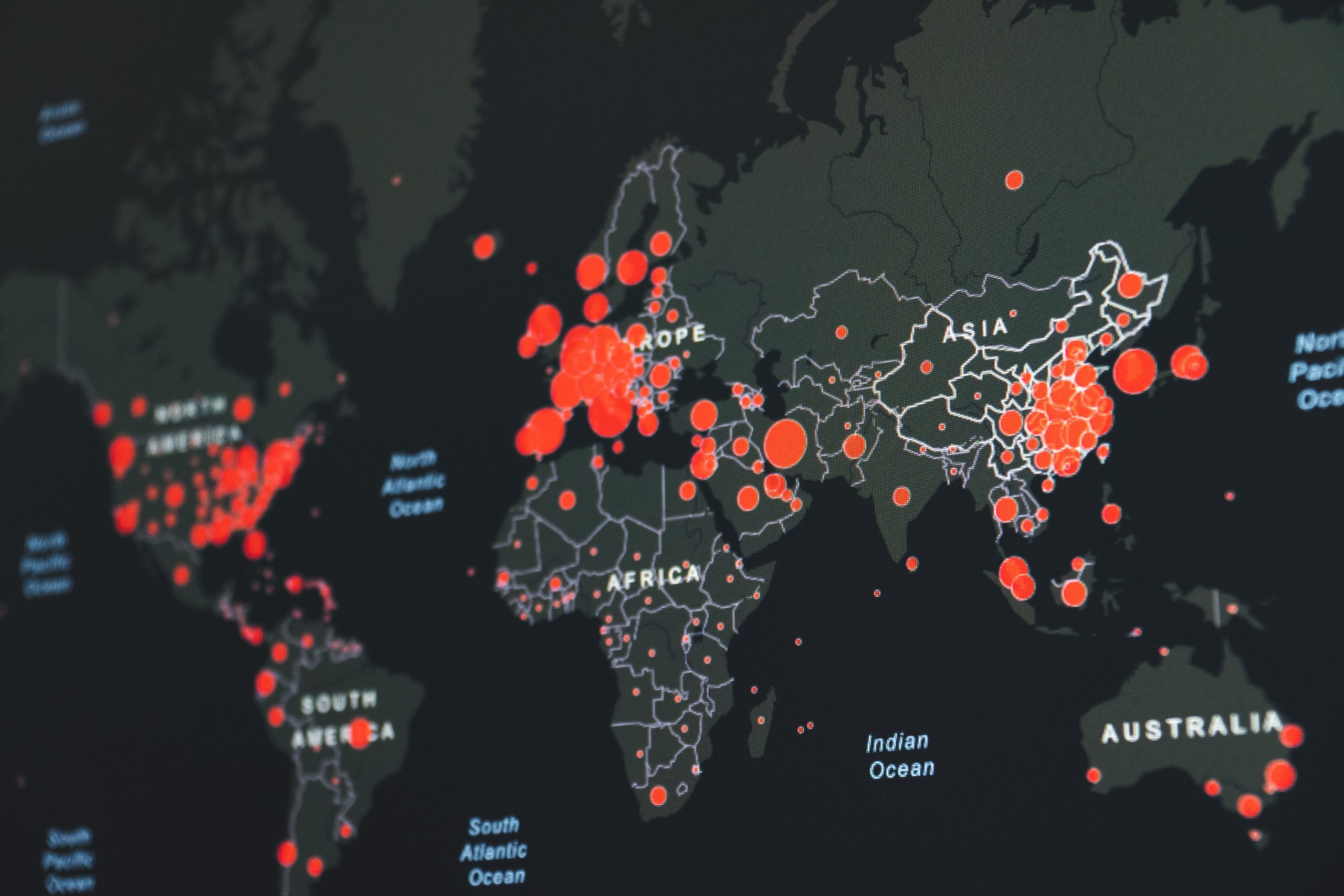
Just as the United States was beginning to ease restrictions on international air travel for the fully vaccinated starting November 8th, the world has once again been thrown into turmoil as a new Coronavirus variant known as “omicron” has been revealed with new cases emerging throughout Europe, Australia, South Africa, and the Netherlands.


President Biden Signs New Travel Ban Proclamation Amid Omicron Variant impacting South Africa, Botswana, Zimbabwe, Namibia, Lesotho, Eswatini, Mozambique, and Malawi


President Biden and his Chief Medical Adviser were briefed on the unfolding situation, and on Friday, November 26, 2021, President Biden signed Presidential Proclamation, “A Proclamation on Suspension of Entry as Immigrants and Nonimmigrants of Certain Additional Persons Who Pose a Risk of Transmitting Coronavirus Disease 2019,” that restricts the entry of non- U.S. Citizens who were physically present within the Republic of South Africa, Republic of Botswana, Zimbabwe, Republic of Namibia, Kingdom of Lesotho, Kingdom of Eswatini, the Republic of Mozambique, and Republic of Malawi, during the 14-day period preceding their entry or attempted entry to the United States.

The new travel ban becomes effective at 12:01 a.m. eastern standard time on Monday, November 29, 2021, as part of a global effort to reduce the spread of the omicron variant to the United States. The Proclamation does not apply to persons aboard a flight scheduled to arrive in the United States that departed prior to 12:01 am eastern standard time on November 29th.

While no confirmed cases of the variant have yet been announced in the United States, the Chief Medical Adviser has explained that its eventual spread will be inevitable. The new travel ban indicates that the Republic of South Africa informed the World Health Organization (WHO) of the new Omicron variant on November 24, 2021, and two days thereafter the WHO announced the new “Omicron” variant as a cause for concern that has been increasing in almost all provinces in the Republic of South Africa. Based on this information, and the lack of genomic sequencing throughout Southern Arica, the government has imposed the new travel restrictions from the named regions.


How long will the travel ban last?


At this time, we do not know how long the bans will remain in place, however it is very likely that they will remain until the Biden administration believes it is safe to rescind the travel bans. As has occurred with the previous COVID-19 geographic travel bans, it is highly likely that the new travel ban will remain in place until it is determined that current vaccinations approved by the U.S. Centers for Disease Control and Prevention are effective against the emerging Omicron variant. The Proclamation indicates that it will remain in effect until terminated by the President. Within 30 days, the Secretary of Health and Human Services must recommend whether the President should continue, modify, or terminate the Proclamation.

Continue reading

flu-shot-ga5cb2354b_1920

In this blog post, we share with you a roundup of new immigration updates for the week starting with some important reminders.


U.S. Welcomes International Air Travel from Fully Vaccinated Starting Monday November 8th


As we have reported on our blog, the Biden administration has issued a new Presidential Proclamation that rescinds the geographic COVID-19 related travel restrictions for fully vaccinated international air travelers to the United States. The new Proclamation will go into effect at 12:01 a.m. Eastern Standard Time on Monday, November 8, 2021. Travelers will need to be prepared to provide documentary evidence of full vaccination against COVID-19 (both doses are required for the Pfizer and Moderna vaccines) as well as proof of a negative COVID-19 test within 3 days of boarding. Certain narrow exceptions to the vaccine requirement have been made in the Presidential Proclamation, however it is important to note that even those who fall under an exception must become fully vaccinated against COVID-19 within 60 days of entry to the United States unless any of the following apply.

  • the noncitizen’s intended stay is sufficiently brief, as determined by the Director of the CDC;
  • the noncitizen is one for whom, given their age, requiring vaccination would be inappropriate, as determined by the Director of the CDC;
  • the noncitizen has participated or is participating in certain clinical trials for COVID-19 vaccination, as determined by the Director of the CDC;
  • COVID-19 vaccination is medically contraindicated for the noncitizen, as determined by the Director of the CDC;
  • the noncitizen is described in section 3(b)(i) or 3(b)(ii) of this proclamation and has previously received a COVID-19 vaccine that is authorized or approved by the noncitizen’s country of nationality, as determined by the Director of the CDC, in consultation with the Secretary of State; or
  • the Director of the CDC otherwise determines that COVID-19 vaccination is not warranted for the noncitizen.

To read the complete details regarding the Presidential Proclamation 10294 please click here.


U.S. will also open the land border to fully vaccinated non-essential travelers from Canada and Mexico starting November 8


In similar fashion, also on Monday, November 8, 2021, the United States will be opening its land border and ferry ports of entry to fully vaccinated nonessential travelers from Canada and Mexico. Travelers will be required to have appropriate paperwork that provides proof of vaccination. The entry of individuals who have not been fully vaccinated for COVID-19 will continue to be restricted for non-essential travelers.

For more information please click here.


Diversity Visa Lottery Registration for FY 2023 closes on Tuesday November 9th


As a reminder, registration for the Diversity Visa Lottery program for fiscal year 2023 will come to a close on Tuesday November 9, 2021, at noon Eastern Standard Time. Don’t lose your chance of being selected. Registration is easy and completely free. Winners of the diversity visa lottery program for fiscal year 2023 will be announced May 8, 2022 and can apply for their immigrant visas or adjust their status starting October 1, 2022.

For information on how to enter and eligibility please click here.

Continue reading

map-g51daed2e3_1280

Exciting news for fully vaccinated travelers from Mexico and Canada! The United States Customs and Border Protection (CBP) recently published a notice in the Federal Register announcing that the United States will be lifting travel restrictions on nonessential travel for Canadian and Mexican nationals who have been fully vaccinated for COVID-19 (as defined by the Centers for Disease Control and Prevention) so that they may enter the United States at land ports of entry along the United States/Canada and United States/Mexico border.

Further, Secretary of Homeland Security Alejandro Mayorkas has said that the new measures have been made to align “with the new international air travel system that will be implemented in November.” According to Mayorkas the United States, “will begin allowing travelers from Mexico and Canada who are fully vaccinated for COVID-19 to enter the United States for non-essential purposes, including to visit friends and family or for tourism, via land and ferry border crossings.” This will be a significant step in reopening the economy as “cross-border travel creates significant economic activity in [U.S.] border communities and benefits our broader economy.”

These new measures will occur in two phases over the next few months.  First, in November, U.S. Customs and Border Protection (CBP) will begin allowing fully vaccinated travelers from Mexico or Canada to enter the United States at land and ferry ports of entry for non-essential reasons. Travelers will be required to have appropriate paperwork that provides proof of vaccination. Individuals who have not been fully vaccinated for COVID-19 will not be allowed to travel for non-essential purposes from Canada and Mexico into the United States via land and ferry ports of entry.

Second, beginning in early January 2022, DHS will require that all inbound foreign national travelers crossing U.S. land or ferry ports of entry – whether for essential or non-essential reasons – be fully vaccinated for COVID-19 and provide related proof of vaccination. This approach will provide ample time for essential travelers such as truckers, students, and healthcare workers to get vaccinated.


When will travel restrictions be lifted for vaccinated nonessential travelers?


The travel restrictions on nonessential travel for fully vaccinated Canadian and Mexican nationals will be lifted on November 8, 2021 – the same date that the relaxation will apply to fully vaccinated air travelers. Travelers crossing U.S. borders with Canada and Mexico for non-essential reasons will be required to present proof of vaccination to a Customs and Border Protection officer upon request. More details will be released by U.S. Customs and Border Protection in the coming weeks.

Continue reading

lukas-souza-5KRFOTnpnnY-unsplash-scaled

Welcome back to Visalawyerblog! We have very exciting news regarding the Biden administration’s plans to rescind the Covid-19 related travel bans that have suspended and restricted entry into the United States, of immigrants and nonimmigrants, physically present within the Schengen Area, Brazil, China, India, the United Kingdom, Ireland, South Africa, and Iran since 2020.

On October 15, 2021, the White House announced that the United States will allow international travelers who are fully vaccinated against Covid-19 to enter the United States by land or air starting November 8, 2021.

This decision will lift the ban for vaccinated visitors from the affected regions.

On Friday October 15, 2021, a White House Official stated that the “CDC has already informed airlines that all FDA approved and authorized vaccines, as well as all vaccines that have an Emergency Use Listing (EUL) from the World Health Organization (WHO) will be accepted for air travel. We anticipate the same will be true at the land border. These travelers are required to be prepared to attest to vaccination status and to present proof of vaccination to a CBP officer upon request. By January, foreign nationals traveling across the land border for both essential and non-essential reasons will be required to be fully vaccinated.”

While the White House is still ironing out the complete details of the new policy including what exemptions the Biden administrations will grant to the vaccine requirements, we know that only generally applicants who are fully vaccinated against Covid-19 will be allowed to enter.

The CDC considers an individual to be fully vaccinated against COVID-19:

  • 2 weeks after their second dose in a 2-dose series, such as the Pfizer-BioNTech or Moderna vaccines, or
  • 2 weeks after a single-dose vaccine, such as Johnson & Johnson’s Janssen vaccine

COVID-19 vaccines currently approved or authorized for emergency use by the U.S. Food and Drug Administration include Pfizer-BioNTech, Moderna, and Johnson & Johnson COVID-19 vaccines, while COVID-19 vaccines authorized for use by the World Health Organization include AstraZeneca/Oxford, Covishield, Sinopharm, and Sinovac.

Continue reading

tom-barrett-M0AWNxnLaMw-unsplash-scaled

We have very interesting and exciting news to report to our readers. We are happy to report that on Tuesday, October 5, 2021, a federal judge from the United States District Court for the District of Columbia, declared that the State Department cannot use the various geographic COVID-19 related Presidential Proclamations to cease the processing of visas at Embassies and Consulates worldwide.

As our readers will know, beginning in January of 2020, to protect against the rise of COVID-19 infections in the United States, the President issued a series of Presidential Proclamations that suspended and restricted entry into the United States, of immigrants and nonimmigrants, who were physically present within the Schengen Area, Brazil, China, the United Kingdom, Ireland, and Iran, during the 14-day period preceding their entry or attempted entry into the United States.

These Presidential Proclamations did not have a termination date and have continued to be in force to the present day. The most widely discussed ban (the Schengen visa ban “Proclamation 9993,”) applied to immigrants and nonimmigrants from 26 European countries including: Austria, Belgium, Czech Republic, Denmark, Estonia, Finland, France, Germany, Greece, Hungary, Iceland, Italy, Latvia, Liechtenstein, Lithuania, Luxembourg, Malta, Netherlands, Norway, Poland, Portugal, Slovakia, Slovenia, Spain, Sweden, and Switzerland. However separate visa bans have also impacted the entry of Brazilian nationals, Chinese nationals, Iranian nationals, and Indian nationals (see the list of COVID-19 travel bans listed below.)

Since the issuance of these travel bans, U.S. Consulates and Embassies worldwide have refused to issue any visas to those who do not otherwise qualify for an exemption and have been physically present in any of the affected regions during the 14-day period preceding their entry into the United States. The only way applicants have succeeded in pushing their cases forward has been by requesting a National Interest Exception from their respective Embassy.


The COVID-19 related travel bans are as follows:

  • China Visa Ban – Proclamation 9984 issued January 21, 2020 – No termination date
  • Iran Visa Ban –Proclamation 9992 issued February 29, 2020 –No termination date
  • European Schengen Area Visa Ban—Proclamation 9993 issued March 11, 2020—No termination date
  • Ireland and UK Visa Ban –Proclamation 9996 issued March 14, 2020 –No termination date
  • India Visa Ban –Proclamation 10199 issued April 30, 2021—No termination date
  • Brazil Visa Ban—Proclamation 10041 issued May 25, 2020 –No termination date

For a complete list of COVID-19 country-specific proclamations click here.


Continue reading

niels-bosman-uBERJmNZp-w-unsplash-scaled

In this blog post, we share with you some exciting new updates in immigration for Croatia and Syria.

We are very happy to announce that Croatia has now joined the Visa Waiver Program. The Visa Waiver Program allows foreign nationals of participating countries to travel to the United States for purposes of tourism or business without having to obtain a U.S. visa. Such stays are limited to 90 days or less, and all travelers must have a valid and approved Electronic System for Travel Authorization (ESTA) prior to traveling to the United States.

Visa Waiver participants are not eligible to change or extend their status within the United States during those 90 days. Only applicants who enter on a U.S. visa may apply for a change or extension of status with USCIS. It is also important to note, that applicants who have been denied a U.S. visa in the past are ineligible for ESTA.


When can Croatian nationals travel under the Visa Waiver Program?


The Secretary of Homeland Security Alejandro Mayorkas, and Secretary of State Antony Blinken designated Croatia as a new participant in the program, that is set to start no later than December 1, 2021. The agencies announced that the ESTA interface will soon be updated to allow Croatian nationals to apply for ESTA prior to travel to the United States. Applicants should note that ESTA authorizations are generally valid for two years.  Those with valid B1/B2 visas are recommended to continue to use their visas for travel to the United States.

Following the announcement, Secretary Mayorkas said that the designation of Croatia as a new participant in the Visa Waiver Program is an important recognition of U.S./Croatian shared economic and security interests.

With this new announcement, Croatia becomes the 40th member of the Visa Waiver Program found eligible to participate after having met strict requirements.


Who else is eligible to travel using the Visa Waiver Program?


For a complete list of countries currently participating in the Visa Waiver Program please click here.


TPS for Syria EADs Automatically Extended through March 28, 2022


We would also like to announce some important information for Temporary Protected Status beneficiaries from Syria. The U.S. Department of Homeland Security has automatically extended the validity of Employment Authorization Documents (EADs) for beneficiaries with a Category Code of A12 or C19 issued under Temporary Protected Status (TPS) for Syria through March 28, 2022.

Continue reading

timo-wielink-4czXbVY1fgY-unsplash-scaled

We kick off the start of a brand-new week with some important information for immigrant and nonimmigrant visa applicants residing in regions currently affected by the four geographic Presidential Proclamations still in place, for non-citizens in the Schengen countries, the United Kingdom, China, Iran, Brazil, South Africa, and India.

The Presidential Proclamations, collectively known as the COVID-19 Geographic Proclamations are as follows:

  • Presidential Proclamation 10143 (Schengen Area, United Kingdom, Ireland, Brazil and South Africa)
  • Presidential Proclamation 9984 (China)
  • Presidential Proclamation 9992 (Iran)
  • Presidential Proclamation 10199 (India)

*The Schengen countries include Austria, Belgium, Czech Republic, Denmark, Estonia, Finland, France, Germany, Greece, Hungary, Iceland, Italy, Latvia, Liechtenstein, Lithuania, Luxembourg, Malta, Netherlands, Norway, Poland, Portugal, Slovakia, Slovenia, Spain, Sweden, and Switzerland.

The COVID-19 Proclamations were issued early on during the pandemic to help contain the rapid spread of the Coronavirus in the United States, by limiting the entry to the United States, of non-citizen travelers who were physically present in any of the impacted regions during the 14-day period, prior to their planned entry or attempted entry to the United States.

To comply with these Proclamations, U.S. Embassies and Consulates worldwide have been unable to issue nonimmigrant and immigrant visas to those who have been physically present in any of the above mentioned 33 covered countries. But all of that has recently changed thanks to new National Interest Exception designations made by the Secretary of State for certain types of travelers.

Continue reading

daniel-schludi-mAGZNECMcUg-unsplash-scaled

We are excited to share with you some new updates regarding the immigrant visa backlog.

On May 25, 2021, the U.S. Department of State: Bureau of Consular Affairs, hosted a live YouTube Question and Answer session with Neal Vermillion, Division Chief at the U.S. Visa Office of the Bureau of Consular Affairs, where he discussed how Consular sections have been prioritizing cases during the phased resumption of visa services, and information about the status of the current immigrant visa backlog worldwide.

Neal Vermillion works directly with the Office of Field Operations, which is a government agency that provides guidance to Consular sections including Embassies and Consulates around the world. He has worked with the Department of State since the early 2000’s in various roles and has invaluable expertise on visa operations at Consular sections around the globe.

In this post, we will share with you the highlights of this session which you may find useful to determine the progress of your visa and what you can expect with regard to visa processing in the coming months.


DOS Q&A Session with Neal Vermillion: Immigrant Visa Backlog Q&A


https://www.youtube.com/watch?v=S_G7kahqQN0


Neal’s Introductory Remarks

I would first like to say a few remarks before we get to that question and the other specific ones. In terms of the history, here we are almost June 2021. Those of you that follow our immigrant visa processing overseas know, we actually shut down due to the pandemic. Visa processing shut down for several months last year at this time, and we really didn’t start the reopening process until July of last year. This is one significant factor that is leading to this backlog discussion that we are having today.

Another point I want to highlight that is another prong of why we are where we are is, you may recall, last spring as well, then President Trump signed Presidential Proclamation 10014, which President Biden rescinded in late February of this year, but that Proclamation prevented the issuance, even when we were open and our Consular sections were processing some visas, that prevented the issuance and travel of many many different types of immigrant visas.

A third prong as we’re talking about Presidential Proclamations, is … some of you may be aware, there are actually still in effect geographic Proclamations, as we call them, which basically are again Presidential Proclamations that have been issued to help protect the homeland, protect health and security.

Continue reading

welcome-2022839_1920

In this blog post, we share with our readers some exciting new updates and information on travel to the United States for Americans who have found themselves stranded abroad with expired U.S. passports.

On May 24, 2021, the Department of State issued a press release informing members of the public that U.S. Citizens currently overseas whose passports expired on or after January 1, 2020, may be able to use their expired U.S. passports to make direct return travel to the United States, provided they meet a certain set of criteria. This policy will be in effect until December 31, 2021.


What criteria do I need to meet to use my expired passport for direct travel to the United States from overseas?


If you are overseas and your passport expired on or after January 1, 2020, you may be able to use your expired passport to return directly to the United States until December 31, 2021.

You qualify for this exception if all the following are true:

  • You are a U.S. citizen.
  • You are currently abroad seeking direct return to the United States.
  • You are flying directly to the United States, a United States territory, or have only short-term transit (“connecting flights”) through a foreign country on your direct return to the United States or to a United States Territory.
  • Your expired passport was originally valid for 10 years. Or, if you were 15 years of age or younger when the passport was issued, your expired passport was valid for 5 years.
  • Your expired passport is undamaged.
  • Your expired passport is unaltered.
  • Your expired passport is in your possession.

Continue reading

alyssia-wilson-8O0_aFy72KY-unsplash-scaled

In its continued efforts to improve communications with the public regarding the status of visa operations worldwide, the Department of State recently provided new insights regarding Immigrant Visa Prioritization at Consular posts overseas.

To reduce the immigrant visa backlog, the Department has announced the adoption of a new four-tiered approach that is designed to triage the processing of immigrant visa applications according to prioritization standards set by U.S. Congress. Such standards will ensure prioritized visa processing for certain categories of immigrant visa applicants, while posts prepare to resume and expand visa processing as local conditions improve.

Prioritization of immigrant visas will begin with a first tier including prioritization of immigrant visas for immediate relative intercountry adoption visas, age-out cases (cases where the applicant will soon no longer qualify due to their age), and certain Special Immigrant Visas (SQ and SI for Afghan and Iraqi nationals working with the U.S. government).

The second tier will include prioritization of immigrant visas for immediate relatives, fiancé(e) visas, and returning resident visas.

While the third tier will prioritize immigrant visas for family preference immigrant visas and SE Special Immigrant Visas for certain employees of the U.S. government abroad.

Finally, the fourth tier will prioritize immigrant visa processing for all other immigrant visas, including employment preference and diversity visas.

Continue reading