Articles Posted in B2 Visitor Visas

26493199526_8a6efa5192_z

Flickr Creative Commons Attribution Jeroen Akkermans

In the last months, the U.S. Department of State released two significant policy updates that impact both immigrant and nonimmigrant visa applicants. These updates focus on a core change: applicants will now be required to have their visa interviews in their place of residence or country of nationality.

This change has significant consequences for third-country nationals who have traditionally applied for U.S. visas outside their country of nationality, particularly those renewing H-1B, E, O, and L visas, as well as immigrant visa applicants outside the United States.

Immigrant Visa Applicants Must Apply in their Country of Residence


On August 28, 2025, the State Department announced that, starting November 1, 2025, immigrant visa applicants must attend their interviews at a U.S. consulate or embassy located in their country of residence, or in their country of nationality, with limited exceptions. The update applies across all immigrant visa categories, including Diversity Visas.

There are exceptions to this rule, though they are limited. Exceptions may be granted in rare cases involving humanitarian or medical emergencies, or in circumstances involving specific foreign policy considerations. Applicants residing in countries where routine U.S. visa services have been suspended or paused will need to process their case at a designated consular post, which is typically assigned by the State Department to handle cases from those particular regions.

Existing appointments for immigrant visa interviews scheduled prior to November 1st will not be cancelled or rescheduled.

Same Policy Applies to Nonimmigrant Visa Applicants


A similar change was later announced on September 6, 2025, for nonimmigrant visa applicants. Effective immediately, nonimmigrant visa applicants must also apply for their visa in their country of residence or nationality. This means that individuals cannot simply choose a different country’s embassy based on convenience or shorter wait times unless they reside there or are citizens of that country. This applies to all third country nationals who previously traveled to embassies or consulates in Mexico or Canada to renew their nonimmigrant visas.
Continue reading

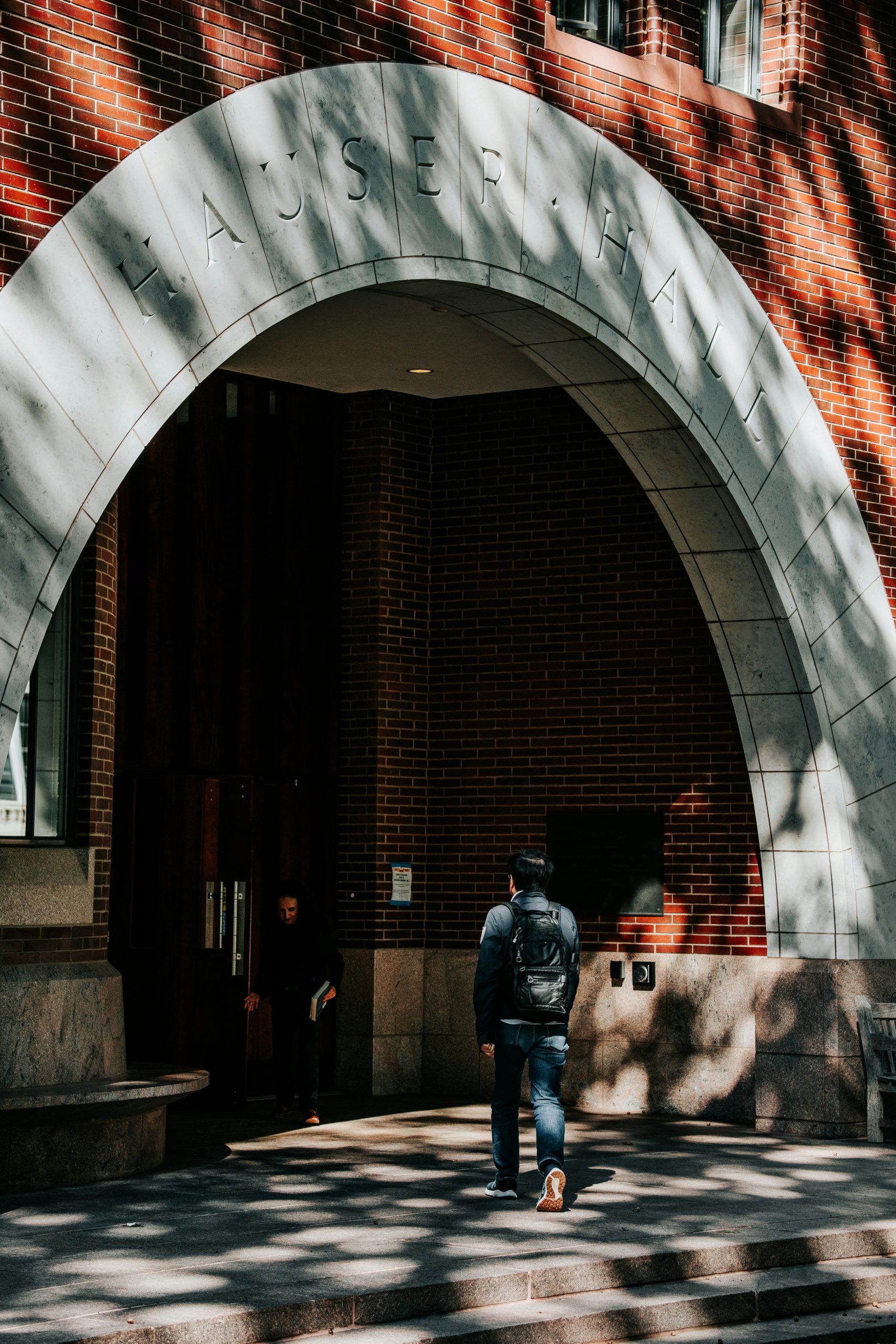
beverly-kimberly-tfiGOGEmJVI-unsplash-scaledOn June 4, 2025, President Trump continued his ongoing assault on Harvard University with a new Executive Order entitled, “Enhancing National Security by Addressing Risks at Harvard University.”

Effective June 4th, the order suspends the entry of all nonimmigrants and exchange visitors bound for Harvard University for a period of 6 months, citing national security concerns over Harvard’s failure to police foreign students and ensure that foreign nationals admitted on student and exchange visitor visas remain in compliance with Federal law.

The executive order also accuses Harvard of having extensive entanglements with foreign adversaries including China.

Who is affected?


All nonimmigrants who enter or attempt to enter the United States to begin attending Harvard University through the Student and Exchange Visitor Program (SEVP) after the effective date of the proclamation (June 4, 2025).

The executive order further empowers the Secretary of State Marco Rubio to consider in his discretion whether foreign nationals who currently attend Harvard University and are in the United States pursuant to F, M, or J visas, should have their visas revoked pursuant to the proclamation.

Who is not affected?


The suspension does not impact Harvard students who are already inside the United States with a valid student visa as of the effective date of the proclamation.

The suspension also does not apply to any alien who enters the United States to attend other universities through the Student and Exchange Visitor Program (SEVP).

It also does not apply to any alien whose entry would be in the national interest, as determined by the Secretary of State, the Secretary of Homeland Security, or their designated representatives.

Impact on Harvard Students Currently in the United States


The executive order does not:

  • Restrict change or extension of status applications filed with U.S. Citizenship and Immigration Services (USCIS)
  • Revoke existing visas, I-94, or STEM OPT work authorization status for students currently in the United States

Continue reading

united-states-8911597_1280After months of speculation and buildup, President Trump’s long-anticipated travel ban has finally arrived.

Issued by executive order on June 4th President Trump’s travel ban entitled “Restricting the Entry of Foreign Nationals to Protect the United States from Foreign Terrorists and Other National Security and Public Safety Threats,” closely mirrors the leaked draft that first surfaced in early March through the New York Times.

That draft hinted at sweeping restrictions targeting so-called “red,” “orange,” and “yellow” countries—coded designations that formed the backbone of President Trump’s proposed directive.

While there are notable differences, as predicted, the administration has framed the ban as a national security measure, but critics argue it remains susceptible to being challenged or overturned through lawsuits that may soon be filed in federal court.

Here’s what you need to know.

President Trump’s travel ban goes into effect today Monday June 9, 2025, at 12:01 am Eastern Daylight time.


Who it Affects


Full Suspension on Nationals from Countries of Concern

The travel ban temporarily suspends the entry of both immigrants and non-immigrants from 12 designated countries who are outside the United States and do not have a valid visa on the effective date of the proclamation, including Afghanistan, Burma, Chad, the Republic of the Congo, Equatorial Guinea, Eritrea, Haiti, Iran, Libya, Somalia, Sudan, and Yemen.

However, several key exceptions apply for lawful permanent residents (LPRs), immediate family members of U.S. citizens, dual nationals, athletes and teams competing in major international sporting events such as the World Cup and the Olympics, and others (a full list of exceptions is provided below).

Continue reading

interview-4783433_1280On February 18, 2025, the U.S. Department of State (DOS) announced new changes to the Visa Interview Waiver program, further adding to the unpredictability of the Trump administration.

Among these changes, the State Department has limited the categories of non-immigrants who are eligible to receive waivers of the in-person interview requirement.

Moving forward only the following individuals may qualify:

  • Applicants classifiable under the visa symbols A-1, A-2, C-3 (except attendants, servants, or personal employees of accredited officials), G-1, G-2, G-3, G-4, NATO-1 through NATO-6, or TECRO E-1;
  • Applicants for diplomatic- or official-type visas; and
  • Applicants who previously held a visa in the same category that expired less than 12 months prior to the new application

Additionally, those seeking interview waivers must also meet the following requirements:

  • apply in their country of nationality or residence
  • have never been refused a visa (unless such refusal was overcome or waived); and
  • have no apparent or potential ineligibility.

Previously, non-immigrant visa applicants applying for visa renewals in the same visa category could seek an interview waiver if their visa was expiring within 48 months. The Trump administration has now cut this time to just 12 months.

This means that renewal applicants with visas that expired past the 12-month window will be required to attend in-person interviews at a U.S. Consulate or Embassy.

These visa restrictions along with Trump’s recent executive order requesting Consulates to fire visa officers and local employees, means that wait times for visa appointments will drastically increase, especially in countries already facing severe backlogs.

The State Department has said that visa renewal applicants who qualify for an interview waiver based on the previously stated guidelines may still be required to attend an in-person interview by the Consulate. This is because the interview waiver process is discretionary. It is never guaranteed.

Continue reading

american-flag-3001893_1280We start the week with the unfortunate news that hundreds of visa applicants were turned away at the U.S. Embassy in Bogotá, Colombia, following a political dispute between President Donald Trump and Colombian President Gustavo Petro.

Tensions between the two heads of state came to a head on Sunday after President Trump wrote on his Truth Social account, “I was just informed that two repatriation flights from the United States, with a large number of Illegal Criminals, were not allowed to land in Colombia. This order was given by Colombia’s Socialist President Gustavo Petro…”

He added, “Petro’s denial of these flights has jeopardized the National Security and Public Safety of the United States, so I have directed my Administration to immediately take the following urgent and decisive retaliatory measures….”

Among these measures, President Trump vowed to:

  • Raise tariffs on all Colombian goods entering the United States
  • Enforce an immediate travel ban and visa revocations on all Colombian government officials, aliens, and supporters
  • Order visa sanctions on all party members, family members, and supporters of the Colombian government and
  • Enhance Customs and Border Protection (CBP) inspections of all Colombian nationals and cargo on “national security” grounds

Shortly thereafter, the U.S. Department of State and Customs and Border Protection (CBP) announced through their spokespersons that they would enforce the President’s orders by immediately ordering the suspension of visa issuance at the U.S. Embassy in Bogotá, Colombia.

Continue reading

heart-2880992_1280We are excited to report that Qatar will soon be joining the Visa Waiver Program, which permits citizens of 41 countries to travel to the United States for business or tourism for stays of up to 90 days without a visa.   

Qatar’s designation was announced on September 24th by the Secretary of Homeland Security and the Secretary of State.

Qatar will become the 42nd member of the Visa Waiver Program and the first of the Arab states of the Persian Gulf to become part of the program.


When can Qatari nationals travel to the United States using the Visa Waiver Program?


Qatari nationals can start applying for the Electronic System for Travel Authorization (ESTA) online application or on the “ESTA Mobile” app no later than December 1, 2024.

The Electronic System for Travel Authorization (ESTA) is a fully automated, electronic system for screening passengers before they begin travel to the United States under the Visa Waiver Program. Eligible citizens or nationals from all Visa Waiver Program countries must obtain approval through ESTA prior to traveling to the United States under the Visa Waiver Program. Visa Waiver Program travelers are encouraged to apply for authorization as soon as they begin to plan a trip to the United States.

ESTA travel authorizations are generally valid for two years upon issuance and permit travelers to remain in the United States for up to 90 days for tourism or business purposes.

Qatari citizens with valid B1/B2 visas may continue to use them for business and tourist travel to the United States.


Can U.S. Citizens also travel to Qatar without a visa?


Yes. The move will also benefit U.S. Citizens, considering that Qatar will update its travel policies starting October 1, 2024, to allow all U.S. citizens to request entry into Qatar for up to 90 days instead of the previous 30-day limit. U.S. travelers must have a passport that is valid for at least three months from arrival and a confirmed hotel booking on arrival.

In his announcement, Secretary of Homeland Security Alejandro N. Mayorkas remarked, “The Visa Waiver Program is one of our most successful security initiatives. Qatar’s participation in the program increases information sharing regarding one of the world’s busiest travel and transfer hubs, strengthening the security of the United States. I commend our Qatari partners for meeting the stringent requirements in this agreement entails and look forward to our continued work together on behalf of our respective countries.”

Continue reading

news-7091305_1280

On May 13, 2024, the State Department announced record breaking milestones including the issuance of a whopping 5.2 million nonimmigrant visas at U.S. Embassies and Consulates worldwide in the first half of fiscal year 2024 – more than any previous year over the same period.

In the past six months alone, 30 percent of U.S. Embassies and Consulates worldwide set all-time records for nonimmigrant visas issued.

In particular, travel and tourism has been a focal point for the State Department considering that international visitors contribute as much as $239 billion annually to the U.S. economy and support approximately 9.5 million jobs.

Some of the key highlights from the State Department’s announcement are as follows:

In the first half of fiscal year 2024:

  • Almost 4.1 million B visitor visas and border crossing cards were issued for tourists and temporary business travelers worldwide, with nearly two-thirds from Mexico, India, Brazil, the People’s Republic of China, Colombia, Argentina, the Dominican Republic and Ecuador.

By the middle of fiscal year 2024, the State Department issued:

  • Approximately 134,000 visas for exchange visitor program participants and 115,000 visas for students. International students contributed almost $38 billion to the U.S. economy in the year 2022 and made up more than 335,000 jobs
  • A record breaking 205,000 visas were issued for temporary or seasonal workers in agriculture and other sectors
  • Almost 160,000 nonimmigrant visas were issued to airline and shipping crew members to support global transportation and supply chains—the second-highest half-year issuance record in this category in history
  • Almost 25,000 employment-based immigrant visas—75 percent more than same period in fiscal year 2019

Continue reading

passport-3127935_1280

The past year saw big victories for worldwide visa operations.

The Department of State recently provided statistics summarizing its visa processing capacity in the year 2023. The recent data shows tremendous advancement in visa processing capacity at Consular posts globally and provides a strong outlook for visa processing in the year 2024.

In the year 2023, the Department of State issued more nonimmigrant visas at U.S. Consular posts and Embassies worldwide than at any other time since 2015.

This included issuing a record of 10.4 million nonimmigrant visas globally, with more than 1 million nonimmigrant visas issued in a single month during March of 2023.

Some of the State Department’s accomplishments include:

  • The reunification of families, with the issuance of 563,000 immigrant visas (IVs) in FY 2023, with 30 of its missions issuing their largest number of immigrant visas ever.  Consular sections worldwide have reduced the overall immigrant visa interview scheduling backlog by nearly half, from nearly 532,000 in July 2021, to just over 275,500.
  • Prioritizing student and academic exchange visitor visa interviews to facilitate study at U.S. universities and colleges. Consular sections issued 830,000 student and exchange visitor visas in FY 2023, more than in any year since FY 2016.  More than 600,000 of those were for students pursuing an education in the United States, many of them from countries sending record numbers of students. Of these numbers, nearly 40,000 visas were issued to African students which set an all-time record.
  • Record numbers of visas were issued for seasonal agricultural and non-agricultural workers to facilitate the legal and orderly flow of labor. A record-breaking 442,000 visas were issued to H-2A and H-2B temporary workers in 2023, with nearly 90 percent of visas issued to workers from Mexico, El Salvador, Guatemala, and Honduras. 
  • A record number of 365,000 nonimmigrant visas were issued to airline and shipping crewmembers (C1/D) which are essential to maintaining international transportation and supply chains that support the U.S. and global economies.

Continue reading

interview-6956089_1280

In the nick of time, on December 21, 2023, the Department of State announced that it will continue its interview waiver policy for certain nonimmigrant visa applicants. The agency’s interview waiver policy was previously set to expire on December 31, 2023. However, its implementation will continue starting on January 1, 2024, and remain in place until further notice.

Following consultations with the Department of Homeland Security (DHS), the Secretary of State has determined that the following categories of interview waivers are in the national interest.  Based on this directive, Consular Officers now have the authority and discretion to waive the in-person interview for:

  • First time H-2 visa applicants (temporary agricultural and non-agricultural workers); and
  • Other nonimmigrant visa applicants applying for any nonimmigrant visa classification who:
      • Were previously issued a nonimmigrant visa in any classification, unless the only prior issued visa was a B visa; and
      • Are applying within 48 months of their most recent nonimmigrant visa’s expiration date.

The Department of State reminds applicants who are renewing a nonimmigrant visa in the same classification within 48 months of the prior visa’s expiration date, that they will continue to be eligible for an interview waiver until further notice.

Continue reading

visa-3653492_1280

The rumors are true. For the first time in nearly two decades, the Department of State (DOS) will process domestic visa renewals for certain H-1B visa applicants without requiring them to leave the United States.

This is all part of a new pilot program starting January 29, 2024, through April 1, 2024, that will allow 20,000 qualified H-1B nonimmigrant workers the opportunity to renew their visas domestically.

The Department of State hopes the pilot program will reduce heavy backlogs at more than 200 consular sections worldwide by making available an increased number of interview appointments for other visa categories, especially first-time travelers applying for business and tourism visas who require in-person interviews.

At the same time, DOS seeks to alleviate the burden on U.S. companies that employ H-1B workers by streamlining the visa renewal process.

The Department will accept applications for the pilot program starting January 29, 2024 on its webpage.

After the initial application period which ends on April 1st the Department will expand the scope of the program.


What are the Requirements to Participate?


Participation in this pilot will be limited to applicants who(se):

  1. Are seeking to renew an H–1B visa; during the pilot phase, the Department will not process any other visa classifications;
  2. Prior H–1B visa that is being renewed was issued by Mission Canada with an issuance date from January 1, 2020, through April 1, 2023; or by Mission India with an issuance date of February 1, 2021, through September 30, 2021;
  3. Are not subject to a nonimmigrant visa issuance fee (Note: this is commonly referred to as a “reciprocity fee”);
  4. Are eligible for a waiver of the in-person interview requirement;
  5. Have submitted ten fingerprints to the Department in connection with a previous visa application;
  6. Prior visa does not include a “clearance received” annotation;
  7. Do not have a visa ineligibility that would require a waiver prior to visa issuance;
  8. Have an approved and unexpired H–1B petition;
  9. Were most recently admitted to the United States in H–1B status;
  10. Are currently maintaining H–1B status in the United States;
  11. Period of authorized admission in H–1B status has not expired; and
  12. Intend to reenter the United States in H–1B status after a temporary period abroad.

Applicants that fall outside of this scope are not eligible to apply for a visa domestically.

Continue reading