Articles Posted in Criminal Offenses

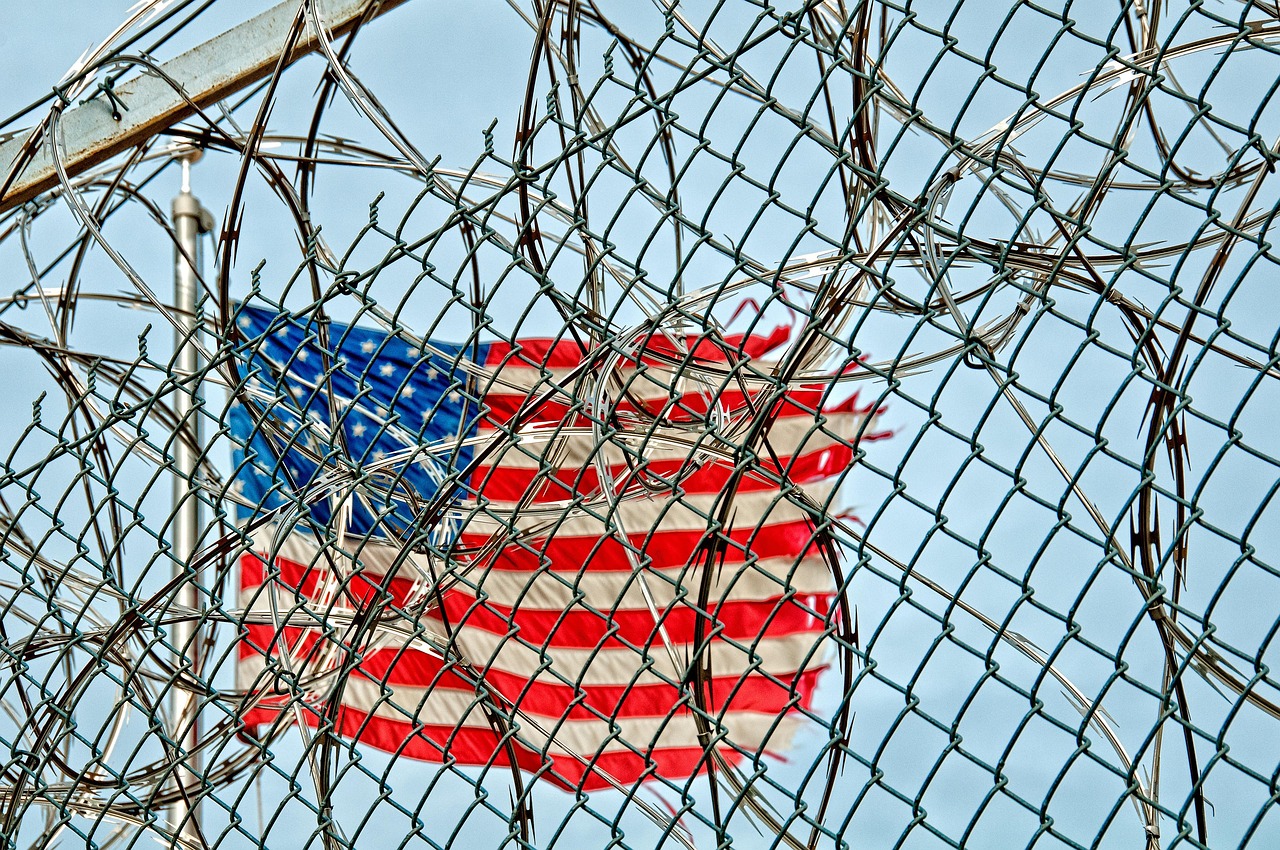
prison-370112_1280Introducing sweeping changes, U.S. Citizenship and Immigration Services (USCIS) has expanded its role by gaining law enforcement powers previously limited to agencies like Immigration and Customs Enforcement (ICE) and Customs and Border Protection (CBP).

Under a new final rule published today, USCIS will now recruit 1,811-classified special agents—fully empowered officers with authority—to investigate, arrest, and prosecute individuals violating U.S. immigration laws.

What’s Changed?


  • Law Enforcement Authority: The newly designated USCIS special agents are authorized to carry firearms, execute search and arrest warrants, make arrests, and use force—including in pursuit and potentially lethal situations—under standard federal law enforcement protocols.
  • Operational Autonomy: Previously, USCIS investigations—especially those involving criminal violations—were referred to Immigration and Customs Enforcement (ICE).
  • Enforcement Agency: Now, USCIS itself can manage law enforcement investigations from start to finish, including investigating civil and criminal violations within the jurisdiction of USCIS and ordering expedited removal when warranted.

Continue reading

raul-najera-TAqspfWom04-unsplash-scaledOn Friday August 15th, the U.S. Citizenship and Immigration Services (USCIS) released a new policy memorandum (PM-602-0188) increasing the scrutiny of applications for U.S. citizenship, as part of the Trump administration’s latest efforts to tighten eligibility for naturalization.

Specifically, USCIS has directed immigration officers to evaluate additional factors when assessing whether applicants demonstrate “good moral character,” a key requirement for naturalization, alongside passing English and civics tests.

The requirement of “good moral character” is typically met when applicants have no criminal history or have not engaged in conduct that would disqualify them from U.S. citizenship, such as committing violent crimes or aggravated felonies.

Friday’s policy memorandum however expands this determination stating that the “good moral character” assessment must involve more than a “cursory mechanical review focused on the absence of wrongdoing.” The expanded policy will now require “a holistic assessment of an alien’s behavior, adherence to societal norms, and positive contributions that affirmatively demonstrate good moral character.”

This directive mandates greater scrutiny of factors that could show a lack of “good moral character,” which go beyond the crimes and disqualifying conduct previously taken into consideration by USCIS.

Continue reading

pieter-van-de-sande-r6BdUpN_iSk-unsplash-scaledPresident Trump’s first 100 days in office have been marred by controversial actions targeting both legal and illegal immigration.

In its latest move, the Trump administration is going even further by targeting “sanctuary” cities which are state and local jurisdictions that limit their cooperation with federal immigration law enforcement officials. “Sanctuary” cities have been known to enact policies that prohibit the detention of individuals solely based on their immigration status and restrict the sharing of information about immigrants with federal authorities.

To force them into compliance, the Trump administration has begun filing lawsuits against sanctuary cities seeking to penalize them for their disobedience.

The first of these lawsuits targets Colorado and Denver for impeding federal immigration authorities from carrying out deportations. Denver is one of many states with state laws that prevent state and local officials from cooperating with federal immigration authorities. For instance, a Denver state law prevents the use of the city’s resources to assist with immigration enforcement, while a separate executive order establishes Denver as a “sanctuary city,” welcoming undocumented immigrants.

If Trump has it his way, the lawsuit would undo Colorado’s sanctuary state laws by declaring them unconstitutional and prohibiting their enforcement.

Interestingly, in responding to the lawsuit, the governor of Colorado Jared Polis denied Colorado’s status as a sanctuary state and said that Colorado regularly cooperates with federal law enforcement authorities.

Continue reading

donald-trump-4921211_1280On April 28th, President Donald Trump signed two new executive orders that significantly impact U.S. immigration policy and enforcement.

These presidential actions are a continued effort to prioritize national security by enhancing law enforcement capabilities and imposes penalties on “sanctuary” cities that limit cooperation with federal immigration authorities.

  • Strengthening and Unleashing America’s Law Enforcement to Pursue Criminals and Protect Innocent Citizens

The first executive order entitled Strengthening and Unleashing America’s Law Enforcement to Pursue Criminals and Protect Innocent Citizens,” empowers state and local law enforcement agencies to take stronger action against crime by expanding their authority and increasing investment in prison infrastructure. It also holds state and local officials accountable for obstructing criminal law enforcement or violating civil rights.

Specifically, it directs the Attorney General to prosecute officials who

willfully and unlawfully direct the obstruction of criminal law, including by directly and unlawfully prohibiting law enforcement officers from carrying out duties necessary for public safety and law enforcement; or

unlawfully engage in discrimination or civil-rights violations under the guise of “diversity, equity, and inclusion” initiatives that restrict law enforcement activity or endanger citizens.

Continue reading

arrested-8303916_1280In the latest clash between the Trump administration and the judiciary—Milwaukee County Circuit Court Judge Hannah Dugan has been arrested by agents from the Federal Bureau of Investigation (FBI) for accusations of helping a man evade immigration authorities.

This all went down on Friday April 25th after allegations that the judge directed an undocumented immigrant and his lawyer to exit her courtroom through a side door after learning that federal immigration agents were waiting in the hallway to arrest him.

Upon being spotted by agents outside the courthouse, the man was pursued on foot and was ultimately taken into custody.

These actions have prompted a showdown over allegations of obstruction of justice amid Trump’s immigration crackdowns. The U.S. attorney general Pam Bondi has accused the judge of interfering with the government’s enforcement priorities claiming the arrest sends a “strong message” to judges that they will be prosecuted if they “escort a criminal defendant out a back door.”

The circumstances surrounding the judge’s arrest remain unclear. What is known is that six federal officers descended upon the Milwaukee County Courthouse to arrest Eduardo Flores-Ruiz, a Mexican national attending a court hearing to respond to battery charges in connection with a criminal complaint filed by his roommate.

Continue reading

sam-balye-w1FwDvIreZU-unsplash-scaled

Following a wave of lawsuits from international students whose visas and Student and Exchange Visitor Information System (SEVIS) records were terminated without prior notice, the Trump administration has suddenly changed its course.

In recent weeks, U.S. Immigration and Customs Enforcement (ICE) has begun reinstating SEVIS records that were previously terminated, after seemingly recognizing that the government did not go through the appropriate channels to do so.

Over the past month, it is estimated that the State Department and ICE collectively cancelled over 300 F-1 student visas and terminated more than 4,736 SEVIS records primarily due to student encounters with law enforcement, criminal charges that were dismissed, and old misdemeanors pre-dating visa issuance. These SEVIS terminations automatically exposed students to unlawful presence in the United States, and the risk of deportation.

It was further discovered that ICE utilized AI assisted programs to screen the social media posts of F-1 international students and terminated their legal status based on antisemitic activity or alleged support for terrorist organizations such as Hamas and Hezbollah.

In response, students across the country sued the government to preserve their status, leading federal judges to issue a series of emergency orders to stop the government from cancelling visas and SEVIS records.

Continue reading

student-5473769_1280F-1 International Students at university campuses across the country have been rocked by alarming reports that their visas and SEVIS records have been suddenly terminated by U.S. Immigration and Customs Enforcement (ICE), without any prior notice to the university or the student.

This new wave of SEVIS terminations which began early this month has led to a string of lawsuits filed in federal district court, challenging the legality of the terminations.

School officials became aware of terminated F-1 student records only after conducting checks of the Student & Exchange Visitor Information System (SEVIS) system. The records of those impacted simply state that the visa revocations were due to an immigration status violation.

The following three generic classifications have been provided for the terminations:

  • Termination based on serious adverse foreign policy consequences
  • Student identified in a criminal records check
  • Student identified in criminal check and/or has had their visa revoked

No further details regarding the reason for the terminations have been provided by the government, nor were school officials notified of actions taken.


What is SEVIS?


The Student and Exchange Visitor Information System (SEVIS) is an online system used by the U.S. Department of Homeland Security (DHS) to maintain information on Student and Exchange Visitor Program (SEVP)-certified schools, F-1 and M-1 students who come to the United States to begin a program of student.

Designated school officials use SEVIS to issue Forms I-20 to specific nonimmigrants to obtain F or M status while enrolled at the school and to satisfy their legal responsibilities.

Continue reading

criminal-8444883_1280The unthinkable has now become a reality. In a recent court filing, the U.S. government disclosed that the Internal Revenue Service (IRS) has agreed to disclose protected tax records to aid Immigration and Customs Enforcement (ICE) in the mass deportation of undocumented immigrants.

The existence of this agreement was initially reported by the New York Times and was revealed in response to a lawsuit brought by Centro de Trabajadores Unidos and Immigrant Solidarity Dupage two immigrant worker organizations, against the IRS to prevent them from engaging in the unauthorized disclosure of taxpayer information for purposes of immigration enforcement.

Under the terms of the deal, ICE officials can request information from the IRS about undocumented immigrants they are investigating for failing to leave the country after receiving a final order of removal from a judge.

This news has caused panic among undocumented immigrants who do not want to file their taxes for fear of being deported.

Many will certainly be discouraged from filing their taxes as they have typically done using an Individual Taxpayer Identification Number (ITIN). An ITIN number is issued by the IRS to people who are not citizens and are not otherwise eligible to receive a Social Security number to comply with their tax obligations.

Continue reading

judge-7602999_1280Last week the United States Citizenship and Immigration Services (USCIS) released a new policy memorandum that requires the agency to initiate removal proceedings after it denies an application for an immigration benefit, if the foreign national is no longer lawfully present in the United States.

Importantly, the memo exempts certain individuals including beneficiaries of employment-based petitions, but it does not exempt dependent family members.

The memorandum also broadens USCIS’s authority to begin removal proceedings for certain foreign nationals with previous criminal charges, arrests, or convictions.

It is effective immediately.

How will USCIS implement this policy?


Under this policy, USCIS will initiate removal proceedings against a foreign national by issuing a Notice to Appear (NTA) after it has denied an application for an immigration benefit, if the foreign national no longer has a lawful basis to remain in the United States.

The issuance of a Notice to Appear (NTA) commences removal (deportation) proceedings in immigration court. Those who are issued an NTA must appear on the scheduled date before a judge who will decide whether the foreign national has a lawful basis to remain in the country or should be removed.

Traditionally, Notices to Appear (NTAs) have been issued by Immigration Customs and Enforcement (ICE) and Customs and Border Protection (CBP) officials.

However, USCIS also has the authority to issue NTAs in limited circumstances defined in policy memorandums issued by the agency.

Continue reading

donald-2911302_1280La administración Trump planea revocar la libertad condicional CHNV dejando a miles sin estatus legal


En un sorprendente giro, CBS News ha publicado nueva información sobre planes inminentes de la administración Trump para revocar el estatus legal de aquellos a quienes se les concedió un permiso de permanencia temporal en el país a base de los programas para los cubanos, haitianos, nicaragüensens, y venezolanos (conocidos como CHNV).

Se estima que más de 530,000 cubanos, haitianos, nicaragüenses y venezolanos se encuentran actualmente en los EE. UU. bajo estos programas.

¿Qué es la permanencia temporal CHNV?


El programa de permanencia temporal CHNV fue promulgado por primera vez en 2023 por la administración Biden. Al igual que el programa de permanencia temporal de “Unidos por Ucrania,” los ciudadanos de los países que calificaban (Cuba, Haití, Nicaragua y Venezuela) debían tener un patrocinador en los EE. UU., pasar verificaciónes de seguridad, y cumplir con otros criterios para obtener la admisión a los EE. UU.

A los admitidos se les concedió la entrada a los EE. UU. por un período temporal de hasta dos años, incluyendo la capacidad de solicitar autorización de empleo temporal con el Servicio de Ciudadanía e Inmigración de los EE. UU. (USCIS).

Después de la orden ejecutiva firmada por el Presidente Trump titulada “Asegurando Nuestras Fronteras,” el dia 28 de enero USCIS dejó de aceptar el Formulario I-134A, solicitud para ser patrocinador para estos programas de permanencia temporal a la espera de revisiones adicionales.

Esta fue la primera señal de problemas para el programa CHNV. También vale la pena destacar que la página web de permanencia temporal CHNV ya no está disponible en el sitio web de USCIS.

Aviso del DHS Para Revocar CHNV


Según documentos internos del gobierno revisados ​​por CBS News, el Departamento de Seguridad Nacional pronto publicará un aviso en el Registro Federal poniendo un fin a los programas de permanencia temporal de CHNV y revocando el estado de permanencia temporal de todos a quienes se les concedió la entrada a los Estados Unidos bajo los programas de permanencia temporal de CHNV.

Estas personas serán sometidas a un proceso de deportación si no tienen ningún otro fundamento legal para permanecer en el país.

Qué significa esto:

  • Aquellos cuya clasificación de permanencia temporal sea revocada y que no tengan otro estatus migratorio, serán inmediatamente inelegibles para permanecer en los Estados Unidos y ya no podrán trabajar de manera legal.
  • Deportaciones aceleradas: El Departamento de Seguridad Nacional ha ampliado los procedimientos de deportación acelerada, dirigidos a personas sin estatus legal
  • Vías legales alternativas: aquellos en los EE. UU. bajo permanencia temporal CHNV deben explorar vías legales alternativas para permanecer en los EE. UU. o prepararse para partir.

Continue reading