Articles Posted in Families

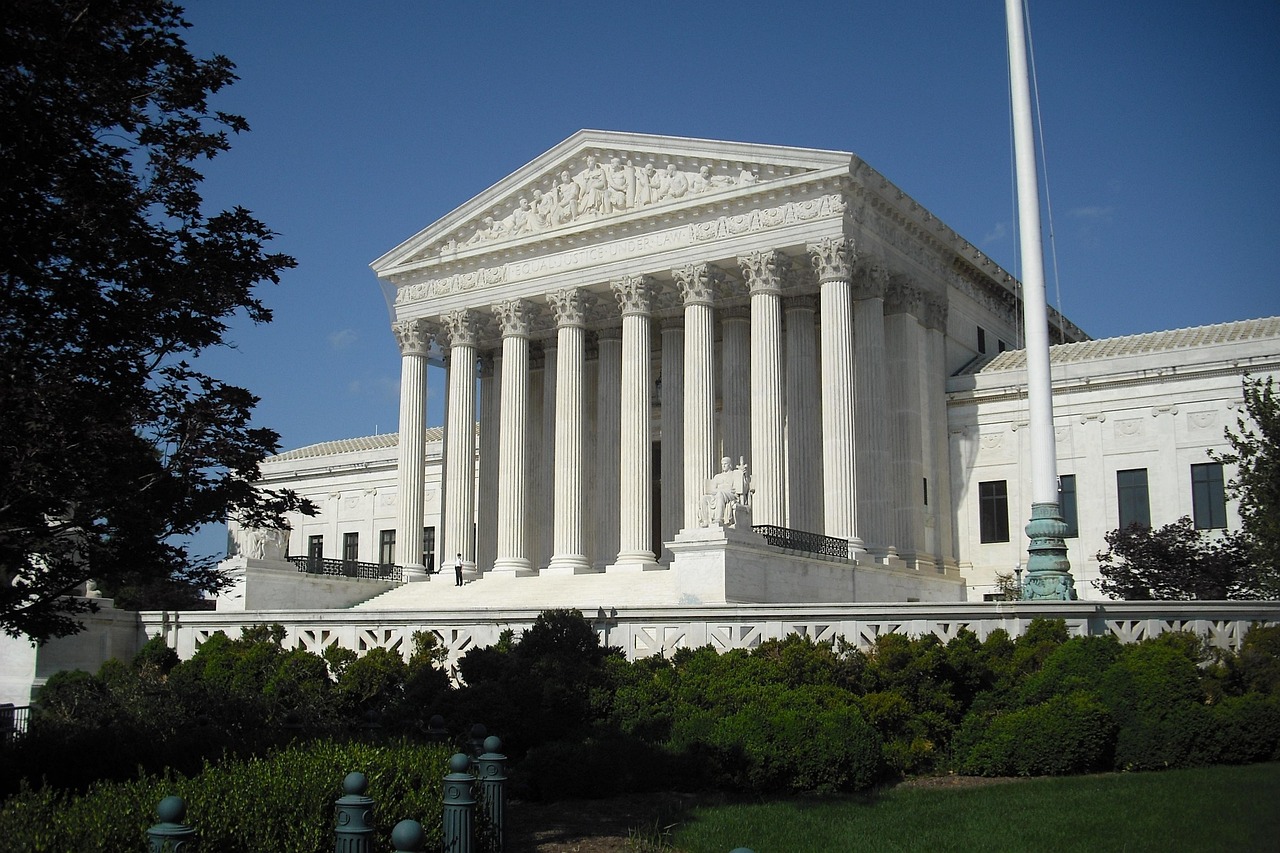
us-1978465_1280Last week, the U.S. Supreme Court handed down a troubling decision that could strip legal status from hundreds of thousands of Venezuelans currently living in the United States under Temporary Protected Status (TPS).

On Friday, the Court granted the Trump administration’s request to halt a lower court ruling that found the administration’s cancellation of TPS protections for Venezuelans unlawful. The unsigned order from the Court effectively allows the government to proceed, for now, with its plans to revoke temporary protections that had shielded Venezuelan nationals from deportation and granted them employment authorization.

TPS was created in 1990 as a humanitarian safeguard for individuals whose home countries are experiencing extraordinary crises such as armed conflict, environmental disasters, or other temporary but severe disruptions. Venezuela was designated for TPS in 2021 under President Biden, in response to the country’s severe economic collapse, widespread human rights abuses, and political instability.

Since then, approximately 300,000 Venezuelans have relied on that protection to live and work legally in the U.S., building lives, paying taxes, and raising families.

Trump Administration Moves to Strip Venezuela’s TPS Designation


But the political tides have shifted. When the Trump administration returned to office, it appointed Kristi Noem as Secretary of Homeland Security. Earlier this year, Noem moved to revoke Venezuela’s TPS designation, arguing that conditions in the country had improved and that continuing the program was no longer in the national interest. That decision sparked immediate legal challenges. A coalition of Venezuelan TPS recipients and advocacy groups sued, claiming the administration’s actions were arbitrary, rushed, and in violation of federal law.

Continue reading

pumpkin-5517221_1280We are pleased to report that today the U.S. Department of State’s Bureau of Consular Affairs published the October 2025 Visa Bulletin.

In this blog post, we breakdown the movement of the employment-based and family-sponsored categories in the coming month.


USCIS Adjustment of Status


For adjustment of status filings to permanent residence in the month of October, USCIS will be using the Dates for Filing Chart for the employment-based and family-sponsored categories.


Highlights of the October 2025 Visa Bulletin


At a Glance

What can we expect to see in the month of October?

Employment-Based Categories


Final Action Advancements


  • At the start of the new fiscal year in October, the Final Action Dates for several EB-1, EB-2 and EB-3 countries will move forward, but none will advance by more than three and a half months, except for two notable exceptions:
    • EB-3 Other Workers China which will advance by 7 months and
    • The Final Action Date for EB-5 India will advance by almost 14 months

Continue reading

statue-9782657_1280On Tuesday, August 19th, U.S. Citizenship and Immigration Services (USCIS) issued updated policy guidance clarifying that immigration officers will assess a range of factors when determining whether to grant a favorable exercise of discretion in the green card process—signaling a tougher stance that may create additional hurdles for applicants seeking approval.

Even where a person has met all eligibility requirements for a green card, officers are required to conduct a discretionary analysis to determine whether an application should be approved. This exercise of discretion involves weighing positive factors against negative ones and considering the totality of the circumstances of each applicant’s case.

Among these factors, immigration officers will need to consider the “[legality of] past requests for parole,” “any involvement in anti-American or terrorist organizations,” and “evidence of antisemitic activity,” which are counted as negative factors weighing against a favorable exercise of discretion.

This guidance is also meant to provide clearer guidance to immigration officers on the “substantial negative discretionary weight” that should be given in cases where an individual has “endorsed, promoted, supported, or otherwise espoused the views of a terrorist organization or group.” This includes those supporting or promoting anti-American sentiments, antisemitic terrorism, terrorist groups with antisemitic agendas, or antisemitic beliefs.

Continue reading

the-now-time-KXUKLB-_Sb0-unsplash-scaledOn August 1st the U.S. Citizenship and Immigration Services (USCIS) announced new policies that could make immigrants applying for green cards through family-based petitions more vulnerable to deportation.

The changes appear in various updates to USCIS’ Policy Manual which states that immigration officials can begin removal proceedings for immigrants who lack legal status and apply to become permanent residents through family-based petitions.

According to the Policy Manual, “if USCIS determines the alien beneficiary is removeable and amenable to removal from the United States, USCIS may issue a Notice to Appear (NTA) [in immigration court] placing the beneficiary in removal proceedings. Petitioners and alien beneficiaries should be aware that a family-based petition accords no immigration status nor does it bar removal.”

The new policy went into effect immediately and applies to pending requests for a green card, and those filed on or after August 1st.

While the practical impact of this policy is yet to be seen, it provides immigration officials with more discretion to initiate removal proceedings even where a green card application is pending with USCIS, for those who entered the U.S. illegally, overstayed a U.S. visa, or otherwise failed to maintain their legal status.

These policy changes underscore the importance of maintaining underlying legal status throughout the green card process. Those who lack legal status or who lost their status during the green card process may be most at risk.

Continue reading

calendar-1559935_1280We are pleased to report that today the U.S. Department of State’s Bureau of Consular Affairs published the August 2025 Visa Bulletin.

In this blog post, we breakdown the movement of the employment-based and family-sponsored categories in the coming month.


USCIS Adjustment of Status


For employment-based preference categories, the U.S. Citizenship and Immigration Services (USCIS) has confirmed it will continue to use the Final Action Dates chart to determine filing eligibility for adjustment of status to permanent residence in the month of August.

For family-sponsored preference categories, USCIS will also continue to use the Dates for Filing chart to determine filing eligibility for adjustment of status to permanent residence in the month of August.

Please click here for more information.


Highlights of the August 2025 Visa Bulletin


At a Glance

What can we expect to see in the month of August?


Employment-Based Categories


Final Action Advancements

EB-2 Members of the Professions and Aliens of Exceptional Ability

  • EB-2 Worldwide, Mexico, Philippines retrogressed by 1.4 months to September 1, 2023

EB-3 Professionals and Skilled Workers and Other Workers

  • EB-3 India will advance by 1 month to May 22, 2013

EB-5 Unreserved Categories (C5, T5, I5, and R5)

  • India will advance by 6.5 months to November 15, 2019
  • China will advance by 22.5 months to December 08, 2015

Continue reading

Gavin_Newsom_by_Gage_Skidmore

Attribution: Gage Skidmore

On Friday July 11, 2025, a federal judge ruled that the government’s ongoing immigration raids in Southern California and its denial of legal counsel to detained immigrants likely violates the Constitution.

In so ruling, the court issued two temporary restraining orders (TROs) barring the Department of Homeland Security (DHS) and other federal agencies from continuing these actions in the counties of Los Angeles, Orange, Ventura, Riverside, San Bernardino, Santa Barbara and San Luis Obispo. (Pedro Vasquez Perdomo v. Kristi Noem (2:25-cv-05605)

The first TRO prohibits immigration agents from stopping individuals without reasonable suspicion and bars law enforcement from relying solely on the following factors—alone or in combination—to form reasonable suspicion for a stop including (1) apparent race or ethnicity (2) speaking Spanish or English with an accent (3) presence in a particular location like a bus stop, car wash, day laborer pick up site, or agricultural site, or (4) the type of work the person does.

The second TRO orders DHS to provide access to counsel on weekdays, weekends, and holidays for those who are detained in B-18, the basement of a federal building in downtown Los Angeles located at 300 North Los Angeles Street.

It further requires immigration officials to develop guidance on how agents and officers should determine whether “reasonable suspicion” exists when conducting stops and to implement training for officers involved in immigration operations.

In addition to immigration officers, the TROs apply to the FBI and Justice Department, who are named in the lawsuit and are involved in immigration enforcement actions.

Continue reading

haiti-162313_1280On Friday June 27, 2025, the Secretary of Homeland Security Kristi Noem announced that the government will not renew Temporary Protected Status (TPS) benefits for Haiti once the current designation expires on August 3, 2025.

Beneficiaries will be granted a 60-day transition period to make preparations to either depart the United States or seek alternative lawful immigration status in the United States, before Haiti’s designation officially terminates on September 2, 2025.

Employment Authorization

passport-8621284_1280

Harvard Travel Ban Blocked by Federal Judge

Earlier this month President Trump had signed an Executive Order suspending the entry of all nonimmigrants and exchange visitors attending Harvard University, for a period of 6 months starting June 4th (the effective date of the proclamation).

Those affected by the executive order were F, J, and M visa holders outside of the United States as of the date of the proclamation. The suspension did not apply to nonimmigrants entering the United States to attend other universities.

Shortly after the executive order was issued, a federal judge granted a preliminary injunction, temporarily halting its enforcement until the court can rule on the merits of the case.

Following the court’s actions, the State Department ordered embassies and consulates around the world to resume visa processing for Harvard University students and exchange visitors.

As a result, Harvard students can breathe easier. While the preliminary injunction remains in effect, consulates are barred from denying visas to Harvard students and exchange visitors, and visa holders attending Harvard cannot be refused entry to the United States.

For more information, please click here.

Continue reading

button-7850713_1280

We are pleased to report that today the U.S. Department of State’s Bureau of Consular Affairs published the July 2025 Visa Bulletin.

In this blog post, we breakdown the movement of the employment-based and family-sponsored categories in the coming month.


USCIS Adjustment of Status


For employment-based preference categories, the U.S. Citizenship and Immigration Services (USCIS) has confirmed it will continue to use the Final Action Dates chart to determine filing eligibility for adjustment of status to permanent residence in the month of July.

For family-sponsored preference categories, USCIS will also continue to use the Dates for Filing chart to determine filing eligibility for adjustment of status to permanent residence in the month of July.

Please click here for more information.


Highlights of the July 2025 Visa Bulletin


At a Glance

What can we expect to see in the month of July?

Employment-Based Categories


Final Action Advancements


EB-1 Aliens of extraordinary ability, Outstanding Professors and Researchers, and Certain Multinational Managers or Executives

  • EB-1 China will advance by 1 week to November 15, 2022

EB-2 Members of the Professions and Aliens of Exceptional Ability

  • EB-2 China will advance by 2 weeks to December 15, 2020

Continue reading

united-states-8911597_1280After months of speculation and buildup, President Trump’s long-anticipated travel ban has finally arrived.

Issued by executive order on June 4th President Trump’s travel ban entitled “Restricting the Entry of Foreign Nationals to Protect the United States from Foreign Terrorists and Other National Security and Public Safety Threats,” closely mirrors the leaked draft that first surfaced in early March through the New York Times.

That draft hinted at sweeping restrictions targeting so-called “red,” “orange,” and “yellow” countries—coded designations that formed the backbone of President Trump’s proposed directive.

While there are notable differences, as predicted, the administration has framed the ban as a national security measure, but critics argue it remains susceptible to being challenged or overturned through lawsuits that may soon be filed in federal court.

Here’s what you need to know.

President Trump’s travel ban goes into effect today Monday June 9, 2025, at 12:01 am Eastern Daylight time.


Who it Affects


Full Suspension on Nationals from Countries of Concern

The travel ban temporarily suspends the entry of both immigrants and non-immigrants from 12 designated countries who are outside the United States and do not have a valid visa on the effective date of the proclamation, including Afghanistan, Burma, Chad, the Republic of the Congo, Equatorial Guinea, Eritrea, Haiti, Iran, Libya, Somalia, Sudan, and Yemen.

However, several key exceptions apply for lawful permanent residents (LPRs), immediate family members of U.S. citizens, dual nationals, athletes and teams competing in major international sporting events such as the World Cup and the Olympics, and others (a full list of exceptions is provided below).

Continue reading