Articles Posted in Nonimmigrant Visas

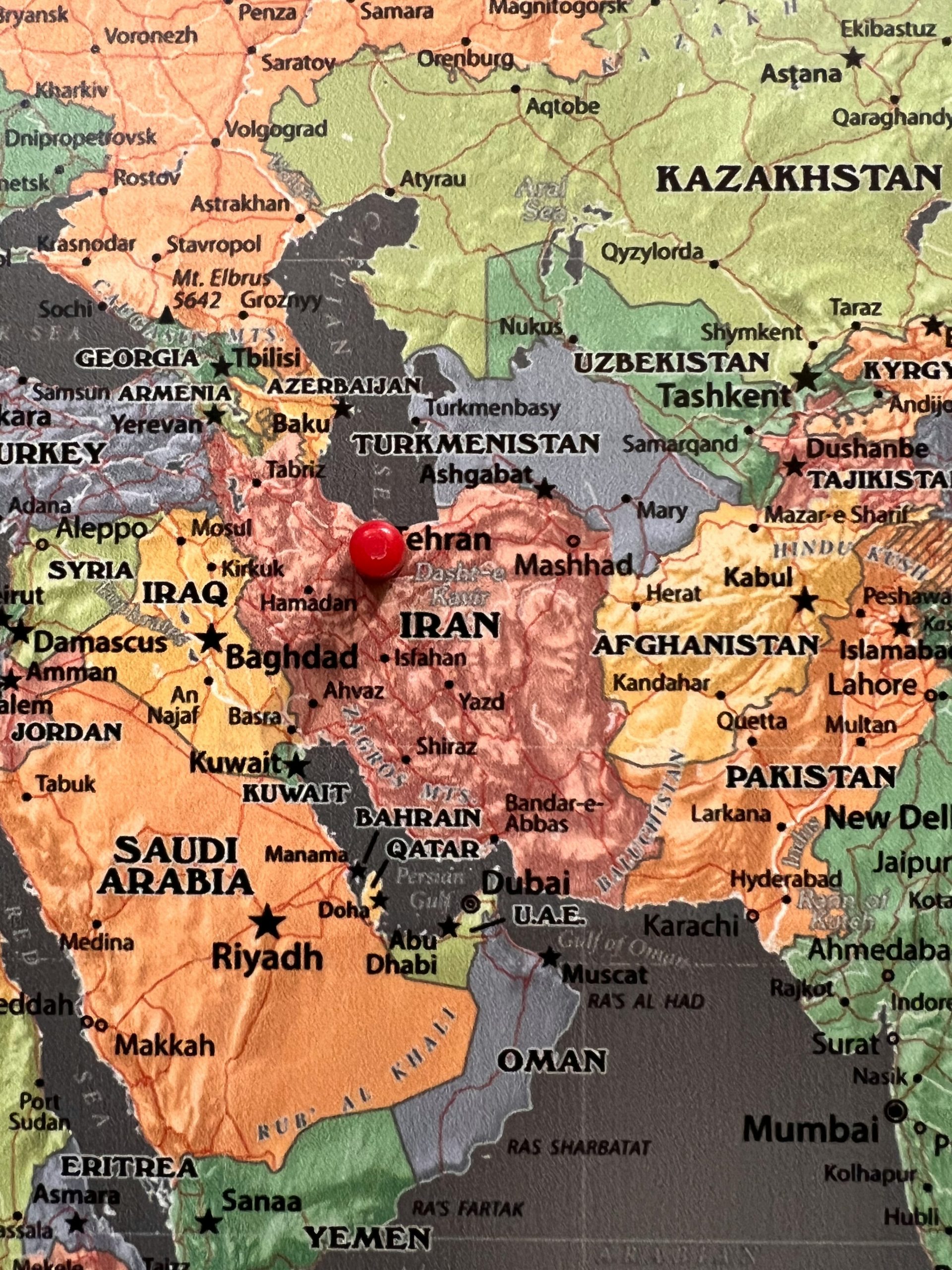
gdj-borders-2099239_1280The U.S. Department of Homeland Security (DHS) has officially terminated the Temporary Protected Status (TPS) designation for Yemen, ending protections that shielded Yemeni nationals from deportation and allowed them to work legally in the United States.

The change, announced on February 13, 2026, takes effect 60 days after the notice is published in the Federal Register.

Yemen was first designated for TPS in September 2015 due to severe armed conflict that made return unsafe. Since then, Yemeni nationals in the U.S., roughly 1,300–1,400 people were able to live and work here under this humanitarian status.

In announcing the termination, DHS said its review found that Yemen no longer meets the law’s requirements for TPS and that ending the designation was in the national interest. Affected individuals who have no other lawful status will have the 60-day wind-down period to either depart the U.S. voluntarily or pursue alternative immigration pathways.

The decision marks another step in the administration’s broader effort to roll back TPS protections that have been in place for decades for people from countries experiencing war, natural disaster, or other extraordinary conditions.

Continue reading

barelydevi-bakery-4737781_1280Beginning March 1, 2026, the U.S. Small Business Administration (SBA) will restrict its flagship loan programs—like the 7(a) and 504 loans—to businesses that are 100 % owned by U.S. citizens or U.S. nationals whose primary residence is in the United States.

Under the revised policy, lawful permanent residents (green card holders) are no longer permitted to hold any ownership stake (direct or indirect) in businesses seeking SBA‑backed loans.

A notice published by the agency earlier this month explains, “SBA is requiring that 100% of all direct and/or indirect owners of a small business applicant be U.S. Citizens or U.S. Nationals who have their Principal Residence in the United States, its territories or possessions.”

This rule removes a long-standing exception that previously allowed limited minority ownership of up to 5% by non‑citizens (such as E-2 investors) or green card holders under certain conditions.

Officials say the new rules implement President Trump’s January 2025 executive order, “Protecting the American People Against Invasion,” described as an effort to enforce U.S. immigration laws and safeguard public safety.

Continue reading

arrow-9487436_1280The U.S. Citizenship and Immigration Services (USCIS) recently announced that the agency will increase the fees for premium processing service for certain employment-based applications and petitions on March 1, 2026 to reflect inflationary adjustments.

Those who plan to file a request for premium processing postmarked on or after March 1, 2026, must include the new fee for the specific benefit requested.

The new premium processing fees are as follows:

Case type  Current Premium Processing Fee New Premium Processing Fee Increase

Form I-140
$2,805 $2,965 $160

Form I-129
$2,805
$1,685 (H-2B & R-1)
$2,965
$1,780 (H-2B or R-1)
$160
$95

Form I-539
$1,965 $2,075 $110

Form I-765
(F-1 OPT)
$1,685 $1,780 $95

Applicants and employers who wish to avoid the upcoming increase in the premium processing fee should make sure to submit their requests well in advance of the March 1st deadline.

Submitting early not only helps lock in the current lower fee but also reduces the risk of processing delays that could occur as the fee change approaches. Careful planning and timely submission are essential for those looking to take advantage of the existing rate before the new, higher fee takes effect.

For more information, please click here.


Contact Us. If you would like to schedule a consultation, please text 619-483-4549 or call 619-819-9204.


Helpful Links


JOIN OUR NEW FACEBOOK GROUP


Need more immigration updates? We have created a new facebook group to address the impact of the new executive orders and other changing developments. Follow us there!

children-5606239_1280
Nearly 200 immigrants, including six from Massachusetts, have filed a federal lawsuit against the U.S. government over a sudden pause in processing green cards, citizenship applications, and asylum petitions. The pause was announced by U.S. Citizenship and Immigration Services (USCIS) shortly after the Trump administration expanded travel restrictions to 39 countries—20 of them facing partial restrictions.

Why USCIS Paused Green Card Processing for Travel Ban Countries


USCIS has paused the processing of green card applications for individuals from countries subject to the travel ban to ensure that all applicants are thoroughly vetted before being allowed to enter or remain in the United States. The agency stated that the pause allows it to review and strengthen security screenings for people from the affected countries. According to the Department of Homeland Security, the temporary halt is intended to maximize the effectiveness of background checks and other vetting procedures, with the goal of protecting public safety while the agency implements the updated immigration restrictions.

hiring-1977914_1280The U.S. Department of Homeland Security (DHS) has issued a final rule that replaces the longstanding random H‑1B cap lottery with a wage‑level‑based weighted selection system, set to take effect in time for the fiscal year 2027 H‑1B cap season beginning in March 2026.

Under the new rule, beneficiaries registered for the H‑1B cap will be entered into the selection pool with entries weighted according to the wage offered by their prospective employer under the Department of Labor’s four‑level prevailing wage system.

A beneficiary offered a Level4 wage receives four entries in the selection pool, Level3 three entries, Level2 two entries, and Level1 one entry, giving higher‑wage positions statistically greater odds of selection than lower‑wage positions.

Employers must indicate the appropriate wage level, occupational code, and work location in each registration, and U.S. Citizenship and Immigration Services (USCIS) may deny or revoke petitions if it determines that an incorrect wage level was indicated to unfairly increase selection odds.

The rule is scheduled to take effect 60 days after its December29 publication in the Federal Register, though it may face court challenges before implementation.

Requirements for Offered Wages


H‑1B cap registrations will reflect the OEWS wage level corresponding to the wage offered to the prospective employee. When submitting a registration, the sponsoring employer must select the highest OEWS wage level that the offered wage meets or exceeds for the relevant occupation in the intended work location.

If the employee will work in multiple locations, the employer must use the lowest applicable OEWS wage level. Additionally, if multiple employers register the same foreign national, that individual will be entered into the H‑1B lottery using the registration with the lowest prevailing wage level.

Continue reading

nils-huenerfuerst-xkq3mbthlh0-unsplash-scaledThe U.S. government has issued a revised travel ban that takes effect at 12:01 a.m. ET on January 1, 2026, significantly expanding restrictions on visa issuance for nationals of 39 countries and individuals travelling with Palestinian Authority–issued travel documents.

Under the new presidential proclamation, immigrant and nonimmigrant visas are fully suspended for nationals of 19 countries, which now include seven newly added nations. An additional 19 countries face partial restrictions — limiting immigrant visas and certain nonimmigrant categories (e.g., B, F, M, J visas). One country, Turkmenistan, now faces only immigrant visa restrictions.

Importantly, the ban does not revoke existing visas or apply to foreign nationals already in the United States on January 1, 2026, with valid visas. Other exceptions include U.S. lawful permanent residents, dual nationals travelling on a non-designated passport, certain diplomats, and athletes travelling for major events.

This expanded travel ban marks one of the most sweeping visa restrictions in recent U.S. policy, with potential impacts on U.S. employers, and visa holders.


What are the countries subject to full restrictions


The proclamation adds seven countries to the existing 12 countries whose nationals are barred from both immigrant and nonimmigrant visa issuance. The initial 12 countries with continued full visa restrictions are:

  • Afghanistan
  • Burma
  • Chad
  • Republic of Congo
  • Equatorial Guinea
  • Eritrea
  • Haiti
  • Iran
  • Libya
  • Somalia
  • Sudan
  • Yemen

The proclamation adds the following seven countries to the full restriction list:

  • Burkina Faso
  • Laos (previously on the June travel ban “partially restricted” list)
  • Mali
  • Niger
  • Sierra Leone (previously on the June travel ban “partially restricted” list)
  • South Sudan
  • Syria

Continue reading

mobile-1087845_1280

DHS Ends Family Reunification Parole Programs

On December 12, 2025, the Department of Homeland Security (DHS) announced that it is terminating all categorical Family Reunification Parole (FRP) programs for citizens of Colombia, Cuba, Ecuador, El Salvador, Guatemala, Haiti, and Honduras, including their immediate family members.

These programs allowed certain relatives of U.S. citizens and permanent residents to enter the United States on parole while awaiting completion of the immigrant visa process.

DHS described the move as an effort to end what they described as the “abuse of humanitarian parole,” arguing that these programs allowed individuals to bypass traditional immigration procedures without sufficient vetting. Under the new policy, parole will be granted on a case-by-case basis.

The termination takes effect December 15, 2025, and parole for individuals already admitted under FRP will generally expire on January 14, 2026, unless they have a pending Form I-485 Application to Adjust Status that is postmarked or electronically filed on or before December 15 and it is still pending on January 14, 2026.

If an individual has a pending Form I-485, their parole will remain valid until either their period of parole expires or USCIS makes a final decision on their pending Form I-485, whichever is sooner. If the Form I-485 is denied, the period of parole will be terminated, and they will be required to depart the United States or seek relief through alternative legal pathways.

Continue reading

ai-generated-8775233_1280On October 3, 2025, a coalition of labor unions, healthcare providers, academic institutions, and religious groups, filed a lawsuit urging a federal court to strike down the $100,000 fee imposed on new H-1B petitions by the Trump administration for workers outside the United States.

What the Lawsuit Says


The lawsuit, filed in the U.S. District Court for the Northern District of California, argues that the fee which took effect September 21, violates both the Immigration and Nationality Act and the Administrative Procedure Act. Plaintiffs claim the President lacks authority to unilaterally impose a fee of this kind, especially one designed to raise revenue or direct government spending.

The Trump administration’s sudden rollout of the H-1B fee caused immediate disruptions:

  • Workers abroad scrambled to return to the United States, paying steep travel costs.
  • Others inside the U.S. canceled planned international travel.
  • Some even asked to deplane midflight upon hearing the news.

The fee is seen by critics as a threat to institutions that rely heavily on skilled foreign workers—such as universities, health systems, and religious groups—particularly in fields already facing staffing shortages.

Continue reading

people-4009327_1280On September 24, 2025, the Department of Homeland Security (DHS) issued a proposed rule that would change the current selection process for selecting H-1B visa petitions subject to the annual numerical limits established by the Immigration and Nationality Act.

Under the proposed rule, the current random lottery system would be replaced with a wage-based selection process that prioritizes the selection of H-1B workers offered higher salaries by sponsoring employers.

The goal is to better align the H-1B program with U.S. labor market needs by increasing the chances of selection for higher-paid, and presumably higher-skilled, foreign workers. This change aims to reduce the potential for abuse in the system, discourage mass low-wage registrations, and ensure that the most economically valuable positions are filled through the H-1B program.

What may change


Currently, the U.S. government selects H-1B visa petitions through a randomized lottery system due to the annual numerical cap on available visas. Employers first submit electronic registrations for each prospective H-1B worker during a designated registration period, typically held in March. Because the demand for H-1B visas consistently exceeds the supply, the U.S. Citizenship and Immigration Services (USCIS) conducts a lottery to determine which petitions can proceed with applying for H-1B visas.

There are two separate caps under the H-1B program: the regular cap of 65,000 visas and an additional 20,000 visas reserved for individuals who hold advanced degrees from U.S. institutions (commonly referred to as the master’s cap). All registered beneficiaries, including those with U.S. advanced degrees, are first entered into the regular cap lottery. After 65,000 are selected, those with U.S. master’s degrees who were not chosen in the initial round are entered into a second lottery for one of the 20,000 advanced degree slots.

This current system does not prioritize applicants based on wage levels, qualifications, or skills. Selection is purely random as long as the minimum eligibility requirements are met.

However, the Department of Homeland Security (DHS) is proposing changes that would shift the selection process to favor higher-paid workers.

Continue reading

ai-generated-9069946_1280The legal immigration landscape was shaken once again late Friday evening when the President issued a new proclamation barring new H-1B workers from entering the United States—unless their employers pay a $100,000 fee for each sponsored employee.

The proclamation took effect at 12:01 a.m. EDT on Sunday, September 21, and will remain in effect until a court order halts its implementation.

Emergency Litigation


A surge of emergency lawsuits is expected to be filed by impacted H-1B workers and their sponsoring employers, seeking a nationwide injunction to stop the implementation of the executive order. A court could issue an injunction as early as Monday. We will provide litigation updates as they develop in the coming days.

Highlights of the Executive Order


  • Effective today September 21, 2025, certain H-1B workers will be denied entry into the United States unless their employer pays a $100,000 fee on their behalf, according to the proclamation signed by President Trump late Friday.
  • Application: The ban on entry and the associated fee requirement applies only to any new H-1B visa petitions submitted after 12:01 a.m. eastern daylight time on September 21, 2025. This includes the 2026 lottery, and any other H-1B petitions submitted after 12:01 a.m. eastern daylight time on September 21, 2025.
  • The proclamation does not apply to:
    • any previously issued H-1B visas, or any petitions submitted prior to 12:01 a.m. eastern daylight time on Sept. 21, 2025.
    • does not change any payments or fees required to be submitted in connection with any H-1B renewals. The fee is a one-time fee on submission of a new H-1B petition.
    • does not prevent any holder of a current H-1B visa from traveling in and out of the United States.
  • Misuse of B Visas: The proclamation warns that individuals with approved H-1B petitions should not misuse B visas to enter the U.S. for jobs that start before October 1, 2026.
  • National Interest Exemptions: The proclamation grants the Department of Homeland Security authority to issue exemptions for individuals, specific employers, or workers in designated industries—if the agency determines that the H-1B employment serves the national interest and poses no threat to U.S. security or public welfare.
  • Termination: Absent a court order, this restriction will remain in effect for 12 months but may be extended based on recommendations from federal immigration agencies. An extension would continue the ban for individuals approved under the FY 2027 H-1B cap.
  • Changes to the Prevailing Wage: Besides restricting H-1B entry, the proclamation directs the Department of Labor to revise prevailing wage levels and prioritize H-1B approvals to high-skilled, high-paid H-1B workers.

In the hours after the proclamation was issued, chaos unfolded as H-1B visa holders, advised by their employers and legal counsel, abandoned flights and canceled international travel due to uncertainty about how the proclamation would be enforced at the U.S. border.

Adding to the uncertainty was the absence of clear guidance from immigration authorities, including the Department of Homeland Security (DHS) and Customs and Border Protection (CBP), about how the proclamation is to be enforced against current H-1B visa holders and approved beneficiaries.

Continue reading