Articles Posted in Temporary Visas

26493199526_8a6efa5192_z

Flickr Creative Commons Attribution Jeroen Akkermans

In the last months, the U.S. Department of State released two significant policy updates that impact both immigrant and nonimmigrant visa applicants. These updates focus on a core change: applicants will now be required to have their visa interviews in their place of residence or country of nationality.

This change has significant consequences for third-country nationals who have traditionally applied for U.S. visas outside their country of nationality, particularly those renewing H-1B, E, O, and L visas, as well as immigrant visa applicants outside the United States.

Immigrant Visa Applicants Must Apply in their Country of Residence


On August 28, 2025, the State Department announced that, starting November 1, 2025, immigrant visa applicants must attend their interviews at a U.S. consulate or embassy located in their country of residence, or in their country of nationality, with limited exceptions. The update applies across all immigrant visa categories, including Diversity Visas.

There are exceptions to this rule, though they are limited. Exceptions may be granted in rare cases involving humanitarian or medical emergencies, or in circumstances involving specific foreign policy considerations. Applicants residing in countries where routine U.S. visa services have been suspended or paused will need to process their case at a designated consular post, which is typically assigned by the State Department to handle cases from those particular regions.

Existing appointments for immigrant visa interviews scheduled prior to November 1st will not be cancelled or rescheduled.

Same Policy Applies to Nonimmigrant Visa Applicants


A similar change was later announced on September 6, 2025, for nonimmigrant visa applicants. Effective immediately, nonimmigrant visa applicants must also apply for their visa in their country of residence or nationality. This means that individuals cannot simply choose a different country’s embassy based on convenience or shorter wait times unless they reside there or are citizens of that country. This applies to all third country nationals who previously traveled to embassies or consulates in Mexico or Canada to renew their nonimmigrant visas.

Continue reading

interview-7323656_1280Starting September 2, 2025, the U.S. Department of State will implement major changes that limit eligibility for nonimmigrant visa interview waivers.

Under the State Department’s new revised policy, most applicants—including children under 14 and adults over 79—will be required to attend an in-person interview with a U.S. consular officer, with limited exceptions.

This new policy replaces the previous Interview Waiver Update issued on February 18, 2025, and will significantly impact individuals seeking to travel to the United States on a nonimmigrant visa including workers seeking to renew their visas.


Who Can Still Qualify for an Interview Waiver After September 2?


Although the new rules tighten overall interview requirements, certain applicants may still be eligible for an interview waiver, including:

  1. Certain Diplomatic and Official Visa Holders

Applicants under the following visa classes are exempt from the interview requirement:

  • A-1, A-2 (representatives of foreign governments)
  • C-3 (excluding attendants or personal staff)
  • G-1 through G-4 (representatives of international organizations)
  • NATO-1 through NATO-6
  • TECRO E-1 (Taipei Economic and Cultural Representative Office officials)
  1. Diplomatic or Official-Type Visa Applicants

Those applying for visas that support diplomatic or governmental missions may still be eligible for interview waivers.

  1. Applicants Renewing Certain B Visas or Border Crossing Cards

Applicants may qualify for an interview waiver if they meet all the following conditions:

Continue reading

programming-8450423_1280A new Department of Homeland Security (DHS) proposed rule known as RIN 1615-AD01 “Weighted Selection Process for Registrants and Petitioners Seeking to File Cap-Subject H-1B Petitions,” seeks to make radical changes to the selection process for new H-1B specialty occupation cap-subject visas.

On Thursday last week, the proposed rule was quietly sent to the White House Office of Information and Regulatory Affairs for review.

If approved, USCIS will publish the proposed rule in the Federal Register for public comment. Once the comment period has closed, USCIS will review the public comments and submit a final rule in the Federal Register with a future effective date.


What is the H-1B Visa Program


The H-1B visa program allows U.S. employers to temporarily hire foreign workers in specialty occupations that require specialized knowledge and at least a bachelor’s degree.

Each fiscal year, U.S. Citizenship and Immigration Services (USCIS) conducts a random lottery to select enough applicants to fill the government’s annual H-1B visa quota of 85,000 visas—65,000 for regular applicants and 20,000 allocated for workers with advanced degrees from U.S. institutions.

Due to high demand, a lottery system is used to randomly select from the pool of eligible registrations submitted by employers each spring. Selected applicants can then file full H-1B petitions for USCIS adjudication.

Continue reading

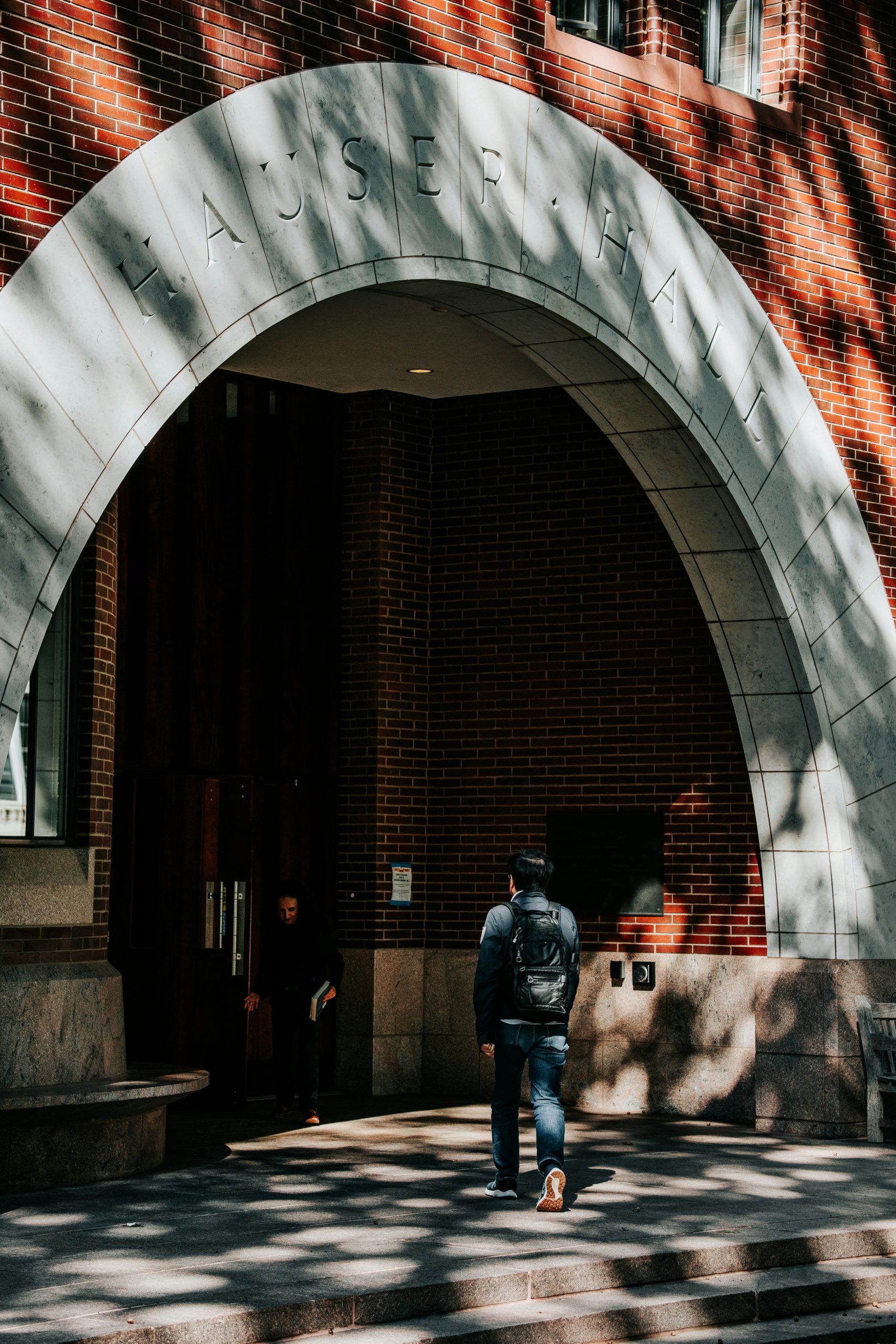
beverly-kimberly-tfiGOGEmJVI-unsplash-scaledOn June 4, 2025, President Trump continued his ongoing assault on Harvard University with a new Executive Order entitled, “Enhancing National Security by Addressing Risks at Harvard University.”

Effective June 4th, the order suspends the entry of all nonimmigrants and exchange visitors bound for Harvard University for a period of 6 months, citing national security concerns over Harvard’s failure to police foreign students and ensure that foreign nationals admitted on student and exchange visitor visas remain in compliance with Federal law.

The executive order also accuses Harvard of having extensive entanglements with foreign adversaries including China.

Who is affected?


All nonimmigrants who enter or attempt to enter the United States to begin attending Harvard University through the Student and Exchange Visitor Program (SEVP) after the effective date of the proclamation (June 4, 2025).

The executive order further empowers the Secretary of State Marco Rubio to consider in his discretion whether foreign nationals who currently attend Harvard University and are in the United States pursuant to F, M, or J visas, should have their visas revoked pursuant to the proclamation.

Who is not affected?


The suspension does not impact Harvard students who are already inside the United States with a valid student visa as of the effective date of the proclamation.

The suspension also does not apply to any alien who enters the United States to attend other universities through the Student and Exchange Visitor Program (SEVP).

It also does not apply to any alien whose entry would be in the national interest, as determined by the Secretary of State, the Secretary of Homeland Security, or their designated representatives.

Impact on Harvard Students Currently in the United States


The executive order does not:

  • Restrict change or extension of status applications filed with U.S. Citizenship and Immigration Services (USCIS)
  • Revoke existing visas, I-94, or STEM OPT work authorization status for students currently in the United States

Continue reading

united-states-8911597_1280After months of speculation and buildup, President Trump’s long-anticipated travel ban has finally arrived.

Issued by executive order on June 4th President Trump’s travel ban entitled “Restricting the Entry of Foreign Nationals to Protect the United States from Foreign Terrorists and Other National Security and Public Safety Threats,” closely mirrors the leaked draft that first surfaced in early March through the New York Times.

That draft hinted at sweeping restrictions targeting so-called “red,” “orange,” and “yellow” countries—coded designations that formed the backbone of President Trump’s proposed directive.

While there are notable differences, as predicted, the administration has framed the ban as a national security measure, but critics argue it remains susceptible to being challenged or overturned through lawsuits that may soon be filed in federal court.

Here’s what you need to know.

President Trump’s travel ban goes into effect today Monday June 9, 2025, at 12:01 am Eastern Daylight time.


Who it Affects


Full Suspension on Nationals from Countries of Concern

The travel ban temporarily suspends the entry of both immigrants and non-immigrants from 12 designated countries who are outside the United States and do not have a valid visa on the effective date of the proclamation, including Afghanistan, Burma, Chad, the Republic of the Congo, Equatorial Guinea, Eritrea, Haiti, Iran, Libya, Somalia, Sudan, and Yemen.

However, several key exceptions apply for lawful permanent residents (LPRs), immediate family members of U.S. citizens, dual nationals, athletes and teams competing in major international sporting events such as the World Cup and the Olympics, and others (a full list of exceptions is provided below).

Continue reading

engineer-4690505_1280The United States Citizenship and Immigration Services (USCIS) recently released detailed statistics and data regarding the number of beneficiaries selected during the fiscal year 2026 H-1B cap season, highlighting the highly competitive nature of the visa process.

Each year, the H-1B visa program allows U.S. employers to temporarily employ foreign workers in specialty occupations, and demand for these visas has consistently gotten tougher throughout the years.

The FY 2026 data shows a significant drop in H-1B registrants, with 126,361 fewer applicants compared to the previous year.

Overview


During the fiscal year 2026 H-1B cap season:

  • USCIS received eligible registrations for 336,153 unique beneficiaries and selected just 118,660 – or approximately 35.3% – of these beneficiaries.
  • The overall number of registrations submitted in FY 2026 decreased dramatically from 470,342 eligible registrations filed last year to just 343,981 eligible registrations filed this year.
  • On average, each beneficiary only had approximately one registration submitted on their behalf.
  • USCIS is not expected to announce a second cap lottery until at least July 2025, after the current H-1B filing period closes.

Continue reading

ai-generated-9069949_1280On May 12, 2025, Secretary of Homeland Security Kristi Noem announced that the State Department will not renew Temporary Protected Status (TPS) benefits for Afghanistan once the current designation expires on May 20, 2025.

Beneficiaries will be granted a 60-day transition period to make preparations to either depart the United States or seek alternative lawful immigration status in the United States, before Afghanistan’s designation officially terminates on July 14, 2025.

Employment Authorization

Beneficiaries with valid TPS Employment Authorization Documents (EADs) will continue to be authorized to work during the 60-day transition period.

DHS announced the agency will be automatically extending the validity of certain EADs previously issued under the TPS designation of Afghanistan through July 14, 2025.

As proof of continued employment authorization through July 14, 2025, TPS beneficiaries can present an EAD that has the notation A-12 or C-19 under Category and a “Card Expires” date of November 20, 2023, or May 20, 2025.

How We Got Here

Afghanistan was initially designated for TPS during the Biden administration on May 20, 2022. The designation was made based on the Secretary’s determination of ongoing armed conflict and extraordinary conditions in Afghanistan preventing the return of its nationals.

Continue reading

patty-zavala-TKwGZ9a6YHU-unsplash-scaledThe Department of Homeland Security has announced the implementation of its REAL ID enforcement measures at Transportation Security Administration (TSA) checkpoints nationwide as of May 7th.

Anyone 18 years and older traveling domestically within the United States must have a REAL ID-compliant state-issued driver’s license or another accepted form of identification to board a commercial flight.

According to the agency, 81 percent of travelers are already REAL ID compliant.

sam-balye-w1FwDvIreZU-unsplash-scaled

Following a wave of lawsuits from international students whose visas and Student and Exchange Visitor Information System (SEVIS) records were terminated without prior notice, the Trump administration has suddenly changed its course.

In recent weeks, U.S. Immigration and Customs Enforcement (ICE) has begun reinstating SEVIS records that were previously terminated, after seemingly recognizing that the government did not go through the appropriate channels to do so.

Over the past month, it is estimated that the State Department and ICE collectively cancelled over 300 F-1 student visas and terminated more than 4,736 SEVIS records primarily due to student encounters with law enforcement, criminal charges that were dismissed, and old misdemeanors pre-dating visa issuance. These SEVIS terminations automatically exposed students to unlawful presence in the United States, and the risk of deportation.

It was further discovered that ICE utilized AI assisted programs to screen the social media posts of F-1 international students and terminated their legal status based on antisemitic activity or alleged support for terrorist organizations such as Hamas and Hezbollah.

In response, students across the country sued the government to preserve their status, leading federal judges to issue a series of emergency orders to stop the government from cancelling visas and SEVIS records.

Continue reading

student-5473769_1280F-1 International Students at university campuses across the country have been rocked by alarming reports that their visas and SEVIS records have been suddenly terminated by U.S. Immigration and Customs Enforcement (ICE), without any prior notice to the university or the student.

This new wave of SEVIS terminations which began early this month has led to a string of lawsuits filed in federal district court, challenging the legality of the terminations.

School officials became aware of terminated F-1 student records only after conducting checks of the Student & Exchange Visitor Information System (SEVIS) system. The records of those impacted simply state that the visa revocations were due to an immigration status violation.

The following three generic classifications have been provided for the terminations:

  • Termination based on serious adverse foreign policy consequences
  • Student identified in a criminal records check
  • Student identified in criminal check and/or has had their visa revoked

No further details regarding the reason for the terminations have been provided by the government, nor were school officials notified of actions taken.


What is SEVIS?


The Student and Exchange Visitor Information System (SEVIS) is an online system used by the U.S. Department of Homeland Security (DHS) to maintain information on Student and Exchange Visitor Program (SEVP)-certified schools, F-1 and M-1 students who come to the United States to begin a program of student.

Designated school officials use SEVIS to issue Forms I-20 to specific nonimmigrants to obtain F or M status while enrolled at the school and to satisfy their legal responsibilities.

Continue reading