Articles Posted in Venezuela

us-1978465_1280Last week, the U.S. Supreme Court handed down a troubling decision that could strip legal status from hundreds of thousands of Venezuelans currently living in the United States under Temporary Protected Status (TPS).

On Friday, the Court granted the Trump administration’s request to halt a lower court ruling that found the administration’s cancellation of TPS protections for Venezuelans unlawful. The unsigned order from the Court effectively allows the government to proceed, for now, with its plans to revoke temporary protections that had shielded Venezuelan nationals from deportation and granted them employment authorization.

TPS was created in 1990 as a humanitarian safeguard for individuals whose home countries are experiencing extraordinary crises such as armed conflict, environmental disasters, or other temporary but severe disruptions. Venezuela was designated for TPS in 2021 under President Biden, in response to the country’s severe economic collapse, widespread human rights abuses, and political instability.

Since then, approximately 300,000 Venezuelans have relied on that protection to live and work legally in the U.S., building lives, paying taxes, and raising families.

Trump Administration Moves to Strip Venezuela’s TPS Designation


But the political tides have shifted. When the Trump administration returned to office, it appointed Kristi Noem as Secretary of Homeland Security. Earlier this year, Noem moved to revoke Venezuela’s TPS designation, arguing that conditions in the country had improved and that continuing the program was no longer in the national interest. That decision sparked immediate legal challenges. A coalition of Venezuelan TPS recipients and advocacy groups sued, claiming the administration’s actions were arbitrary, rushed, and in violation of federal law.

Continue reading

update-1672349_1280On September 3, 2025, the Department of Homeland Security (DHS) announced the termination of the 2021 designation of Temporary Protected Status (TPS) previously granted to Venezuelans by President Biden.

The government’s actions mean that the 2021 designation for Venezuela TPS and any associated TPS-related protection and documentation for beneficiaries will expire on September 10, 2025. The termination becomes effective 60 days after publication of the Federal Register notice.

Venezuelans have long been targeted by the Trump administration due to organized crime from violent Venezuelan gangs such as the Tren de Aragua.

Therefore, it comes as no surprise that President Trump has called to dismantle TPS protections for Venezuelan nationals.

What this means


  • 2021 Venezuela TPS Designation: TPS will remain valid for current beneficiaries until September 10, 2025. The termination of the 2021 designation cannot take effect until 60 days after the termination notice is published in the Federal Register.

All TPS protection and associated work authorization will expire on the dates indicated above.

Continue reading

united-states-8911597_1280After months of speculation and buildup, President Trump’s long-anticipated travel ban has finally arrived.

Issued by executive order on June 4th President Trump’s travel ban entitled “Restricting the Entry of Foreign Nationals to Protect the United States from Foreign Terrorists and Other National Security and Public Safety Threats,” closely mirrors the leaked draft that first surfaced in early March through the New York Times.

That draft hinted at sweeping restrictions targeting so-called “red,” “orange,” and “yellow” countries—coded designations that formed the backbone of President Trump’s proposed directive.

While there are notable differences, as predicted, the administration has framed the ban as a national security measure, but critics argue it remains susceptible to being challenged or overturned through lawsuits that may soon be filed in federal court.

Here’s what you need to know.

President Trump’s travel ban goes into effect today Monday June 9, 2025, at 12:01 am Eastern Daylight time.


Who it Affects


Full Suspension on Nationals from Countries of Concern

The travel ban temporarily suspends the entry of both immigrants and non-immigrants from 12 designated countries who are outside the United States and do not have a valid visa on the effective date of the proclamation, including Afghanistan, Burma, Chad, the Republic of the Congo, Equatorial Guinea, Eritrea, Haiti, Iran, Libya, Somalia, Sudan, and Yemen.

However, several key exceptions apply for lawful permanent residents (LPRs), immediate family members of U.S. citizens, dual nationals, athletes and teams competing in major international sporting events such as the World Cup and the Olympics, and others (a full list of exceptions is provided below).

Continue reading

court-5665886_1280
On Wednesday, May 28, 2025, a federal judge from the United States District Court for the District of Massachusetts issued a nationwide court order lifting the Trump administration’s suspension of adjudications for immigration benefit applications submitted by noncitizens who were lawfully paroled into the United States under certain categorical parole programs implemented during the Biden administration.

Those affected by the suspensions were parolees in the following programs:

  • Military Parole in Place (MPIP) for members of the U.S. armed forces to petition their relatives for parole
  • Uniting for Ukraine (U4U), for Ukrainian citizens and their family members to apply for advanced authorization to travel to the United States to request parole for up to two years and apply for employment authorization with USCIS
  • Noncitizens from Cuba, Haiti, Nicaragua, and Venezuela (CHNV) authorizing parole requests of up to two years, and the ability to apply for employment authorization from USCIS
  • Family Reunification Parole (FRP) programs permitting individuals from Colombia, Cuba, Guatemala, Ecuador, Haiti, Honduras, and El Salvador to receive advanced authorization to travel to the United States while their family-based immigrant visas are pending.
  • Central American Minors Program (CAM) for individuals from El Salvador, Honduras, and Guatemala lawfully present in the United States to request immediate relatives not present in the United States to be granted access to the Refugee Admissions Program.

Continue reading

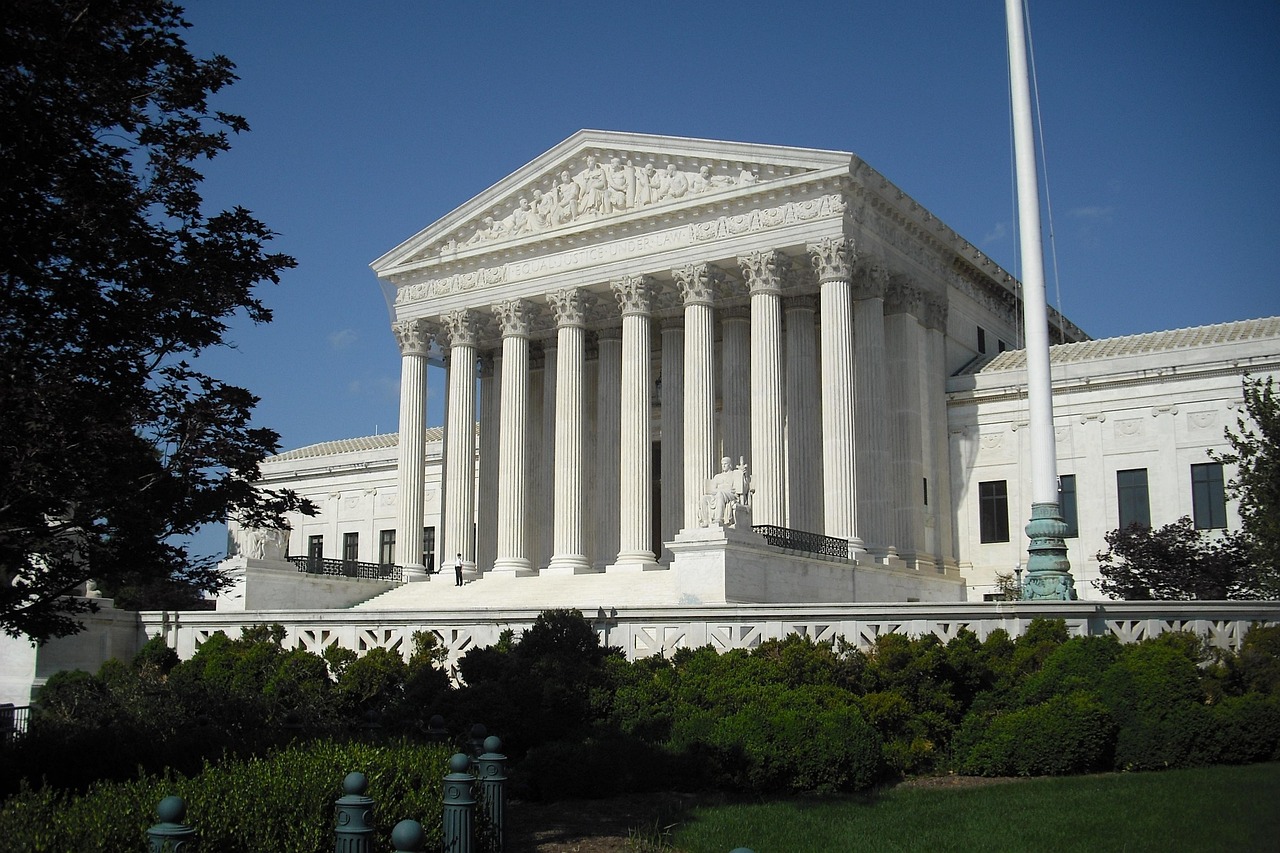
united-states-supreme-court-6330563_1280On May 19th the U.S. Supreme Court handed the Trump administration a legal victory after the justices agreed to lift a lower court order that had previously stopped the President’s efforts to strip Venezuelans of deportation protections granted under Temporary Protected Status (TPS).


What is TPS?


Temporary Protected Status (TPS) is a humanitarian program allowing nationals of certain countries to remain in the United States temporarily, if the government has determined that it is unsafe for them to return to their home country for humanitarian reasons, such as armed conflict or a natural disaster.

It allows nationals of designated countries to live and work in the United States for a temporary period of time, during which they are protected from deportation. Those who qualify are given temporary employment authorization, which is automatically extended if the government extends their TPS validity period.


Biden’s Designation of Venezuela for TPS


The original TPS designation for nationals of Venezuela was issued on March 9, 2021, due to extraordinary conditions preventing their safe return to Venezuela (the 2021 designation). A separate re-designation was issued on October 3, 2023 (the 2023 designation).

Before leaving office, the Biden administration extended Venezuela’s 2023 designation for an additional period of 18 months, which was meant to last from, April 3, 2025, to October 2, 2026.

Continue reading

tingey-injury-law-firm-S2rcAJbBxX0-unsplash-scaledWe are pleased to report that on April 14, 2025, a Massachusetts federal judge issued a temporary nationwide injunction, suspending the Department of Homeland Security’s (DHS) termination of the Cuba, Haiti, Nicaragua, and Venezuela (CHNV) parole programs. The termination was set to take effect on April 24, 2025, and would have ended parole authorization and any associated benefits, including work authorization for individuals in the United States under the CHNV parole programs. The judge’s decision suspends the Trump administration’s cancellation of these programs.

What You Need to Know

  • A federal district court judge has issued a temporary nationwide injunction immediately blocking the Department of Homeland Security from terminating the Cuba, Haiti, Nicaragua, and Venezuela (CHNV) parole programs, which were expected to terminate on April 24, 2025.

statue-of-liberty-9275095_1280Today March 21, 2025, the Department of Homeland Security (DHS) released an advance copy of a notice in the Federal Register ending four Biden-era parole programs for Cuba, Haiti, Nicaragua, and Venezuela (CHNV).

When


The temporary parole period of aliens in the United States under the CHNV parole programs will terminate on April 24th (30 days from the date of the notice’s publication in the Federal Register)

Parolees without a lawful basis to remain in the United States following this termination of the CHNV parole programs must depart the United States before the program’s termination date.

Who will be impacted


Nationals from Cuba, Haiti, Nicaragua and Venezuela who flew to the U.S. under Biden’s CHNV humanitarian parole program.

Parolees granted admission under CHNV were given a temporary two-year parole period to remain in the U.S., work authorization, and protection from deportation. The purpose of the program was to reduce illegal immigration at the southern border and provide alternative legal avenues.

Approximately 532,000 nationals entered the United States using this program.

Termination of Employment Authorization Documents


Parole-based employment authorization for CHNV parolees will also automatically terminate on April 24th and will be revoked pursuant to 8 CFR 274a.14(b).

Expedited Removal


Following parole termination, DHS intends to promptly remove aliens who entered the United States under the CHNV parole programs, who do not depart the United States before their parole termination date and who do not have any lawful basis to remain in the United States.

Continue reading

boeing-159589_1280A new article published in the New York Times reveals the 43 countries that are reportedly included in President Trump’s new travel ban, expected to be released by executive order on Friday March 21st.

According to anonymous government sources, the White House is considering a draft proposal establishing partial or full suspensions on entry to the United States for countries falling into three different tiers: red, orange, and yellow.

The “red” list of countries includes nationals whose entry to the United States would be barred for a temporary period that is yet to be determined by the U.S. government including:

  • Afghanistan
  • Bhutan
  • Cuba
  • Iran
  • Libya
  • North Korea
  • Somalia
  • Sudan
  • Syria
  • Venezuela and
  • Yemen

The draft proposal also includes an “orange” list of countries whose nationals would not be barred from the United States, but who must be properly vetted and screened at mandatory in-person visa interviews before gaining admission to the United States.

Continue reading

ai-generated-8775943_1280We knew it was coming. The Trump administration is preparing to roll out a new ban on travel to the United States, restricting the entry of citizens from certain countries for which vetting and screening warrants a partial or full suspension of admission to the United States. This travel restriction is rumored to take place by executive action next week.

If this sounds like déjà vu, that’s because it is.

During his first term in office, in 2017 Trump signed Executive Order 13769 entitled, “Protecting the Nation from Foreign Terrorist Entry into the United States,” which banned nationals from seven Muslim-majority countries from entering the United States for a period of 90 days.

This executive order caused international chaos, due to several key provisions:

  • It suspended the entry of immigrants and non-immigrants from seven predominantly Muslim countries including Iran, Iraq, Libya, Somalia, Sudan, Syria, and Yemen – for 90 days
  • The order indefinitely suspended the entry of Syrian refugees
  • It reduced the number of refugees to be admitted to the United States in 2017 to 50,000
  • The U.S. Refugee Admissions Program (USRAP) was suspended for 120 days

Implementation of this executive order led to controversy and numerous legal challenges:

  • More than 700 travelers were detained, and up to 60,000 visas were “provisionally revoked”
  • Protests and chaos erupted at airports across the country
  • Multiple lawsuits were filed in federal court challenging its constitutionality

Continue reading

international-2693195_1280-1The first 30 days of the Trump administration have involved dismantling Biden-era immigration protections including ending Temporary Protected Status (TPS) for Venezuelans, and now Haitians.

Before leaving office, the former Secretary of the Department of Homeland Security Alejandro Mayorkas had extended Temporary Protected Status (TPS) protections for Haiti for an 18-month period (until February 3, 2026).

Acting under the Trump administration, today DHS Secretary Kristi Noem partially vacated the Mayorkas extension reducing it from 18 months to 12 months.

As a result, Haiti’s TPS extension and new designation will end on August 3, 2025, instead of February 3, 2026, unless extended by the Trump administration.

First-time registration for Haitians seeking TPS protections will remain in effect until August 3, 2025, instead of February 3, 2026.

DHS said in a statement that by taking action it was making good on its promise to “rescind [Biden] policies that were magnets for illegal immigration,” highlighting that TPS is meant to provide only “temporary” immigration status to certain nationals from countries facing ongoing armed conflict, environmental disasters, and other extraordinary conditions.

The statement went on to say, “for decades the TPS system has been exploited and abused. For example, Haiti has been designated for TPS since 2010. The data shows each extension of the country’s TPS designation allowed more Haitian nationals, even those who entered the U.S. illegally, to qualify for legal protected status.”

Continue reading