Articles Posted in Student Visas

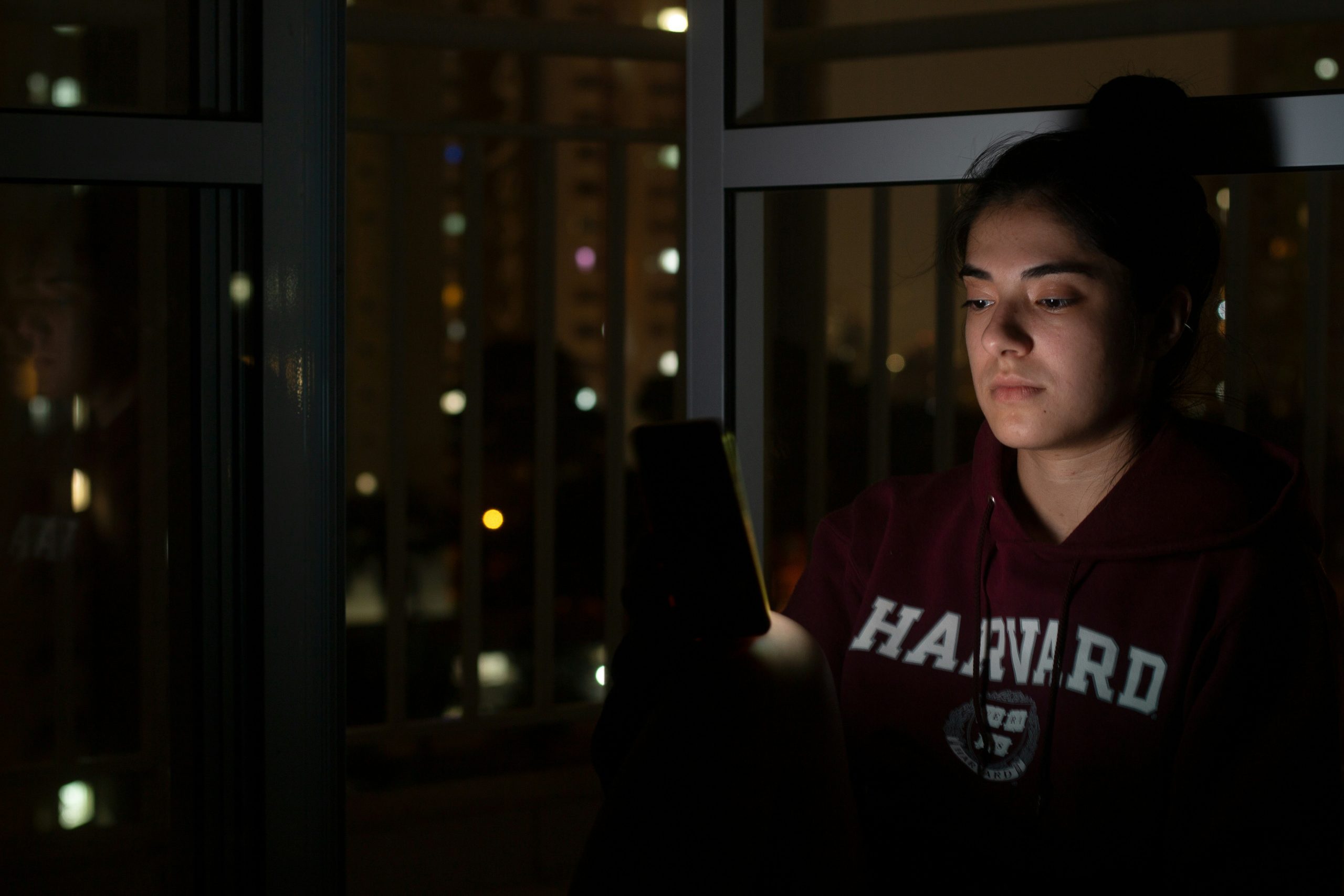
danilo-rios-bj5y_XuSm58-unsplash-scaledThe Trump administration is not letting up on its campaign to target international students applying for visas at U.S. Embassies and Consulates, beginning with Harvard University students.

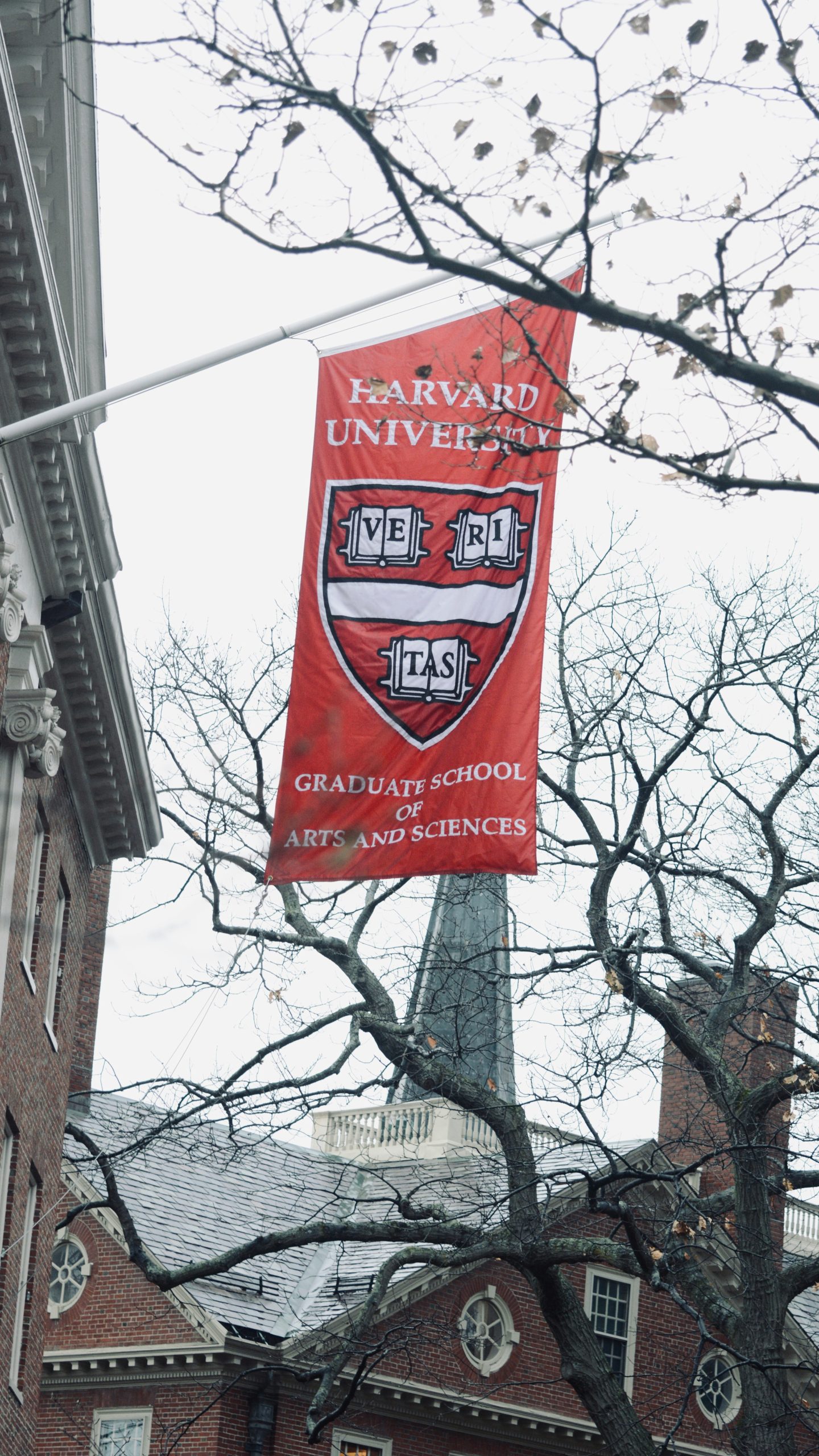
On Friday May 30, 2025, the Secretary of State Marco Rubio sent an internal cable to U.S. Embassies and Consulates worldwide requiring them to “immediately begin additional vetting” for all applicants seeking a visa to travel to Harvard University “for any purpose.”

While the internal cable is not publicly available, its contents have been reviewed by several prominent media outlets including Politico and CNN.

According to their reports, the cable indicates that the State Department has adopted a new policy requiring Consulates and Embassies to review the social media accounts of all nonimmigrant visa applicants seeking to attend Harvard University, including prospective students, current students, faculty members, contractors, guest speakers, and even tourists visiting the university. This initiative, directed by Secretary of State Marco Rubio through a diplomatic cable, is set to begin immediately and serves as a pilot program that is expected to expand to other U.S. schools, colleges, and universities.

The policy specifically targets the identification of antisemitic content and antisemitic viewpoints published on online social media platforms. The cable notes, “the enhanced vetting measures described in this guidance aim at ensuring that consular officers can appropriately identify such visa applicants with histories of antisemitic harassment and violence, and to duly consider the visa eligibility under U.S. immigration law.” Notably, the cable does not specify what specifically would indicate “inadmissible antisemitism” nor does it define online activities that would render an individual ineligible for a visa.

Consular officers are instructed to conduct comprehensive screenings of applicant’s social media accounts, including those set to private. The cable notes that consular officers should determine, either in pre-screening or an interview, if the applicant is seeking to travel to Harvard, and such applicants should be refused a visa “pending review of their online presence.”

Continue reading

manu-ros-wvlwZ00eIRk-unsplash-scaledIn recent days, the Trump administration has launched an aggressive campaign targeting international students studying at colleges and universities throughout the United States.

These attacks escalated Thursday last week when the administration first announced that it would be halting Harvard University’s ability to enroll international students by revoking their Student and Exchange Visitor Program (SEVP) certification—a certification that is necessary for U.S. schools to enroll and issue Forms I-20 to F and M international students.

The move sent shockwaves throughout the academic community because it meant Harvard could no longer enroll foreign students, and its more than 7,000 existing international students would be required to transfer or lose their legal status in the United States.

According to the Secretary of the Department of Homeland Security Kristi Noem, such drastic steps were taken due to Harvard’s alleged failure to comply with Student Exchange Visa Program (SEVP) regulations, as well as “encouraging and allowing antisemitic and anti-American violence to rage on its campus and coordinating with Chinese Communist Party officials on training that undermined American national security.”

Less than 24 hours later, Harvard filed a lawsuit in federal court requesting and obtaining a temporary restraining order to block the Trump administration from cutting off its ability to enroll foreign students. The judge found that absent the court order, Harvard would “suffer immediate and irreparable injury.”

Today, that same judge granted Harvard a preliminary injunction extending Harvard’s ability to maintain its SEVP certification intact while the lawsuit moves forward in federal court. This action effectively protects Harvard’s students and allows them to remain in the United States.

Continue reading

engineer-4690505_1280The United States Citizenship and Immigration Services (USCIS) recently released detailed statistics and data regarding the number of beneficiaries selected during the fiscal year 2026 H-1B cap season, highlighting the highly competitive nature of the visa process.

Each year, the H-1B visa program allows U.S. employers to temporarily employ foreign workers in specialty occupations, and demand for these visas has consistently gotten tougher throughout the years.

The FY 2026 data shows a significant drop in H-1B registrants, with 126,361 fewer applicants compared to the previous year.

Overview


During the fiscal year 2026 H-1B cap season:

  • USCIS received eligible registrations for 336,153 unique beneficiaries and selected just 118,660 – or approximately 35.3% – of these beneficiaries.
  • The overall number of registrations submitted in FY 2026 decreased dramatically from 470,342 eligible registrations filed last year to just 343,981 eligible registrations filed this year.
  • On average, each beneficiary only had approximately one registration submitted on their behalf.
  • USCIS is not expected to announce a second cap lottery until at least July 2025, after the current H-1B filing period closes.

Continue reading

sam-balye-w1FwDvIreZU-unsplash-scaled

Following a wave of lawsuits from international students whose visas and Student and Exchange Visitor Information System (SEVIS) records were terminated without prior notice, the Trump administration has suddenly changed its course.

In recent weeks, U.S. Immigration and Customs Enforcement (ICE) has begun reinstating SEVIS records that were previously terminated, after seemingly recognizing that the government did not go through the appropriate channels to do so.

Over the past month, it is estimated that the State Department and ICE collectively cancelled over 300 F-1 student visas and terminated more than 4,736 SEVIS records primarily due to student encounters with law enforcement, criminal charges that were dismissed, and old misdemeanors pre-dating visa issuance. These SEVIS terminations automatically exposed students to unlawful presence in the United States, and the risk of deportation.

It was further discovered that ICE utilized AI assisted programs to screen the social media posts of F-1 international students and terminated their legal status based on antisemitic activity or alleged support for terrorist organizations such as Hamas and Hezbollah.

In response, students across the country sued the government to preserve their status, leading federal judges to issue a series of emergency orders to stop the government from cancelling visas and SEVIS records.

Continue reading

student-5473769_1280F-1 International Students at university campuses across the country have been rocked by alarming reports that their visas and SEVIS records have been suddenly terminated by U.S. Immigration and Customs Enforcement (ICE), without any prior notice to the university or the student.

This new wave of SEVIS terminations which began early this month has led to a string of lawsuits filed in federal district court, challenging the legality of the terminations.

School officials became aware of terminated F-1 student records only after conducting checks of the Student & Exchange Visitor Information System (SEVIS) system. The records of those impacted simply state that the visa revocations were due to an immigration status violation.

The following three generic classifications have been provided for the terminations:

  • Termination based on serious adverse foreign policy consequences
  • Student identified in a criminal records check
  • Student identified in criminal check and/or has had their visa revoked

No further details regarding the reason for the terminations have been provided by the government, nor were school officials notified of actions taken.


What is SEVIS?


The Student and Exchange Visitor Information System (SEVIS) is an online system used by the U.S. Department of Homeland Security (DHS) to maintain information on Student and Exchange Visitor Program (SEVP)-certified schools, F-1 and M-1 students who come to the United States to begin a program of student.

Designated school officials use SEVIS to issue Forms I-20 to specific nonimmigrants to obtain F or M status while enrolled at the school and to satisfy their legal responsibilities.

Continue reading

winner-4443135_1280In this blog post, we bring you an important announcement regarding the H-1B visa fiscal year (FY) 2026 cap season.

Today, March 31st the U.S. Citizenship and Immigration Services (USCIS) announced that it received sufficient electronic registrations during the initial registration period to meet the annual numerical limitations for fiscal year 2026, including for the advanced degree exemption (also known as the master’s cap).

Due to this, the agency has completed the H-1B visa lottery and selected unique beneficiaries at random from the properly submitted electronic registrations to reach the H-1B cap.

As of today, March 31st USCIS has notified all prospective petitioners of their selection via their myUSCIS organizational accounts. Please be aware that only selected beneficiaries are eligible to file an H-1B cap-subject petition with USCIS.

Congratulations to all those who were selected!


How will I know if I was selected in the lottery?


Petitioners with selected registrations will have their myUSCIS online organizational accounts updated to include a selection notice, which includes details of when and where to file. If you submitted your electronic registration with the assistance of an attorney, you should contact your legal representative to determine whether you were selected in the randomized lottery and your next steps.

Please note that a registrant’s USCIS online account will show one of the following statuses for each beneficiary registered:

  • Submitted: The registration has been submitted and is eligible for selection. If the initial selection process has been completed, this registration remains eligible, unless subsequently invalidated, for selection in any subsequent selections for the fiscal year for which it was submitted.
  • Selected: Selected to file an H-1B cap petition.
  • Not Selected: Not eligible to file an H-1B cap petition based on this registration.
  • Denied – duplicate registration: Multiple registrations were submitted by or on behalf of the same registrant for the same beneficiary. If denied as a duplicate registration, all registrations submitted by or on behalf of the same registrant for this beneficiary for the fiscal year are invalid.
  • Invalidated –failed payment: A registration was submitted but the payment method was declined, not reconciled, or otherwise invalid.
  • Deleted: The submitted registration has been deleted and is no longer eligible for selection.

Continue reading

interview-4783433_1280On February 18, 2025, the U.S. Department of State (DOS) announced new changes to the Visa Interview Waiver program, further adding to the unpredictability of the Trump administration.

Among these changes, the State Department has limited the categories of non-immigrants who are eligible to receive waivers of the in-person interview requirement.

Moving forward only the following individuals may qualify:

  • Applicants classifiable under the visa symbols A-1, A-2, C-3 (except attendants, servants, or personal employees of accredited officials), G-1, G-2, G-3, G-4, NATO-1 through NATO-6, or TECRO E-1;
  • Applicants for diplomatic- or official-type visas; and
  • Applicants who previously held a visa in the same category that expired less than 12 months prior to the new application

Additionally, those seeking interview waivers must also meet the following requirements:

  • apply in their country of nationality or residence
  • have never been refused a visa (unless such refusal was overcome or waived); and
  • have no apparent or potential ineligibility.

Previously, non-immigrant visa applicants applying for visa renewals in the same visa category could seek an interview waiver if their visa was expiring within 48 months. The Trump administration has now cut this time to just 12 months.

This means that renewal applicants with visas that expired past the 12-month window will be required to attend in-person interviews at a U.S. Consulate or Embassy.

These visa restrictions along with Trump’s recent executive order requesting Consulates to fire visa officers and local employees, means that wait times for visa appointments will drastically increase, especially in countries already facing severe backlogs.

The State Department has said that visa renewal applicants who qualify for an interview waiver based on the previously stated guidelines may still be required to attend an in-person interview by the Consulate. This is because the interview waiver process is discretionary. It is never guaranteed.

Continue reading

ai-generated-8894578_1280The H-1B FY 2026 cap season is now in full swing!

Yesterday, the U.S. Citizenship and Immigration Services (USCIS) formally announced that the initial registration period for the FY 2026 cap season will open on March 7th at noon Eastern time and run through March 24th at noon eastern time.

Those who participated in the FY 2025 H-1B cap season may recall that there was a decrease in the number of registrations submitted (479,953) when compared to FY 2024 (780,884). Of the 479,953 total registrations submitted in FY 2025, only 470,342 were eligible to participate in the lottery.

Additionally, a total of 135,137 registrations were selected in FY 2025, compared to 188,400 in FY 2024.

H-1B FY 2026 Cap Registration Important Dates


  • February: Petitioners and registrants can begin creating H-1B registrant accounts at noon Eastern.
  • March 7: H-1B registration period opens at noon Eastern.
  • March 24: H-1B registration period closes at noon Eastern.
  • March 31: Date by which USCIS intends to notify selected registrants.
  • April 1: The earliest date that FY 2026 H-1B cap-subject petitions based on the registrations selected during the initial FY 2026 selection period may be filed.

FY 2026 Cap Season Highlights


  • FY 2026 H-1B cap petitioners or their representatives must register using their USCIS online accounts by the deadline of March 24th at noon ET to participate in the computer-generated lottery
  • The H-1B registration fee for each electronic registration is $215 U.S. dollars (per beneficiary)
  • H-1B cap selections will not take place until the initial registration period closes, so there is no requirement to register on the day the initial registration period opens
  • Legal representatives and registrations will need to wait until March 7 to enter beneficiary information and submit the registration with the associated fee

For more information about how to create a USCIS online account, please click here.

Continue reading

american-flag-2054414_1280This week President Trump unleashed a fresh barrage of executive orders targeting illegal immigration and antisemitism in the United States.

Executive Order Expanding Migration Operations at Guantánamo Bay


Among these orders, on January 29th the President signed, “Expanding Migration Operations Center at Naval Station Guantánamo Bay,” unveiling his administration’s plans to use a migrant holding facility at the U.S. naval base in Guantánamo Bay, Cuba, to house more than 30,000 migrants deported from the United States.

The White House has said the naval station will soon be operating at its full capacity to detain “high priority” criminal aliens unlawfully present in the United States, and to “address attendant immigration enforcement needs,” identified by the Department of Defense and the Department of Homeland Security.

Immigration advocates have questioned the optics of this decision due to Guantánamo Bay’s sordid history. Once a processing center for asylum seekers and HIV-positive refugees, it has been well known for its detainment of notorious terrorists and unlawful enemy combatants such as the 9/11 mastermind Khalid Sheikh Mohammed. This decision has raised alarm due to Guantanamo’s unfit conditions and frequent human rights violations reported to international human rights organizations.

Despite these criticisms, the White House has said that deported migrants held in Guantánamo will not be detained in the same U.S. military prison where foreign terrorists are being held. Instead, migrants will be placed in a separate holding facility previously used to detain migrants intercepted at sea.

Continue reading

engineer-4922781_1280On January 15, 2025, the U.S. Citizenship and Immigration Services (USCIS) released updated police guidance for EB-2 National Interest Waiver petitions.

The updated policy guidance is effective immediately and applies to requests pending or filed on or after its publication date of January 15.

This guidance provides insights into how USCIS officials will determine eligibility for NIW petitions for employment-based immigrants, who are seeking a waiver of the job offer requirement, and thus labor certification.

Updated Policy Highlights


  • Clarifies that a petitioner seeking a national interest waiver must first demonstrate qualification for the underlying EB-2 classification, as either a member of the professions holding an advanced degree, or an individual of exceptional ability in the sciences, arts, or business.
  • Explains that USCIS considers on a case-by-case basis whether the occupation in which the person proposes to advance an endeavor is a profession and, if applicable, whether the 5 years of post-baccalaureate experience is in the specialty, noting that it is the petitioner’s burden to establish each element of eligibility.
  • Clarifies that USCIS determines the relationship between exceptional ability and the proposed endeavor on a case-by-case basis, considering any shared skillsets, knowledge, or expertise.
  • Provides additional guidance, with examples, about how USCIS evaluates whether a proposed endeavor has national importance.
  • Explains how USCIS evaluates evidence such as letters of support and business plans, when determining whether a person is well positioned to advance an endeavor.
  • Clarifies, with examples, that not every entrepreneur qualifies for a national interest waiver. While USCIS decides each case on its merits, broad assertions regarding general benefits to the economy and potential to create jobs will not establish an entrepreneur’s qualification for a national interest waiver.
  • Explains that, as with all adjudications, USCIS evaluates all of the evidence in the aggregate, and that the list of suggested evidence for entrepreneurs is not intended to suggest that any one piece, by itself, necessarily establishes eligibility. USCIS reviews all of the person’s education, experience, and skills and the benefit to the national interest when determining eligibility.

Continue reading