Articles Posted in Court Injunction

sarah-kranz-pKqAaTUi0wg-unsplash-scaledIn a significant ruling handed down on Friday, the U.S. Supreme Court limited the power of federal judges to impose nationwide injunctions against President Trump’s executive order aimed at denying birthright citizenship to children born in the U.S. to noncitizens.

While the justices did not rule on the legality of the President’s executive order, this decision is an extraordinary victory for the Trump administration, because it hinders lower courts from intervening in potentially illegal actions by the government.

Historically, lower courts have issued nationwide preliminary injunctions early in litigation to block government conduct that could cause irreparable harm to plaintiffs pending judicial review.

The court’s decision to restrain judges from providing such relief is a remarkable departure from historic precedent and ventures into dangerous territory. It further indicates that the balance of power on the Supreme Court has clearly shifted in Trump’s favor, with six conservative justices backing his position.

What it Means

The ruling means that lower courts cannot stop the enforcement of the executive order on a nationwide basis for affected individuals. The executive order can only be suspended against individuals who have filed lawsuits against the government (either as individual plaintiffs or in class actions) or where a state has issued a state-wide injunction.

It will take time before the Supreme Court ultimately rules on the constitutionality of the executive order, with some legal experts suggesting the process could stretch on for years.

It is also uncertain whether this decision could restrict future nationwide blocks on controversial laws, particularly in other immigration and civil rights cases against the government.

Continue reading

passport-8621284_1280

Harvard Travel Ban Blocked by Federal Judge

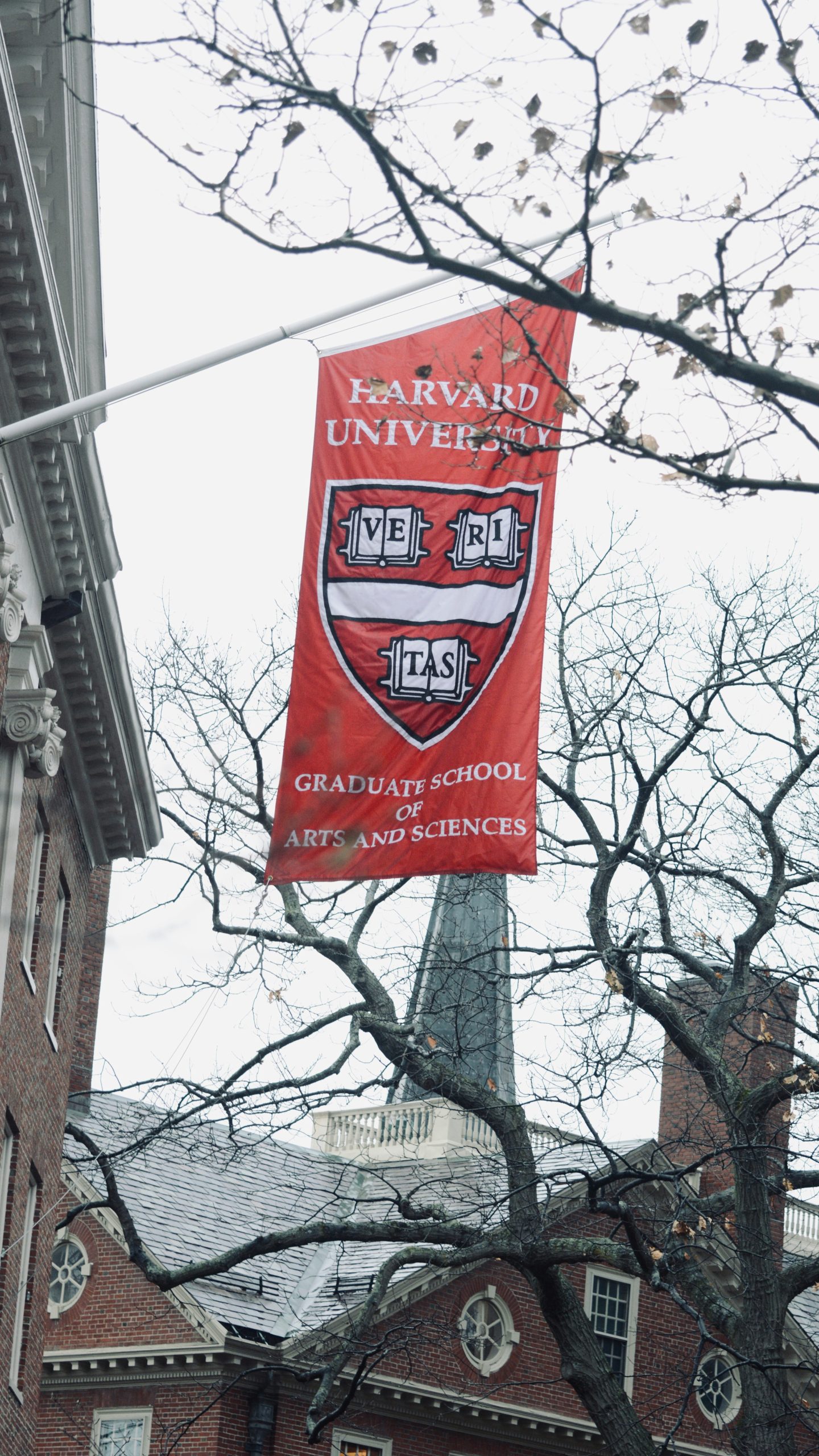
Earlier this month President Trump had signed an Executive Order suspending the entry of all nonimmigrants and exchange visitors attending Harvard University, for a period of 6 months starting June 4th (the effective date of the proclamation).

Those affected by the executive order were F, J, and M visa holders outside of the United States as of the date of the proclamation. The suspension did not apply to nonimmigrants entering the United States to attend other universities.

Shortly after the executive order was issued, a federal judge granted a preliminary injunction, temporarily halting its enforcement until the court can rule on the merits of the case.

Following the court’s actions, the State Department ordered embassies and consulates around the world to resume visa processing for Harvard University students and exchange visitors.

As a result, Harvard students can breathe easier. While the preliminary injunction remains in effect, consulates are barred from denying visas to Harvard students and exchange visitors, and visa holders attending Harvard cannot be refused entry to the United States.

For more information, please click here.

Continue reading

beverly-kimberly-tfiGOGEmJVI-unsplash-scaledOn June 4, 2025, President Trump continued his ongoing assault on Harvard University with a new Executive Order entitled, “Enhancing National Security by Addressing Risks at Harvard University.”

Effective June 4th, the order suspends the entry of all nonimmigrants and exchange visitors bound for Harvard University for a period of 6 months, citing national security concerns over Harvard’s failure to police foreign students and ensure that foreign nationals admitted on student and exchange visitor visas remain in compliance with Federal law.

The executive order also accuses Harvard of having extensive entanglements with foreign adversaries including China.

Who is affected?


All nonimmigrants who enter or attempt to enter the United States to begin attending Harvard University through the Student and Exchange Visitor Program (SEVP) after the effective date of the proclamation (June 4, 2025).

The executive order further empowers the Secretary of State Marco Rubio to consider in his discretion whether foreign nationals who currently attend Harvard University and are in the United States pursuant to F, M, or J visas, should have their visas revoked pursuant to the proclamation.

Who is not affected?


The suspension does not impact Harvard students who are already inside the United States with a valid student visa as of the effective date of the proclamation.

The suspension also does not apply to any alien who enters the United States to attend other universities through the Student and Exchange Visitor Program (SEVP).

It also does not apply to any alien whose entry would be in the national interest, as determined by the Secretary of State, the Secretary of Homeland Security, or their designated representatives.

Impact on Harvard Students Currently in the United States


The executive order does not:

  • Restrict change or extension of status applications filed with U.S. Citizenship and Immigration Services (USCIS)
  • Revoke existing visas, I-94, or STEM OPT work authorization status for students currently in the United States

Continue reading

united-states-8911597_1280After months of speculation and buildup, President Trump’s long-anticipated travel ban has finally arrived.

Issued by executive order on June 4th President Trump’s travel ban entitled “Restricting the Entry of Foreign Nationals to Protect the United States from Foreign Terrorists and Other National Security and Public Safety Threats,” closely mirrors the leaked draft that first surfaced in early March through the New York Times.

That draft hinted at sweeping restrictions targeting so-called “red,” “orange,” and “yellow” countries—coded designations that formed the backbone of President Trump’s proposed directive.

While there are notable differences, as predicted, the administration has framed the ban as a national security measure, but critics argue it remains susceptible to being challenged or overturned through lawsuits that may soon be filed in federal court.

Here’s what you need to know.

President Trump’s travel ban goes into effect today Monday June 9, 2025, at 12:01 am Eastern Daylight time.


Who it Affects


Full Suspension on Nationals from Countries of Concern

The travel ban temporarily suspends the entry of both immigrants and non-immigrants from 12 designated countries who are outside the United States and do not have a valid visa on the effective date of the proclamation, including Afghanistan, Burma, Chad, the Republic of the Congo, Equatorial Guinea, Eritrea, Haiti, Iran, Libya, Somalia, Sudan, and Yemen.

However, several key exceptions apply for lawful permanent residents (LPRs), immediate family members of U.S. citizens, dual nationals, athletes and teams competing in major international sporting events such as the World Cup and the Olympics, and others (a full list of exceptions is provided below).

Continue reading

court-5665886_1280
On Wednesday, May 28, 2025, a federal judge from the United States District Court for the District of Massachusetts issued a nationwide court order lifting the Trump administration’s suspension of adjudications for immigration benefit applications submitted by noncitizens who were lawfully paroled into the United States under certain categorical parole programs implemented during the Biden administration.

Those affected by the suspensions were parolees in the following programs:

  • Military Parole in Place (MPIP) for members of the U.S. armed forces to petition their relatives for parole
  • Uniting for Ukraine (U4U), for Ukrainian citizens and their family members to apply for advanced authorization to travel to the United States to request parole for up to two years and apply for employment authorization with USCIS
  • Noncitizens from Cuba, Haiti, Nicaragua, and Venezuela (CHNV) authorizing parole requests of up to two years, and the ability to apply for employment authorization from USCIS
  • Family Reunification Parole (FRP) programs permitting individuals from Colombia, Cuba, Guatemala, Ecuador, Haiti, Honduras, and El Salvador to receive advanced authorization to travel to the United States while their family-based immigrant visas are pending.
  • Central American Minors Program (CAM) for individuals from El Salvador, Honduras, and Guatemala lawfully present in the United States to request immediate relatives not present in the United States to be granted access to the Refugee Admissions Program.

Continue reading

manu-ros-wvlwZ00eIRk-unsplash-scaledIn recent days, the Trump administration has launched an aggressive campaign targeting international students studying at colleges and universities throughout the United States.

These attacks escalated Thursday last week when the administration first announced that it would be halting Harvard University’s ability to enroll international students by revoking their Student and Exchange Visitor Program (SEVP) certification—a certification that is necessary for U.S. schools to enroll and issue Forms I-20 to F and M international students.

The move sent shockwaves throughout the academic community because it meant Harvard could no longer enroll foreign students, and its more than 7,000 existing international students would be required to transfer or lose their legal status in the United States.

According to the Secretary of the Department of Homeland Security Kristi Noem, such drastic steps were taken due to Harvard’s alleged failure to comply with Student Exchange Visa Program (SEVP) regulations, as well as “encouraging and allowing antisemitic and anti-American violence to rage on its campus and coordinating with Chinese Communist Party officials on training that undermined American national security.”

Less than 24 hours later, Harvard filed a lawsuit in federal court requesting and obtaining a temporary restraining order to block the Trump administration from cutting off its ability to enroll foreign students. The judge found that absent the court order, Harvard would “suffer immediate and irreparable injury.”

Today, that same judge granted Harvard a preliminary injunction extending Harvard’s ability to maintain its SEVP certification intact while the lawsuit moves forward in federal court. This action effectively protects Harvard’s students and allows them to remain in the United States.

Continue reading

airport-8081875_1280On Friday May 9, 2025, President Trump signed executive order “Establishing Project Homecoming,”a new White House initiative aimed at encouraging the voluntary departure of undocumented immigrants from the United States.

This new policy offers financial incentives and logistical support to those who facilitate self-deportation, with the stated goal of reducing the fiscal and social burdens associated with deportation to prioritize funding for Americans in need.

Key Provisions of Project Homecoming:

  • Free Government-Funded Flights:Undocumented immigrants are offered complimentary flights to any country willing to accept them, excluding the United States.This service is accessible through the government’s new “CBP Home” mobile application and at participating airport
  • $1,000 Exit Bonus: Individuals who voluntarily and permanently depart the U.S. under this program are allegedly eligible to receive a $1,000 “exit bonus” upon successful relocation.
  • Concierge Travel Assistance: A government-provided concierge service is available at airports to assist individuals, even those lacking valid travel documents from their home countries, in booking flights and navigating the voluntary departure process.

Continue reading

sam-balye-w1FwDvIreZU-unsplash-scaled

Following a wave of lawsuits from international students whose visas and Student and Exchange Visitor Information System (SEVIS) records were terminated without prior notice, the Trump administration has suddenly changed its course.

In recent weeks, U.S. Immigration and Customs Enforcement (ICE) has begun reinstating SEVIS records that were previously terminated, after seemingly recognizing that the government did not go through the appropriate channels to do so.

Over the past month, it is estimated that the State Department and ICE collectively cancelled over 300 F-1 student visas and terminated more than 4,736 SEVIS records primarily due to student encounters with law enforcement, criminal charges that were dismissed, and old misdemeanors pre-dating visa issuance. These SEVIS terminations automatically exposed students to unlawful presence in the United States, and the risk of deportation.

It was further discovered that ICE utilized AI assisted programs to screen the social media posts of F-1 international students and terminated their legal status based on antisemitic activity or alleged support for terrorist organizations such as Hamas and Hezbollah.

In response, students across the country sued the government to preserve their status, leading federal judges to issue a series of emergency orders to stop the government from cancelling visas and SEVIS records.

Continue reading

tingey-injury-law-firm-S2rcAJbBxX0-unsplash-scaledWe are pleased to report that on April 14, 2025, a Massachusetts federal judge issued a temporary nationwide injunction, suspending the Department of Homeland Security’s (DHS) termination of the Cuba, Haiti, Nicaragua, and Venezuela (CHNV) parole programs. The termination was set to take effect on April 24, 2025, and would have ended parole authorization and any associated benefits, including work authorization for individuals in the United States under the CHNV parole programs. The judge’s decision suspends the Trump administration’s cancellation of these programs.

What You Need to Know

  • A federal district court judge has issued a temporary nationwide injunction immediately blocking the Department of Homeland Security from terminating the Cuba, Haiti, Nicaragua, and Venezuela (CHNV) parole programs, which were expected to terminate on April 24, 2025.

criminal-8444883_1280The unthinkable has now become a reality. In a recent court filing, the U.S. government disclosed that the Internal Revenue Service (IRS) has agreed to disclose protected tax records to aid Immigration and Customs Enforcement (ICE) in the mass deportation of undocumented immigrants.

The existence of this agreement was initially reported by the New York Times and was revealed in response to a lawsuit brought by Centro de Trabajadores Unidos and Immigrant Solidarity Dupage two immigrant worker organizations, against the IRS to prevent them from engaging in the unauthorized disclosure of taxpayer information for purposes of immigration enforcement.

Under the terms of the deal, ICE officials can request information from the IRS about undocumented immigrants they are investigating for failing to leave the country after receiving a final order of removal from a judge.

This news has caused panic among undocumented immigrants who do not want to file their taxes for fear of being deported.

Many will certainly be discouraged from filing their taxes as they have typically done using an Individual Taxpayer Identification Number (ITIN). An ITIN number is issued by the IRS to people who are not citizens and are not otherwise eligible to receive a Social Security number to comply with their tax obligations.

Continue reading