Articles Posted in B2 Visitor Visas

travel-5219496_1280

We are happy to report that the Biden administration has accelerated Israel’s designation into the Visa Waiver Program (VWP).

Previously, the government announced that Israeli nationals could begin to travel to the United States visa-free starting on November 30th.

However, as of yesterday, Thursday, October 19, 2023, the Department of Homeland Security (DHS) issued a new press release notifying the public that eligible Israeli nationals can now start applying for authorization to travel to the United States on a temporary basis through the U.S. Customs and Border Protection’s (CBP) Electronic System for Travel Authorization (ESTA). For the time being, the ESTA application is only available in the English language but will soon be made available in other languages.

ESTA authorizations are generally valid for two years upon issuance and allow successful applicants to travel to the United States for tourism or business purposes for up to 90 days without first obtaining a U.S. visa. Israeli citizens and nationals with valid B-1/B-2 visas may continue to use them for business and tourist travel to the United States.

Continue reading

friendship-3901908_1280

The long-awaited news is finally here. The Department of State has announced the designation of Israel into the Visa Waiver Program (VWP) effective November 30, 2023.

Beginning on that date, citizens and nationals of Israel will be able to apply to travel to the United States for tourism or business purposes for up to 90 days, without first obtaining a U.S. visa by applying on the Electronic System for Travel Authorization (known as ESTA). ESTA travel authorizations are generally valid for two years upon issuance.

Israeli citizens with valid B1/B2 visas may continue to use them for business and tourist travel to the United States.

The move will also benefit U.S. Citizens, considering that Israel has updated its travel policies to allow all U.S. citizens to request entry to Israel for up to 90 days for business, tourism, or transit without obtaining a visa. Israel has also granted Palestinian-Americans both living in the West Bank and the United States, the ability to enter Israel visa free, and fly in and out of Ben Gurion airport without restrictions.

Israel will join 40 other countries in becoming part of the Visa Waiver Program.

In the announcement, Secretary of Homeland Security Alejandro N. Mayorkas remarked, “This designation, which represents over a decade of work and coordination between the United States and Israel, will enhance our two nations’ collaboration on counterterrorism, law enforcement, and our other common priorities. Israel’s entry into the Visa Waiver Program, and the stringent requirements it entails, will make both of our nations more secure.”

Continue reading

flag-gd4a7b1739_1280

In this blog post, we share with you an important announcement from the U.S. Customs and Border Protection’s Carrier Liaison Program.

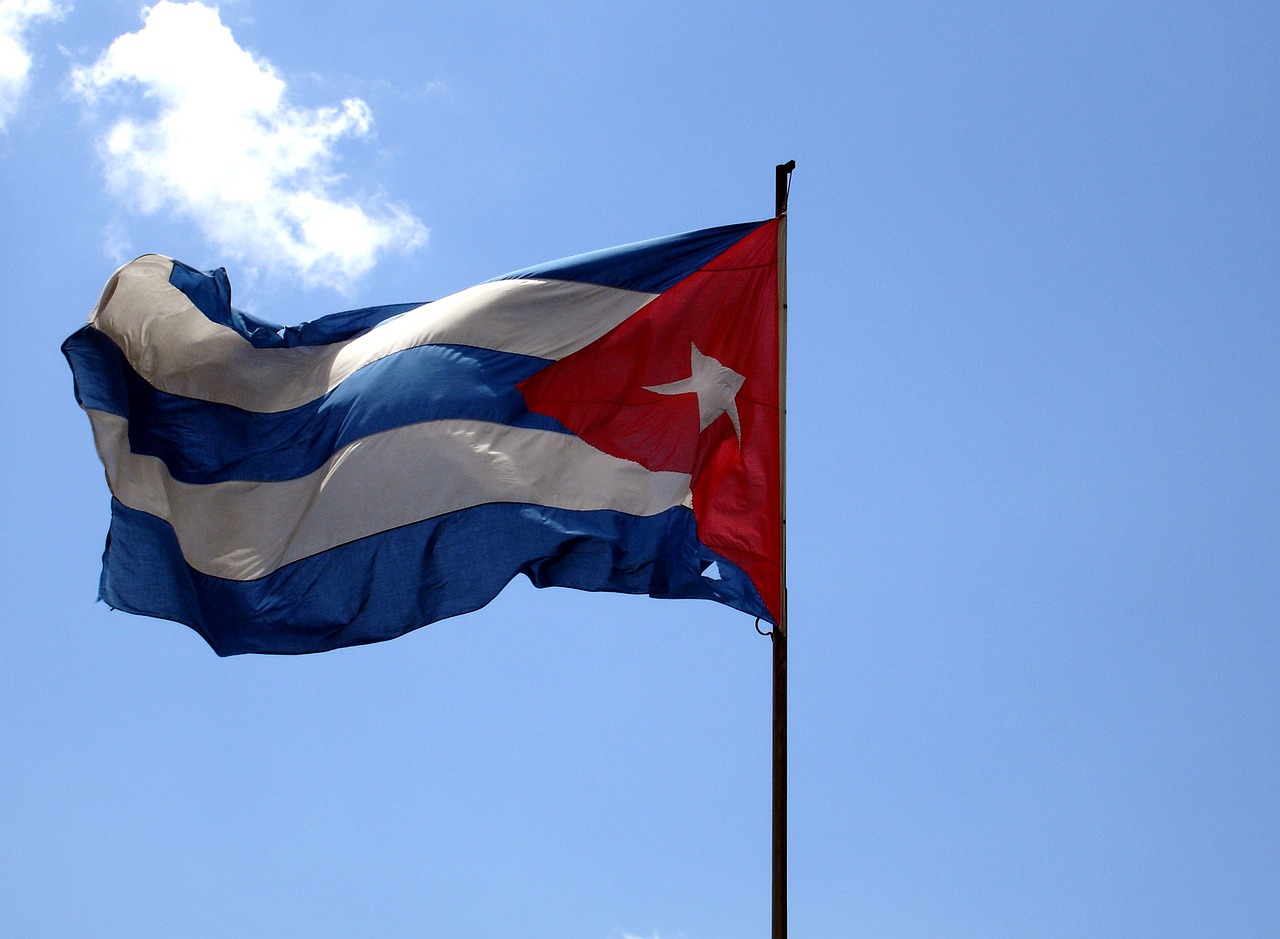
The agency has announced that certain nationals participating in the Visa Waiver Program (VWP), who have been physically present in Cuba, or who are dual nationals of Cuba and a country participating in the Visa Waiver Program, will be ineligible to gain admission to the United States using the Electronic System for Travel Authorization also known as ESTA.

According to CBP, beginning January 12, 2021, the Department of State designated Cuba as a State Sponsor of Terrorism, causing the above-mentioned individuals to become ineligible for travel to the United States under the Visa Waiver Program.

Later, on July 6th the Department of Homeland Security updated its Electronic System for Travel Authorization (ESTA) online application and mobile application to reflect these changes.


Why has this happened?


The Visa Waiver Program Improvement and Terrorist Travel Prevention Act of 2015 (“the Act”) makes nationals of Visa Waiver Program (VWP) countries who have been present in a country designated as a State Sponsor of Terrorism (SST), as well as those who are dual nationals of both a VWP country and a country designated as an State Sponsor of Terrorism at the time of applying for an Electronic System for Travel Authorization (ESTA), ineligible for travel to the United States under the Visa Waiver Program.

Since Cuba has been named a State Sponsor of Terrorism, these restrictions will now be enforced against nationals participating in the VWP program who have been present in Cuba or are dual nations of Cuba and a VWP country.

Continue reading

bag-gf3e0d3e13_1280

Certain types of nonimmigrants will be expected to shell out more money for the nonimmigrant visa process.

The State Department has announced that starting June 17, 2023, nonimmigrant visa (NIV) application processing fees for visitor visas for business or tourism (B1/B2s and BCCs), and other non-petition based nonimmigrant visas such as student and exchange visitor visas (F, M, and J visas), will increase from $160 to $185.

Additionally, processing fees for certain petition-based nonimmigrant visas for temporary workers (H, L, O, P, Q, and R categories) will increase from $190 to $205.

Fees for a treaty trader, treaty investor, and treaty applicants in a specialty occupation (nonimmigrant E category) visa will also increase from $205 to $315.


What if I pay my nonimmigrant visa fee prior to June 17, 2023?


In this case you are in luck. Nonimmigrant visa fees paid prior to June 17, 2023, will remain valid through the expiration date on your nonimmigrant visa fee payment receipt.


Why the increase?


The Department of State has said that nonimmigrant visa fees are set based on the actual cost of providing nonimmigrant visa services and are determined after conducting a study of the cost of these services.

The agency uses Activity-Based Costing (ABC) methodology to calculate, annually, the cost of providing consular services, including visa services.

Continue reading

eye-gd012fb6ce_1280

The Department of State raised eyebrows earlier this month when it released information that it will be reducing the waiting period for 221(G) “administrative processing,” in an effort to process visas more efficiently.

While this is welcome news, in practice it may not mean much. Consulates and Embassies have been notoriously secretive when it comes to 221(G) administrative processing and do not reveal the reason for a visa applicant being placed in administrative processing in the first place, nor the type of security checks that are being conducted.


What is 221(G) Administrative Processing?


First, let’s explain what administrative processing is. When an applicant visits a U.S. Consulate or Embassy overseas for their visa interview, there are only two possible outcomes that can occur at the conclusion of their interview. The Consular Officer may choose to either issue or “refuse” the visa. A refusal is not the same as a denial. It simply means that the visa applicant has not established his or her eligibility for the visa they are seeking for the time being, and the Consulate needs additional time or requires further information either from the visa applicant or another source to determine the applicant’s eligibility for the visa.

In most cases, visa applicants who have been “refused” will require further administrative processing.


How will I know if I have been placed in 221(G) administrative processing?


Visa applicants placed in administrative processing are often given what is called a “Notice of 221(G) Refusal” at the conclusion of their interview, which states that the visa application has been “refused” under section 221(G) of the Immigration and Nationality Act. The Notice should indicate whether additional administrative processing is required for your case, and whether any further action is required on your part, such as providing additional documentation or further information to process your visa.

However, in some cases visa applicants are not given such a Notice and will later discover that they have been placed in 221(G) administrative processing upon checking their visa status on the Consular Electronic Application Center (CEAC) visa status check webpage.

Continue reading

vaccine-g2e9472fd1_1920

CBP No Longer Requires Proof of COVID-19 Vaccination for Air Passengers from Any Country starting today May 12, 2023 


The United States Customs and Border Protection (CBP) now joins the State Department and Department of Homeland Security in announcing the end of the COVID-19 vaccination requirement for international travelers starting today Friday, May 12, 2023.

Noncitizen nonimmigrant air passengers will no longer need to show proof of being fully vaccinated with an accepted COVID-19 vaccine to board a flight to the United States.

passport-g58b60bd4e_1920

Welcome back to Visalawyerblog! In this blog post we share with you some breaking news regarding the COVID-19 vaccination requirement for non-immigrant international travelers.

On May 4, 2023, the State Department announced that the Biden administration will end the COVID-19 vaccine requirements for international air travelers at the end of the day on May 11, 2023, which marks the end of the federal COVID-19 public health emergency.

After this date, beginning May 12, noncitizen nonimmigrant air passengers will no longer need to show proof of being fully vaccinated with an accepted COVID-19 vaccine to board a flight to the United States.

Additionally, the Department of Homeland Security has released its own statement announcing that the COVID-19 vaccine requirement will also end for non-U.S. citizen travelers seeking entry through land parts of entry and ferries as indicated below:

Beginning May 12, 2023, DHS will no longer require non-U.S. travelers entering the United States via land ports of entry and ferry terminals to be fully vaccinated against COVID-19 and provide related proof of vaccination upon request. DHS intends to rescind these Title 19 travel restrictions in alignment with the end of the Public Health Emergency and the termination of the Presidential Proclamation on air travel.

Continue reading

Welcpuzzle-g75f3e575f_1920ome back to Visalawyerblog! We hope you had a wonderful holiday break and wish you a prosperous new year ahead.

We kick off the new year with some important updates in the world of immigration.

Today, the United States Citizenship and Immigration Services (USCIS) officially announced a Notice of Proposed Rulemaking (NPRM) that will be posted in the Federal Register tomorrow Wednesday, January 4, 2023 that will increase filing fees for certain types of immigration benefits. An unpublished version is already available in the Federal Register.

A 60-day public comment period will follow the publication of the NPRM on January 4, 2023 and will close on March 5, 2023.

Fees will not change until the final rule goes into effect, and only after the public has had the opportunity to comment and USCIS finalizes the fee schedule in response to such public comments. USCIS will host a public engagement session on the proposed fee rule on January 11, 2023.

According to USCIS, the proposed fee increases are necessary to ensure that the agency will have enough resources to provide adequate services to applicants and petitioners moving forward. The agency has said that after having conducted a review of current fees, it has determined that it cannot cover the full cost of providing adjudication and naturalization services without a fee increase.

The agency cited the COVID-19 pandemic as one of the factors leading the agency to increase its fees. As you may recall, the pandemic caused a dramatic reduction in the filing of new applications, leaving USCIS with a substantial decrease in revenues of 40 percent. This unfortunate drop in applications led USCIS to reduce its workforce accordingly.

With current resources, the agency has said it is incapable of adjudicating applications in a timely manner, when considering that agency caseloads are now returning to pre-pandemic levels.

Among the new proposals included in the NPRM are measures that:

  • Incorporate biometrics costs into the main benefit fee and remove the separate biometric services fee
  • Require separate filing fees for Form I-485 and associated Form I-131 and Form I-765 filings
  • Establish separate fees for Form I-129, Petition for Nonimmigrant Worker, by nonimmigrant classification.
  • Revise the premium processing timeframe interpretation from 15 calendar days to 15 business days
  • Create lower fees for certain immigration forms filed online.

Continue reading

board-g893a3f402_1920

Welcome to the start of a brand-new week. In a recent announcement, the U.S. Customs and Border Protection (CBP) Carrier Liaison Program, revealed that United States visas issued at all U.S. embassies and consulates worldwide will now have a new look.

Foreign nationals seeking to visit, work, or remain temporarily in the United States must apply for U.S. visas at foreign consulates or embassies overseas. Once a U.S. visa has been approved following the in-person visa interview, consulates stamp and issue the U.S. visa in the applicant’s foreign passport.

Previously, U.S. visas were printed with the image of Abraham Lincoln, but now U.S. visas will debut a new design.

To ensure the security of documents and protect against counterfeiting, the government has said it will begin issuing new visa foils in the year 2023, replacing the prior image of Abraham Lincoln with the iconic San Francisco Golden Gate Bridge. These new visas are referred to as “Bridge” visa foils. Visas with the new “Bridge” foil are expected to be rolled out as early as 2023.

According to CBP’s announcement:

  • The U.S. has begun issuing a new Bridge visa foil
  • This is a redesigned visa foil that will replace the Lincoln visa.
  • As each consular posts depletes Lincoln visa stock, they will begin to issue Bridge visas.
  • All Lincoln visas will remain valid until the printed expiration date, unless revoked or canceled.
  • The Lincoln visas that will gradually be phased out were first issued in 2022.
  • Revisions to visa designs make altering and counterfeiting more difficult, officials state.

Continue reading

pumpkin-g0b3c427b5_1920

We kick off the Thanksgiving week with some exciting news.

Recently, the American Immigration Lawyers Association (AILA) met with representatives from the Department of State to address some issues of concern relating to several different immigration topics.

We provide a summary of the questions asked and responses from the Department of State down below that was part of a recent roundtable with representatives from Consular Affairs.


Nonimmigrant and Immigrant Visa Applications from Third Country Nationals


Representatives reminded nonimmigrant visa applicants, including students, that they can apply for their visas at any embassy or consulate where they are physically present and obtain a visa appointment.

Additionally, immigrant visa applicants can request to transfer their case to another embassy or consulate if they are unable to travel to the post where their case is assigned.

As to the possibility for virtual visa interviews, the State Department has said immigrant visa applicants are required to appear in person before a consular officer to provide fingerprints, therefore video interviews would be of limited utility.


Interview Waivers


AILA informed the State Department that it appears that some appointment scheduling systems incorrectly identify applicants that are clearly not eligible for interview waivers as eligible and invite them to send in their passports for visa issuance.

In these instances, once the passport is submitted to the post, it is determined that the applicant is not eligible for an interview waiver, the applicant has to be contacted, their passport has to be returned, and they have to then schedule an in-person interview appointment.

The State Department has said it is not aware of this issue happening at posts and recommended that those experiencing issues with applications submitted via interview waiver processes should contact the relevant post for information.


E-2 Treaty Investor Visas  


Question: 9 FAM 402.9-6(A)(a)(4) informs officers that one of the determinations in evaluating E-2 Treaty Investor applications is that the: “Enterprise is a real and operating commercial enterprise,” and is then referred to 9 FAM 402.9-6(C) for further discussion.

The first sentence of 9 FAM 402.9-6(C) states: “The enterprise must be a real and active commercial or entrepreneurial undertaking, producing some service or commodity.” The third sentence of 9 FAM 402.9-6(C) continues the description of the enterprise to state, “It cannot be a paper organization or an idle speculative investment…”Especially in the context of start-up businesses, defining these terms will provide greater clarity and guidance to E-2 visa applicants.

Please confirm: Are the words “operating” at 402.9-6(A)(a)(4) and “active” at 402.9-6(C) used interchangeably?

Answer: Almost. The term “active” at 402.9-6(C) was used to ensure that new enterprises that had not yet begun producing services or commodities, but which were actively taking steps to become operational, could also provide a basis for E visa issuance.

Continue reading