Articles Posted in Executive Order

a-plastic-card-1647376_1280U.S. Citizenship and Immigration Services (USCIS) has announced that, effective October 28, it will no longer accept checks or money orders for payment of filing fees, ending the previously permitted payment methods.

What Payment Methods Are Now Accepted?


Payment by ACH Bank Transfer

Starting October 28th USCIS will accept payment of filing fees directly from a U.S. bank account by electronic debit.

To use this payment method, individuals must complete and sign Form G-1650, Authorization for ACH Transactions, and submit it along with their application, petition, or request.

Please note that the bank account must be with a U.S. financial institution, as ACH transactions cannot be processed through foreign banks.

Payment by Credit Card

Alternatively, payment for filing fees can be made using a credit card issued by a U.S. bank, by completing Form G-1450, Authorization for Credit Card Transactions.

Please note that USCIS does not accept credit cards issued by foreign banks.

Continue reading

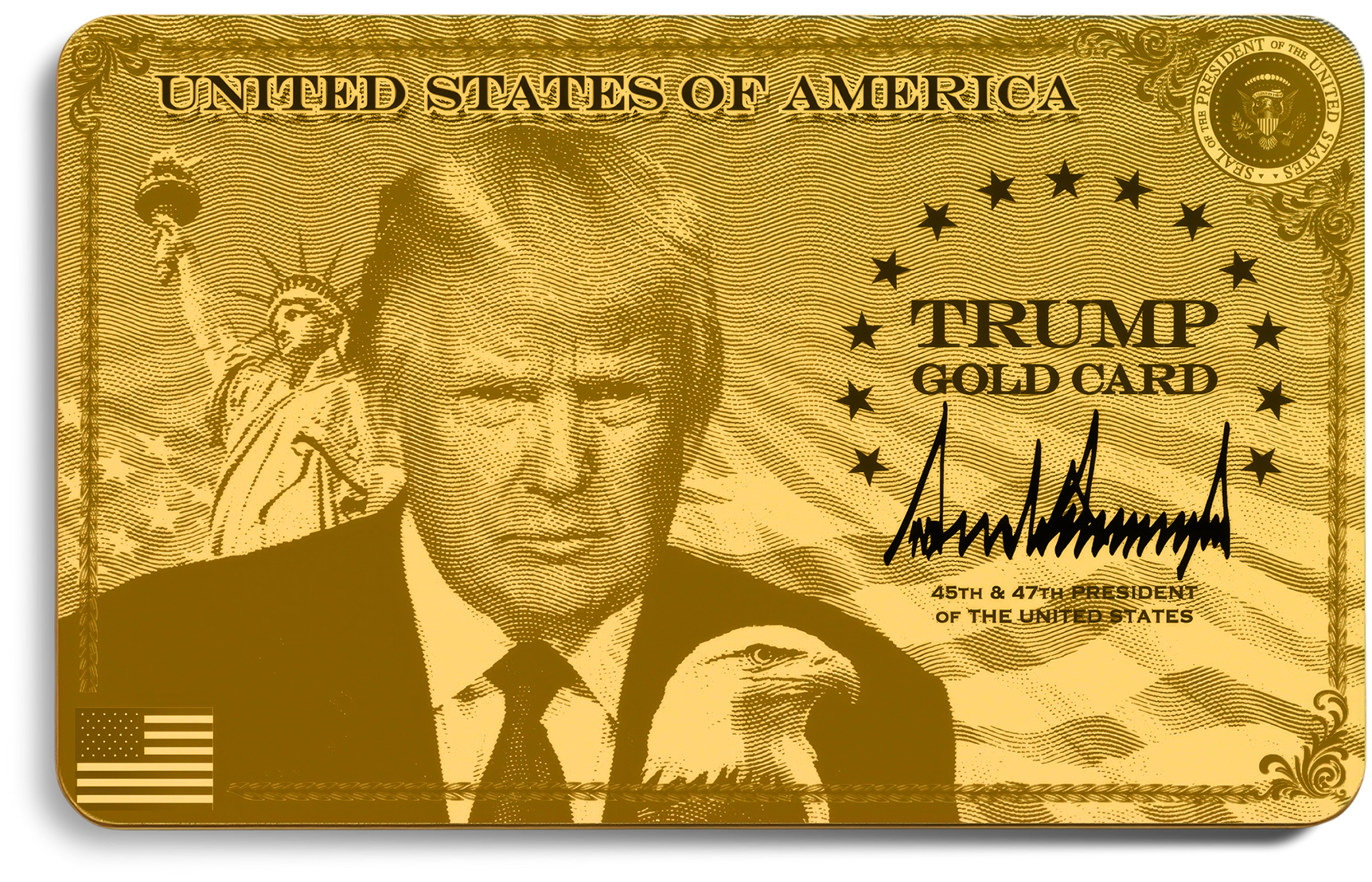
imageOn Friday evening, President Donald J. Trump signed an executive order establishing a new pathway to permanent residency called “The Gold Card. This program creates a fast-track green card option for wealthy individuals who make significant “gifts” to the U.S. government through the Department of Commerce.

Highlights


Although clear guidance on the application process has not yet been provided, the executive order outlines several key features:

  • Unrestricted Gift requirement:

To qualify for an immigrant visa through the Gold Card program, applicants must provide an unrestricted gift (without conditions or limitations) to the Department of Commerce in the following amounts.

  • $1 million for individuals donating on their own behalf.
  • $2 million if the gift comes from a corporation or entity on behalf of an individual
  • Visa benefits: The gift can be used as evidence of eligibility under two employment-based categories:
    • Exceptional business ability and national benefit (8 U.S.C. §1153(b)(2)(A) and
    • National Interest Waiver (8 U.S.C. §1153(b)(2)(B))
      • Could be expanded to the EB-5 immigrant investor program under 8 U.S.C. 1153(b)(5).
  • Oversight and agencies involved: The Departments of Commerce, State, and Homeland Security are tasked with implementing the program, including setting up application, processing, status adjustment, and screening for public safety / national security.
  • Use of the funds: The money raised will go into a separate Department of Commerce fund, held with the Treasury, intended to promote commerce and American industry.
  • Timeline: The order gives the relevant secretaries 90 days to lay out implementation plans (application process, when gifts may start being submitted, fees, etc.)

Potential Legal Challenges


The Gold Card Executive Order, aimed at streamlining the visa process for wealthy donors may face several legal challenges. Plaintiffs could argue that it oversteps executive authority by altering immigration policy without congressional approval, potentially violating the Immigration and Nationality Act. Additionally, if the order is seen as favoring certain nationalities or industries, it may prompt lawsuits alleging discrimination or unequal treatment under the law. Legal battles may also arise from states or interest groups concerned about labor market impacts or federal overreach, leading to judicial review that could delay or block its implementation.

Continue reading

ai-generated-9069946_1280The legal immigration landscape was shaken once again late Friday evening when the President issued a new proclamation barring new H-1B workers from entering the United States—unless their employers pay a $100,000 fee for each sponsored employee.

The proclamation took effect at 12:01 a.m. EDT on Sunday, September 21, and will remain in effect until a court order halts its implementation.

Emergency Litigation


A surge of emergency lawsuits is expected to be filed by impacted H-1B workers and their sponsoring employers, seeking a nationwide injunction to stop the implementation of the executive order. A court could issue an injunction as early as Monday. We will provide litigation updates as they develop in the coming days.

Highlights of the Executive Order


  • Effective today September 21, 2025, certain H-1B workers will be denied entry into the United States unless their employer pays a $100,000 fee on their behalf, according to the proclamation signed by President Trump late Friday.
  • Application: The ban on entry and the associated fee requirement applies only to any new H-1B visa petitions submitted after 12:01 a.m. eastern daylight time on September 21, 2025. This includes the 2026 lottery, and any other H-1B petitions submitted after 12:01 a.m. eastern daylight time on September 21, 2025.
  • The proclamation does not apply to:
    • any previously issued H-1B visas, or any petitions submitted prior to 12:01 a.m. eastern daylight time on Sept. 21, 2025.
    • does not change any payments or fees required to be submitted in connection with any H-1B renewals. The fee is a one-time fee on submission of a new H-1B petition.
    • does not prevent any holder of a current H-1B visa from traveling in and out of the United States.
  • Misuse of B Visas: The proclamation warns that individuals with approved H-1B petitions should not misuse B visas to enter the U.S. for jobs that start before October 1, 2026.
  • National Interest Exemptions: The proclamation grants the Department of Homeland Security authority to issue exemptions for individuals, specific employers, or workers in designated industries—if the agency determines that the H-1B employment serves the national interest and poses no threat to U.S. security or public welfare.
  • Termination: Absent a court order, this restriction will remain in effect for 12 months but may be extended based on recommendations from federal immigration agencies. An extension would continue the ban for individuals approved under the FY 2027 H-1B cap.
  • Changes to the Prevailing Wage: Besides restricting H-1B entry, the proclamation directs the Department of Labor to revise prevailing wage levels and prioritize H-1B approvals to high-skilled, high-paid H-1B workers.

In the hours after the proclamation was issued, chaos unfolded as H-1B visa holders, advised by their employers and legal counsel, abandoned flights and canceled international travel due to uncertainty about how the proclamation would be enforced at the U.S. border.

Adding to the uncertainty was the absence of clear guidance from immigration authorities, including the Department of Homeland Security (DHS) and Customs and Border Protection (CBP), about how the proclamation is to be enforced against current H-1B visa holders and approved beneficiaries.

Continue reading

usa-8643859_1280On August 21, 2025, Secretary of State Marco Rubio announced that the State Department is temporarily pausing the issuance of work visas for foreign nationals seeking employment as commercial truck drivers in the U.S.

“Increasing numbers of foreign drivers behind the wheels of large tractor-trailers on America’s roads are putting lives at risk and threatening the jobs of American truckers,” Rubio stated in a post on X.

The likely reason behind this drastic move is a deadly highway crash that occurred in the state of Florida, involving a commercial truck driver who made an illegal U-turn killing at least three people.

Federal authorities claim that the driver entered the United States illegally, did not speak English, and held a limited-term commercial driver’s license from the state of California. According to the California Department of Motor Vehicles (DMV), the federal government confirmed the driver’s legal presence in the United States when it approved his commercial driver’s license in 2024.

Earlier this year, President Trump signed an executive order directing the enforcement of a rule requiring commercial drivers in the U.S. to meet English proficiency standards, with violators subject to being taken out of service. Based on an internal investigation conducted by the U.S. Department of Transportation, the driver failed to establish English proficiency “providing correct responses to just two of 12 verbal questions and only accurately identifying one of four highway traffic signs.”

Continue reading

motherhood-7114294_1280Last month, the Supreme Court ruled that lower courts cannot issue nationwide injunctions blocking the Trump administration’s executive order limiting birthright citizenship, except in class action lawsuits.

Prior to the Supreme Court’s ruling, at least three different lawsuits had secured nationwide injunctions protecting all individuals potentially affected by Trump’s executive order restricting birthright citizenship. However, the Court’s ruling scaled back those protections, potentially leaving some children unprotected.

To safeguard all families across the country and address any gaps left by prior legal actions, the American Civil Liberties Union (ACLU) filed a class-action lawsuit, Barbara v. Donald J. Trump to stop the government’s enforcement of the order against all current or future babies born or after February 20, 2025, where:

(1) that child’s mother was unlawfully present in the United States and the child’s father was not a United States citizen or lawful permanent resident at the time of said child’s birth, or

(2) that child’s mother’s presence in the United States was lawful but temporary, and the child’s father was not a United States citizen or lawful permanent resident at the time of said child’s birth.

The U.S. District Judge Joseph Laplante agreed with the plaintiffs and issued a class-wide preliminary injunction blocking Trump’s executive order from being enforced against any affected baby born in the United States after February 20th.

Continue reading

sarah-kranz-pKqAaTUi0wg-unsplash-scaledIn a significant ruling handed down on Friday, the U.S. Supreme Court limited the power of federal judges to impose nationwide injunctions against President Trump’s executive order aimed at denying birthright citizenship to children born in the U.S. to noncitizens.

While the justices did not rule on the legality of the President’s executive order, this decision is an extraordinary victory for the Trump administration, because it hinders lower courts from intervening in potentially illegal actions by the government.

Historically, lower courts have issued nationwide preliminary injunctions early in litigation to block government conduct that could cause irreparable harm to plaintiffs pending judicial review.

The court’s decision to restrain judges from providing such relief is a remarkable departure from historic precedent and ventures into dangerous territory. It further indicates that the balance of power on the Supreme Court has clearly shifted in Trump’s favor, with six conservative justices backing his position.

What it Means

The ruling means that lower courts cannot stop the enforcement of the executive order on a nationwide basis for affected individuals. The executive order can only be suspended against individuals who have filed lawsuits against the government (either as individual plaintiffs or in class actions) or where a state has issued a state-wide injunction.

It will take time before the Supreme Court ultimately rules on the constitutionality of the executive order, with some legal experts suggesting the process could stretch on for years.

It is also uncertain whether this decision could restrict future nationwide blocks on controversial laws, particularly in other immigration and civil rights cases against the government.

Continue reading

passport-8621284_1280

Harvard Travel Ban Blocked by Federal Judge

Earlier this month President Trump had signed an Executive Order suspending the entry of all nonimmigrants and exchange visitors attending Harvard University, for a period of 6 months starting June 4th (the effective date of the proclamation).

Those affected by the executive order were F, J, and M visa holders outside of the United States as of the date of the proclamation. The suspension did not apply to nonimmigrants entering the United States to attend other universities.

Shortly after the executive order was issued, a federal judge granted a preliminary injunction, temporarily halting its enforcement until the court can rule on the merits of the case.

Following the court’s actions, the State Department ordered embassies and consulates around the world to resume visa processing for Harvard University students and exchange visitors.

As a result, Harvard students can breathe easier. While the preliminary injunction remains in effect, consulates are barred from denying visas to Harvard students and exchange visitors, and visa holders attending Harvard cannot be refused entry to the United States.

For more information, please click here.

Continue reading

beverly-kimberly-tfiGOGEmJVI-unsplash-scaledOn June 4, 2025, President Trump continued his ongoing assault on Harvard University with a new Executive Order entitled, “Enhancing National Security by Addressing Risks at Harvard University.”

Effective June 4th, the order suspends the entry of all nonimmigrants and exchange visitors bound for Harvard University for a period of 6 months, citing national security concerns over Harvard’s failure to police foreign students and ensure that foreign nationals admitted on student and exchange visitor visas remain in compliance with Federal law.

The executive order also accuses Harvard of having extensive entanglements with foreign adversaries including China.

Who is affected?


All nonimmigrants who enter or attempt to enter the United States to begin attending Harvard University through the Student and Exchange Visitor Program (SEVP) after the effective date of the proclamation (June 4, 2025).

The executive order further empowers the Secretary of State Marco Rubio to consider in his discretion whether foreign nationals who currently attend Harvard University and are in the United States pursuant to F, M, or J visas, should have their visas revoked pursuant to the proclamation.

Who is not affected?


The suspension does not impact Harvard students who are already inside the United States with a valid student visa as of the effective date of the proclamation.

The suspension also does not apply to any alien who enters the United States to attend other universities through the Student and Exchange Visitor Program (SEVP).

It also does not apply to any alien whose entry would be in the national interest, as determined by the Secretary of State, the Secretary of Homeland Security, or their designated representatives.

Impact on Harvard Students Currently in the United States


The executive order does not:

  • Restrict change or extension of status applications filed with U.S. Citizenship and Immigration Services (USCIS)
  • Revoke existing visas, I-94, or STEM OPT work authorization status for students currently in the United States

Continue reading

united-states-8911597_1280After months of speculation and buildup, President Trump’s long-anticipated travel ban has finally arrived.

Issued by executive order on June 4th President Trump’s travel ban entitled “Restricting the Entry of Foreign Nationals to Protect the United States from Foreign Terrorists and Other National Security and Public Safety Threats,” closely mirrors the leaked draft that first surfaced in early March through the New York Times.

That draft hinted at sweeping restrictions targeting so-called “red,” “orange,” and “yellow” countries—coded designations that formed the backbone of President Trump’s proposed directive.

While there are notable differences, as predicted, the administration has framed the ban as a national security measure, but critics argue it remains susceptible to being challenged or overturned through lawsuits that may soon be filed in federal court.

Here’s what you need to know.

President Trump’s travel ban goes into effect today Monday June 9, 2025, at 12:01 am Eastern Daylight time.


Who it Affects


Full Suspension on Nationals from Countries of Concern

The travel ban temporarily suspends the entry of both immigrants and non-immigrants from 12 designated countries who are outside the United States and do not have a valid visa on the effective date of the proclamation, including Afghanistan, Burma, Chad, the Republic of the Congo, Equatorial Guinea, Eritrea, Haiti, Iran, Libya, Somalia, Sudan, and Yemen.

However, several key exceptions apply for lawful permanent residents (LPRs), immediate family members of U.S. citizens, dual nationals, athletes and teams competing in major international sporting events such as the World Cup and the Olympics, and others (a full list of exceptions is provided below).

Continue reading

airport-8081875_1280On Friday May 9, 2025, President Trump signed executive order “Establishing Project Homecoming,”a new White House initiative aimed at encouraging the voluntary departure of undocumented immigrants from the United States.

This new policy offers financial incentives and logistical support to those who facilitate self-deportation, with the stated goal of reducing the fiscal and social burdens associated with deportation to prioritize funding for Americans in need.

Key Provisions of Project Homecoming:

  • Free Government-Funded Flights:Undocumented immigrants are offered complimentary flights to any country willing to accept them, excluding the United States.This service is accessible through the government’s new “CBP Home” mobile application and at participating airport
  • $1,000 Exit Bonus: Individuals who voluntarily and permanently depart the U.S. under this program are allegedly eligible to receive a $1,000 “exit bonus” upon successful relocation.
  • Concierge Travel Assistance: A government-provided concierge service is available at airports to assist individuals, even those lacking valid travel documents from their home countries, in booking flights and navigating the voluntary departure process.

Continue reading