Articles Posted in Interviews

priest-g2c15dd1f9_1920

Have you ever wondered: is there an exception to the COVID-19 vaccine requirement mandated by the U.S. Citizenship and Immigration Services (USCIS) for those undergoing the green card process?

In this blog post, we share with you how our office was able to obtain successful waivers of the COVID-19 vaccine requirement, information about what exceptions exist to the vaccine requirement, the criteria that must be proven to obtain a vaccine waiver, and the resulting victories we gained on behalf of our clients.

We also describe how we were able to accomplish vaccine waiver approvals, by presenting an abundance of documentary evidence to help these individuals prove their case.


An Overview: What is the COVID-19 Vaccination Requirement


In response to the rapid rise in Coronavirus cases, the U.S. government announced that starting October 1, 2021, those applying for permanent residency (a green card) within the United States, or an immigrant visa abroad, would be required to be fully vaccinated against COVID-19 (one or two doses depending on the vaccine taken).


The Medical Examination Form I-693

As part of the green card process, applicants are required to complete a medical examination conducted by a civil surgeon on Form I-693, to establish that they are not inadmissible to the United States on public health grounds. The government made it a matter of policy as of October 1, 2021, to require all those subject to the medical examination requirement to complete the COVID-19 vaccination to prove their admissibility (and therefore) receive approval of their green cards.

The U.S. Citizenship and Immigration Service announced that this policy would apply “prospectively to all Forms I-693 [medical examinations] signed by the civil surgeons” on or after October 1, 2021. The agency also took steps to revise Form I-693 and its instructions to include the new vaccination requirement.

Its policy guidance followed the recommendations of the U.S. Centers for Disease Control and Prevention’s (CDC) August 17, 2021, update to the Technical Instructions for Civil Surgeons. The CDC update requires applicants subject to the immigration medical examination to “complete the COVID-19 vaccine series [in addition to the other routinely required vaccines] and provide documentation of vaccination to the civil surgeon or panel physician in person before completion of the medical examination.”


Does the COVID-19 vaccination requirement also apply to those seeking immigrant visas at U.S. Embassies and Consulates abroad?


Yes. The government made clear that the COVID-19 vaccination requirement applies to those seeking to adjust their immigration status within the United States, as well as applicants applying for immigrant visas at U.S. Embassies and Consulates abroad. That is because complete vaccination is necessary for a medical examination conducted by a civil surgeon or physician abroad, as part of the green card admissibility process.

Continue reading

autumn-g4d4e9f7ea_1280

In this blog post, we cover the release of the October Visa Bulletin 2022 and what you can expect for employment based and family preference categories during the upcoming month of October.

The Department of State releases the visa bulletin on a monthly basis, which summarizes the availability of immigrant visa numbers for that particular month. The “Final Action Dates” and “Dates for Filing Applications,” charts indicate when immigrant visa applicants should be notified to assemble and submit the required documentation to the National Visa Center.


Adjustment of Status Filing Chart October 2022


For Family-Sponsored Filings:

Pursuant to guidance released by USCIS, for all family-sponsored preference categories, applicants must use the  Dates for Filing chart in the Department of State Visa Bulletin for October 2022.

For Employment-Based Preference Filings:

All applicants, falling under employment-based preference categories, must use the Dates for Filing chart in the Department of State Visa Bulletin for October 2022.

Continue reading

businessmen-gd26be9ace_1280

In this blog post, we share with you some new updates regarding the employment-based numerical limits for immigrant visas in fiscal year 2022.

As a result of the global COVID-19 pandemic and the suspension of visa services at U.S. Consulates and Embassies worldwide, approximately 140,000 family-sponsored visa numbers went unused during fiscal year 2021.

This was due to the pent-up demand for in-person visa interviews that could not be accommodated. Fortunately, these visa numbers have trickled down to the employment-based categories, expanding the number of visa numbers available in fiscal year 2022 to nearly double the usual amount.

Sadly, fiscal year 2022 is nearly coming to a close. To provide the public with more transparency regarding the usage of employment-based visa numbers, the U.S. Citizenship, and Immigration Services (USCIS) has updated its frequently asked questions for employment-based adjustment of status. We breakdown the questions and answers down below.

How many employment-based visas did USCIS and DOS use in FY 2021? How many employment-based visas went unused in FY 2021?


A: The annual limit for employment-based visa use in FY 2021 was 262,288, nearly double the typical annual total. The Department of State (DOS) publishes the official figures for visa use in their Report of the Visa Office.

Overall, the two agencies combined to use 195,507 employment-based immigrant visas in FY 2021.

  • DOS issued 19,779 employment-based immigrant visas, and USCIS used 175,728 employment-based immigrant visas through adjustment of status, more than 52% higher than the average before the pandemic.
  • Despite our best efforts, 66,781 visas went unused at the end of FY 2021.

UPDATED: Can you estimate how many family-sponsored or employment-based immigrant visas USCIS and DOS will use during FY 2022?


A:  DOS has determined that the FY 2022 employment-based annual limit is 281,507 – (slightly more than double the typical annual total) – due to unused family-based visa numbers from FY 2021 being allocated to the current fiscal year’s available employment-based visas.

  • Through July 31, 2022, the two agencies have combined to use 210,593 employment-based immigrant visas (FY2022 data is preliminary and subject to change).
  • USCIS alone approved more than 10,000 employment-based adjustment of status applications in the week ending August 14, 2022, and DOS continues its high rate of visa issuance, as well. USCIS states that it will maximize our use of all available visas by the end of the fiscal year and are well-positioned to use the remaining visas.

NEW: Will my case be processed faster if I file a second Form I-485?


A: Submitting a new adjustment of status application typically does not result in faster adjudication and may have the opposite effect by adding extra burden to the USCIS workload.

  • USCIS is identifying and prioritizing all employment-based adjustment of status applications with available visas and approved underlying petitions, including those received prior to this fiscal year. This includes applications where noncitizens have submitted a transfer of underlying basis requests.

Continue reading

bingo-g2727c83b3_1920

We close off the week with an immigration roundup summarizing recent news in the world of immigration.

In this week’s post, we have Diversity Visa Program updates. Yesterday, the Department of State provided guidance for Diversity Visa applicants selected for fiscal year 2023. Such applicants are advised to submit to the Kentucky Consular Center (KCC) the DS-260 immigrant visa application form for themselves and any accompanying family members.

After submission of the DS-260 immigrant visa application, the Kentucky Consular Center will review it for completeness, and place your application in a queue to be scheduled for an in-person visa interview, provided that your priority date is current on to the Visa Bulletin.

For now, this will be the procedure required of Diversity Visa selectees for fiscal year 2023.

The Kentucky Consular Center warns applicants not to submit any other required supporting documents, other than the completed DS-260 application. This is because, all supporting documentation for DV-2023 selectees will be collected and evaluated at the time of the applicant’s in-person visa interview at the embassy or consulate where the visa application has been made.

Selected candidates should carefully review the Department of State website for the necessary supporting documentation they must bring on the day of their scheduled interview to establish eligibility for an immigrant visa. Those who are unsure of the requirements, should consider working with an experienced attorney for assistance.

Continue reading

outline-g101176714_1920

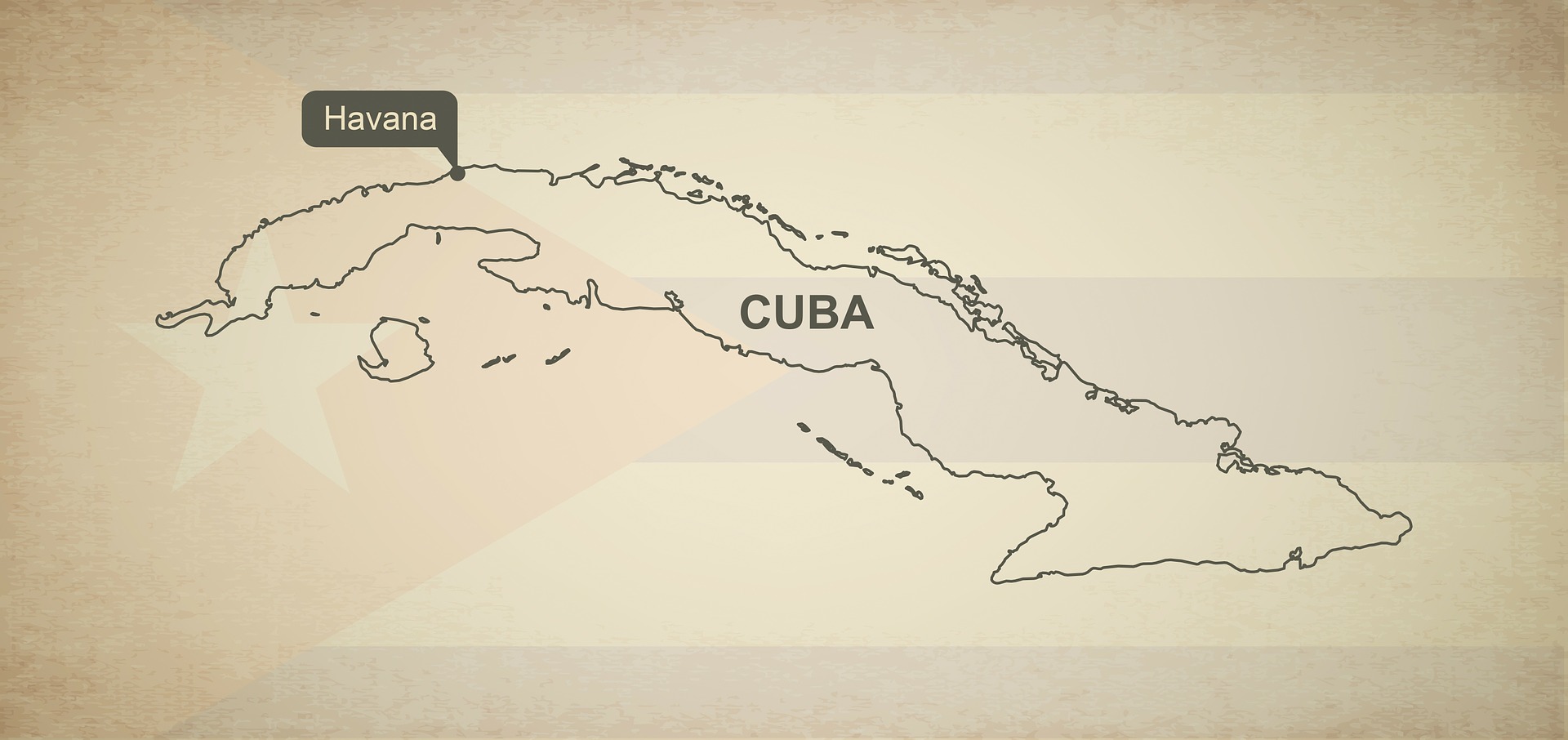
Are you a Cuban national with a pending immigrant visa application? If so, we have some great news for you.

The Department of State today announced that the U.S. Embassy in Havana, Cuba will now be responsible for scheduling all immediate relative immigrant visa appointments, including those of spouses and children under 21 of U.S. citizens (IR/CR-1 and IR/CR-2), with interviews beginning in July 2022.

Previously, the Department of State announced that Havana would be scheduling interviews for applicants in the IR-5 category (parent of a U.S. Citizen) that began their processing there in May 2022.  While the government is working to expand services to reduce the ongoing backlogs, the U.S. Embassy in Georgetown, Guyana will continue to remain the primary processing location for all other Cuban immigrant visa applicants (IR/CR-1, IR/CR-2 and IR-5).


Documentarily Qualified Notifications on or after June 8th – U.S. Embassy Havana


IR/CR-1 and IR/CR-2 applicants who were notified on or after June 8, 2022 that their case is ready to be processed will have their interview scheduled at the U.S. Embassy Havana, not the U.S. Embassy in Georgetown, beginning in July.


Documentarily Qualified Notifications before June 8th – U.S. Embassy Georgetown


IR/CR-1 and IR/CR-2 applicants who were notified prior to June 8, 2022 that their case was ready to be processed will be interviewed at the U.S. Embassy Georgetown, also beginning in July.

The Department of State has said that neither the U.S. Embassy in Havana nor the U.S. Embassy in Georgetown will be able to assist with requests to transfer cases due to resource constraints.

The government will continue to evaluate, further expansion of visa processing in Havana depending on resources and country conditions.

Additionally, the U.S. Embassy in Havana will continue to offer services for American Citizens and limited emergency nonimmigrant visa processing. For further information please review the embassy’s website for updates at https://cu.usembassy.gov/consular-services-available-at-u-s-embassy-havana/.

Continue reading

approved-gc01ea1702_1280

Did you file an EB-2 National Interest Waiver petition on or before June 1, 2021, and still haven’t received a decision? What about an EB-1 petition as a multinational executive or manager filed on or before January 1, 2021? If so, be prepared for some exciting news!

USCIS recently announced the news we have all been waiting for. The agency will soon allow such applicants to upgrade their petition to Premium Processing Service by filing Form I-907, Request for Premium Processing Service, and paying the required filing fee.


What is this next update all about?


On May 24, 2022, USCIS released a news alert notifying the public that it will expand premium processing service for certain petitioners who have filed a pending Form I-140, Immigrant Petition for Alien Worker under the EB-1 multinational executive/managers and EB-2 NIW immigrant classifications.


Who does this update apply to?


To qualify for premium processing service, you must have applied for your I-140 either under the E13 multinational executive, E13 manager classification, or E21 classification as a member of professions with advanced degrees or exceptional ability seeking a national interest waiver (NIW).

Those who fall under the above categories will be eligible to upgrade their petitions by requesting premium processing service and filing Form I-907, Request for Premium Processing Service provided they filed their petitions with USCIS within a certain time period as discussed below.


When can I apply?


  • USCIS will accept premium processing service requests for E13 multinational executive and manager petitions starting June 1, 2022, but only for those E13 executive and manager petitions that were received by USCIS on or before January 1, 2021.
  • Additionally, USCIS will accept premium processing service requests for E21 National interest Waiver petitions, starting July 1, 2022, but only for those E21 NIW petitions that were received by USCIS on or before March 1, 2021.
  • Starting July 1, 2021, USCIS will also accept premium processing service requests, but only for those E13 multinational executive and manager petitions that were received by USCIS on or before March 1, 2021. 

Continue reading

couple-g86465ecab_1920USCIS Updates Policy Guidance Highlighting Discretionary Power to Waive In-Person Interviews for I-751 Applicants


On April 7, 2022, the United States Citizenship, and Immigration Services (USCIS) updated its Policy Manual on the interview waiver criteria for family-based conditional permanent residents filing to remove the conditions on permanent residence on Form I-751 Removal of Conditions.

Under the law, those who attained their permanent resident status (green card) based on a marriage that was less than 2 years old at the time of approval, receive a conditional green card, also known as “conditional permanent residency.”

This conditional green card is issued for a 2-year period. Prior to the expiration of the 2-year green card, the applicant must file Form I-751 to remove their conditions on permanent residence within the 90-day window before it expires.

The Immigration and Nationality Act stipulates that a conditional permanent resident must appear for an in-person interview as part of the I-751 Removal of Conditions adjudication process, so that the immigration officer can verify the accuracy of the information included in the petition and determine whether the conditions on permanent residence should be removed.

The Act also carves out discretionary powers that allow USCIS officers to authorize waiver of the in-person interview.

The April 2022 updated Policy Guidance clarifies that USCIS officers may consider waiving an interview, if, generally, the applicant meets all eligibility requirements for removal of conditions, and the record contains sufficient evidence for approval, and there is no indication of fraud, misrepresentation, criminal bars, or such factors that would require an interview.

The Guidance also eliminates automatic referrals in cases where a conditional permanent resident obtained status by way of Consular processing.

The language of the pertinent section indicates the following:

Volume 6: Immigrants, Part I, Family-Based Conditional Permanent Residents, Chapter 3, Petition to Remove Conditions on Residence [6 USCIS-PM I.3]


CPRs who file a Form I-751 must appear for an interview at a USCIS field office, unless USCIS waives the interview requirement. USCIS officers may consider waiving the interview in cases where:

Continue reading

identification-card-gee67e2a74_1280

We are happy to start this week with interesting new developments in the world of immigration law.

As some of our readers may be aware, all green card applicants filing Form I-485 Application to Register Permanent Residence or Adjust Status, are given the opportunity to file the Form I-765 Application for Employment Authorization, and Form I-131 Application for Travel Document, along with their green card application (or separately at a later time), in order to receive what has been commonly referred to as an employment authorization document (EAD) and advance parole (AP) “combo” card.

With this “combo” card, green card applicants have engaged in lawful employment inside of the United States, and cards with the notation ‘Serves as I-512 Advance Parole’ have been used to re-enter the U.S. after temporary foreign travel.

That is all about to change. USCIS has announced that in an effort to drastically reduce the processing times associated with EAD and AP documents, the agency will now be discontinuing its policy of issuing the “combo” card.

Going forward, U.S. Citizenship and Immigration Services will be separating the issuance of the employment authorization document (EAD card) and advance parole (AP) document. This means that green card applicants that file the Forms I-765 and I-131 together with their green card (or at a later time) can expect to receive two separate documents in the mail, instead of one single combo card.

EADs that do not have the notation ‘Serves as I-512 Advance Parole,’ can only be used for employment purposes. Green card applicants wishing to return to the U.S. after temporary foreign travel must have a valid Advance Parole document. Applicants should not engage in international travel without such document.


Substantial Backlogs


USCIS has made this change to help alleviate the substantial processing times of EAD and AP documents during the Coronavirus pandemic. Unfortunately, these delays have caused employment interruptions for thousands of applicants who have had to wait many months for these applications to be approved.

Presently, the Nebraska Service Center is currently reporting processing times of between 11.5 to 13.5 months for an EAD to be issued based on a pending adjustment of status application. While the California Service Center is currently reporting a wait period of between 20 months to 21.5 months.

This lengthy waiting period has prompted USCIS to take action to separate issuance of the EAD and AP, in what will hopefully result in faster processing times.

Continue reading

confused-gda7145471_1280

In today’s blog post, we share some interesting Question and Answer responses recently provided by the Department of State’s Office of the Assistant Legal Adviser for Consular Affairs (L/CA), in a meeting with the American Immigration Lawyers Association (AILA).

The responses below provide some important insight into current immigration policies and procedures taking place amid the ongoing COVID-19 pandemic.

Here, we summarize the most interesting questions covered during the January 20 meeting:


Department of State/AILA Liaison Committee Meeting


January 20, 2022 Q & A Highlights


Q: What role do Consular sections assume when determining whether an individual is exempt from the CDC COVID-19 vaccine requirement to gain entry to the U.S.?

A: Consular sections’ role in the process is to ensure that an individual’s request for a [vaccine] exception is filled out in full, and to transmit those requests to the CDC.


Q: If consular posts are involved in transmitting information in support of a humanitarian exception to CDC, what is the process, if any, for making such a request of a consular post outside the context of a visa interview?

A: Travelers should contact the consular section of the nearest embassy or consulate using the information provided on that embassies or consulate’s website


Q: What is the Department of State doing to alleviate the substantial backlogs created by the slowdown of operations at Consular posts and Embassies worldwide?

A: The Department is planning to hire foreign service officers above attrition in FY 2022. The majority will be assigned to a consular position after initial training. Additionally, the Department continues to recruit Limited Non-career Appointment (LNA) Consular Professionals. With very limited LNA hiring in FY 2020 and a pause on LNA hiring in FY 2021 due to CA’s budgetary constraints, Consular Affairs plans to hire more than 60 LNAs in FY 2022

Consular Affairs is working with State’s office of Global Talent Management to ramp up hiring in FY 2022, but many posts will not see these new officers until the second half of FY 2022 or FY 2023, particularly for officers assigned to positions requiring language training. Increased hiring will not have an immediate effect on reducing current visa wait times. Because local pandemic restrictions continue to impact a significant number of our overseas posts, extra staff alone is not sufficient to combat wait times for interviews.


Q: Can Consular Affairs please advise regarding efforts to resume routine consular services?

A: Consular sections abroad must exercise prudence given COVID’s continuing unpredictability. The emergence of the Omicron variant has prompted countries to reevaluate plans to relax travel bans, thereby leading consular sections abroad to recalibrate plans to resume services. Some posts have already fully resumed routine services. Others, in an abundance of caution and out of concern for the health of both consular staff and clientele, are slowly reintroducing some routine services.

Continue reading

calendar-gfe196abeb_1920

It is that time of the month again! In this blog post, we will cover the release of the February Visa Bulletin 2022 and what you can expect for employment based and family preference categories during the month of February 2022.

The Department of State releases the visa bulletin on a monthly basis, which summarizes the availability of immigrant visa numbers for that particular month. The “Final Action Dates” and “Dates for Filing Applications,” charts indicate when immigrant visa applicants should be notified to assemble and submit the required documentation to the National Visa Center.


Adjustment of Status Filings for those lawfully residing in the United States


In general, if USCIS determines there are more immigrant visas available for a fiscal year than there are known applicants for such visas, the agency will provide instructions on the www.uscis.gov/visabulletininfo webpage that applicants may use the Dates for Filing chart. Otherwise, USCIS will indicate that applicants must use the Final Action Dates chart to determine when they may file their adjustment of status application with USCIS. If a particular immigrant visa category is “current” on the Final Action Dates chart or the cutoff date on the Final Action Dates chart is later than the date on the Dates for Filing chart, applicants in that immigrant visa category may file using the Final Action Dates chart during that month.

Information has not yet been posted regarding the adjustment of status filing charts that should be used for green card filings. However, applicants are encouraged to monitor the USCIS webpage mentioned above within the next weeks.


February 2022 Visa Bulletin Final Action Cutoff Dates


Employment Based Categories


FINAL ACTION DATES FOR EMPLOYMENT-BASED PREFERENCE CASES


According to the Department of State’s February 2022 Visa Bulletin, the following final cutoff dates will apply for the issuance of an immigrant visa for employment-based categories:

  • EB-1: All countries, including India and China, will remain current.
  • EB-2: India will advance by nearly 6 months to January 1, 2013, and China will advance by more than 5 weeks to March 1, 2019. All other countries will remain current.
  • EB-3 Professionals and Skilled Workers: EB-3 India and China will remain the same as the previous months at January 15, 2012 and March 22, 2018 respectively. All other countries will remain current.
  • EB-5: The Non-Regional Center program will be current for all countries, including China. The Regional Center program has expired and is listed as unavailable in the February 2022 Visa Bulletin. If reauthorized, the Regional Center program will mirror the Non-Regional Center final action dates, except China, which would be subject to a November 22, 2015, final action date.

Continue reading