Articles Posted in Policy

happy-birthday-gc71254c11_1920

Welcome back to Visalawyerblog! We hope you had a wonderful Christmas break with your families.

In this blog post, we share a new update from the State Department regarding the continuation of its interview waiver policy for certain nonimmigrant visa types.

In a new announcement, the Secretary of State has revealed that it is extending its interview waiver policy for certain nonimmigrant visa types until December 31, 2023, allowing Consular officers to continue to waive the in-person interview requirement for certain classes of immigrants.


What is the extension all about?


As you might recall back in December of last year, the State Department first announced its interview waiver policy for temporary workers applying for H-1, H-3, H-4, L, O, P, and Q visas in their country of nationality or residence, following USCIS approval of their petitions.

The State Department has now confirmed it will continue its interview waiver policy until at least the end of 2023.


Who qualifies?


Interview Waiver Policy for H, L, O, P, Q visas


Pursuant to the interview waiver policy, Consular officers have the discretion to waive the visa interview requirement for:

  • individual petition-based H-1, H-3, H-4, L, O, P, and Q applicants who were previously issued any type of visa, and that have not had any visa refusal or ineligibility issues in the past OR
  • first-time individual petition-based H-1, H-3, H-4, L, O, P, and Q who are citizens or nationals of a country that participates in the Visa Waiver Program (VWP), provided that they have no ineligibility issues and have previously traveled to the United States using an authorization obtained via the Electronic System for Travel Authorization (ESTA)

Continue reading

american-flag-gc7e239910_1920

If you are considering applying for U.S. Citizenship in the new year, you may be interested to learn that yesterday December 15, 2022, the Department of Homeland Security (DHS), published a notice in the Federal Register announcing that U.S. Citizenship and Immigration Services (USCIS) plans to conduct trial testing of a newly redesigned naturalization examination for N-400 naturalization applicants in the year 2023.

The main purpose of the trial is to test an updated format of the civics component that evaluates an applicant’s knowledge and understanding of the fundamentals of U.S. history, as well as introduce a brand-new English-speaking component that may become the new standard of the N-400 examination.


Why the change?


The Department of Homeland Security (DHS) has implemented this change in response to President Biden’s Executive Order 14012, Restoring Faith in Our Legal Immigration Systems and Strengthening Integration and Inclusion Efforts for New Americans, which includes a directive to review the naturalization process. To align with the goals of this Executive Order, USCIS has called for a review of the naturalization examination and recommended redesigning the speaking and civics test to improve testing standards.


How will the trial testing occur?


USCIS has said that the trial will be rolled out with the assistance of nationwide volunteer community-based organizations known as CBOs working with immigrant English language learners and lawful permanent residents preparing for naturalization. USCIS will seek approximately 1,500 individuals enrolled in adult education classes to take the trial test. The agency may use the results of the trial to support its proposed changes to the naturalization test.

The trial will test both the standardized English-speaking test as part of the requirement to demonstrate an understanding of the English language, and the civics examination with updated content and format. The trial testing will not include the reading or writing portions of the naturalization examination.

Continue reading

passport-gd3a586a63_1920

We start off the week with some exciting news for naturalization applicants filing N-400, Application for Naturalization.

On December 9, 2022, the U.S. Citizenship and Immigration Services (USCIS) announced new updates to its policy guidance including a new procedure that will allow USCIS to automatically extend the validity of a Permanent Resident Card for a period of 24-months, through the issuance of an N-400 Application for Naturalization, receipt notice. This means that generally Permanent Residents with a pending N-400 Application, will no longer need to file Form I-90 to renew their green cards.

This policy is effective as of today, Monday, December 12, 2022, and applies to all applications filed on or after December 12, 2022.

Lawful permanent residents who filed for N-400 naturalization PRIOR to December 12, 2022, will NOT receive an N-400 receipt notice with the 24-month extension, and will be required to file Form I-90 if their green card expires, or request an appointment to receive an ADIT stamp in their passport to maintain valid evidence of their status as required under the law.


What You Need to Know


Previously, naturalization applicants who did not apply for naturalization at least six months before the expiration date on their green cards needed to file Form I-90, Application to Replace Permanent Resident Card, (green card) to maintain proper documentation of their lawful status.

Applicants who applied for naturalization at least six months prior to their green card expiration were eligible to request an appointment to receive an Alien Documentation, Identification, and Telecommunications (ADIT) stamp in their passport, which served as temporary evidence of their LPR status.

This policy is no more.

Continue reading

a-book-g7ca408570_1920

In this blog post, we bring you some unfortunate news. Recently, the U.S. Department of Education announced that it will no longer recognize the Accrediting Council for Independent Colleges and Schools (ACICS) as an accrediting agency.

Sadly, this means that certain F-1 student visa applicants will be impacted by this change, including those undertaking an English language study program. The U.S. Citizenship and Immigration Services has said that such programs are required to be accredited under the Accreditation of English Language Training Programs Act.

Additionally, this change will impact F-1 students applying for a 24-month science, technology, engineering and mathematics (STEM) optional practical training (OPT) extension, because government regulations now require use of a degree from an accredited, Student and Exchange Visitor Program (SEVP) certified school to receive a STEM OPT extension.

The regulations make clear that the school must be accredited at the time of the application (the date of the designated school official’s (DSO) recommendation on the Form I-20, Certificate of Eligibility for Nonimmigrant Student Status).


What happens next?


Students who have been impacted by this change will receive notification letters from SEVP informing them that their schools’ certification has been withdrawn.

USCIS has said that students who are enrolled at an ACICS-accredited school should contact their DSOs immediately to understand how this loss of accreditation will impact their status and/or immigration benefits.

To make matters worse, schools accredited by ACICS will not be able to issue program extensions, and students will only be allowed to finish their current session if the ACICS-accredited school chooses to voluntarily withdraw its certification or if is withdrawn by SEVP.

If a student’s ACICS-accredited school can provide evidence of a Department of Education recognized accrediting agency or evidence in lieu of accreditation within the allotted timeframe, the student may remain at the school to complete their program of study.


Requests for Evidence Imminent for I-539 Extend/Change of Status


The U.S. Citizenship and Immigration Services (USCIS) will be issuing requests for evidence (RFEs) to individuals who filed Form I-539, Application to Extend/Change Nonimmigrant Status, on or after August 19, 2022, requesting a change of status or reinstatement to attend an ACICS-accredited English language study program.

Once the individual receives the RFE, they will be given the opportunity to provide evidence in response, such as documentation showing that the English language study program they are seeking to enroll in meets the accreditation requirements.

If the student does not submit a new Form I-20 from a school accredited by an entity recognized by the Department of Education, USCIS will deny a change of status or reinstatement request.

Continue reading

venezuela-g25f459dd7_1920

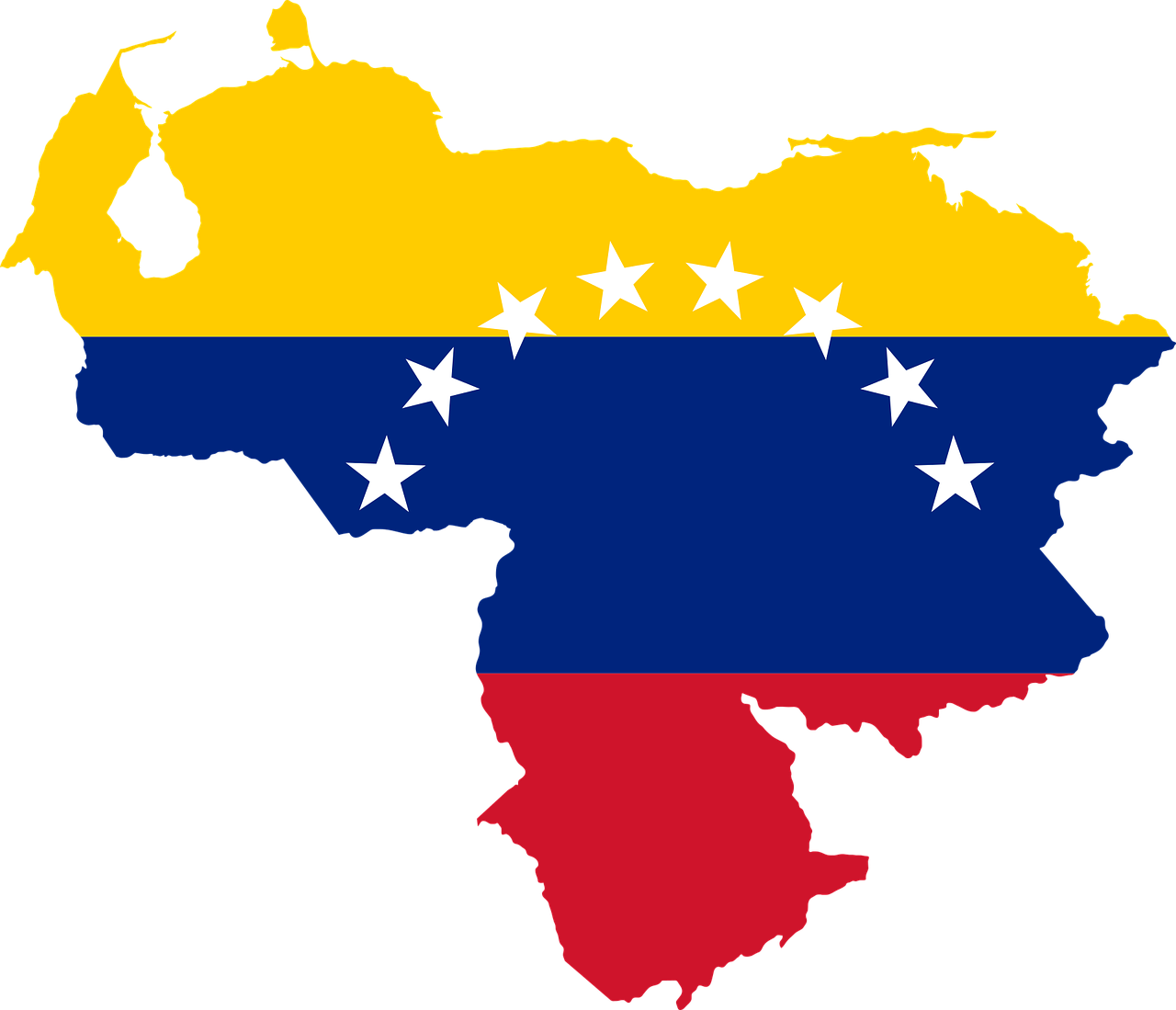
In this blog post, we follow up on our previous reporting relating to a brand-new program launched by the Biden administration that will allow for the admission of up to 24,000 Venezuelans, closely following in the footsteps of the Uniting for Ukraine program.

Today, October 18, 2022, the U.S. Citizenship and Immigration Services updated its “Venezuela” webpage including all the details regarding this new program. Applications are currently being accepted by USCIS.

We break down the details for you down below.


What is this program all about?


USCIS has launched a new process that allows Venezuelan nationals and their immediate family members to come to the United States in a safe and orderly manner.

Like the Uniting for Ukraine program, nationals of Venezuela who are outside the United States and who lack U.S. entry documents will be considered for admission to the United States on a case-by-case basis.

Those who are found eligible, will receive advance authorization to travel to the United States and a temporary period of parole for up to 2 years for urgent humanitarian reasons and significant public benefit.

After being paroled into the United States, beneficiaries are eligible to apply for discretionary employment authorization from USCIS. To apply for an Employment Authorization Document (EAD), applicants must submit Form I-765, Application for Employment Authorization, using the (c)(11) category code with the required fee or apply for a fee waiver.

Using the same Form I-765 form, applicants can also apply for a Social Security number (SSN) by following the form instructions.

If you request an SSN in Part 2 (Items 13a-17.b) of your Form I-765, and your application is approved, USCIS will electronically transmit that data to the Social Security Administration (SSA), and SSA will assign you an SSN and issue you a Social Security card. SSA will mail your Social Security card directly to the address you provide on Form I-765.

Continue reading

borders-ga8db894a2_1280

The Biden administration is ramping up efforts to secure the Southwest border to curb illegal immigration stemming from the humanitarian and economic crisis in Venezuela.

In a press release issued October 12, 2022, the Biden administration announced that effective immediately, Venezuelans who enter the United States between ports of entry, without authorization, will be returned to Mexico, pursuant to its agreement with the Mexican government.

The U.S. government also announced a new process to efficiently grant admission of up to 24,000 Venezuelans into the country, that mirrors the Uniting for Ukraine program. This effort is designed to encourage lawful and orderly admission to the United States for Venezuelans.

To be eligible for this new program, Venezuelans must:

  • have a supporter in the United States who will provide financial and other support;
  • pass rigorous biometric and biographic national security and public safety screening and vetting; and
  • complete vaccinations and other public health requirements.

Continue reading

cartoon-g79f09563f_1280

Happy Columbus Day! We start the week with great news for green card applications.

The U.S. Citizenship and Immigration Services (USCIS) recently announced that it is extending a policy that previously waived the requirement for civil surgeons to sign the Form I-693, Report of Medical Examination and Vaccination Record, no more than 60 days before filing the green card application.

USCIS previously issued its waiver policy until September 30, 2022 but has decided to extend the waiver until March 31, 2023.


Why the extension?


Due to processing delays caused by the COVID-19 pandemic, USCIS has decided that extending this policy is necessary to provide relief to applicants for the delays and difficulties that it takes to complete the green card medical examination.

Moving forward, the waiver will apply to all Form I-693 medical examinations for green card applications that have not been adjudicated, regardless of when the application was submitted to USCIS or when a civil surgeon signed the Form I-693.

USCIS expects this extension to provide much needed relief to Afghan nationals evacuated under Operation Allies Welcome, who completed immigration medical examinations but could not apply for adjustment of status within 60 days of a civil surgeon signing their Form I-693.

For more information about this important update, please click here.

Continue reading

work-gcb8fa6c49_1920

In this blog post we share with you some great news for lawful permanent residents filing Form I-90 Application to Replace or Renew existing permanent resident cards.

On September 28, 2022, the U.S. Citizenship and Immigration Services (USCIS) announced that beginning September 26th the agency will be automatically extending the validity of Permanent Resident Cards (Green Cards) to 24 months for lawful permanent residents who file the Form I-90.

All green card holders who file Form I-90 to renew an expiring or expired green card will receive this automatic extension on their receipt notice. Previously, Form I-90 receipt notices for green card renewal applicants provided an automatic extension of only 12-months.

USCIS has already started printing amended receipt notices for individuals that have a pending Form I-90 application with USCIS, granting the 24-month extension.

These receipt notices can be presented with an expired Green Card as evidence of continued status to employers, and during international travel. The additional 12-month validity period was provided as a form of relief to those applicants who have been experiencing longer processing times.

Continue reading

priest-g2c15dd1f9_1920

Have you ever wondered: is there an exception to the COVID-19 vaccine requirement mandated by the U.S. Citizenship and Immigration Services (USCIS) for those undergoing the green card process?

In this blog post, we share with you how our office was able to obtain successful waivers of the COVID-19 vaccine requirement, information about what exceptions exist to the vaccine requirement, the criteria that must be proven to obtain a vaccine waiver, and the resulting victories we gained on behalf of our clients.

We also describe how we were able to accomplish vaccine waiver approvals, by presenting an abundance of documentary evidence to help these individuals prove their case.


An Overview: What is the COVID-19 Vaccination Requirement


In response to the rapid rise in Coronavirus cases, the U.S. government announced that starting October 1, 2021, those applying for permanent residency (a green card) within the United States, or an immigrant visa abroad, would be required to be fully vaccinated against COVID-19 (one or two doses depending on the vaccine taken).


The Medical Examination Form I-693

As part of the green card process, applicants are required to complete a medical examination conducted by a civil surgeon on Form I-693, to establish that they are not inadmissible to the United States on public health grounds. The government made it a matter of policy as of October 1, 2021, to require all those subject to the medical examination requirement to complete the COVID-19 vaccination to prove their admissibility (and therefore) receive approval of their green cards.

The U.S. Citizenship and Immigration Service announced that this policy would apply “prospectively to all Forms I-693 [medical examinations] signed by the civil surgeons” on or after October 1, 2021. The agency also took steps to revise Form I-693 and its instructions to include the new vaccination requirement.

Its policy guidance followed the recommendations of the U.S. Centers for Disease Control and Prevention’s (CDC) August 17, 2021, update to the Technical Instructions for Civil Surgeons. The CDC update requires applicants subject to the immigration medical examination to “complete the COVID-19 vaccine series [in addition to the other routinely required vaccines] and provide documentation of vaccination to the civil surgeon or panel physician in person before completion of the medical examination.”


Does the COVID-19 vaccination requirement also apply to those seeking immigrant visas at U.S. Embassies and Consulates abroad?


Yes. The government made clear that the COVID-19 vaccination requirement applies to those seeking to adjust their immigration status within the United States, as well as applicants applying for immigrant visas at U.S. Embassies and Consulates abroad. That is because complete vaccination is necessary for a medical examination conducted by a civil surgeon or physician abroad, as part of the green card admissibility process.

Continue reading

map-of-the-world-g1ddce7b60_1920

Welcome to the start of a brand-new week. In this blog, we cover new reports from the U.S./Mexico border addressing the growing number of asylum seekers entering the United States from Tijuana into San Diego, through a process known as “humanitarian parole.”

According to a recent report published by the National Institute for Migration in Baja California, in April of 2022, just under 400 migrants were granted permission to cross through Ped West, one of two pedestrian crossings at the San Ysidro Port of Entry.

When compared to crossings in August, that number has skyrocketed to 4,075 migrants entering using their humanitarian parole document.


What is humanitarian parole?

  • Humanitarian parole is a process by which a foreign national (who may be inadmissible or otherwise ineligible for admission into the United States) may enter for a temporary period of time for urgent humanitarian reasons or significant public benefit by filing Form I-131 Application for Travel Document and Form I-134 Affidavit of Support including their supporting documentation.

In addition to those entering with humanitarian parole, the Institute reports that more than 2,500 Haitian refugees have been granted permission to cross into the United States, as well as 440 migrants from Honduras fleeing organized crime.

At the same time, the Institute reports that many migrants in Tijuana are being falsely misled to believe that migrant shelters can help them bypass detention upon requesting asylum at the U.S. border.

Sadly, the Biden administration has not done little to address the growing number of asylum seekers. In fact, the Biden administration has been silently asking the Mexican government to allow for the expulsion of thousands of asylum-seeking migrants from Cuba, Nicaragua, and Venezuela through a little-known policy known as “Title 42.” This expulsion policy began under the Trump administration in March 2020 and has continued under President Biden. Since that time, the Mexican government agreed to accept expulsions of its citizens, along with those of El Salvador, Guatemala, and Honduras totaling more than 2 million migrants.

According to the Washington Office on Latin America (WOLA) the expulsion of migrants from Mexico, El Salvador, Guatemala, and Honduras is near the highest-level seen in over 15 years, but has declined from 2021 (154,000 in July 2021, 104,000 in July 2022). It is estimated that the U.S. government has used Title 42 to expel 78 percent of these migrants.

Continue reading