Articles Posted in Executive Actions

passport-8621284_1280

Harvard Travel Ban Blocked by Federal Judge

Earlier this month President Trump had signed an Executive Order suspending the entry of all nonimmigrants and exchange visitors attending Harvard University, for a period of 6 months starting June 4th (the effective date of the proclamation).

Those affected by the executive order were F, J, and M visa holders outside of the United States as of the date of the proclamation. The suspension did not apply to nonimmigrants entering the United States to attend other universities.

Shortly after the executive order was issued, a federal judge granted a preliminary injunction, temporarily halting its enforcement until the court can rule on the merits of the case.

Following the court’s actions, the State Department ordered embassies and consulates around the world to resume visa processing for Harvard University students and exchange visitors.

As a result, Harvard students can breathe easier. While the preliminary injunction remains in effect, consulates are barred from denying visas to Harvard students and exchange visitors, and visa holders attending Harvard cannot be refused entry to the United States.

For more information, please click here.

Continue reading

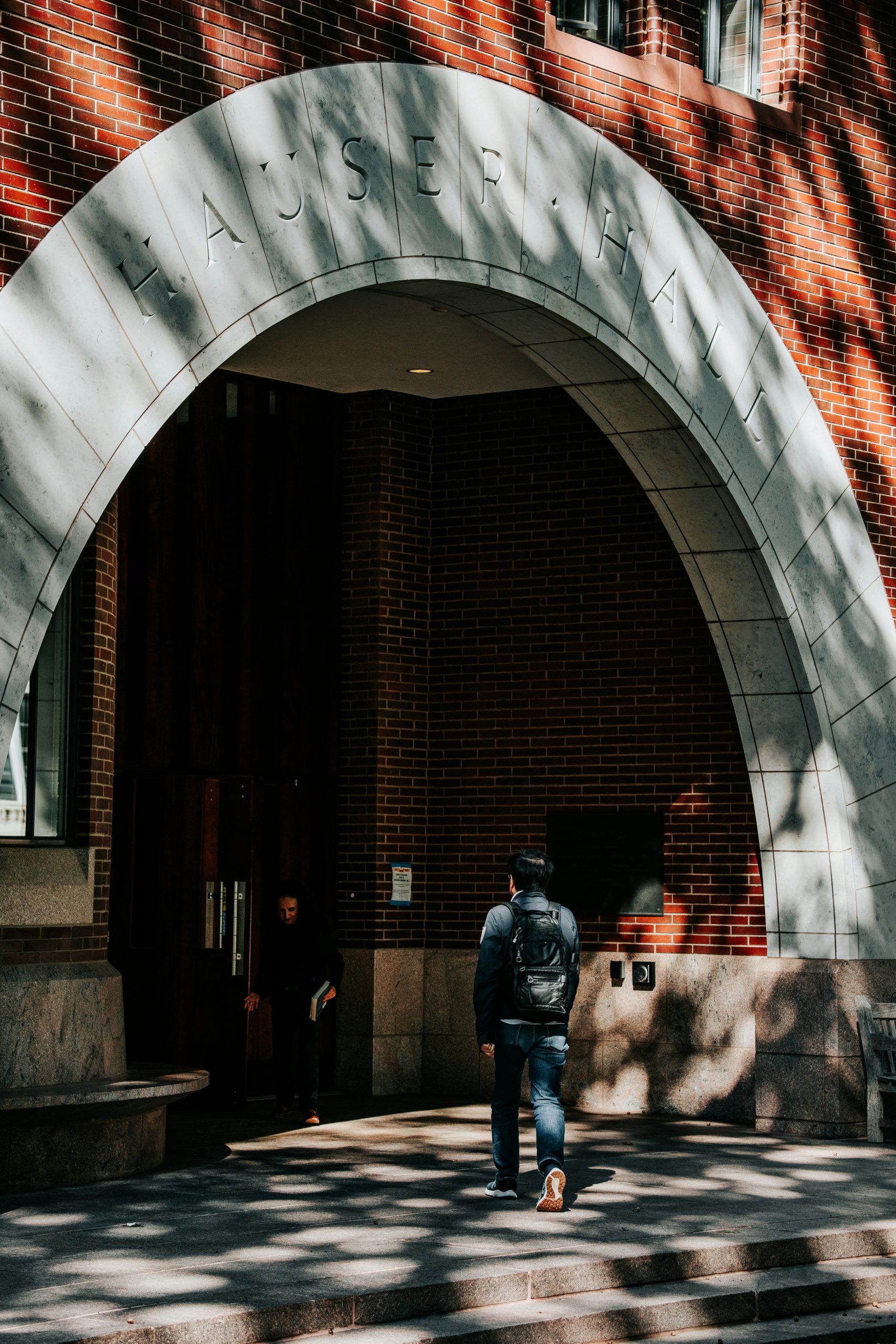
beverly-kimberly-tfiGOGEmJVI-unsplash-scaledOn June 4, 2025, President Trump continued his ongoing assault on Harvard University with a new Executive Order entitled, “Enhancing National Security by Addressing Risks at Harvard University.”

Effective June 4th, the order suspends the entry of all nonimmigrants and exchange visitors bound for Harvard University for a period of 6 months, citing national security concerns over Harvard’s failure to police foreign students and ensure that foreign nationals admitted on student and exchange visitor visas remain in compliance with Federal law.

The executive order also accuses Harvard of having extensive entanglements with foreign adversaries including China.

Who is affected?


All nonimmigrants who enter or attempt to enter the United States to begin attending Harvard University through the Student and Exchange Visitor Program (SEVP) after the effective date of the proclamation (June 4, 2025).

The executive order further empowers the Secretary of State Marco Rubio to consider in his discretion whether foreign nationals who currently attend Harvard University and are in the United States pursuant to F, M, or J visas, should have their visas revoked pursuant to the proclamation.

Who is not affected?


The suspension does not impact Harvard students who are already inside the United States with a valid student visa as of the effective date of the proclamation.

The suspension also does not apply to any alien who enters the United States to attend other universities through the Student and Exchange Visitor Program (SEVP).

It also does not apply to any alien whose entry would be in the national interest, as determined by the Secretary of State, the Secretary of Homeland Security, or their designated representatives.

Impact on Harvard Students Currently in the United States


The executive order does not:

  • Restrict change or extension of status applications filed with U.S. Citizenship and Immigration Services (USCIS)
  • Revoke existing visas, I-94, or STEM OPT work authorization status for students currently in the United States

Continue reading

united-states-8911597_1280After months of speculation and buildup, President Trump’s long-anticipated travel ban has finally arrived.

Issued by executive order on June 4th President Trump’s travel ban entitled “Restricting the Entry of Foreign Nationals to Protect the United States from Foreign Terrorists and Other National Security and Public Safety Threats,” closely mirrors the leaked draft that first surfaced in early March through the New York Times.

That draft hinted at sweeping restrictions targeting so-called “red,” “orange,” and “yellow” countries—coded designations that formed the backbone of President Trump’s proposed directive.

While there are notable differences, as predicted, the administration has framed the ban as a national security measure, but critics argue it remains susceptible to being challenged or overturned through lawsuits that may soon be filed in federal court.

Here’s what you need to know.

President Trump’s travel ban goes into effect today Monday June 9, 2025, at 12:01 am Eastern Daylight time.


Who it Affects


Full Suspension on Nationals from Countries of Concern

The travel ban temporarily suspends the entry of both immigrants and non-immigrants from 12 designated countries who are outside the United States and do not have a valid visa on the effective date of the proclamation, including Afghanistan, Burma, Chad, the Republic of the Congo, Equatorial Guinea, Eritrea, Haiti, Iran, Libya, Somalia, Sudan, and Yemen.

However, several key exceptions apply for lawful permanent residents (LPRs), immediate family members of U.S. citizens, dual nationals, athletes and teams competing in major international sporting events such as the World Cup and the Olympics, and others (a full list of exceptions is provided below).

Continue reading

court-5665886_1280
On Wednesday, May 28, 2025, a federal judge from the United States District Court for the District of Massachusetts issued a nationwide court order lifting the Trump administration’s suspension of adjudications for immigration benefit applications submitted by noncitizens who were lawfully paroled into the United States under certain categorical parole programs implemented during the Biden administration.

Those affected by the suspensions were parolees in the following programs:

  • Military Parole in Place (MPIP) for members of the U.S. armed forces to petition their relatives for parole
  • Uniting for Ukraine (U4U), for Ukrainian citizens and their family members to apply for advanced authorization to travel to the United States to request parole for up to two years and apply for employment authorization with USCIS
  • Noncitizens from Cuba, Haiti, Nicaragua, and Venezuela (CHNV) authorizing parole requests of up to two years, and the ability to apply for employment authorization from USCIS
  • Family Reunification Parole (FRP) programs permitting individuals from Colombia, Cuba, Guatemala, Ecuador, Haiti, Honduras, and El Salvador to receive advanced authorization to travel to the United States while their family-based immigrant visas are pending.
  • Central American Minors Program (CAM) for individuals from El Salvador, Honduras, and Guatemala lawfully present in the United States to request immediate relatives not present in the United States to be granted access to the Refugee Admissions Program.

Continue reading

airport-8081875_1280On Friday May 9, 2025, President Trump signed executive order “Establishing Project Homecoming,”a new White House initiative aimed at encouraging the voluntary departure of undocumented immigrants from the United States.

This new policy offers financial incentives and logistical support to those who facilitate self-deportation, with the stated goal of reducing the fiscal and social burdens associated with deportation to prioritize funding for Americans in need.

Key Provisions of Project Homecoming:

  • Free Government-Funded Flights:Undocumented immigrants are offered complimentary flights to any country willing to accept them, excluding the United States.This service is accessible through the government’s new “CBP Home” mobile application and at participating airport
  • $1,000 Exit Bonus: Individuals who voluntarily and permanently depart the U.S. under this program are allegedly eligible to receive a $1,000 “exit bonus” upon successful relocation.
  • Concierge Travel Assistance: A government-provided concierge service is available at airports to assist individuals, even those lacking valid travel documents from their home countries, in booking flights and navigating the voluntary departure process.

Continue reading

pieter-van-de-sande-r6BdUpN_iSk-unsplash-scaledPresident Trump’s first 100 days in office have been marred by controversial actions targeting both legal and illegal immigration.

In its latest move, the Trump administration is going even further by targeting “sanctuary” cities which are state and local jurisdictions that limit their cooperation with federal immigration law enforcement officials. “Sanctuary” cities have been known to enact policies that prohibit the detention of individuals solely based on their immigration status and restrict the sharing of information about immigrants with federal authorities.

To force them into compliance, the Trump administration has begun filing lawsuits against sanctuary cities seeking to penalize them for their disobedience.

The first of these lawsuits targets Colorado and Denver for impeding federal immigration authorities from carrying out deportations. Denver is one of many states with state laws that prevent state and local officials from cooperating with federal immigration authorities. For instance, a Denver state law prevents the use of the city’s resources to assist with immigration enforcement, while a separate executive order establishes Denver as a “sanctuary city,” welcoming undocumented immigrants.

If Trump has it his way, the lawsuit would undo Colorado’s sanctuary state laws by declaring them unconstitutional and prohibiting their enforcement.

Interestingly, in responding to the lawsuit, the governor of Colorado Jared Polis denied Colorado’s status as a sanctuary state and said that Colorado regularly cooperates with federal law enforcement authorities.

Continue reading

donald-trump-4921211_1280On April 28th, President Donald Trump signed two new executive orders that significantly impact U.S. immigration policy and enforcement.

These presidential actions are a continued effort to prioritize national security by enhancing law enforcement capabilities and imposes penalties on “sanctuary” cities that limit cooperation with federal immigration authorities.

  • Strengthening and Unleashing America’s Law Enforcement to Pursue Criminals and Protect Innocent Citizens

The first executive order entitled Strengthening and Unleashing America’s Law Enforcement to Pursue Criminals and Protect Innocent Citizens,” empowers state and local law enforcement agencies to take stronger action against crime by expanding their authority and increasing investment in prison infrastructure. It also holds state and local officials accountable for obstructing criminal law enforcement or violating civil rights.

Specifically, it directs the Attorney General to prosecute officials who

willfully and unlawfully direct the obstruction of criminal law, including by directly and unlawfully prohibiting law enforcement officers from carrying out duties necessary for public safety and law enforcement; or

unlawfully engage in discrimination or civil-rights violations under the guise of “diversity, equity, and inclusion” initiatives that restrict law enforcement activity or endanger citizens.

Continue reading

registration-7273476_1280Starting April 11, 2025, USCIS will begin requiring certain foreign nationals to register with the agency and submit to fingerprinting if they remain in the United States for 30 days or longer. Foreign nationals who remain in the U.S. for less than 30 days are not required to register.

Failure to comply may expose you to criminal or civil penalties, but registering also means providing sensitive personal information to USCIS that may be used in future enforcement actions.

This makes it important for noncitizens to seek the guidance of an immigration attorney. (See important warnings below.)

In this blog post you will learn what the registration requirement is about, who is required to register, the risks of registering, and information about the registration process.


What is the Alien Registration Requirement?


The requirement for foreign nationals to register with the U.S. government is not new—it began in 1940, when Congress first passed a law requiring all foreign nationals to register with the federal government, to provide biographic details (fingerprints), and carry proof of their registration.

Most foreign nationals have been unaware of this requirement because the vast majority are considered “automatically registered” when undergoing the routine visa issuance process and lawfully entering the United States through a port of entry.

However, the alien registration requirement had one glaring flaw. Those who entered the country unlawfully had no way to comply with the registration requirement and meet their obligations under the law.

Continue reading

statue-of-liberty-9275095_1280Today March 21, 2025, the Department of Homeland Security (DHS) released an advance copy of a notice in the Federal Register ending four Biden-era parole programs for Cuba, Haiti, Nicaragua, and Venezuela (CHNV).

When


The temporary parole period of aliens in the United States under the CHNV parole programs will terminate on April 24th (30 days from the date of the notice’s publication in the Federal Register)

Parolees without a lawful basis to remain in the United States following this termination of the CHNV parole programs must depart the United States before the program’s termination date.

Who will be impacted


Nationals from Cuba, Haiti, Nicaragua and Venezuela who flew to the U.S. under Biden’s CHNV humanitarian parole program.

Parolees granted admission under CHNV were given a temporary two-year parole period to remain in the U.S., work authorization, and protection from deportation. The purpose of the program was to reduce illegal immigration at the southern border and provide alternative legal avenues.

Approximately 532,000 nationals entered the United States using this program.

Termination of Employment Authorization Documents


Parole-based employment authorization for CHNV parolees will also automatically terminate on April 24th and will be revoked pursuant to 8 CFR 274a.14(b).

Expedited Removal


Following parole termination, DHS intends to promptly remove aliens who entered the United States under the CHNV parole programs, who do not depart the United States before their parole termination date and who do not have any lawful basis to remain in the United States.

Continue reading

boeing-159589_1280A new article published in the New York Times reveals the 43 countries that are reportedly included in President Trump’s new travel ban, expected to be released by executive order on Friday March 21st.

According to anonymous government sources, the White House is considering a draft proposal establishing partial or full suspensions on entry to the United States for countries falling into three different tiers: red, orange, and yellow.

The “red” list of countries includes nationals whose entry to the United States would be barred for a temporary period that is yet to be determined by the U.S. government including:

  • Afghanistan
  • Bhutan
  • Cuba
  • Iran
  • Libya
  • North Korea
  • Somalia
  • Sudan
  • Syria
  • Venezuela and
  • Yemen

The draft proposal also includes an “orange” list of countries whose nationals would not be barred from the United States, but who must be properly vetted and screened at mandatory in-person visa interviews before gaining admission to the United States.

Continue reading