Articles Posted in LPRs

According to recent data released by the U.S. Citizenship and Immigration Services (USCIS), applications for U.S. Citizenship surpassed pre-pandemic levels in fiscal year 2023, welcoming 878,500 new citizens from all over the world.

To be eligible for naturalization, applicants must meet certain eligibility requirements set forth in the Immigration and Nationality Act (INA).

The requirements generally include being a lawful permanent resident (LPR) for at least five years or at least three years for spouses of U.S. Citizens. Applicants must establish that they have good moral character, have continuously and physically resided in the United States as a green card holder, be proficient in basic spoken and written English, pass the required civics and English examination, among other requirements. Please note that there are other special naturalization provisions that exempt certain applicants, including certain spouses of U.S. citizens and applicants with military service, from one or more of the general requirements for naturalization.

Continue reading

blue-2618088_1280

The February 2024 Visa Bulletin was recently published by the Department of State.

While the Dates for Filing Chart remains unchanged from the previous month, the Final Action Dates Chart shows some modest advancements in some of the employment-based preference categories, specifically EB-1 worldwide continues to be current, EB-2 Worldwide will advance by two weeks to November 15, 2022, EB-3 Professional and Skilled Workers, India will advance by one month to July 1, 2012, and the rest of the world will advance by one month to September 1, 2022. EB-5 India will advance by one week to December 15, 2015, while the rest of the world will remain current.

For family-sponsored categories, the Final Action Dates for F2A Worldwide, F2A China, F2A India, and F2A Philippines will advance by more than 3 months to February 8, 2020, while F2A Mexico will advance to February 1, 2020. The February Dates for Filing remain the same as the previous month.

Whether you are applying for an immigrant visa at a U.S. Consulate overseas or applying for adjustment of status to permanent residence in the United States, you won’t want to miss these new updates.


Highlights of the February 2024 Visa Bulletin


Employment-based categories

  • The February Dates for Filing remain the same as January 2024

Final Action Dates

  • EB-1 India: The EB-1 India Final Action Date will remain at September 1, 2020.
  • EB-1 China: The EB-1 China Final Action Date will remain at July 1, 2022
  • EB-1 Worldwide: All other countries will remain current.
  • EB-2 India: The EB-2 Final Action Date for India will remain at March 1, 2012
  • EB-2 China: The EB-2 China Final Action Date will remain at January 1, 2020.
  • EB-2 Worldwide: Final Action Dates for the remaining countries in EB-2 will advance by two weeks, to November 15, 2022.
  • EB-3 Professional/Skilled Workers: The EB-3 Professional/Skilled Worker Final Action for China, will remain at September 1, 2020. India will advance by one month to July 1, 2012. Final Action Dates for the remaining countries in the category will advance by one month to September 1, 2022.

Continue reading

chasing-3744753_1280

On January 5, 2024, the U.S. Citizenship and Immigration Services (USCIS) released updated policy guidance describing how the agency analyzes an employer’s ability to pay the offered wage to prospective employees with employment-based immigrant petitions requiring a job offer, filed with USCIS under the first, second, and third preference categories, also known as EB-1, EB-2, and EB-3.

Specifically, the policy guidance clarifies how an employer’s ability to pay will be demonstrated where a beneficiary of a pending Form I-140 Immigrant Petition for Alien Worker, decides to change to a new employer under the American Competitiveness in the Twenty-First Century Act of 2000 (AC-21).

As a general matter, employers must be able to demonstrate their continuing ability to pay the offered wage to employees with petitions filed under the employment first, second, and third preference categories (EB-1, EB-2, EB-3) starting from the priority date of the underlying I-140 petition, until the beneficiary receives lawful permanent resident status (a green card).

Under the updated guidance, when an employee moves to a new employer under AC-21 while the underlying I-140 petition is still pending, USCIS will determine whether the petitioner meets its ability to pay requirement by only reviewing the facts in existence at the time of filing. This means that, USCIS will only consider initial evidence submitted with the petition (and any responses to Requests for Evidence) to determine if the petitioner has established its ability to pay from the priority date to the date of filing the I-140 petition.

Continue reading

business-5851887_1280

It’s official. The U.S. Citizenship and Immigration Services (USCIS) has confirmed that it will be increasing the validity period of work permits also known as Employment Authorization Documents (EADS) to 5 years, for certain categories of noncitizens who are employment authorized incident to their immigration status and those who must apply for employment authorization including:

  • Refugees
  • Asylees
  • Noncitizens paroled as Refugees
  • Noncitizens granted Withholding of Removal
  • Noncitizens with pending applications for Asylum or Withholding of Removal
  • Noncitizens with pending applications for Adjustment of Status (green cards) under INA 245
  • Noncitizens seeking Suspension of Deportation or Cancellation of Removal

Additionally, USCIS has released policy guidance clarifying that the Arrival/Departure Record (Form I-94) may be used as evidence of an alien’s status and employment authorization for certain EAD categories that are employment authorized incident to their immigration status or parole.

These changes can be found in the USCIS Policy Manual, and are also described in USCIS Policy Alert 2023-27 dated September 27, 2023.


What’s changed?


Previously, USCIS policy allowed for a maximum 2-year validity period of Employment Authorization Documents (EADs) for most categories of immigrants indicated above, and a maximum 1-year validity period for noncitizens paroled as refugees and those seeking suspension of deportation or cancellation of removal.

USCIS is now revising its guidelines to increase the maximum EAD validity period for these categories up to 5 years.

The purpose of increasing the validity period is to reduce the frequency in which noncitizens must file Form I-765 Application for Employment Authorization to renew their work permits (EADs).

Continue reading

american-flag-gc7e239910_1920

If you are considering applying for U.S. Citizenship in the new year, you may be interested to learn that yesterday December 15, 2022, the Department of Homeland Security (DHS), published a notice in the Federal Register announcing that U.S. Citizenship and Immigration Services (USCIS) plans to conduct trial testing of a newly redesigned naturalization examination for N-400 naturalization applicants in the year 2023.

The main purpose of the trial is to test an updated format of the civics component that evaluates an applicant’s knowledge and understanding of the fundamentals of U.S. history, as well as introduce a brand-new English-speaking component that may become the new standard of the N-400 examination.


Why the change?


The Department of Homeland Security (DHS) has implemented this change in response to President Biden’s Executive Order 14012, Restoring Faith in Our Legal Immigration Systems and Strengthening Integration and Inclusion Efforts for New Americans, which includes a directive to review the naturalization process. To align with the goals of this Executive Order, USCIS has called for a review of the naturalization examination and recommended redesigning the speaking and civics test to improve testing standards.


How will the trial testing occur?


USCIS has said that the trial will be rolled out with the assistance of nationwide volunteer community-based organizations known as CBOs working with immigrant English language learners and lawful permanent residents preparing for naturalization. USCIS will seek approximately 1,500 individuals enrolled in adult education classes to take the trial test. The agency may use the results of the trial to support its proposed changes to the naturalization test.

The trial will test both the standardized English-speaking test as part of the requirement to demonstrate an understanding of the English language, and the civics examination with updated content and format. The trial testing will not include the reading or writing portions of the naturalization examination.

Continue reading

international-g0a4ba2900_1920

This week in immigration news, we share new developments for Afghan nationals. The Biden administration recently announced its plan to launch a new portal that would facilitate the reunification of Afghans immigrants with their family members.


What is it all about?


The U.S. Department of State run portal would provide a place for Afghans in the United States to search for family members who were separated from them following the U.S. withdrawal from Afghanistan last year.

Previously, Afghans needed the help of nonprofit groups such as the United National Refugee Agency (UNHCR) and U.S. Department of State liaisons to help them locate family members left behind. Individuals were required to complete lengthy questionnaires, provide information, and submit documentation that would be independently verified by state department liaisons.

Now, the state-run portal will provide a central location where users can upload information to help locate their family members. Users will be able to enter their own status on the website, and complete forms to enable their relative to gain entry to the United States.

Additionally, the Biden administration is said to be considering waiving the $535 government filing fee associated the filing of Form I-130 Petition for Alien Relative, which allows a U.S. citizen to petition the entry of their relative to the United States.

According to a Department of State spokesperson, through the resettlement effort known as Operation Allies Welcome, immediate family members of Afghans who relocated to the United States are strongly being considered for parole. Immediate relatives of U.S. Citizens, lawful permanent residents, formerly locally employed staff members of the U.S. Embassy in Kabul, and certain Special Immigrant Visa (SIV) applicants are also being prioritized to receive parole.

Continue reading

chart-g1cb8459b5_1280

DACA Renewal E-Filing is here!

Exciting news is on the horizon for those filing a renewal of their deferred action under the Deferred Action for Childhood Arrivals (DACA)!

This week, the United States Citizenship, and Immigration Services (USCIS) announced that applicants will now be able to file their applications online on Form I-821D, Consideration of Deferred Action for Childhood Arrivals. Additionally, renewal applicants may also file applications to renew their Employment Authorization Document (EAD) online by filing Form I-765 Application for Employment Authorization and the Form I-765 Worksheet.

This move will now make it easier for applicants to obtain a renewal of their status faster and more efficiently.

While the agency hopes to expand the possibility of electronic filing to a broader pool of applicants in the future, the e-file option is currently only available for individuals who have been previously granted DACA.

The e-filing option is expected to help reduce the substantial backlogs at the USCIS level. Currently, USCIS receives nearly half a million Form I-821D DACA requests every fiscal year, and processes more than 8.8 million requests for immigration benefits. As time has gone on, the agency has allowed online filings to streamline the application process.

How can you file online?


DACA renewal applicants who wish to file Form I-821D and Form I-765 online, must first create a USCIS online account, to submit their forms, pay fees and track the status of any pending USCIS immigration request throughout the adjudication process. There is no cost to set up an account, and one of the added benefits is that applicants have the ability to communicate with USCIS through a secure inbox and respond online to Requests for Evidence received.

Continue reading

confused-gda7145471_1280

In today’s blog post, we share some interesting Question and Answer responses recently provided by the Department of State’s Office of the Assistant Legal Adviser for Consular Affairs (L/CA), in a meeting with the American Immigration Lawyers Association (AILA).

The responses below provide some important insight into current immigration policies and procedures taking place amid the ongoing COVID-19 pandemic.

Here, we summarize the most interesting questions covered during the January 20 meeting:


Department of State/AILA Liaison Committee Meeting


January 20, 2022 Q & A Highlights


Q: What role do Consular sections assume when determining whether an individual is exempt from the CDC COVID-19 vaccine requirement to gain entry to the U.S.?

A: Consular sections’ role in the process is to ensure that an individual’s request for a [vaccine] exception is filled out in full, and to transmit those requests to the CDC.


Q: If consular posts are involved in transmitting information in support of a humanitarian exception to CDC, what is the process, if any, for making such a request of a consular post outside the context of a visa interview?

A: Travelers should contact the consular section of the nearest embassy or consulate using the information provided on that embassies or consulate’s website


Q: What is the Department of State doing to alleviate the substantial backlogs created by the slowdown of operations at Consular posts and Embassies worldwide?

A: The Department is planning to hire foreign service officers above attrition in FY 2022. The majority will be assigned to a consular position after initial training. Additionally, the Department continues to recruit Limited Non-career Appointment (LNA) Consular Professionals. With very limited LNA hiring in FY 2020 and a pause on LNA hiring in FY 2021 due to CA’s budgetary constraints, Consular Affairs plans to hire more than 60 LNAs in FY 2022

Consular Affairs is working with State’s office of Global Talent Management to ramp up hiring in FY 2022, but many posts will not see these new officers until the second half of FY 2022 or FY 2023, particularly for officers assigned to positions requiring language training. Increased hiring will not have an immediate effect on reducing current visa wait times. Because local pandemic restrictions continue to impact a significant number of our overseas posts, extra staff alone is not sufficient to combat wait times for interviews.


Q: Can Consular Affairs please advise regarding efforts to resume routine consular services?

A: Consular sections abroad must exercise prudence given COVID’s continuing unpredictability. The emergence of the Omicron variant has prompted countries to reevaluate plans to relax travel bans, thereby leading consular sections abroad to recalibrate plans to resume services. Some posts have already fully resumed routine services. Others, in an abundance of caution and out of concern for the health of both consular staff and clientele, are slowly reintroducing some routine services.

Continue reading

tingey-injury-law-firm-L4YGuSg0fxs-unsplash-1-scaled

Welcome back to Visalawyerblog! In this blog post we share with you some recent news regarding a new class action lawsuit that has been filed by 49 plaintiffs against the Department of Homeland Security (DHS) and United States Citizenship and Immigration Services (USCIS), seeking relief from the extreme processing delays currently taking place for I-765 applications for employment authorization (EADs) filed by individuals seeking adjustment of status (AOS) in the United States, and for I-765 applications filed by E-2 dependent spouses with USCIS.

Currently, USCIS reports that I-765 work permit applications based on a pending I-485 adjustment of status application are taking between 20 to 21.5 months to process at the California Service Center; while it is taking 9 to 9.5 months to process work permit applications at the National Benefits Center; and 9.5 to 10.5 months to process such applications at the Nebraska Service Center.

The new legal challenge against the government has been mounted by the American Immigration Lawyers Association (AILA), Wolfsdorf Rosenthal LLP, Joseph and Hall PC, Kuck Baxter Immigration LLC, and Siskind Susser PC.

The lawsuit seeks to hold the government accountable once and for all for the exorbitant processing times taking place for work permit applications to be adjudicated, especially those at the California Service Center. Under the law, applicants for adjustment of status are afforded the option of applying for temporary employment authorization while their green card applications are pending with USCIS, through what is supposed to be an easy procedure that involves filing a simple I-765 application for employment authorization. In normal circumstances, such employment authorization applications took on average 7 to 9 months to be adjudicated. Since the onset of the pandemic however USCIS has not been able to adjudicate these applications within reasonable timeframes.

Processing times have gotten worse and worse to the point that applicants are receiving their green card interview appointments before even coming close to receiving an approved employment authorization document. This has resulted in applicants being unable to seek employment while waiting for their green card applications to process. This has caused great cause for concern for individuals who have a job offer lined up or who need to work to maintain their households. Further, the American economy is experiencing more and more labor shortages as they struggle to get individuals back to work. The situation at the USCIS level is making it even more difficult for American businesses to find qualified workers.

Continue reading

hakan-nural-niBllet7sTw-unsplash-scaled

In this blog post we share with you some breaking news for green card applicants applying for adjustment of status on Form I-485, as well as those applying for immigrant visas from abroad.

As part of the green card process, USCIS and the Department of State require applicants to undergo a medical examination with a doctor designated as a civil surgeon, to establish that the applicant is not inadmissible to the United States on public health grounds.

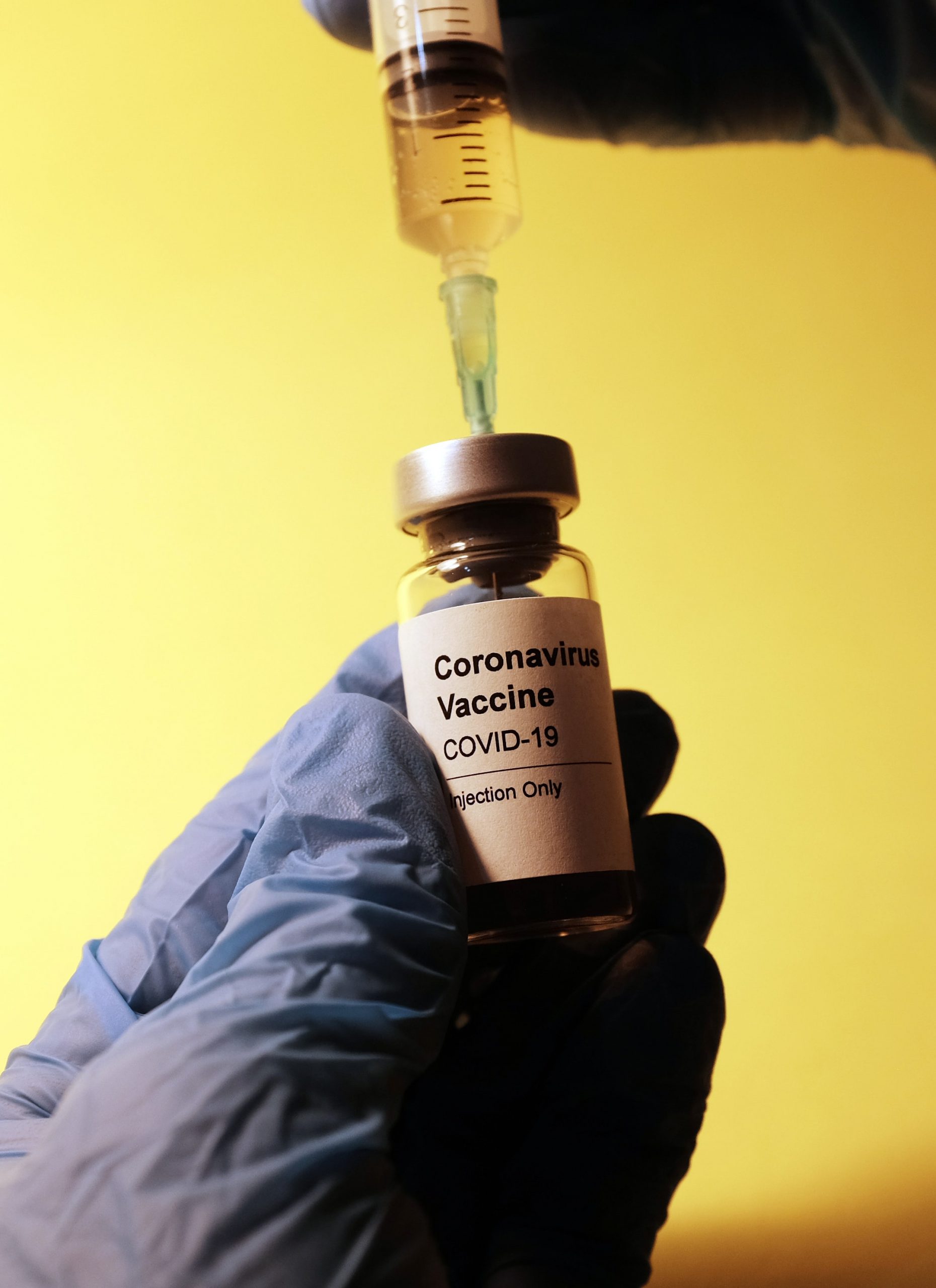
According to new guidelines released by the Centers for Disease Control, beginning October 1, 2021, green card applicants will now be required to establish that they have received a complete COVID-19 vaccine series, in order to be deemed eligible for permanent residence. Following the release of this new guidance, COVID-19 was added to the list of vaccinations required of those seeking U.S. lawful permanent residence.

The new vaccine requirement will apply to routine medical examinations necessary for both adjustment of status applicants applying for green cards in the United States and immigrant visa applicants applying at U.S. embassies and consulates abroad.


Who must take the COVID-19 vaccine?


All applicants (1) applying for I-485 adjustment of status (a green card) or (2) those applying for an immigrant visa abroad, who will receive their medical examination from a Civil Surgeon or Panel Physician on or after October 1, 2021, will be subject to this requirement and are encouraged to complete a COVID-19 vaccine series as soon  as possible.

Eligible applicants must complete the COVID-19  vaccine  series if  a  COVID-19  vaccine  listed  for  emergency  use  by  the World  Health  Organization  (WHO)  or  licensed  or  authorized  for  emergency  use  by  the  U.S. Food  and  Drug Administration  (FDA)  is  available  to  the  applicant  in  the  country  where  the  medical  examination  is  conducted.


How can I show that I have met the vaccine requirement?


Applicants must complete the COVID-19 vaccine series and provide documentation of vaccination to the civil surgeon in person before completion of the medical examination.  The COVID-19 vaccination requirement will differ from previous requirements in that the entire vaccine series (1 or 2 doses depending on formulation) must be completed in addition to the other routinely required vaccines.


How long will the COVID-19 vaccine requirement be in place?


These COVID-19 vaccine requirement will be in place until the CDC determines the vaccine is no longer needed to prevent the importation and spread of COVID-19.

Continue reading